Rang Travels — explore the colors of India
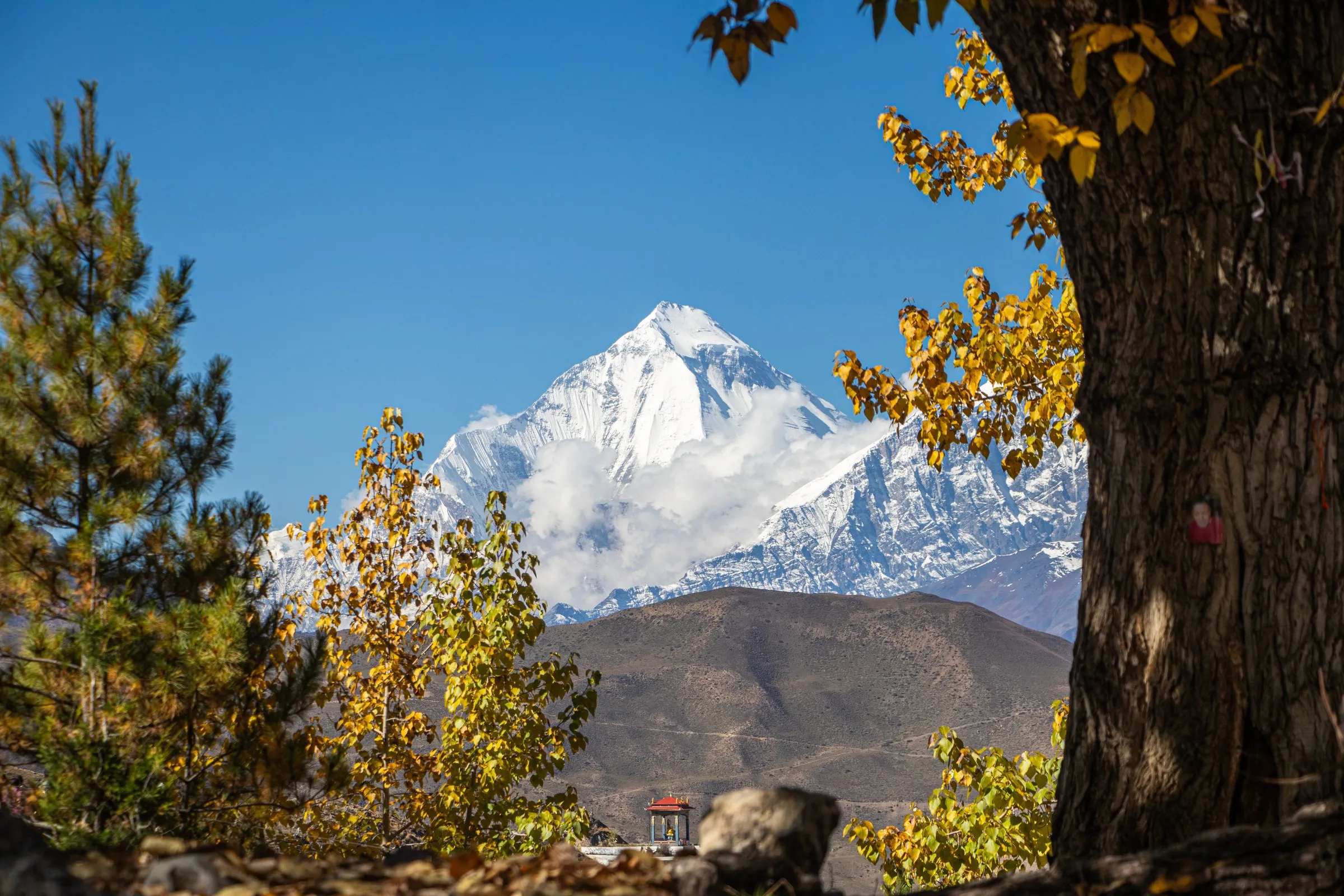
Dhaulagiri framed by autumn trees, seen from Muktinath

Trekking · Himalaya · Pilgrimage

Kathmandu & the Muktinath Trek, Nepal

The Kathmandu Valley, Pokhara, and a week on foot to Muktinath and down the Kali Gandaki

See the day-by-day
Duration
14 days · 13 nights
Halts
9
Kathmandu to Kathmandu
Best months
March – May · October – November
Price
On request
quoted to your dates

The journey

Fourteen days in Nepal: the temples and stupas of the Kathmandu Valley, Pokhara, and a trek from Jomsom up to Muktinath and down the Kali Gandaki gorge.

Muktinath stands at 3,795 metres in a side valley above the Kali Gandaki, and it belongs to two faiths. Hindus come to bathe under the 108 spouts of one of Vishnu’s holiest shrines; Buddhists know it as Chumig Gyatsa, the Hundred Waters, where Guru Rinpoche is said to have meditated. This journey reaches it on foot: a flight to Jomsom, two days up through Kagbeni and Jharkot, then five walking days down the river, past Thakali villages and apple orchards, with a rest day at the hot springs of Tatopani.

Before the mountains, three days in the Kathmandu Valley: the Durbar Squares of Kathmandu, Patan and Bhaktapur, the stupas of Swayambhunath and Boudhanath, and the cremation ghats of Pashupatinath — six of the seven monument zones of its World Heritage Site. Then Pokhara, where Machhapuchhre and the Annapurnas stand over Phewa Lake, and on the trail Nilgiri, Dhaulagiri and Annapurna I, the old salt-trading town of Tukuche and the waterfall at Rupse. A last night by the lake at Pokhara, and the flight back to Kathmandu.

Highlights

What you will remember

  • Kathmandu’s Durbar Square, the Kumari’s house and Swayambhunath above the city

  • Pashupatinath on the Bagmati, and the great stupa of Boudhanath

  • Bhaktapur’s Palace of Fifty-Five Windows and the temples of Patan

  • Machhapuchhre and the Annapurnas over Phewa Lake at Pokhara

  • The mountain flight to Jomsom, and the old village of Kagbeni

  • Muktinath’s 108 spouts and the flame of Jwala Mai

  • Down the Kali Gandaki gorge, through Marpha’s orchards to the hot springs at Tatopani

The route

10 halts, in order

  1. Kathmandu
  2. Pokhara1 night
  3. Kagbeni1 night
  4. Muktinath1 night
  5. Marpha1 night
  6. Ghasa1 night
  7. Tatopani2 nights
  8. Galeshwor1 night
  9. Pokhara1 night
  10. Kathmandu

Experiences

The moments it is built around

Everything else on this page is logistics. These are the reasons to come.

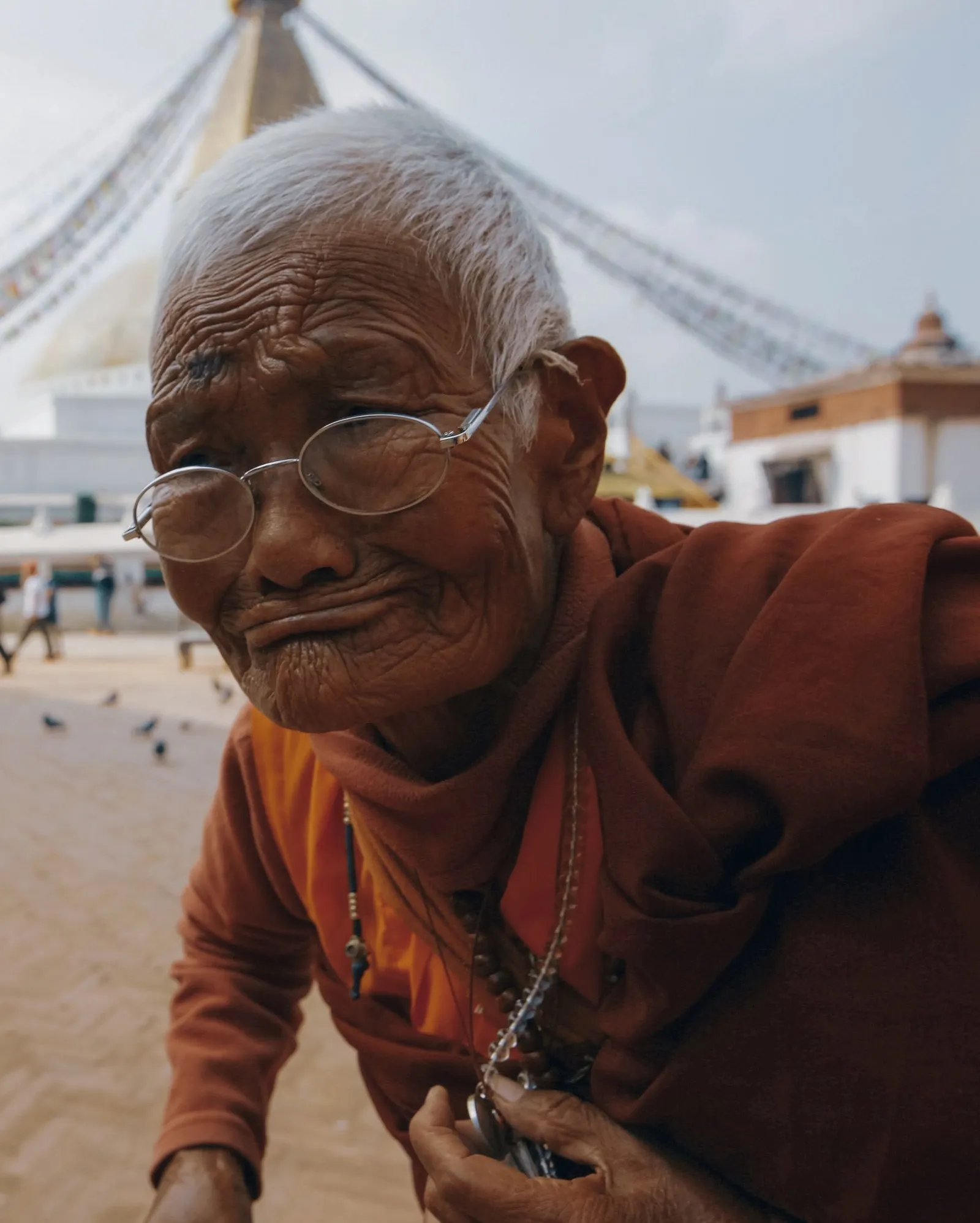
  • An elder in maroon robes with prayer beads at the Boudhanath stupa, Kathmandu

    The kora at Boudhanath

    Walk clockwise round the great stupa with Tibetan pilgrims, turning the prayer wheels as you go.

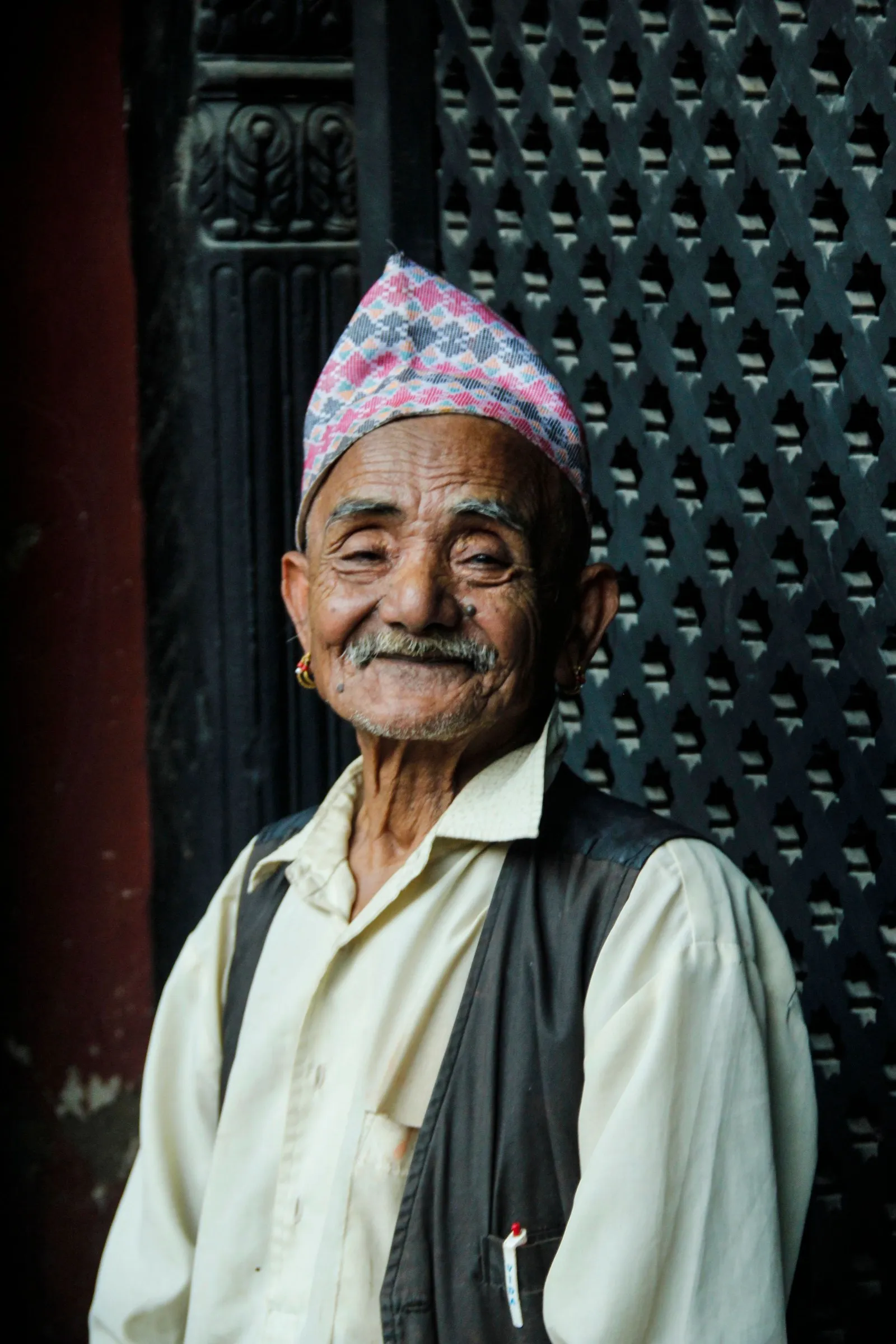
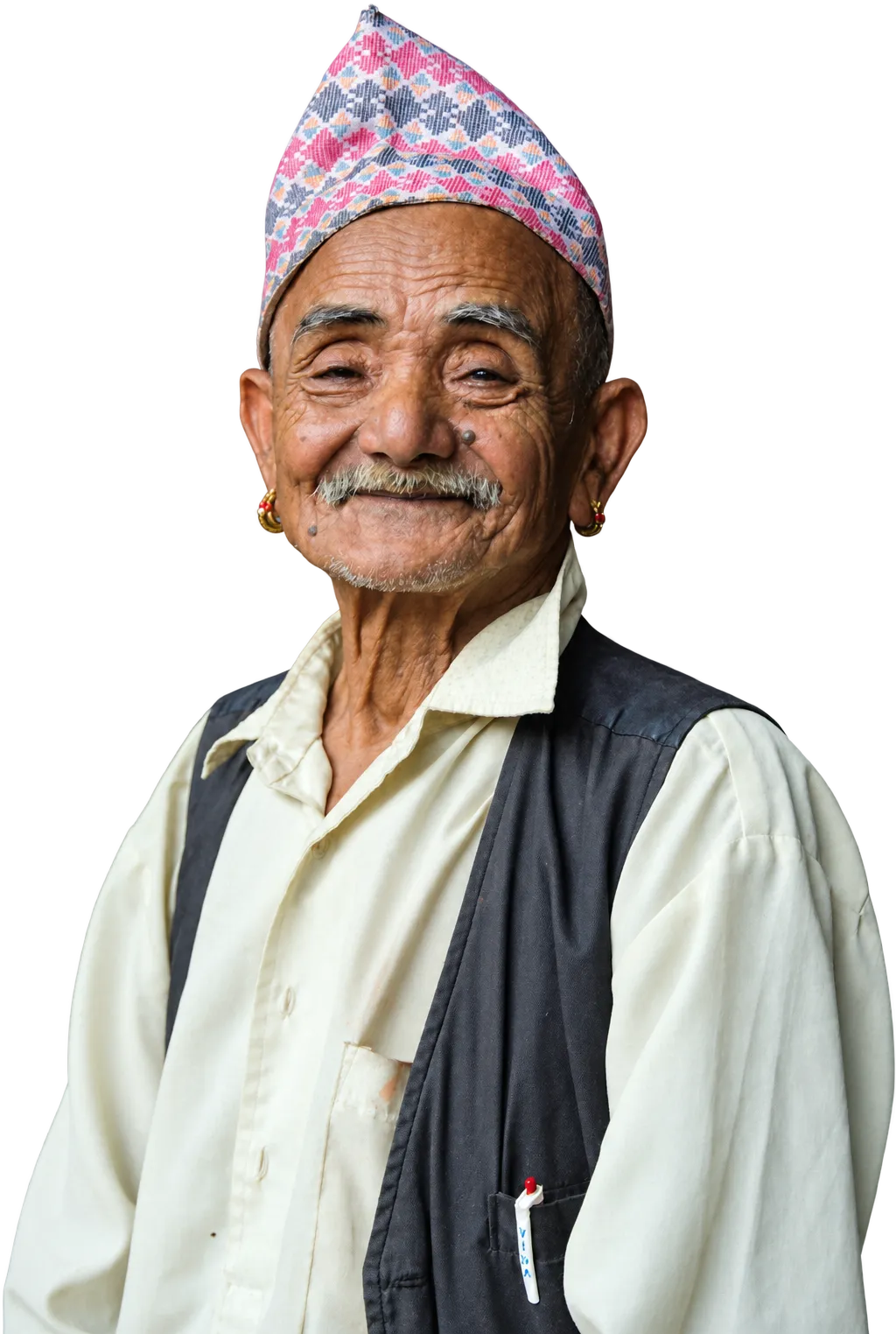
  • An elderly man in a dhaka topi, the Nepali cap, in Patan

    The valley’s royal cities

    Kathmandu, Patan and Bhaktapur: three Durbar Squares of pagodas, still at the heart of Newar life.

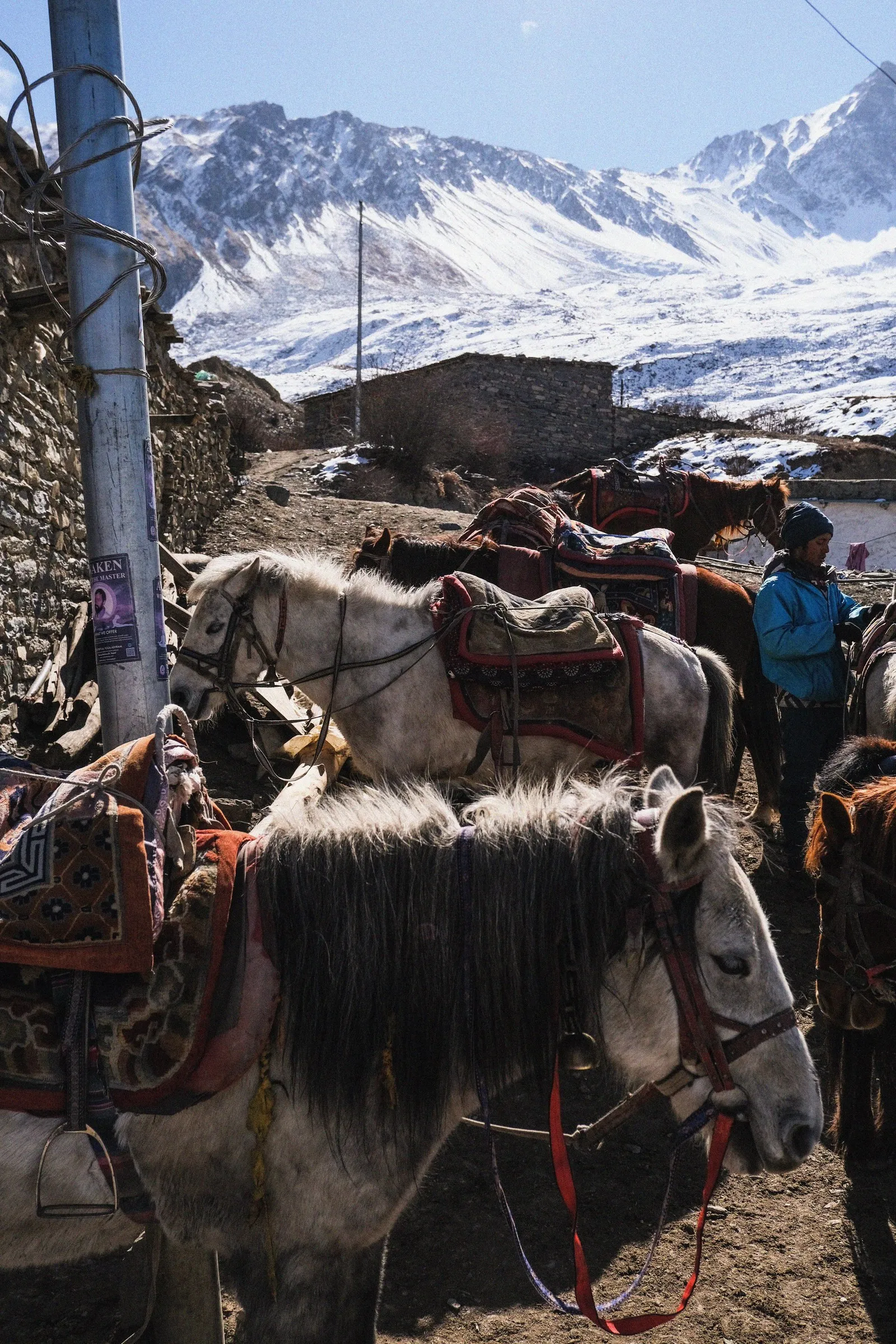
  • Horses with bright saddle rugs at Muktinath, snow peaks behind

    Muktinath’s 108 spouts

    Vishnu’s shrine to Hindus, the Hundred Waters to Buddhists: one temple, holy to two faiths, at 3,795 m.

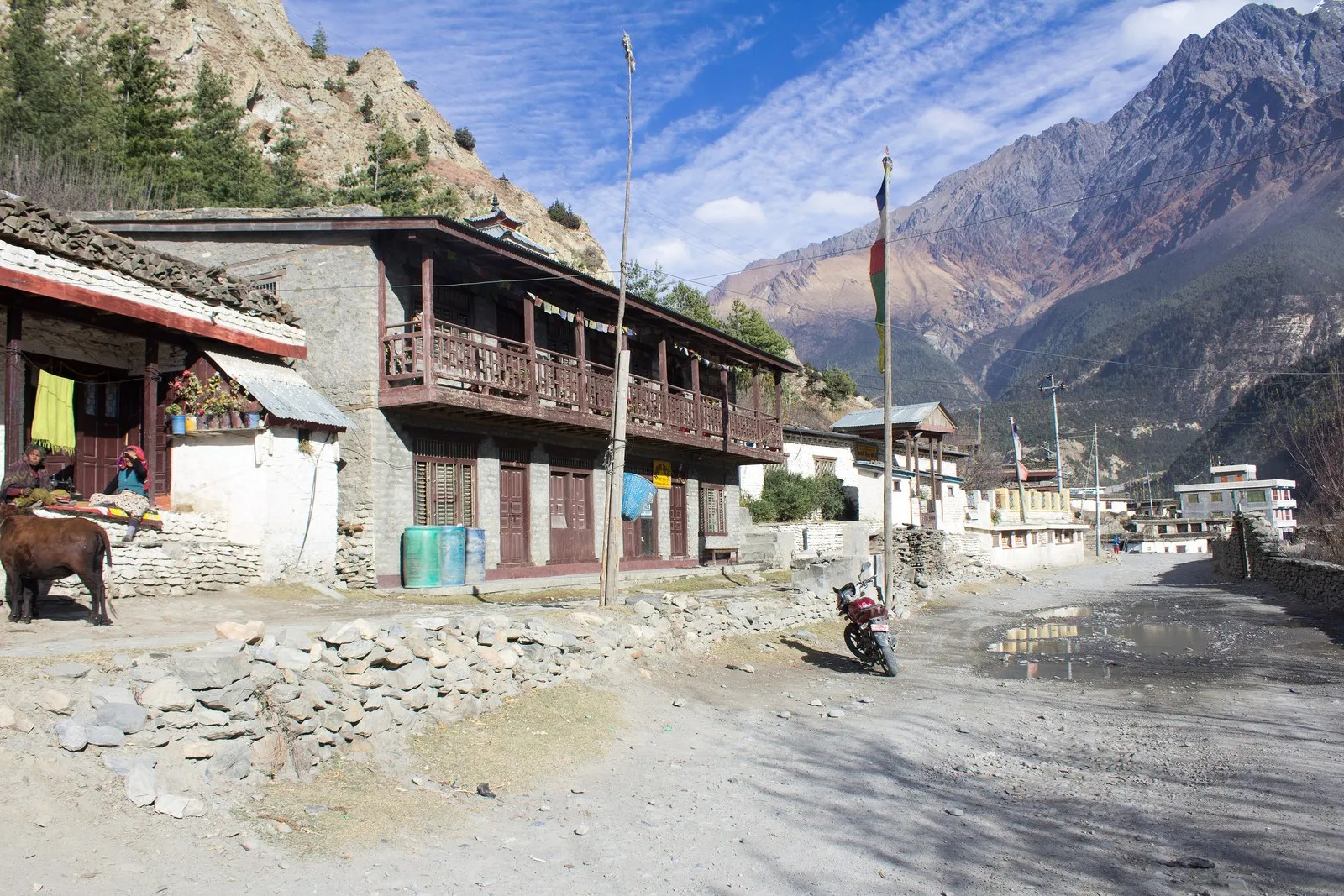
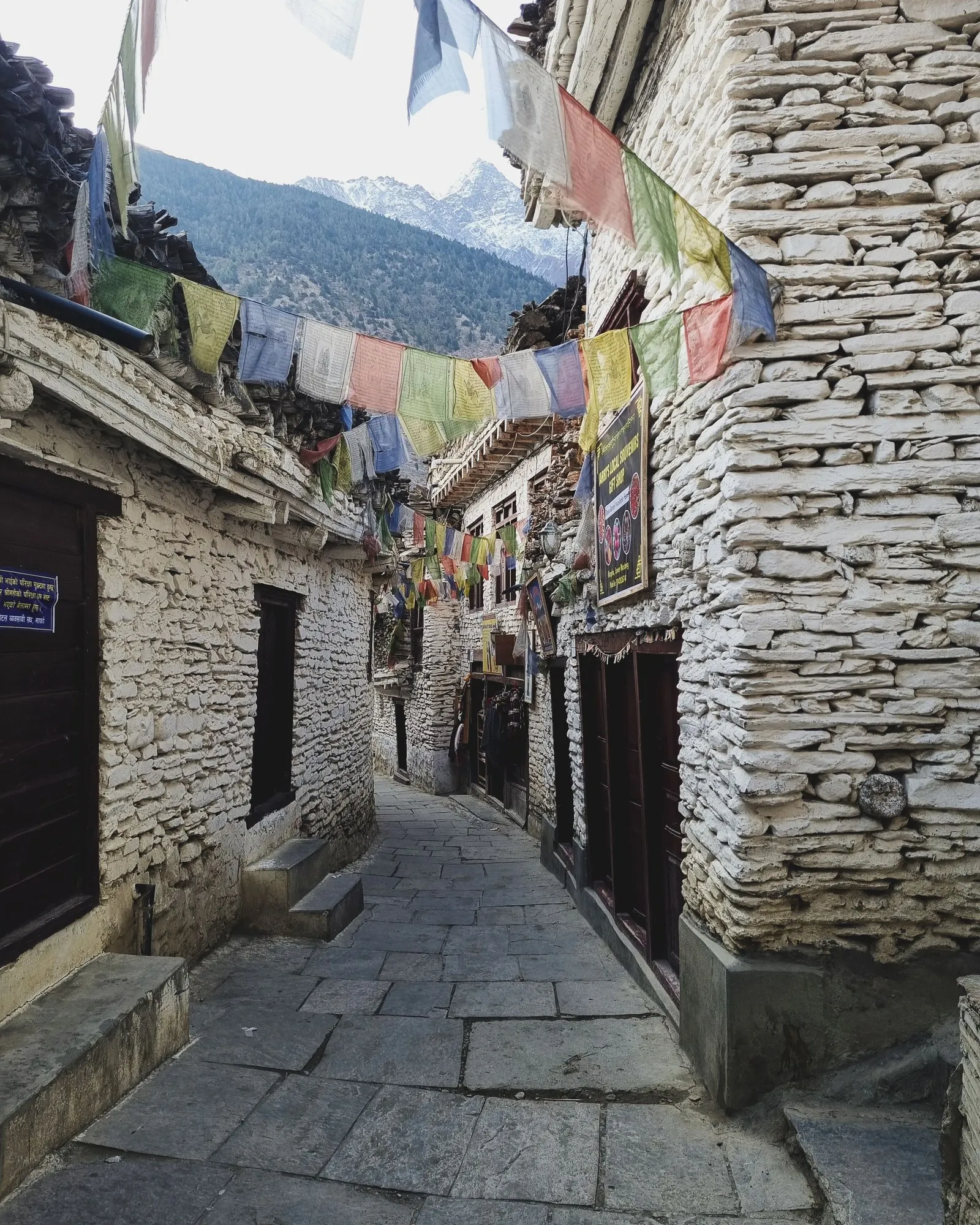
  • A flagstone lane between whitewashed stone houses under prayer flags, Mustang

    Down the Kali Gandaki

    Five walking days through Thakali villages and apple orchards, between Dhaulagiri and Annapurna.

A smiling elder in a dhaka topi, the Nepali cap, Patan

Trekking · Himalaya · Pilgrimage

The Kathmandu Valley, Pokhara, and a week on foot to Muktinath and down the Kali Gandaki

14 days, 13 nights

The route, day by day

Every halt, every overnight and every drive, published in full.

  1. Kathmandu
  2. Pokhara
  3. Kagbeni
  4. Muktinath
  5. Marpha
  6. Ghasa
  7. Tatopani
  8. Galeshwor
  9. Pokhara
  10. Kathmandu
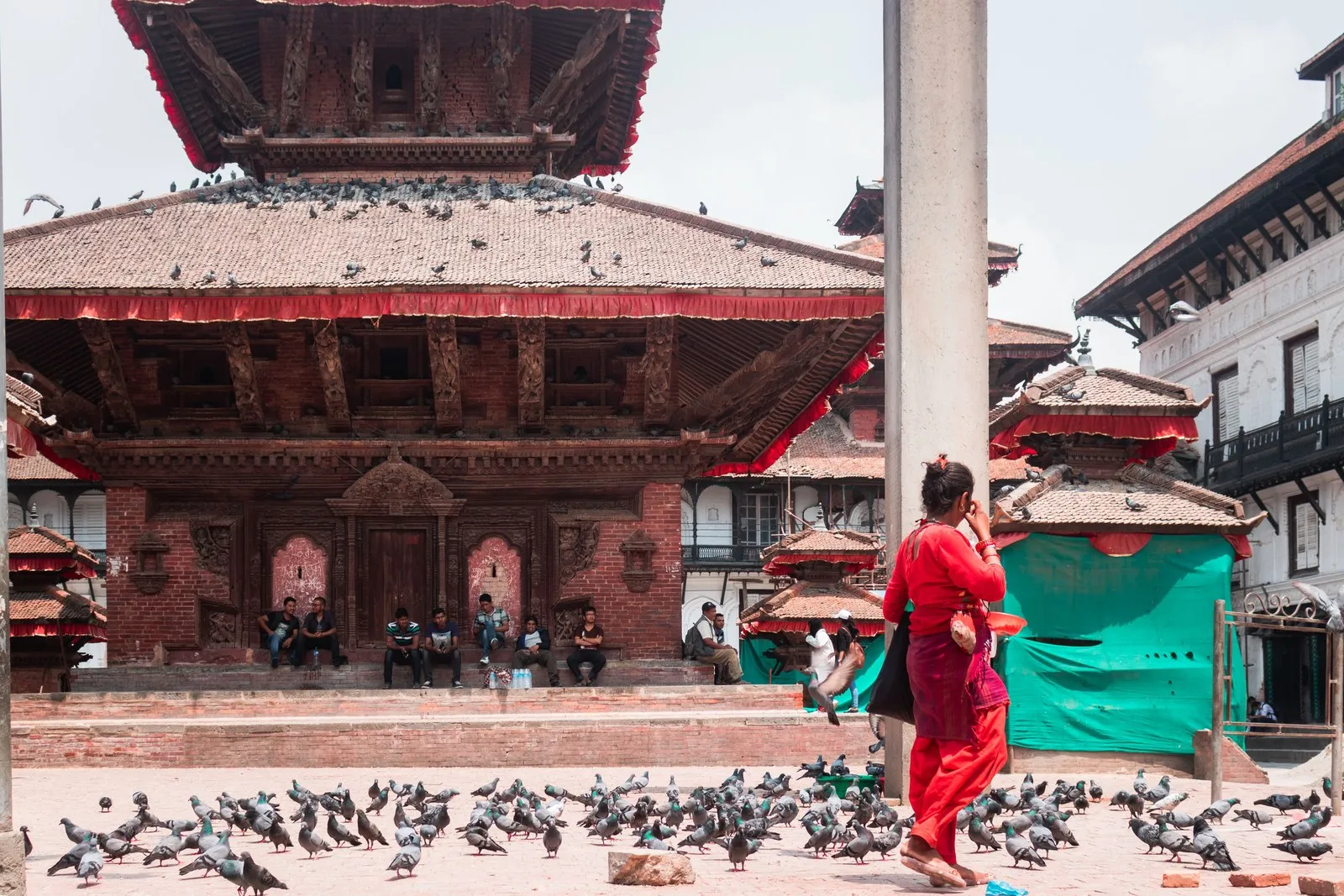
  1. A woman in red among the pigeons in Kathmandu Durbar Square

    01

    Overnight Kathmandu

    Arrival: Durbar Square and Swayambhunath

    Met at Kathmandu airport and driven to your hotel, then the old city in the afternoon. Tradition credits King Gunakamadeva with founding Kathmandu, and its heart is Kathmandu Durbar Square, around the Hanuman Dhoka palace — the royal residence until the nineteenth century, named for the statue of Hanuman, smeared red and shaded by an umbrella, that guards its gate.

    Across the square stands the Kumari Ghar, the house of the Kumari: the living goddess, a young Newar girl chosen as the embodiment of Taleju, a form of Durga. She sometimes comes to a carved window above the courtyard, and she may not be photographed.

    Then Swayambhunath, on its hill west of the city, the oldest Buddhist monument in the valley. The eyes of the Buddha are painted on all four sides of the gilded tower above its dome, prayer flags stream from the spire, and the monkeys that give it its nickname, the Monkey Temple, patrol the worn stone steps. The whole of Kathmandu lies below you.
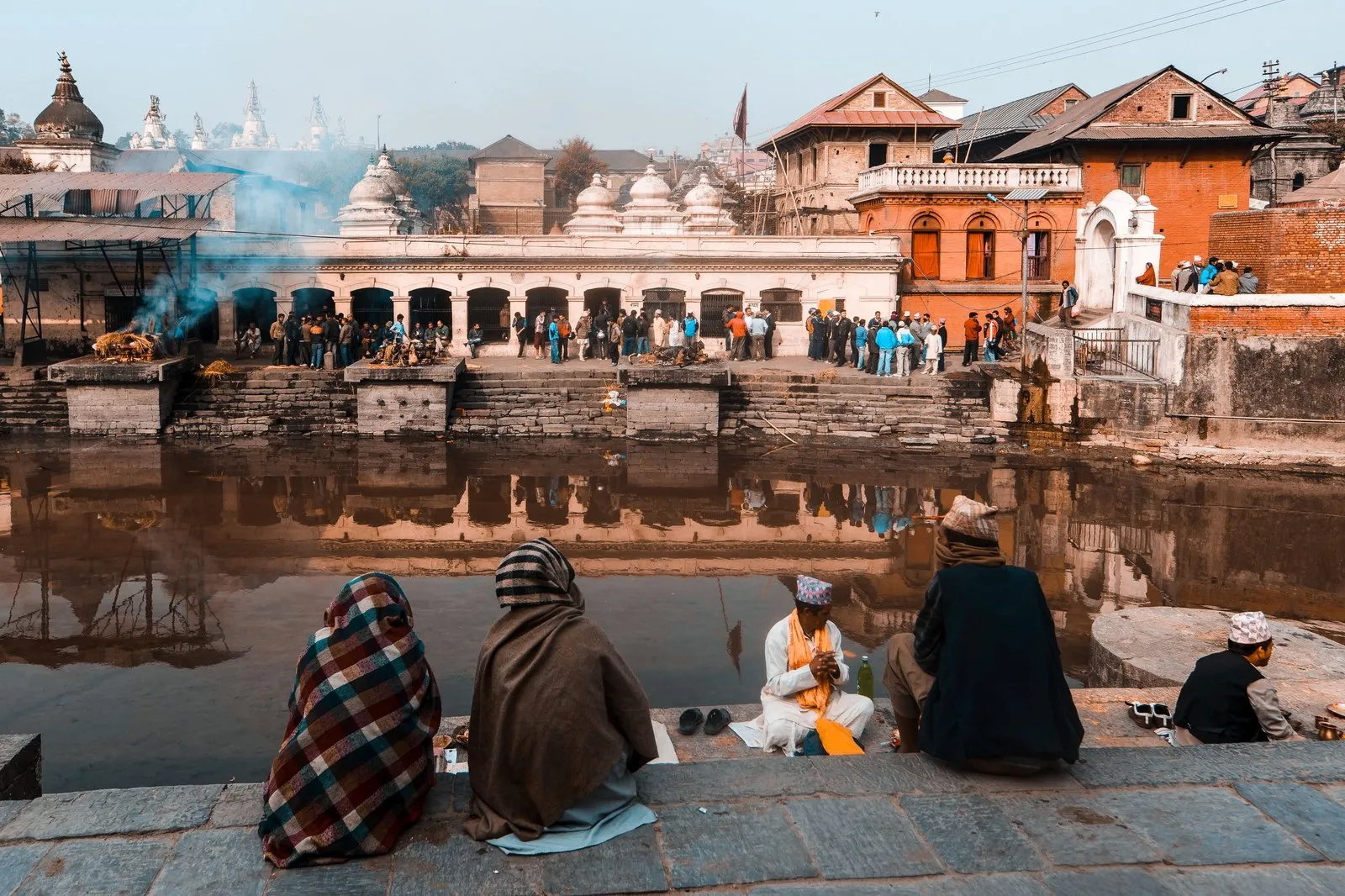
  2. People on the east bank of the Bagmati, looking across to the ghats at Pashupatinath

    02

    Overnight Kathmandu

    Pashupatinath, Boudhanath and Bhaktapur

    The morning at Pashupatinath on the Bagmati, the most revered temple to Shiva in Nepal, where he is worshipped as Pashupati, lord of the animals. Only Hindus may enter the main temple. From the terraces on the far bank you look across at the cremation ghats, the sadhus and the pilgrims, with your guide to explain what you are watching.

    Then Boudhanath, the largest stupa in Nepal and the centre of Tibetan life in Kathmandu, ringed by monasteries and the tall houses of its square. Join the pilgrims on the kora, walking clockwise round the great white dome and turning the prayer wheels set into its base.

    In the afternoon, Bhaktapur — Bhadgaon, the city of devotees. Its Durbar Square gathers pagoda and shikhara temples around the Palace of Fifty-Five Windows, built of brick and carved wood. Find the potters at their wheels in the square named for them, and eat juju dhau, the city’s rich curd, from a clay bowl.

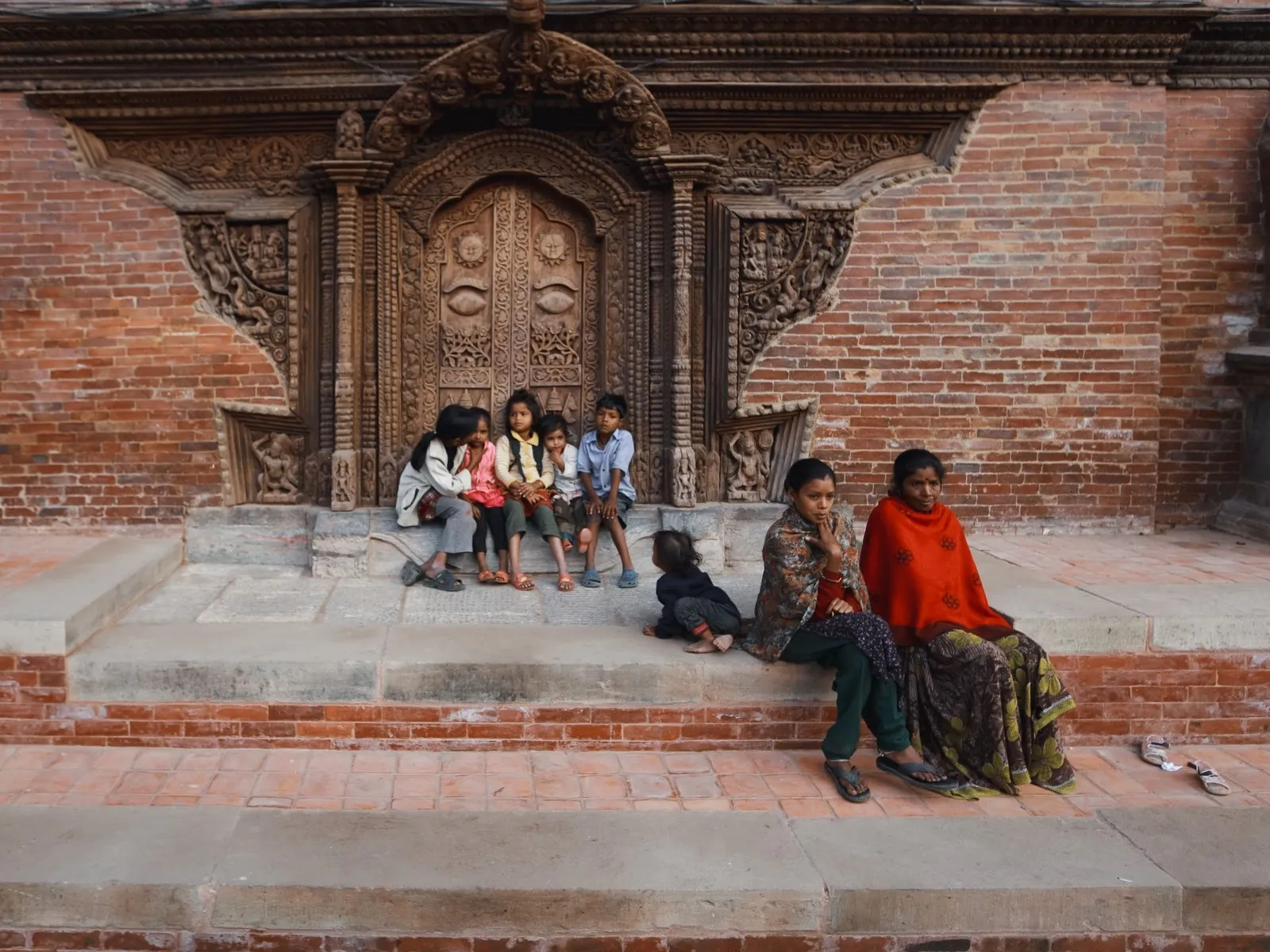
  3. A woman and children on the steps by a carved palace door in Patan Durbar Square

    03

    Overnight Kathmandu

    Patan, the city of fine arts

    The morning in Patan — Lalitpur, across the Bagmati from Kathmandu, and long the valley’s city of craftsmen. Patan Durbar Square holds more temples to the square metre than Kathmandu’s or Bhaktapur’s: the stone Krishna Mandir, the royal palace, one of whose courtyards now holds the Patan Museum and its bronzes, and a few lanes away the Golden Temple of Kwa Bahal. Patan’s metalworkers still cast images in the old way.

    Then the Tibetan refugee settlement at Jawalakhel, where carpets are still woven by hand on tall upright looms. The afternoon is yours: rest before the mountains, browse the bookshops of Thamel, or take tea on a rooftop above one of the squares.

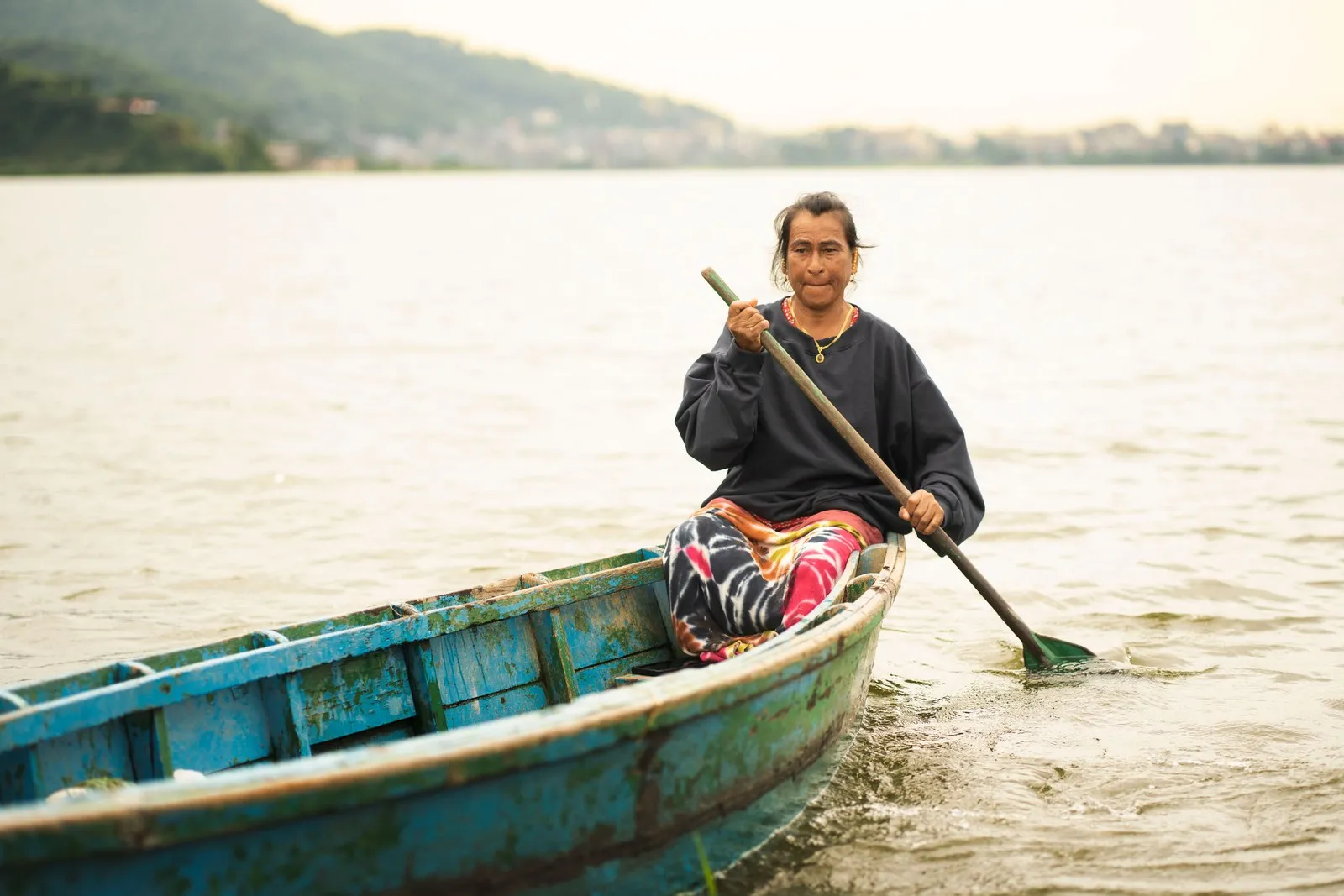
  4. A woman paddling a wooden boat on Phewa Lake, Pokhara

    04

    Overnight Pokhara

    Flight Kathmandu – Pokhara · about 30 min

    Fly to Pokhara

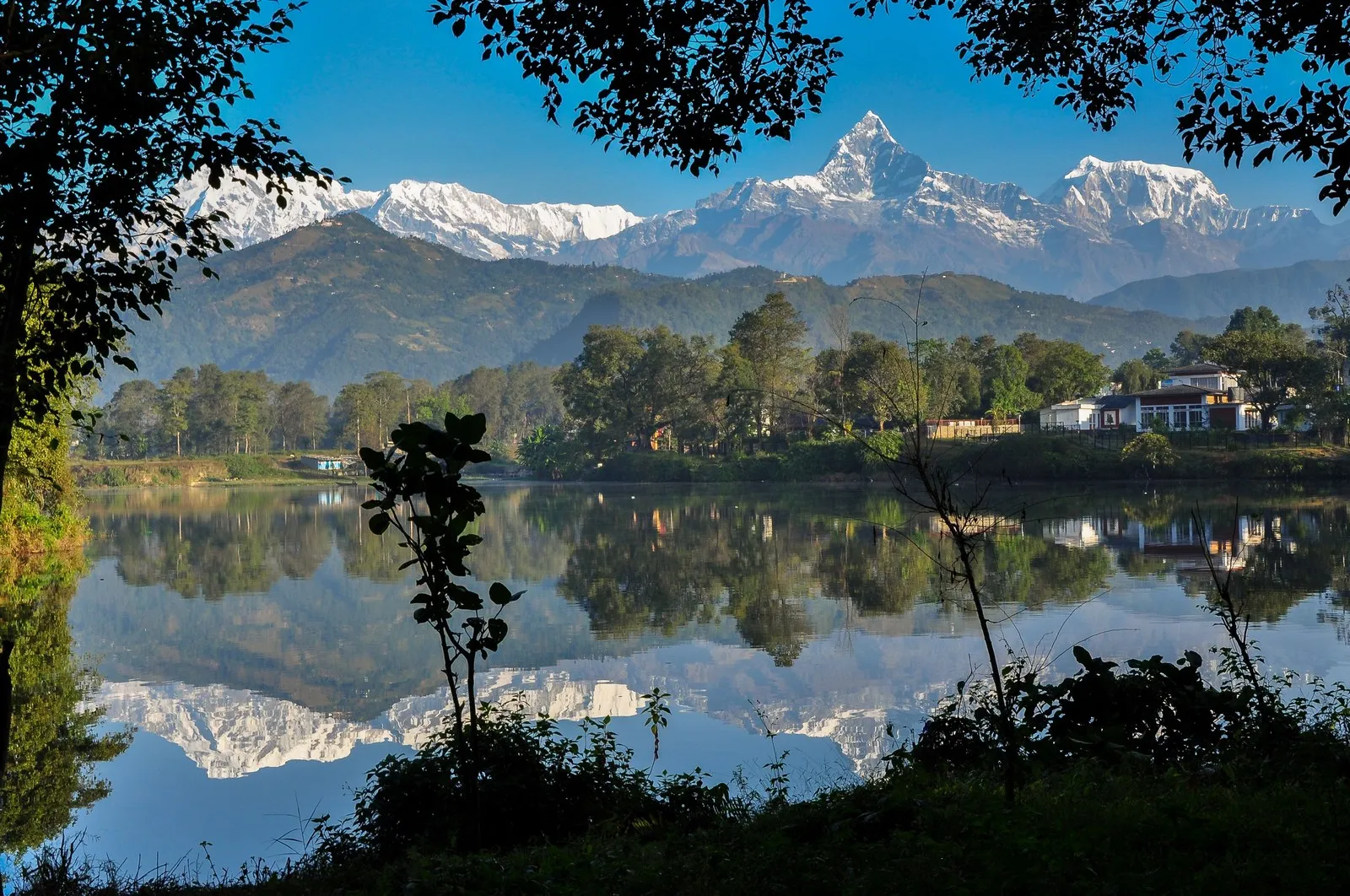
    A short flight west to Pokhara — sit on the right for the Himalaya if the morning is clear — and a transfer to your hotel. Pokhara lies lower and warmer than Kathmandu, yet the mountains stand right over it: Machhapuchhre, the Fishtail (6,993 m), is the nearest, with the Annapurnas beside it and, far to the west, Dhaulagiri.

    It is the finest mountain view in Nepal to be had without walking for it, and in good weather you see it from the hotel. The rest of the day is free: a rowing boat out on Phewa Lake to the island temple of Tal Barahi, or a walk along the lakeshore as the light goes.

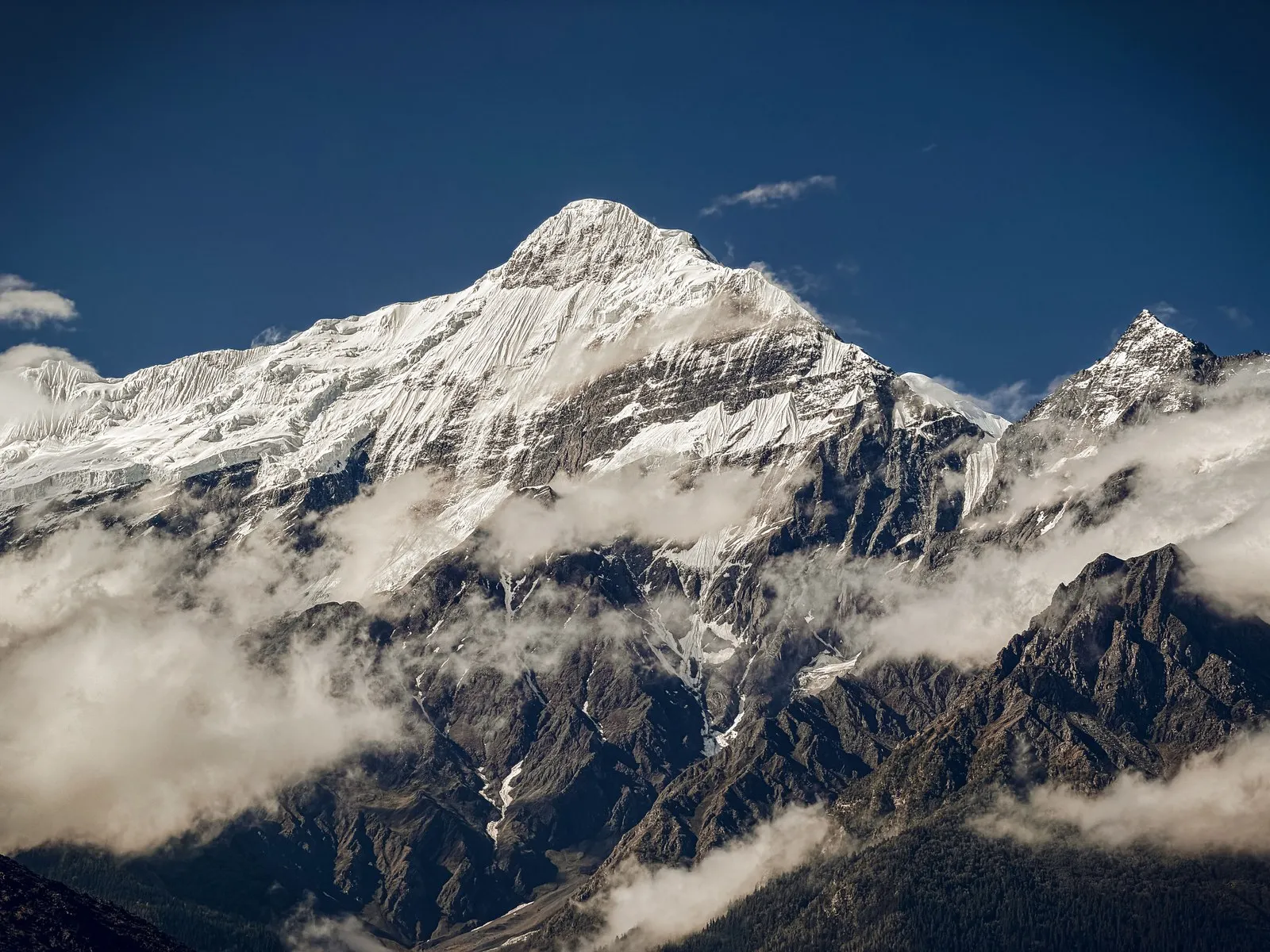
  5. Snow peaks and cloud above Jomsom, in the upper Kali Gandaki valley

    05

    Overnight Kagbeni

    Flight Pokhara – Jomsom · about 30 min · trek about 4 hrs

    Fly to Jomsom, walk to Kagbeni

    An early flight to Jomsom (2,720 m), the headquarters of Mustang district. The small planes fly only in the morning, before the wind rises in the valley, and the route runs up the gorge between Dhaulagiri and the Annapurnas. At Jomsom you meet your trekking guide and porters, and the loads are shared out for the trail.

    Just out of Jomsom you cross a suspension bridge and follow the Kali Gandaki north along its wide, stony bed. The going is easy and mostly level, through bare rock and sand that already look like Tibet, with Nilgiri, Tukuche Peak and Dhaulagiri over your shoulder. The Kali Gandaki is where shaligrams come from: black ammonite fossils that Hindus worship as a form of Vishnu, and that pilgrims carry home from Muktinath.

    About four hours brings you to Kagbeni (2,810 m), where the stream from Muktinath meets the Kali Gandaki: mud-brick houses built close together, narrow alleys and tunnels, irrigation channels, green fields of wheat and barley, and a large red gompa. North of the village lies Upper Mustang, a restricted area this trek does not enter.

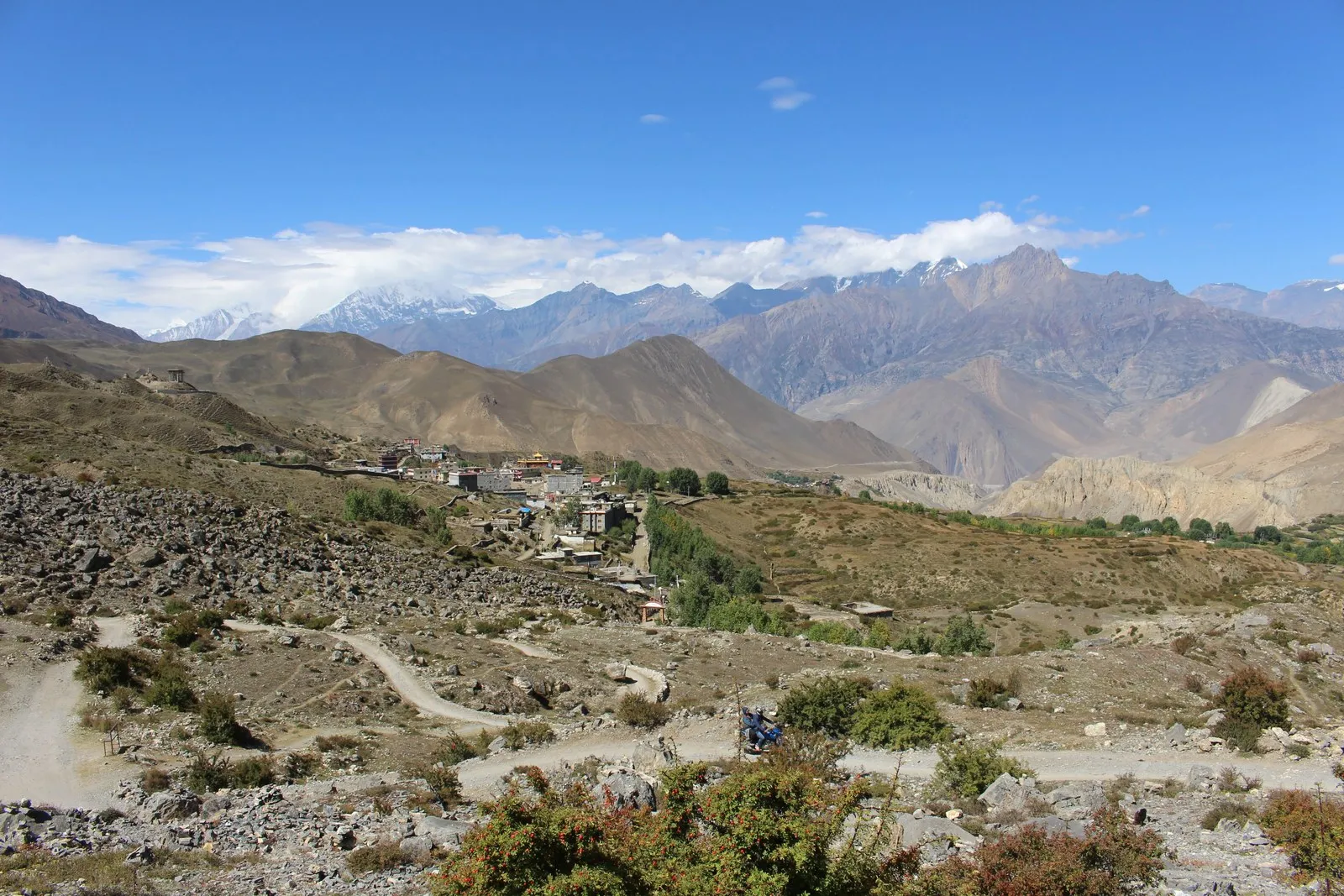
  6. The high, dry valley at Muktinath under a clear autumn sky

    06

    Overnight Muktinath

    Trek · about 4 hrs

    Kagbeni – Muktinath

    A steep climb of a couple of hundred metres out of Kagbeni, then a steadier walk east up the valley towards the Thorong La, the pass that Annapurna Circuit trekkers cross from Manang. It is high desert: caves in the cliffs, apple orchards, yaks and sheep, and villages built in the Tibetan manner. Lunch is at Jharkot, beside a ruined fort and a red gompa said to date from the fifteenth century; then half an hour of steep path brings you to Ranipauwa (3,700 m), the village below the temple, for the night.

    A fifteen-minute walk above the village, Muktinath (3,795 m) is sacred to Hindus and Buddhists alike. For Hindus it is Mukti Kshetra, the place of liberation and one of the 108 Divya Desams, the sacred shrines of Vishnu: pilgrims bathe in its two ponds and under 108 bull-headed spouts that pour icy water along the temple wall. For Buddhists it is Chumig Gyatsa, the Hundred Waters, where Guru Rinpoche is said to have meditated, and Buddhist nuns tend the shrine. In the little Jwala Mai temple beside it, a natural gas flame burns beside a trickle of spring water.

    On a clear evening Dhaulagiri I (8,167 m) and Nilgiri (7,061 m) fill the view down the valley. This is the highest night of the journey: walk slowly, drink plenty, and tell your guide at once if you have a headache or feel unwell.

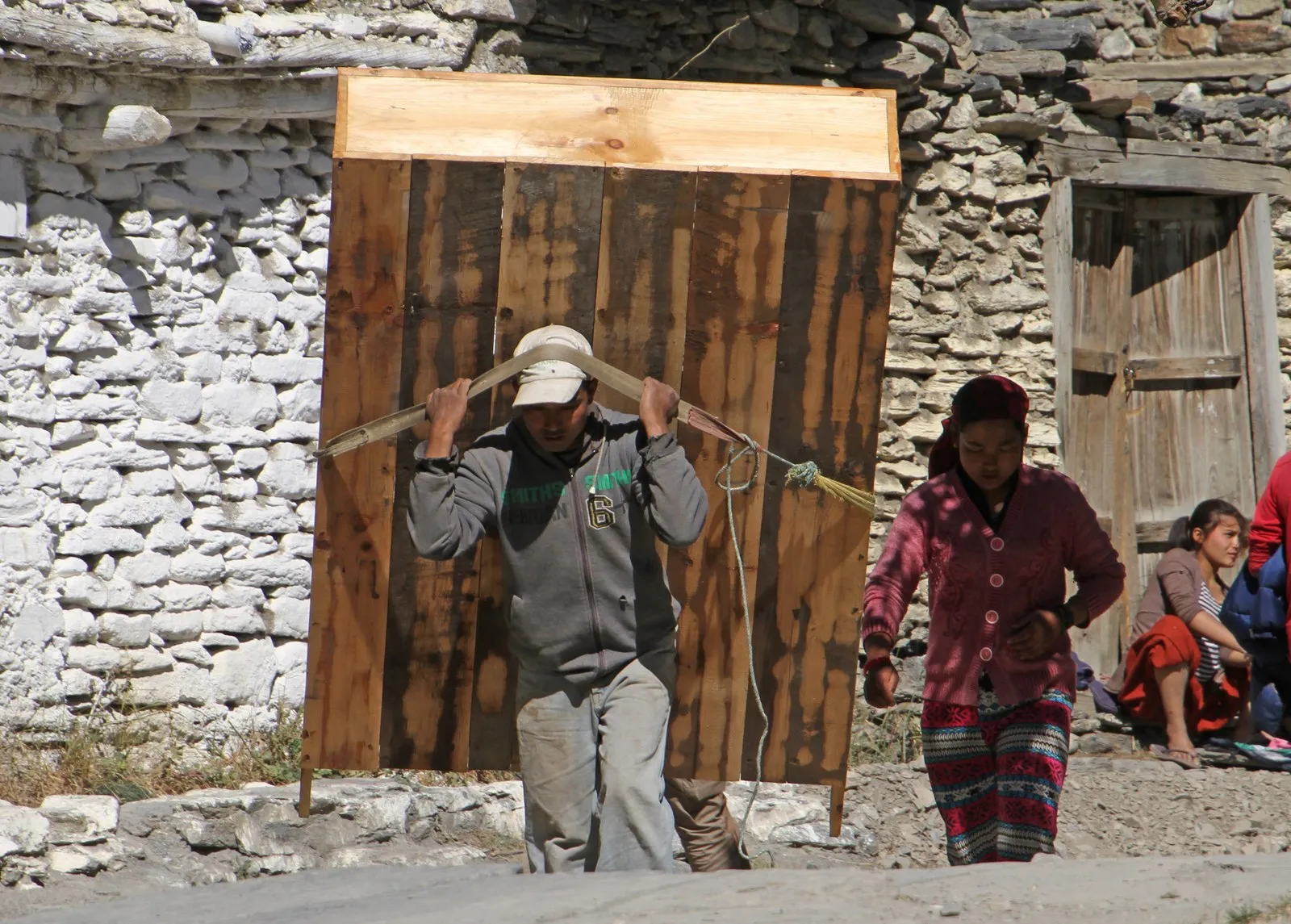
  7. A man carrying a wooden cupboard on his back through the lanes of Marpha, Mustang

    07

    Overnight Marpha

    Trek · about 6 hrs

    Muktinath – Marpha, down the Kali Gandaki

    Now the long descent begins, through country in the same dry rain shadow as Tibet. Back down through Jharkot and Khingar, then along the valley floor — and in places the jeep road that now runs up it — most of the way to Jomsom, spread along both banks of the river under the Nilgiri peaks. After midday the wind blows hard up the gorge; it is why the planes fly early.

    Below Jomsom is Marpha (2,667 m), a Thakali village of whitewashed stone houses and flagstone lanes, with its drains running beneath the paving and narrow passages that shelter you from the wind. Marpha is known across Nepal for its apples, eaten fresh or pressed into cider, and for rakshi, the local spirit, distilled from apples, apricots and peaches. The Nyingma monastery above the village looks down the length of the valley.

  8. The stone houses of Tukuche below the peaks of the Kali Gandaki valley

    08

    Overnight Ghasa

    Trek · about 6 hrs

    Marpha – Ghasa, by Tukuche and Kalopani

    Almost level walking at first, down the valley through Tukuche, once the great trading post of the salt caravans from Tibet, and on to Kalopani. Around Kalopani the gorge opens on to the great mountain panorama of the trek: Dhaulagiri I (8,167 m), Annapurna I (8,091 m), Tukuche Peak (6,920 m) and the three summits of Nilgiri — North (7,061 m), Central (6,940 m) and South (6,839 m).

    The forest closes in as you lose height, pine and birch and rhododendron, and after Kalopani the path drops steeply to Ghasa (2,013 m), the last Thakali village and about as far south as the prayer flags and gompas reach. The woods around it are known for their birds.

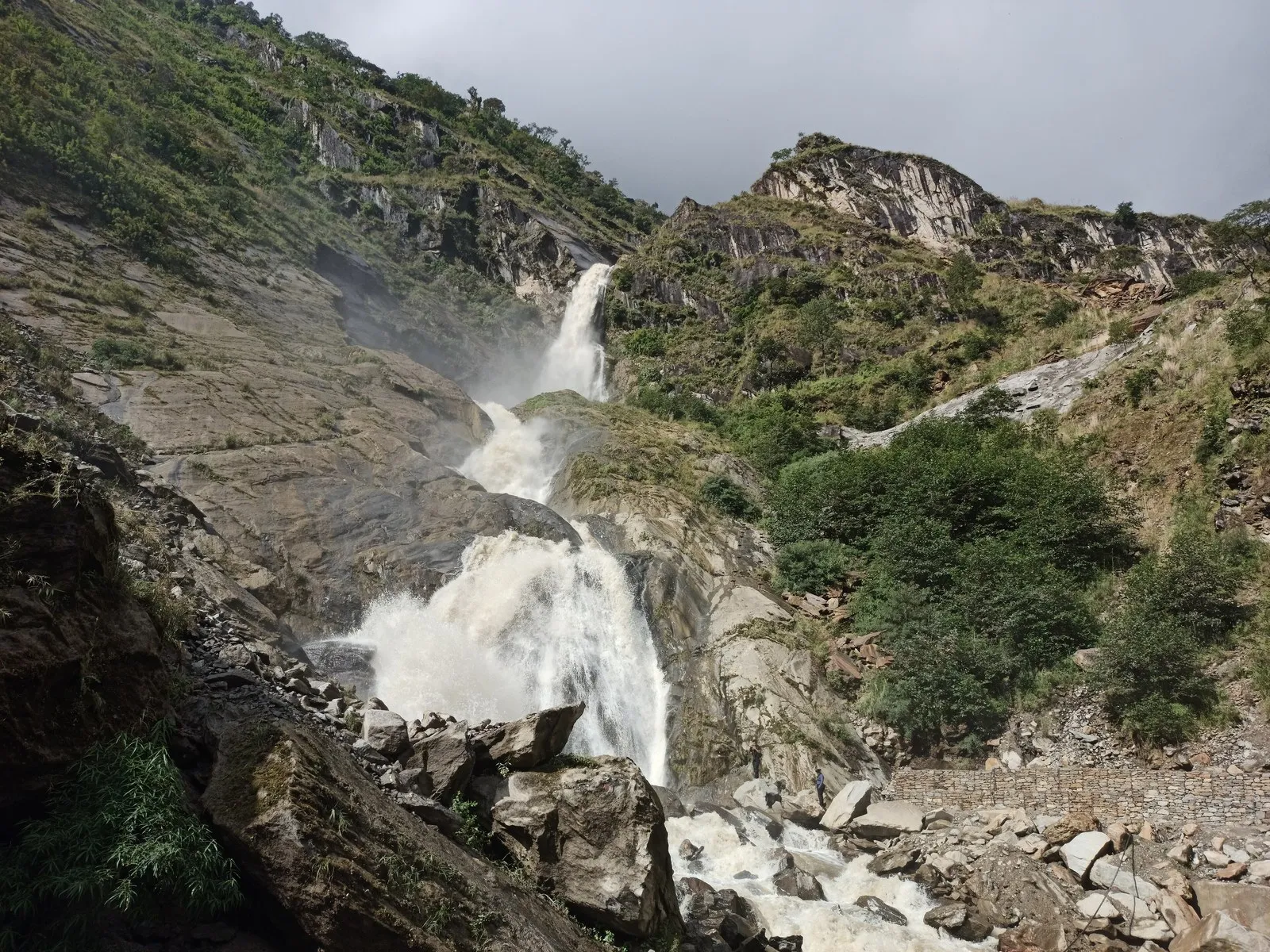
  9. Rupse Chhahara, the waterfall beside the trail in the Kali Gandaki gorge, Myagdi

    09

    Overnight Tatopani

    Trek · about 5 hrs

    Ghasa – Tatopani, through the gorge

    A steep descent through the forest to Rupse Chhahara, a waterfall that comes down the cliff in a long white ribbon beside the path. You are in the Kali Gandaki gorge: Dhaulagiri I and Annapurna I face each other across it, both over 8,000 m, with the river thousands of metres below — by some measures the deepest gorge on earth.

    Then on through Dana and the villages of the lower valley to Tatopani (1,189 m), warm and green after the high desert, and more than 2,500 metres below Muktinath, where you slept three nights ago.

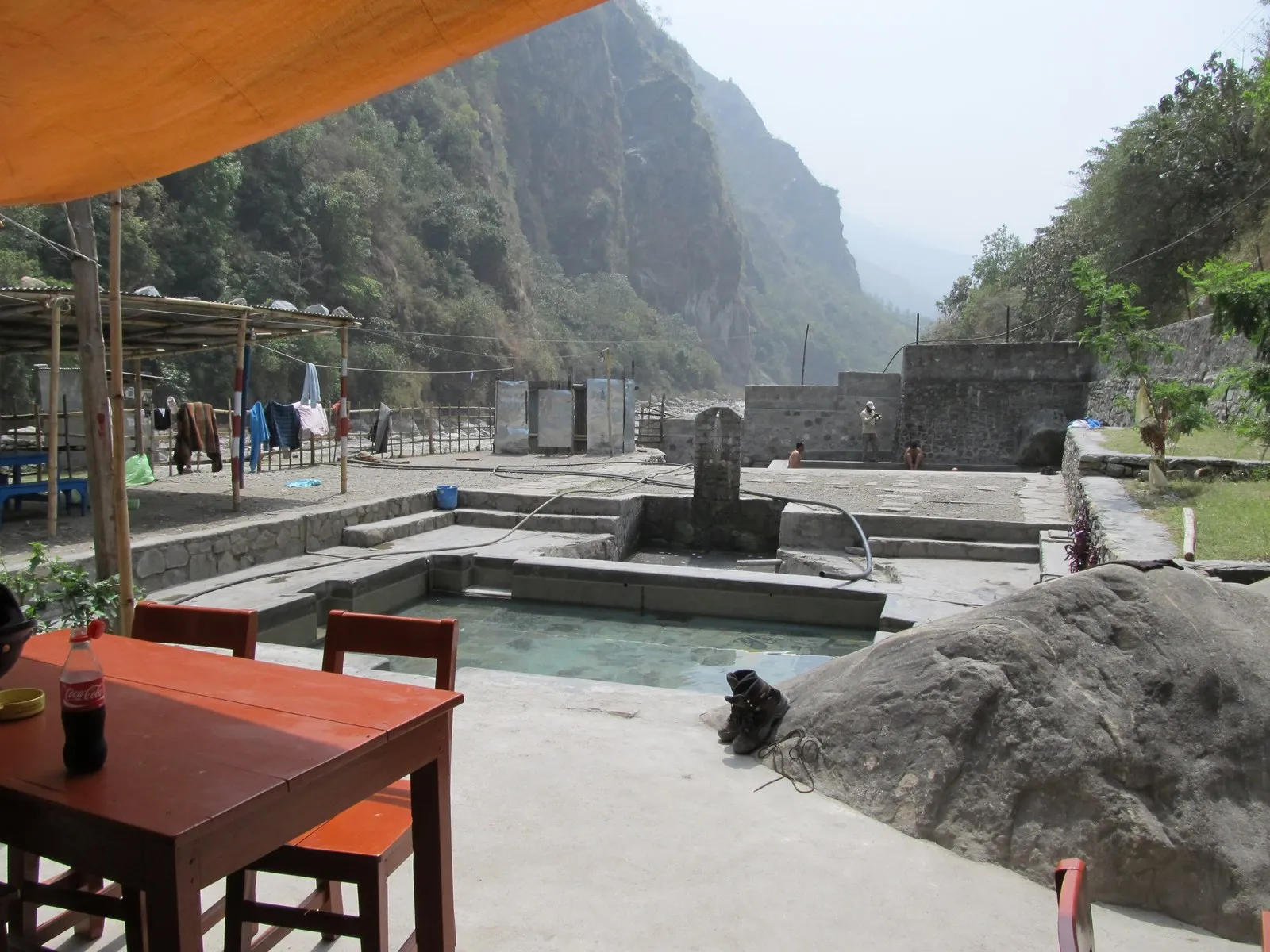
  10. The hot-spring pools of Tatopani beside the Kali Gandaki

    10

    Overnight Tatopani

    A day at the hot springs

    A day off your feet. Tatopani means ‘hot water’, and the village is named for the springs on the bank of the Kali Gandaki, where the water comes up warm enough to soak five days of walking out of your legs; local people have long held that it heals the skin. If you would rather walk, there are short hikes up the valley sides for the snow peaks.

    This is also the journey’s spare day. If cloud or wind held up the flight to Jomsom, the trek starts a day late and this rest day is given up instead, so everything after it runs to time.

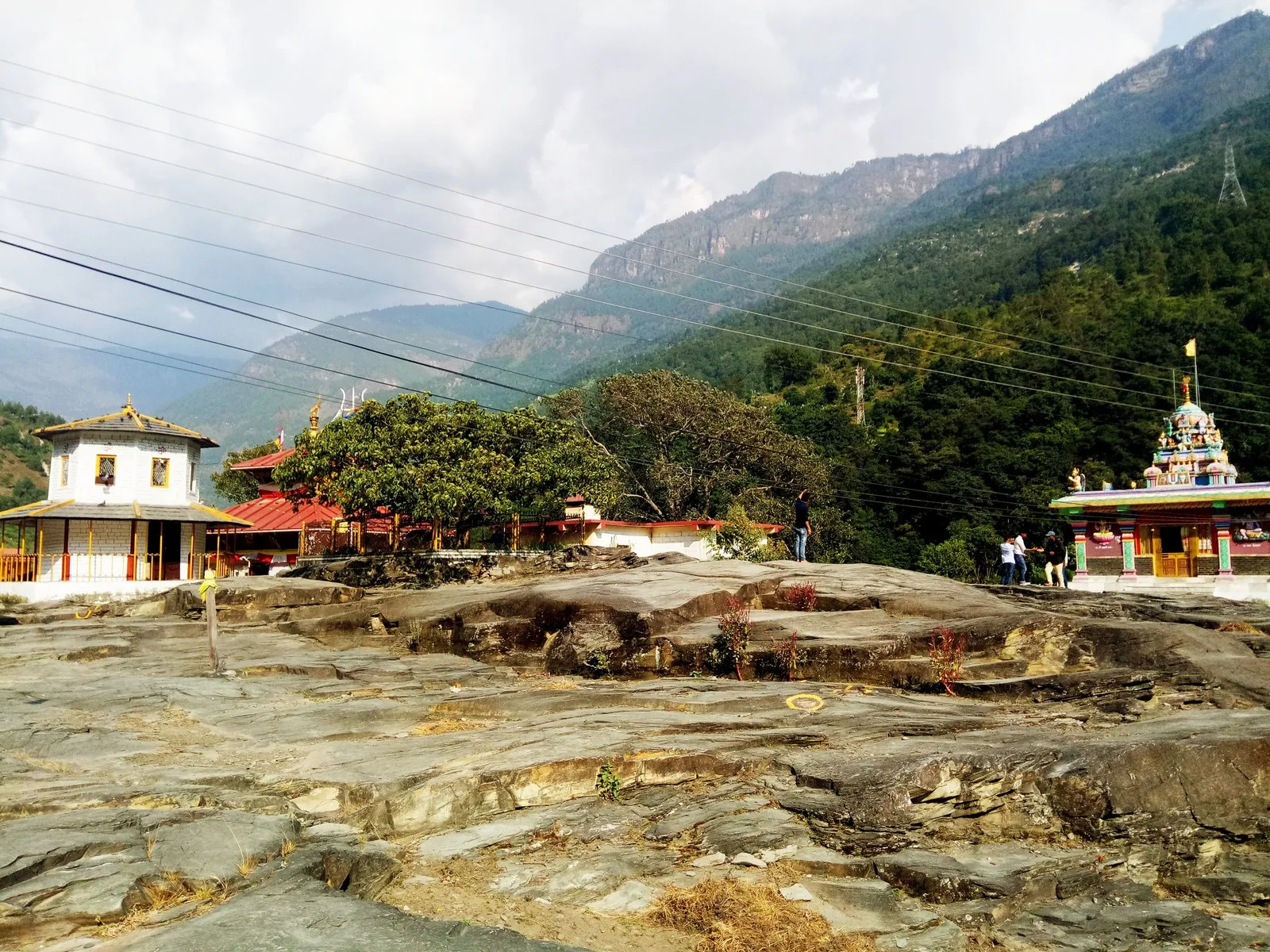
  11. The Galeshwor temple built on its great rock above the Kali Gandaki

    11

    Overnight Galeshwor

    Trek

    Tatopani – Galeshwor

    South along the Kali Gandaki towards Tiplyang, on footpaths and in places the road, through farming villages one after another, with the river loud below you and the snow peaks now behind. The day ends at Galeshwor (1,170 m), whose Shiva temple on the riverbank, Galeshwor Dham, draws its own pilgrims; many bound for Muktinath stop here on the way.

  12. Machhapuchhre and the Annapurnas reflected in Phewa Lake, Pokhara

    12

    Overnight Pokhara

    Trek · about 2 hrs · drive Beni – Pokhara

    Walk out to Beni, back to Pokhara

    The last walk: about two hours down from Galeshwor to Beni (930 m), the market town where the Myagdi Khola joins the Kali Gandaki, and the end of the trek. From Beni the road runs back to Pokhara — a hot shower, a proper bed and an evening by the lake.

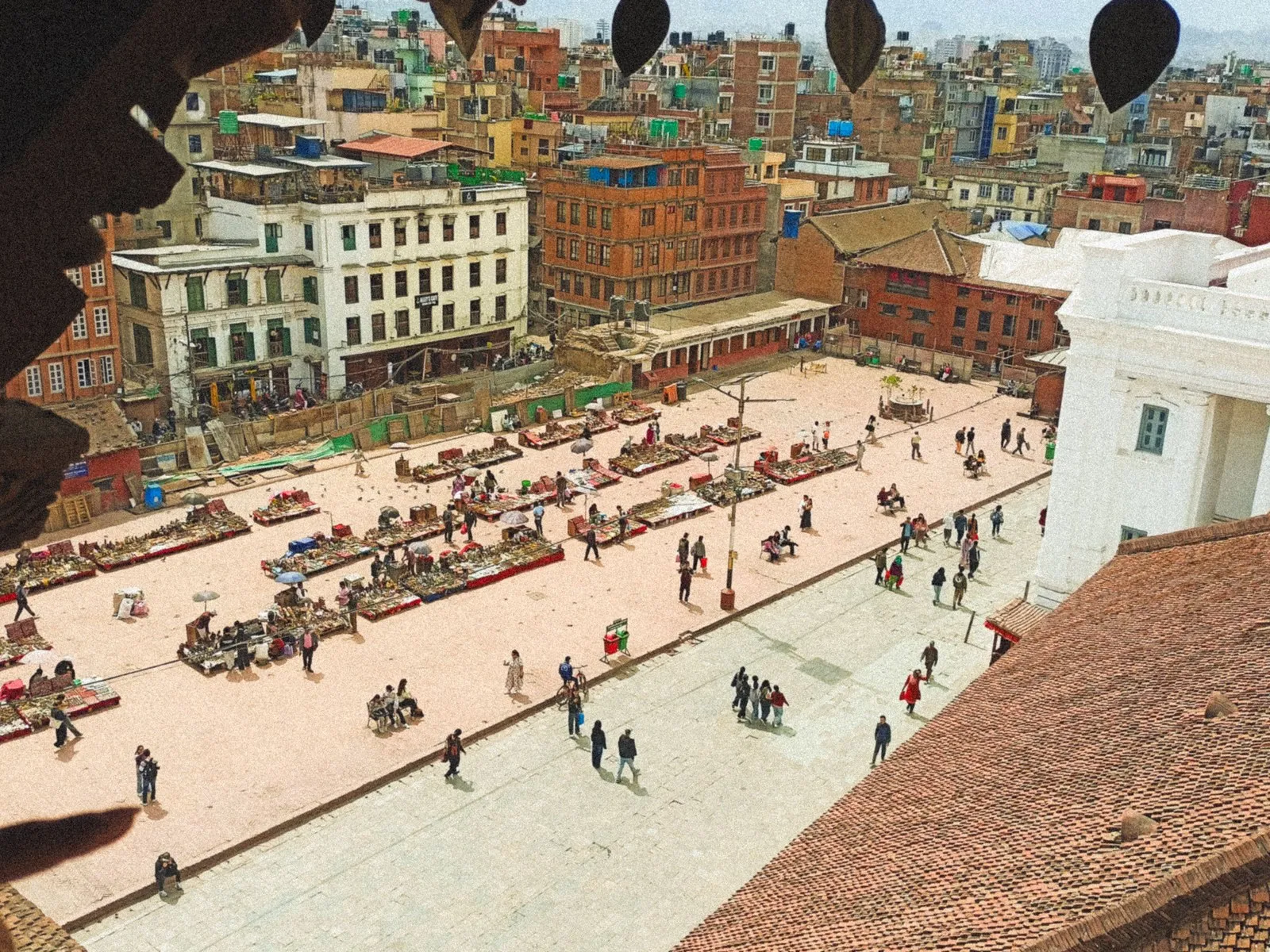
  13. Kathmandu Durbar Square from above, the old city crowding round its temples

    13

    Overnight Kathmandu

    Flight Pokhara – Kathmandu · about 30 min

    Fly back to Kathmandu

    Back to the airport for the short flight to Kathmandu — sit on the left for the mountains this time — and met on arrival for the drive to your hotel. The rest of the day is free: for the shops of Thamel, a last circuit of Boudhanath at dusk, or a long, slow lunch.

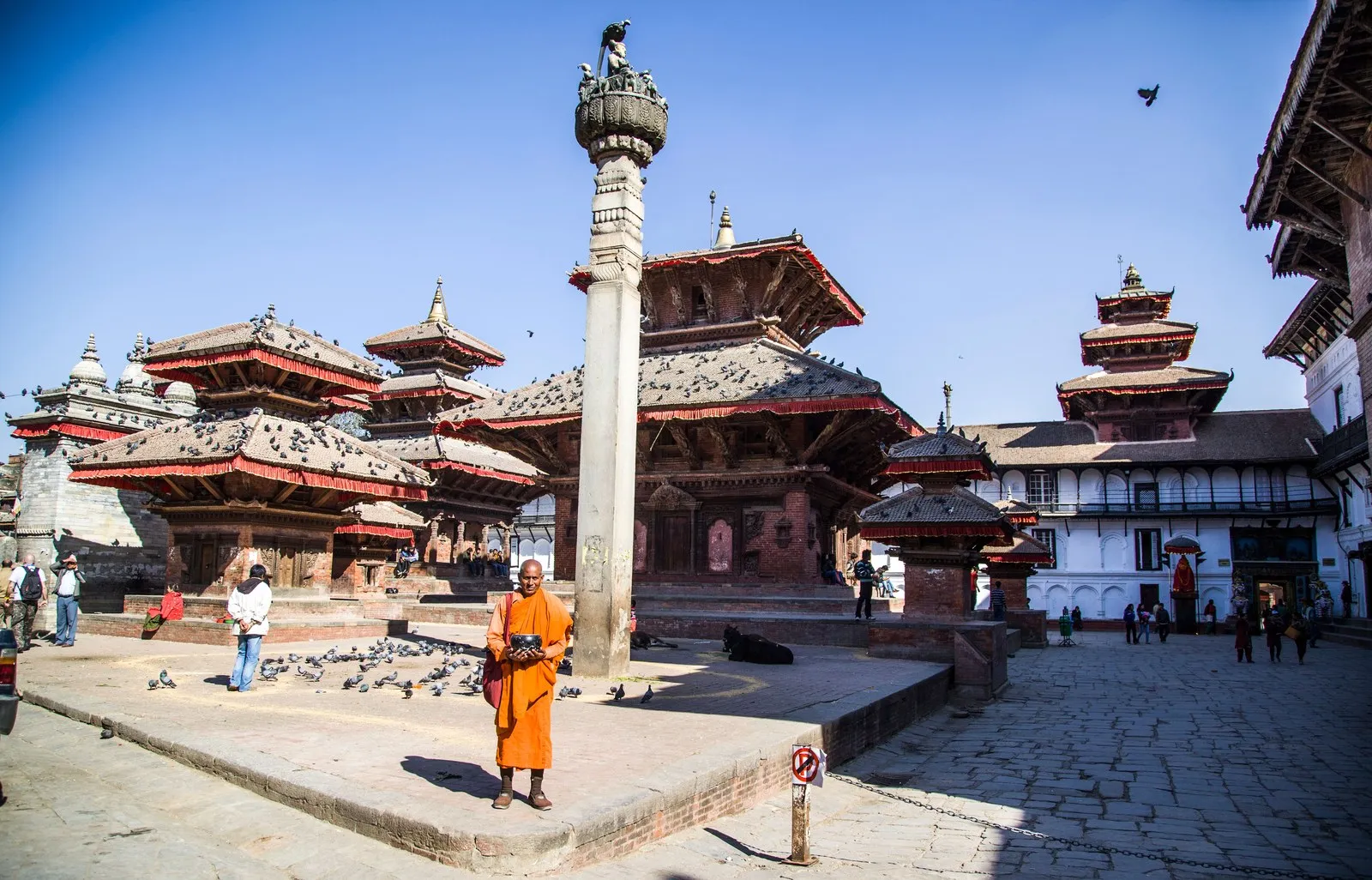
  14. A monk and visitors at the Jagannath temple, Kathmandu Durbar Square

    14

    Departure

    Departure

    After breakfast, the transfer to Kathmandu airport for your flight home, or on to your next journey.

Like the route? We will write it for your dates.

The price

What the price covers

The commonest reason travellers abandon an enquiry is not knowing what is covered. Every Rang Travels quotation itemises it — this is the usual shape for this journey.

Included

  • 13 nights: hotels in Kathmandu and Pokhara with breakfast, and simple village lodges on the trek
  • The flights Kathmandu – Pokhara, Pokhara – Jomsom and Pokhara – Kathmandu
  • A trekking guide and porters from Jomsom to Beni, and the transfer by road from Beni back to Pokhara
  • The Annapurna Conservation Area permit
  • Local guides for the sightseeing in the Kathmandu Valley
  • Airport transfers, and a private car for the sightseeing in Kathmandu and Pokhara

Not included

  • International flights
  • Lunches and dinners
  • Monument and temple entrance fees
  • Nepal visa and tips
  • Travel insurance — it must cover trekking at altitude and emergency evacuation

Price on request

Quoted to your dates,
your hotels and your pace

Before you book

The trek, the altitude and the Jomsom flights

Nothing on this trek needs climbing skills, but it is a real walk in high country. Please read these before you confirm.

Fitness and altitude

  • The trek is seven walking days on mountain paths, most of them four to six hours, with steep climbs above Kagbeni and a steep descent to Ghasa. You need to be able to walk for several hours a day, several days in a row; regular walks in hilly country before you come are the best preparation.
  • Muktinath (3,795 m) is high. Altitude can affect anyone above about 2,500 m, however fit. Go up slowly, drink plenty, avoid alcohol on the way up, and tell your guide at once about a headache, nausea, dizziness or breathlessness; the remedy is to go down.
  • The day from Kagbeni to Ranipauwa gains almost 900 metres — quicker than the usual advice once you are above 3,000 m — though it is the only night that high, and you start down the next morning. If you would like to take it more slowly, ask us to add a night at Jharkot to break the climb.
  • If you have a heart or lung condition, or have been unwell at altitude before, please talk to your doctor before you book.

Permits and visa

  • The Annapurna Conservation Area permit you need for the trek is arranged for you with your booking.
  • Nepal gives visas on arrival at Kathmandu airport to most nationalities; check the current rules for your passport before you travel. Indian citizens need no visa.
  • Upper Mustang, north of Kagbeni, is a restricted area with its own permit. This trek does not go into it.

The Jomsom flights

  • The small planes to Jomsom fly only in the morning, and cloud or wind in the gorge can delay or cancel them.
  • The rest day at Tatopani is there for this. If you cannot fly on day five, you fly the next morning and give up the rest day, and the journey still ends on time.
  • Baggage on the mountain flights is weighed strictly. Pack for the trek in one soft bag; what you do not need on the trail can wait in Pokhara, where you return on day twelve.

Porters and lodges

  • Porters carry your main bag from Jomsom to Beni. You carry a day pack: water, a warm layer, a waterproof, sun cream and your camera.
  • Keep the bag light — it goes on a porter’s back, over the same paths you walk.
  • On the trek you stay in village lodges run by local families: simple rooms, and a warm dining room at the end of the day.

Questions

Before you go

The questions travellers ask about this journey, answered from the itinerary itself. Anything else — ask, and a curator replies.

When is the best time to go?

October and November, when the monsoon has cleared the air, and March to May, when the rhododendrons flower in the forests below Ghasa. The upper valley lies in the rain shadow, but from June to September the monsoon brings rain and landslides to the lower trail, and the Jomsom flights are least reliable.

How fit do I need to be?

Fit enough to walk four to six hours a day on mountain paths, with steep climbs and descents, for a week. No climbing skills are needed, and porters carry your bags.

Will the altitude affect me?

It can affect anyone, whatever their fitness. Muktinath is the highest point and the only night that high, and you start down the next morning. Walk slowly, drink plenty, and tell your guide about any headache, nausea or breathlessness — the remedy is to go down.

Do I need a visa for Nepal?

Most nationalities can get a visa on arrival at Kathmandu airport; check the current rules for your passport before you travel. Indian citizens do not need one.

What should I wear at the temples?

Cover your shoulders and knees, take off your shoes where you are asked to, and walk clockwise round stupas and prayer wheels. Only Hindus may enter the main temple at Pashupatinath, and the Kumari may not be photographed.

Can I add days?

Yes. A night at Jharkot eases the climb to Muktinath, and a night at Nagarkot on the valley rim, for sunrise over the Himalaya, or two nights in Chitwan National Park fit well at the end. Ask, and we will write them in.

The gallery

On the road

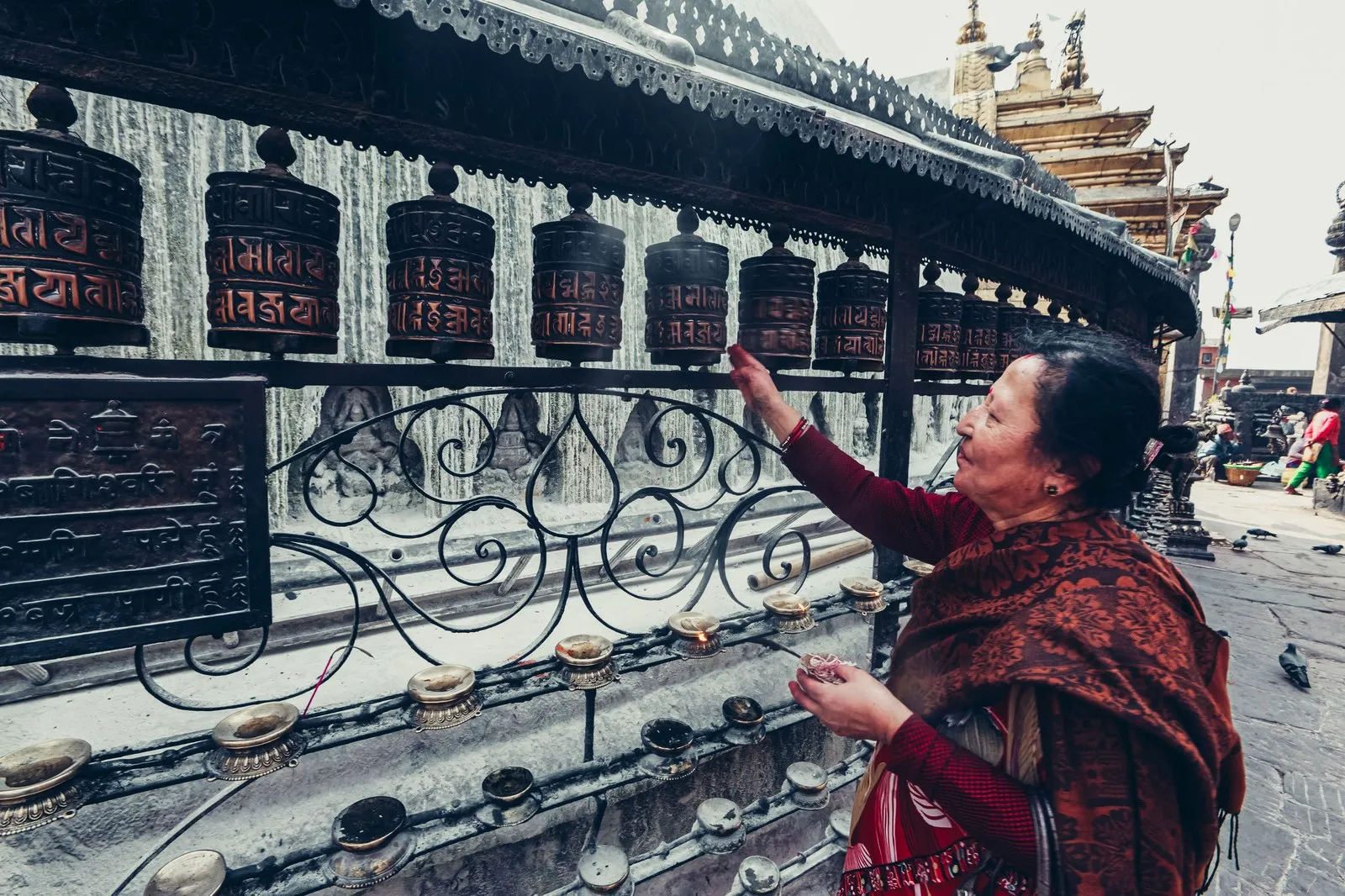
  • A woman turning the prayer wheels at Swayambhunath
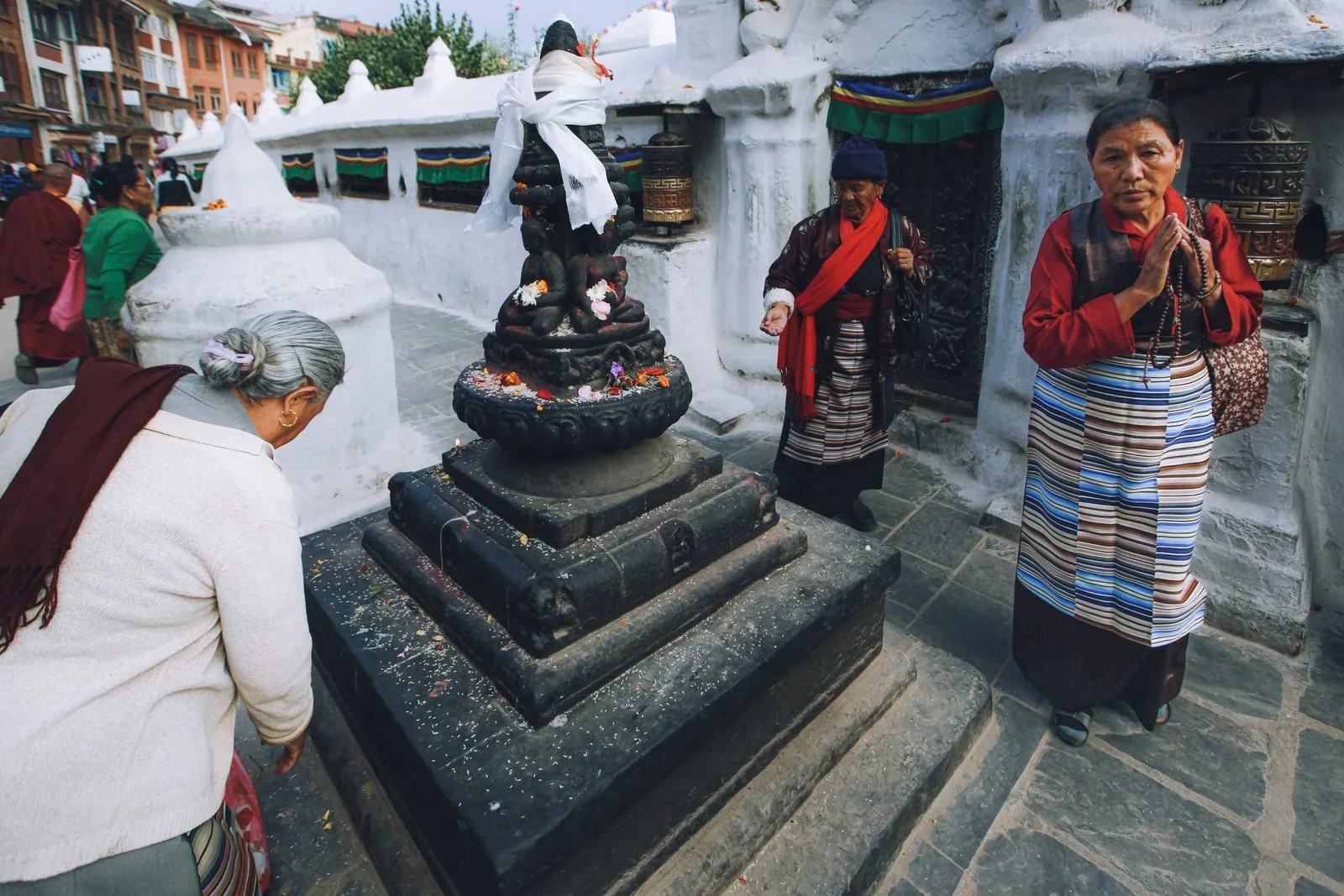
  • Tibetan women at prayer beside a shrine at Boudhanath
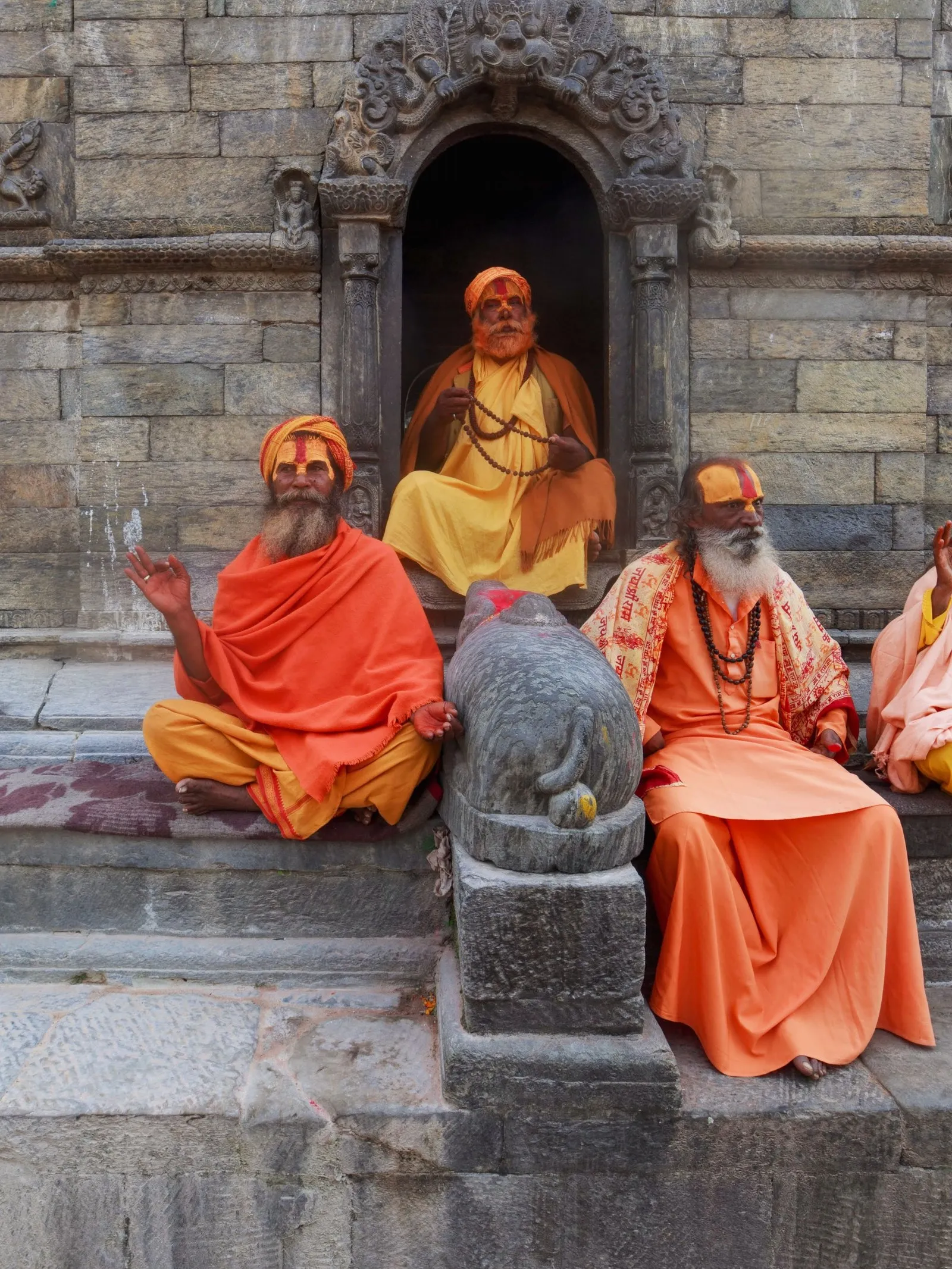
  • Sadhus in saffron at a shrine at Pashupatinath
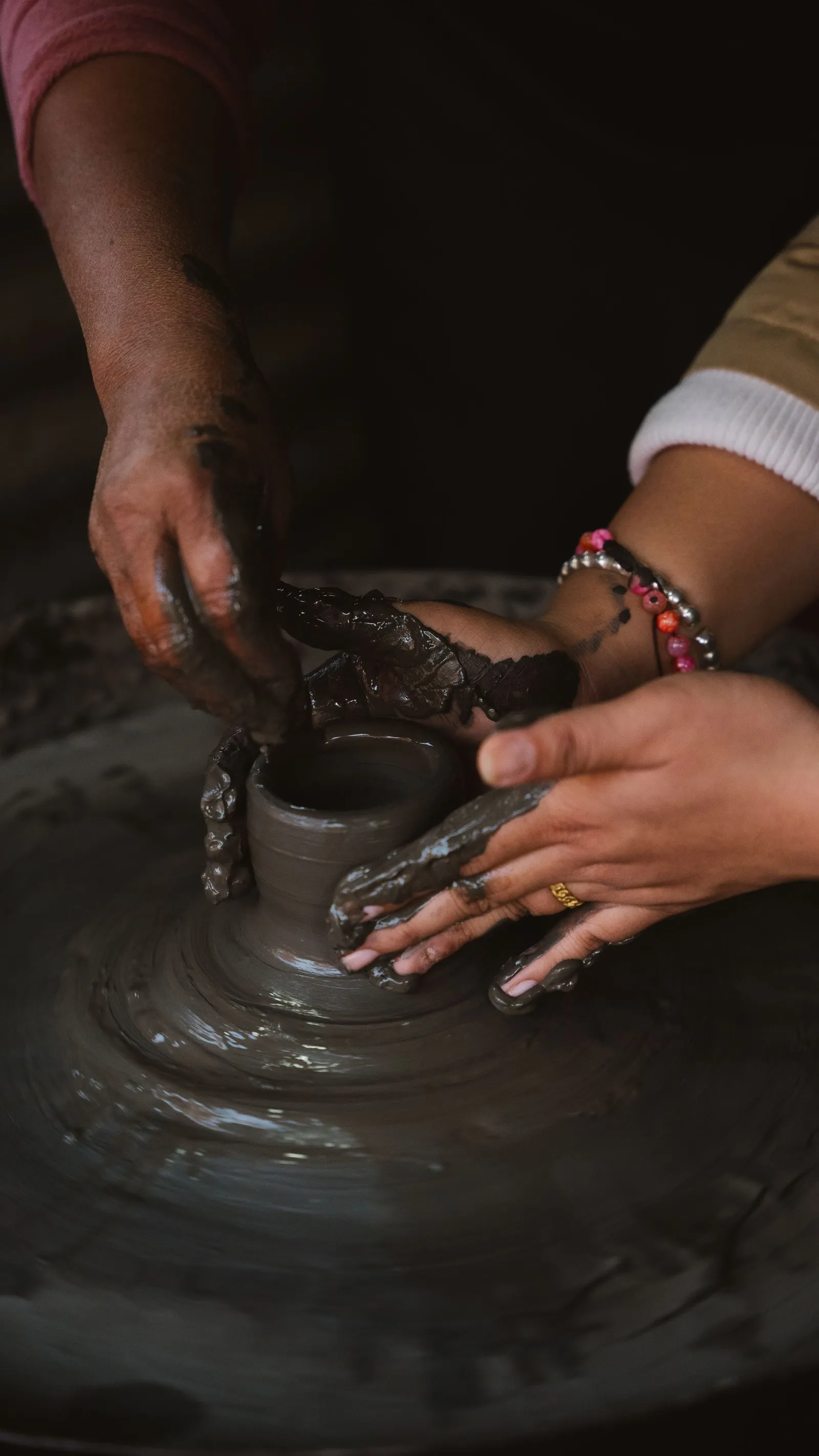
  • Hands shaping a pot on the wheel in Bhaktapur
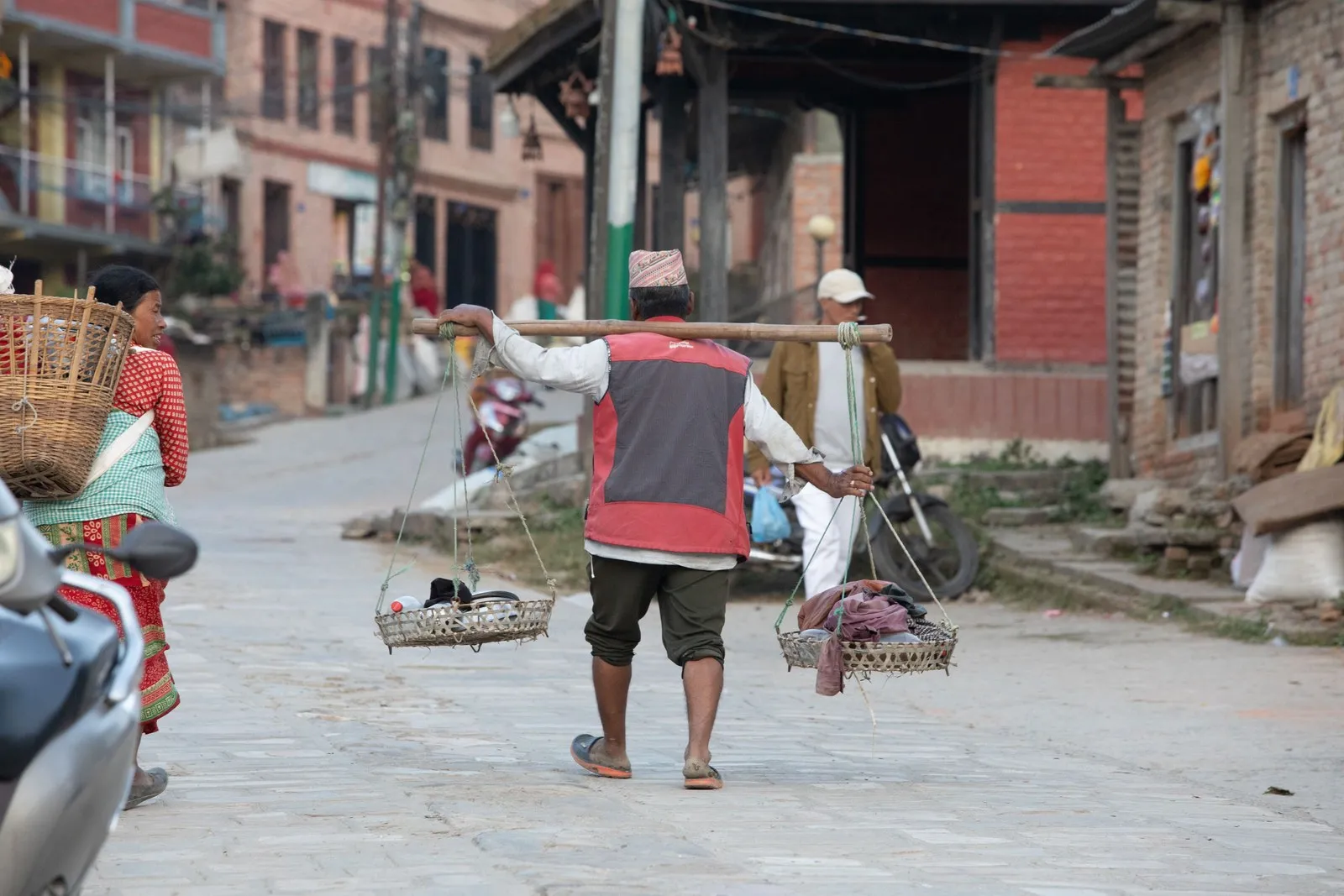
  • A porter with a carrying pole in a Bhaktapur street
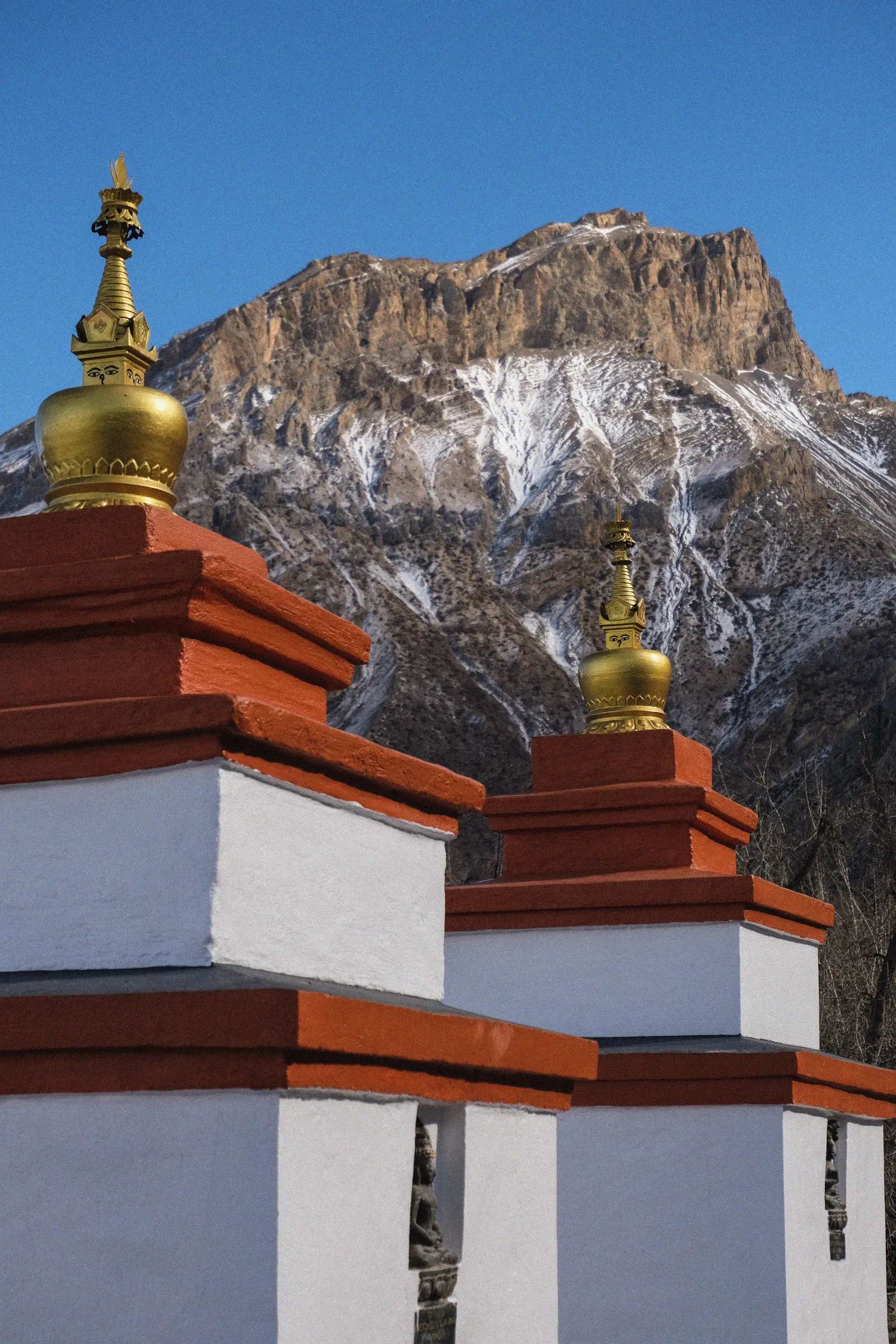
  • Two chortens with gilded spires at Muktinath
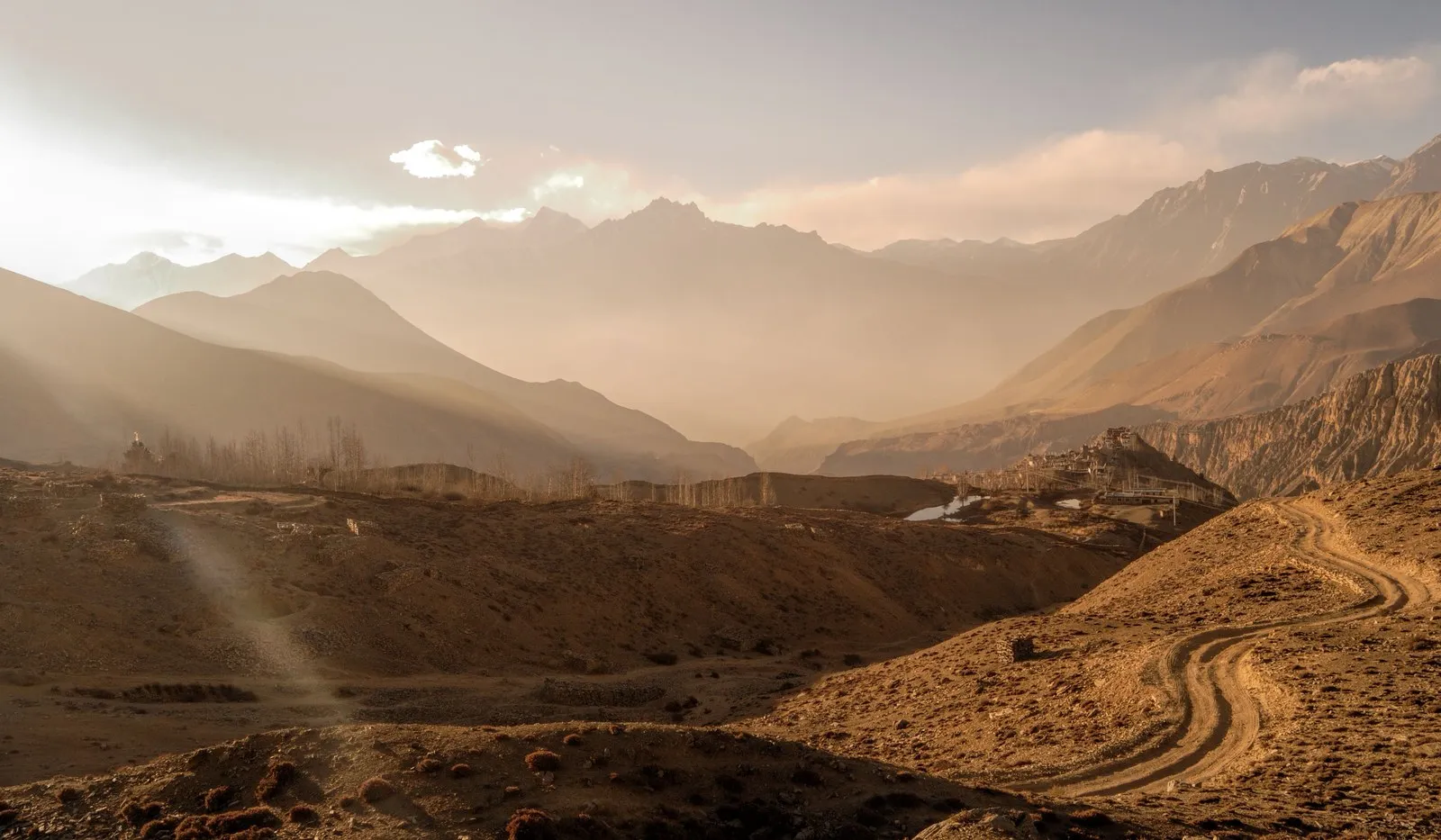
  • Evening light over the dry hills around Jomsom

Reviews

In their own words

Word for word, several in Italian, because Italy found us early. 5.0 from 146 reviews on Google, and 5.0 from 200 on TripAdvisor.

I had an incredible adventure with Rang Travels in Northern India earlier this year! The tour was jam packed. I loved the beautiful forts and buildings we visited, the markets, as well as the stunning World Heritage hotels. This tour gave me a real taste for India, and I felt very comfortable for my first time visiting!

Read the whole review on Google

Jess Foster

Northern India · May 2025

1 / 19

Enquire

Plan my journey

Tell us where your India begins — we reply with a written itinerary.

Travellers
When, roughly
Interests
Or ask on WhatsApp

No obligation. We reply with a written itinerary, not a sales call.