Rang Travels — explore the colors of India
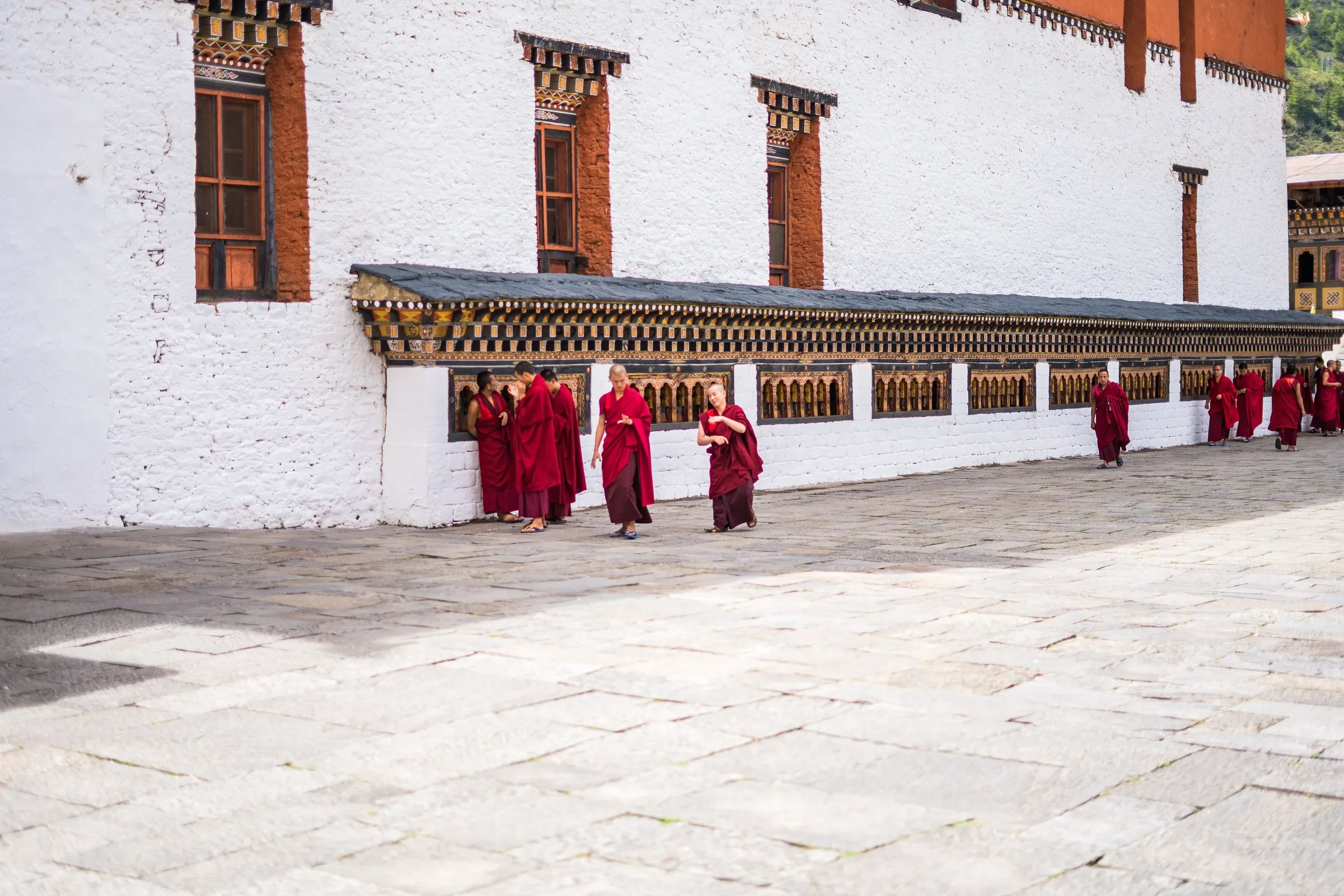
Monks walking past a long wall of prayer wheels in a dzong courtyard, Bhutan

Spiritual · Heritage · Himalaya

Glimpses of Bhutan

Thimphu, Punakha over Dochu La, and the walk to the Tiger’s Nest above Paro

See the day-by-day
Duration
7 days · 6 nights
Halts
3
Paro to Paro
Best months
March – May · September – November
Price
On request
quoted to your dates

The journey

A week in western Bhutan: Thimphu’s dzong and craft schools, Punakha Dzong over the Dochu La pass, and the walk to the Tiger’s Nest above Paro.

Seven days is the shortest good way into Bhutan, and this is the classic route through the west of the country. It begins in Thimphu, a capital that still directs its traffic by hand; crosses Dochu La to Punakha, the old capital, in its warm valley of rice terraces; and ends in Paro, where the international airport and the country’s most famous monastery share one valley. The pace is gentle, and every day holds one thing worth the journey on its own.

You see the dzongs as working buildings, not museums: Tashichho Dzong, which holds the king’s throne room and the summer seat of the chief abbot, and Punakha Dzong at the meeting of two rivers, where the monk body spends the winter. Between them come the smaller places that make Bhutan — the Memorial Chorten, circled all day by the city’s elders; Chimi Lhakhang across the rice fields; a nunnery on a pine ridge. The last full day is the climb to the Tiger’s Nest, the monastery on the cliff above Paro.

Highlights

What you will remember

  • Tashichho Dzong in the evening, and Thimphu’s Craft Bazaar

  • The Memorial Chorten, Buddha Dordenma and the painting school in Thimphu

  • Over Dochu La and its 108 chortens to Punakha

  • Punakha Dzong, where the Pho Chhu and the Mo Chhu meet

  • Chimi Lhakhang and the Khamsum Yulley chorten, through the rice fields

  • Rinpung Dzong, the National Museum and Kyichu Lhakhang in Paro

  • The walk to the Tiger’s Nest, on its cliff above the Paro valley

The route

4 halts, in order

  1. Paro
  2. Thimphu2 nights
  3. Punakha2 nights
  4. Paro

Experiences

The moments it is built around

Everything else on this page is logistics. These are the reasons to come.

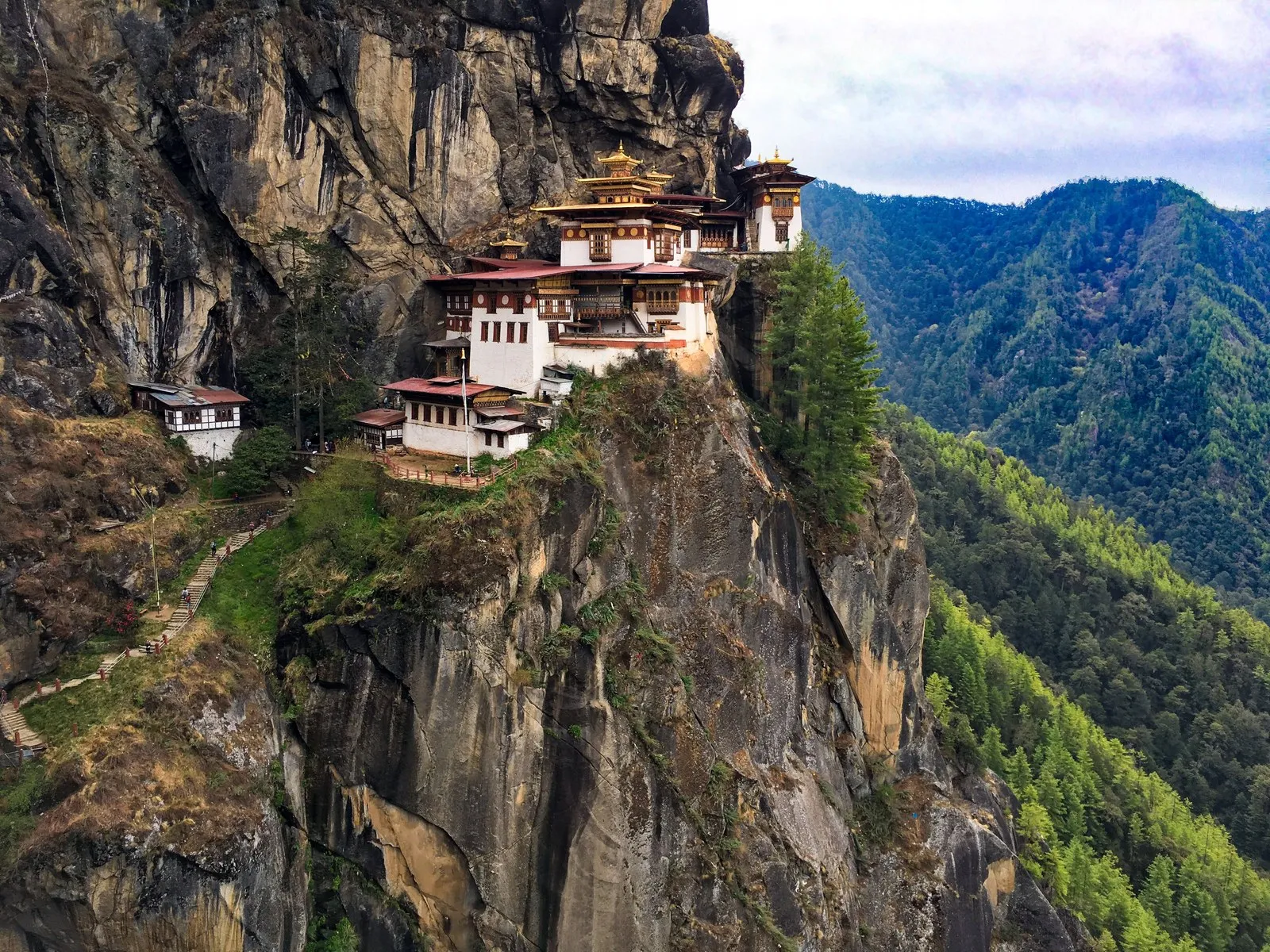
  • The Tiger’s Nest monastery on its cliff above the Paro valley, seen from the trail

    The Tiger’s Nest

    Two hours up through the pines to the viewpoint, with Taktsang fixed to the cliff across the gorge.

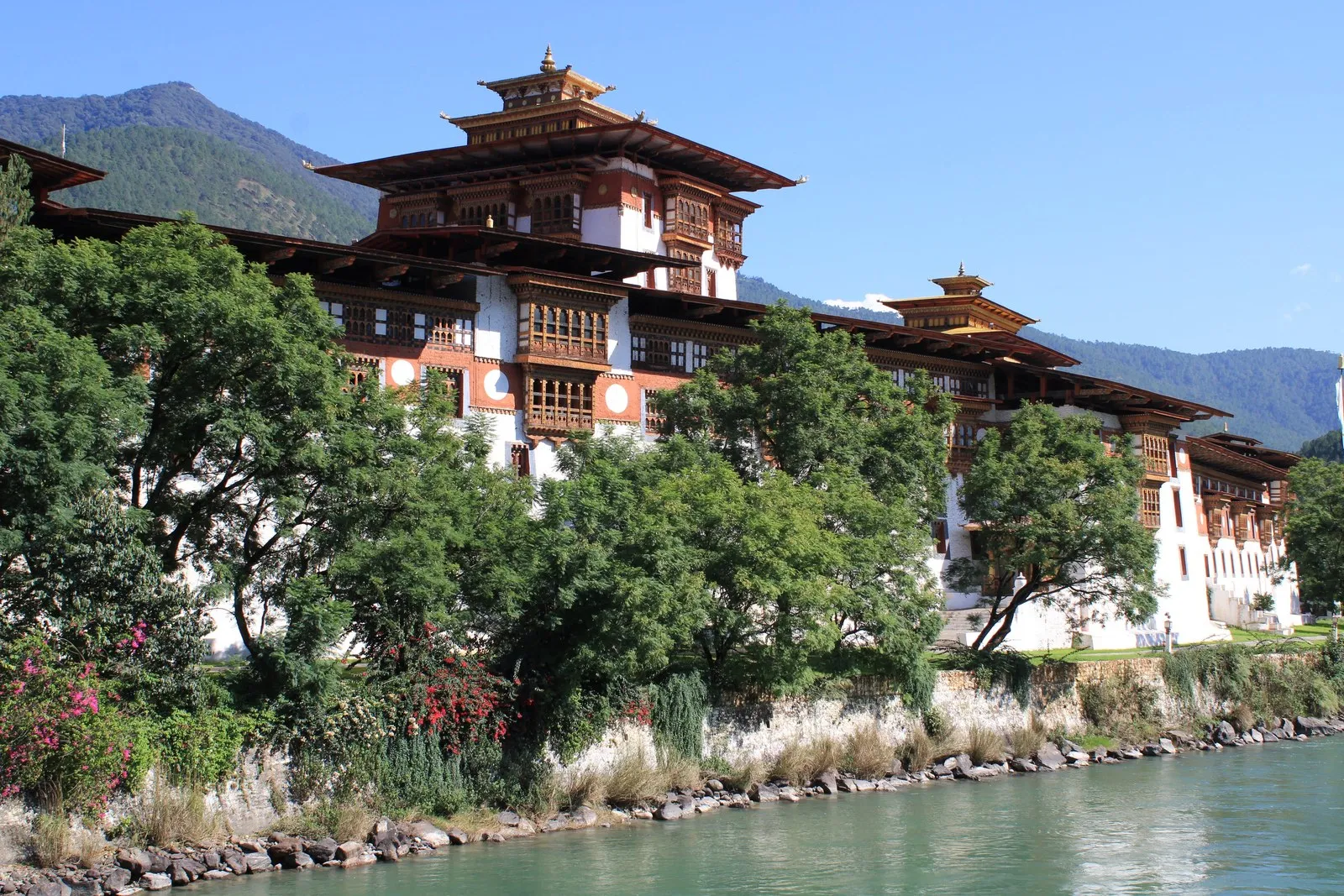
  • Punakha Dzong above the river, behind a line of trees

    Punakha Dzong

    Built in 1637 where the Pho Chhu and the Mo Chhu meet, and still the monk body’s winter home.

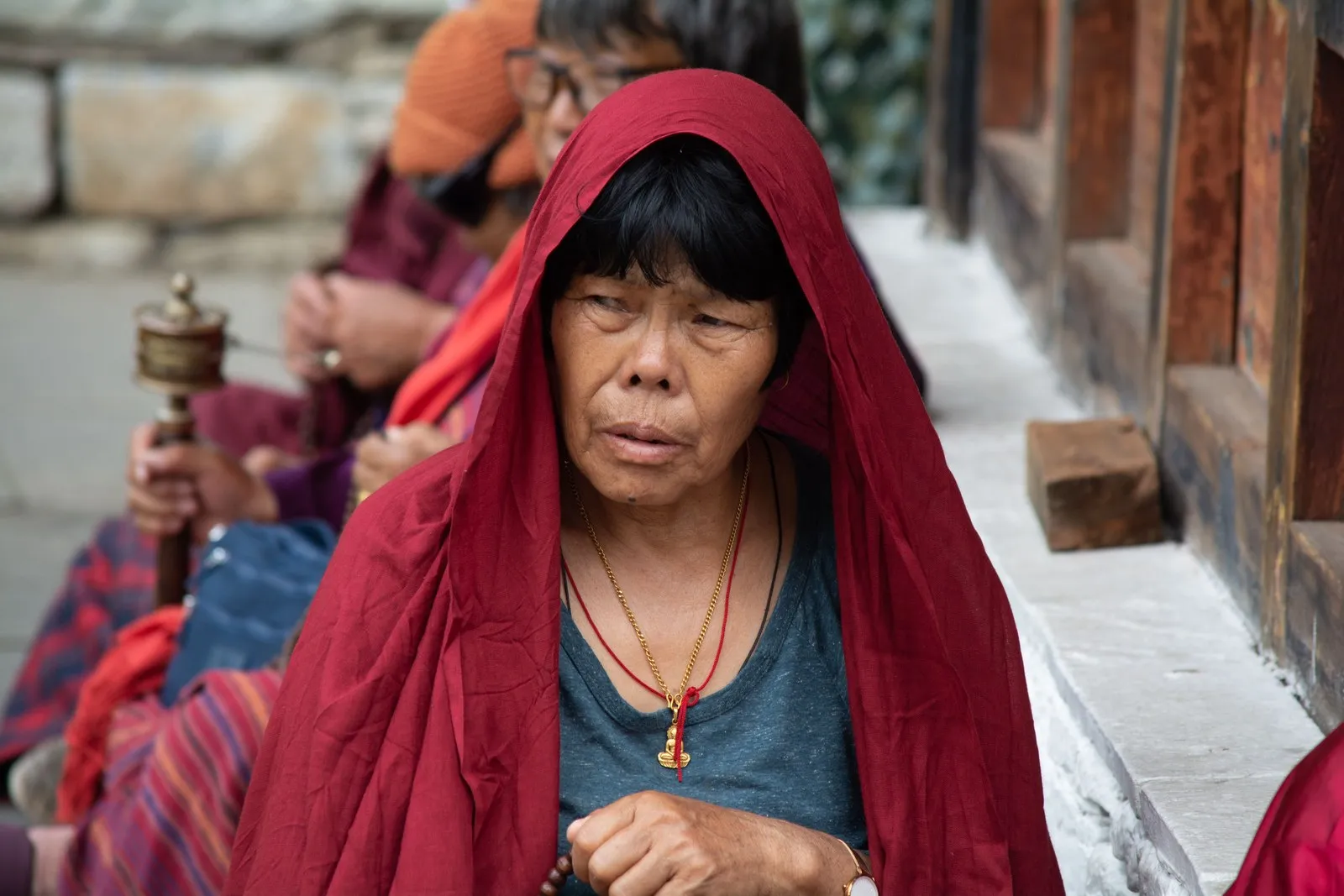
  • An elderly woman in a red shawl holding a hand prayer wheel, Thimphu

    Thimphu’s prayer wheels

    The city’s elders circle the Memorial Chorten all day, turning prayer wheels as they walk.

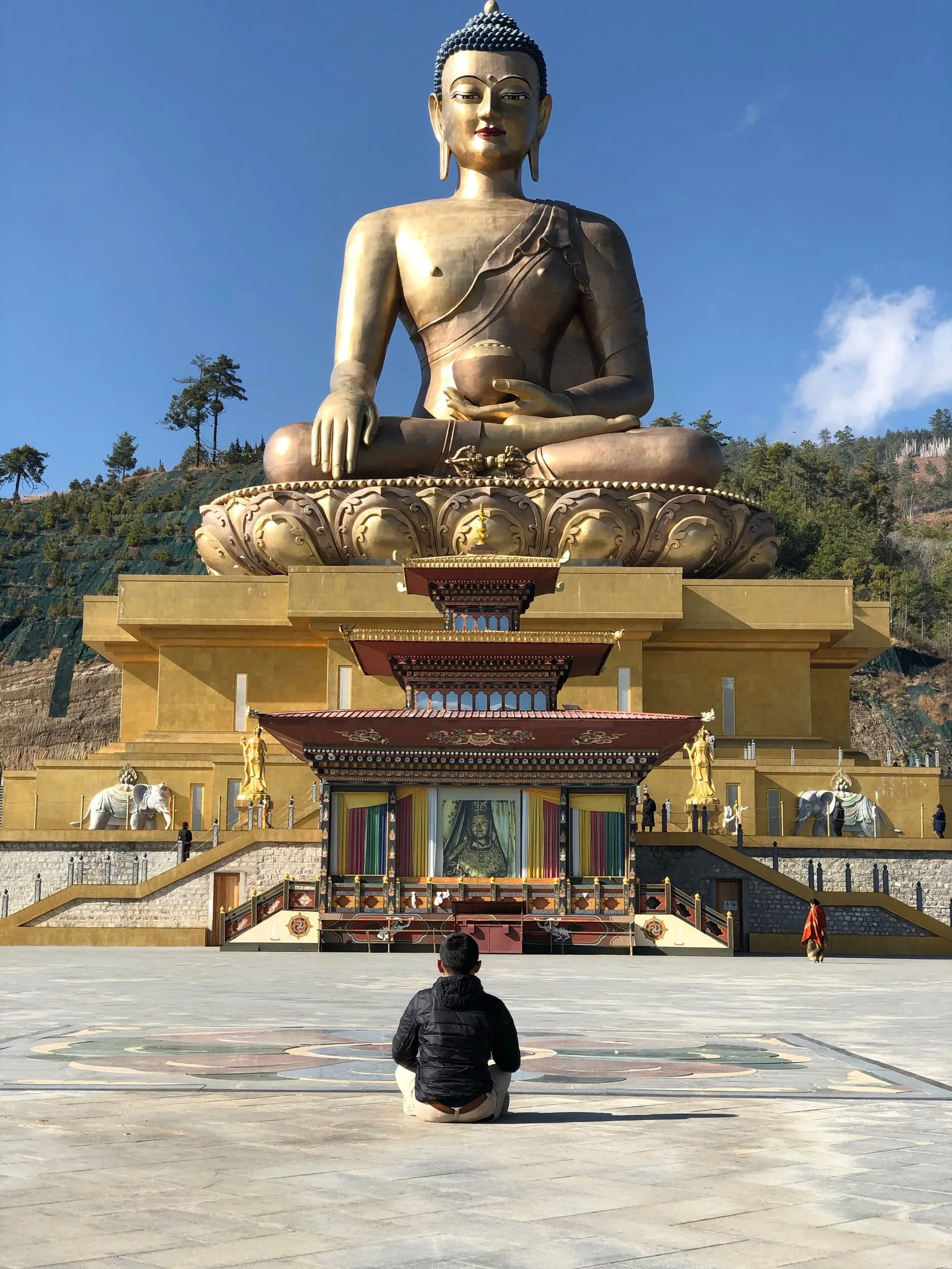
  • A man seated in prayer before Buddha Dordenma above Thimphu

    Buddha Dordenma

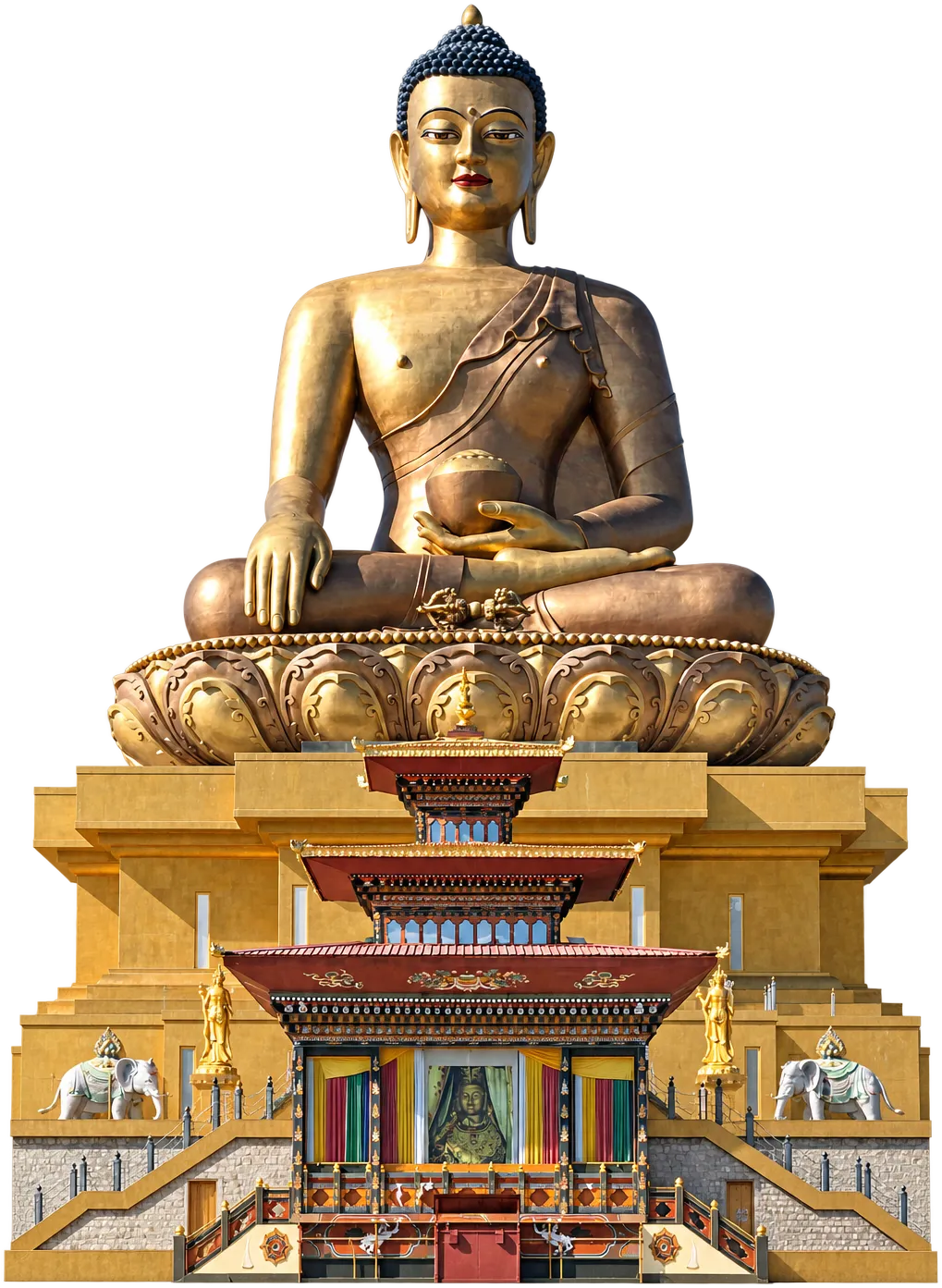
    A seated bronze Buddha, the largest statue in Bhutan, looking down the Thimphu valley.

The gilded Buddha Dordenma on its lotus throne above the temple beneath it, Thimphu

Spiritual · Heritage · Himalaya

Thimphu, Punakha over Dochu La, and the walk to the Tiger’s Nest above Paro

7 days, 6 nights

The route, day by day

Every halt, every overnight and every drive, published in full.

  1. Paro
  2. Thimphu
  3. Punakha
  4. Paro
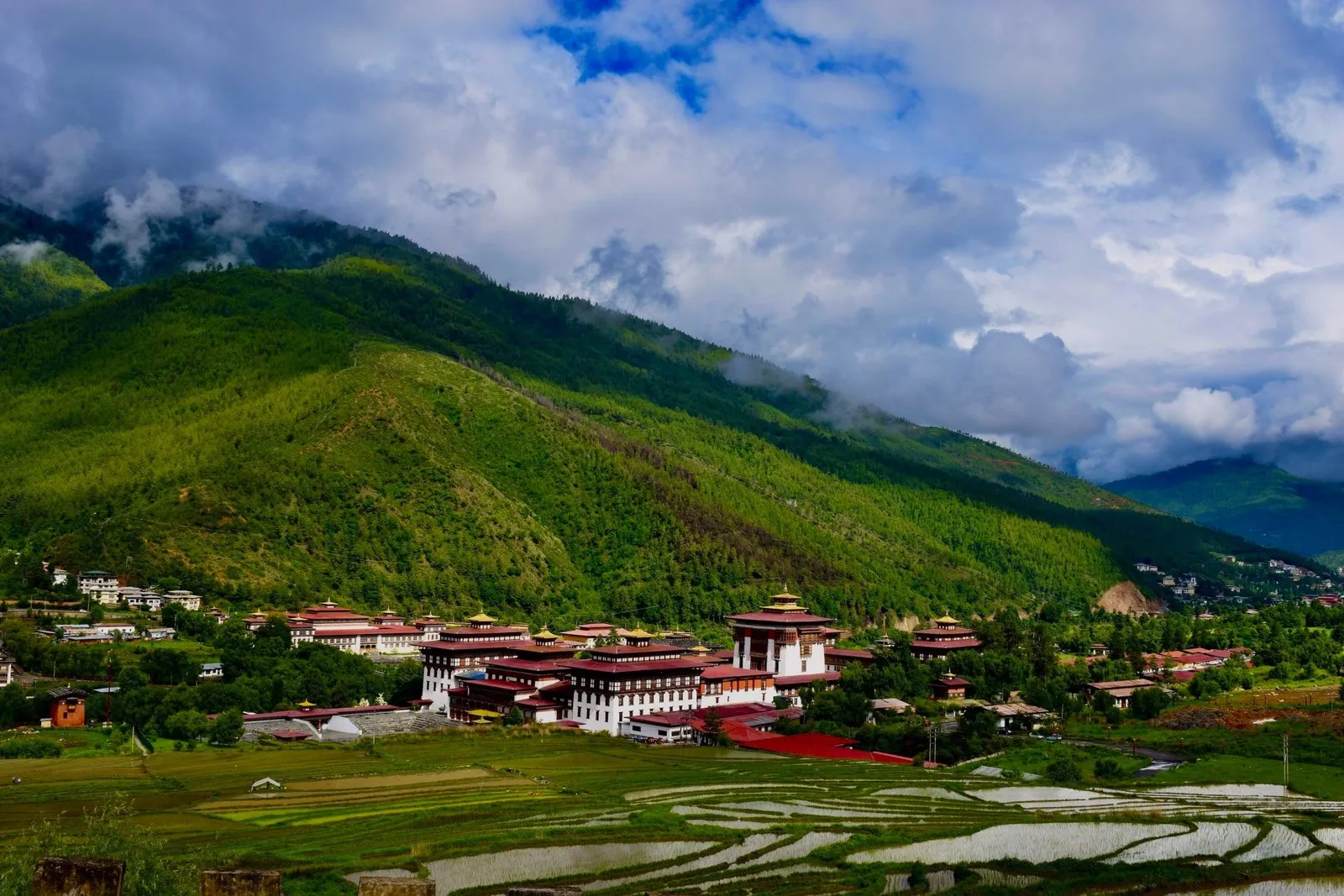
  1. Tashichho Dzong below forested hills, rice terraces in front, Thimphu

    01

    Overnight Thimphu

    50 km · about 2 hrs

    Paro, and on to Thimphu

    The flight into Paro is one of the great arrivals in the Himalaya. On a clear day the snow peaks run along the window before the plane turns between forested ridges and drops into the valley, and the first thing you notice on the tarmac is the air: cool, thin and clean. Met at the airport, you drive down the Paro river and up the Thimphu river to the capital.

    Thimphu is the seat of government, the summer home of the monk body and the country’s commercial centre, and it still has no traffic lights: at the main junction a policeman in white gloves directs the cars by hand. Before dark, walk the Craft Bazaar, a few minutes from the hotels, where the stalls sell work made in Bhutan — handwoven textiles, bamboo, wooden masks and handmade paper.

    End the day at Tashichho Dzong, the ‘fortress of the glorious religion’, which opens to visitors on weekdays once the offices close. It holds the king’s throne room and government offices, and in summer it is the seat of the Je Khenpo, the chief abbot. The Zhabdrung Ngawang Namgyal, who unified Bhutan, built it in 1641; it was rebuilt in the 1960s in the traditional way, without nails or written plans.
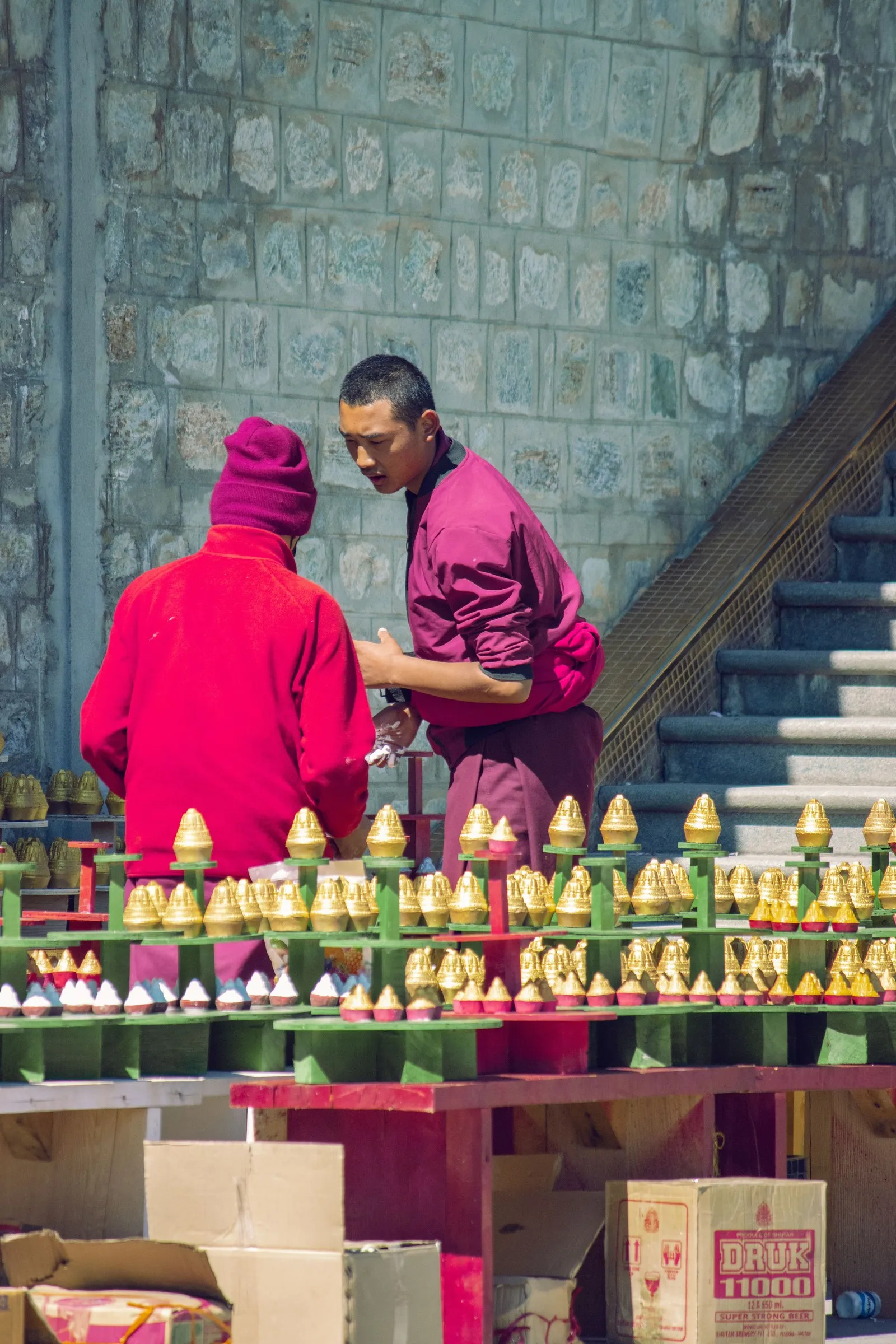
  2. Two monks setting out butter-lamp offerings in Thimphu

    02

    Overnight Thimphu

    Thimphu: weaving, scripture and the great Buddha

    A full day in the capital, starting with its crafts. At the Royal Textile Museum you learn to read Bhutan’s living national art: the weaving techniques, the regional patterns, and the gho and kira still worn every day. The National Library keeps the country’s history in manuscripts and old texts, along with the woodblocks used to print prayer flags. At the Institute for Zorig Chusum — the thirteen crafts — students train for up to six years in painting, carving, sculpture and embroidery; if the school is closed for exams or holidays, we visit Zangtho Pelri Lhakhang and its murals instead.

    In the afternoon, the Memorial Chorten, built in 1974 for the third king, Jigme Dorji Wangchuck, the father of modern Bhutan, and circled all day by elders turning prayer wheels. Then up to Kuensel Phodrang and Buddha Dordenma, the largest statue in the country, for the view over the whole valley, and finally Changangkha Lhakhang, a fifteenth-century temple on its ridge whose main image is Chenrezig, eleven-headed and thousand-armed. Families still bring their newborn children here for a blessing.

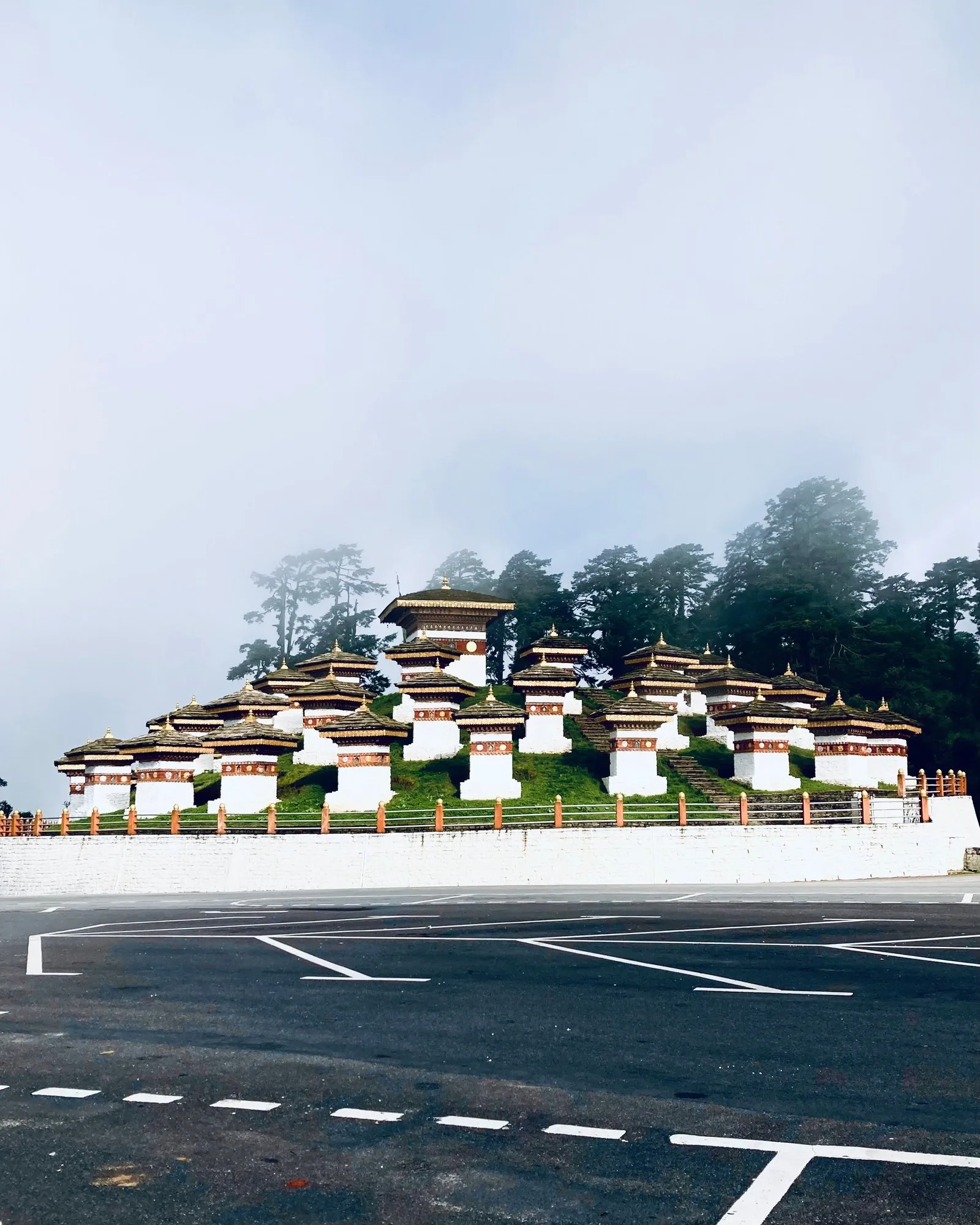
  3. The 108 chortens of Dochu La in morning mist

    03

    Overnight Punakha

    75 km · about 3 hrs

    Over Dochu La to Punakha

    East out of the valley and up to Dochu La, the pass at over 3,000 metres where 108 chortens stand on a knoll among the prayer flags. On a clear day the snow peaks of the eastern Himalaya line the northern horizon; on a misty one the chortens come and go in the cloud.

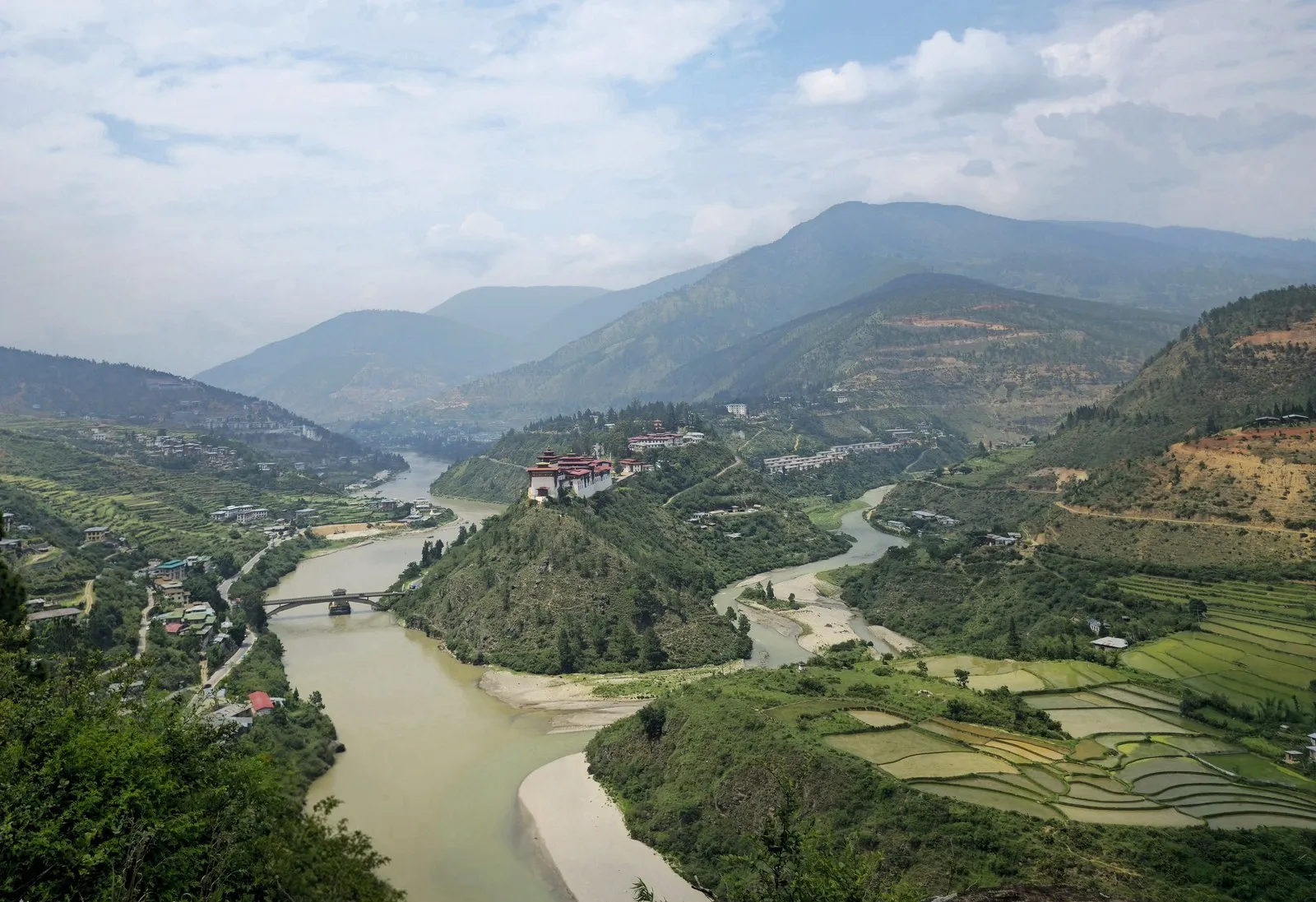
    Then the long descent into Punakha, the old capital, lower and warmer than Thimphu or Paro, with rice terraces in place of pine. Punakha Dzong, the ‘palace of great happiness’, stands at the meeting of the Pho Chhu and the Mo Chhu. The Zhabdrung built it in 1637; the Je Khenpo and the monk body spend the winter here, and though fire, flood and earthquake have damaged it over the centuries, it has been rebuilt each time.

    Later, a twenty-minute walk from the road at Sopsokha, across the rice fields and through the hamlet of Pana, to Chimi Lhakhang. Drukpa Kunley, the Divine Madman, subdued the demoness of Dochu La on this spot; the temple built here in 1499 keeps a wooden effigy of his ‘thunderbolt of wisdom’, and couples who hope for a child come for his blessing.

  4. The Punakha valley from above: rice terraces along the river and the dzong at the confluence

    04

    Overnight Punakha

    The Punakha valley

    A day in the valley, at whatever pace suits you: a visit to a farming village to see rural Bhutan at home, or longer walks between villages. On a pine ridge looking over Punakha and Wangdue Phodrang stands the Sangchhen Dorji Lhuendrup nunnery, where the nuns study and meditate and also learn tailoring, embroidery, statue-making and thangka painting. Then on to Talo, a monastery founded in 1767 on the hillside above the valley.

    The walk of the day climbs to Khamsum Yulley Namgyal Chorten, which the Queen Mother built over nearly ten years in the 1990s and dedicated to the king and the wellbeing of the country. It is about half an hour’s drive north of town, then some 45 minutes up through the rice fields and 30 down; after rain the path is muddy. Birdwatchers can walk on for about two hours along the river, through farmland and the village of Sonagasa, back towards the dzong.

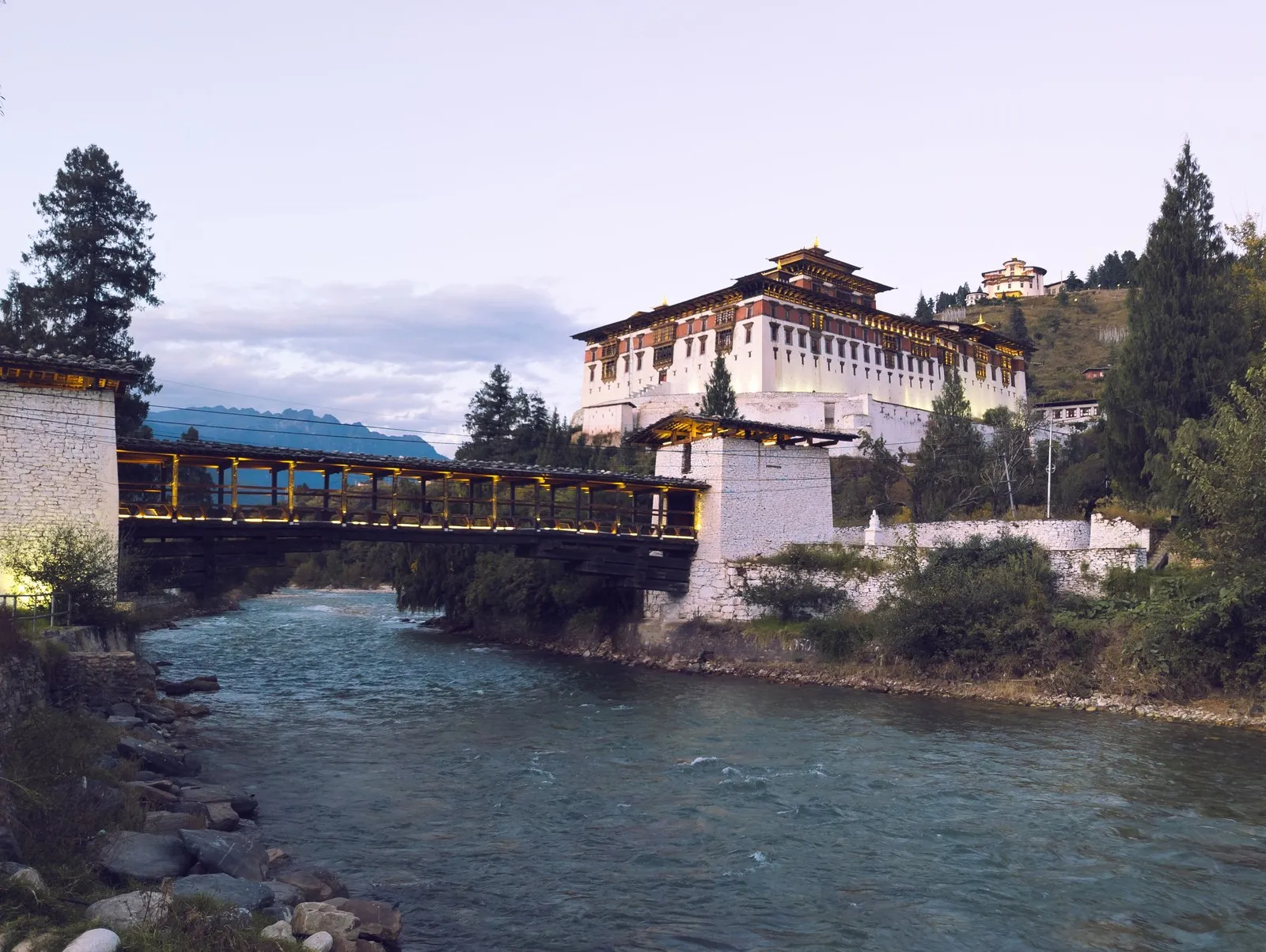
  5. Rinpung Dzong above the Paro river, with the covered bridge in front, at dusk

    05

    Overnight Paro

    115 km · about 4 hrs

    Back over the pass to Paro

    Back west over Dochu La, with lunch in Thimphu and a last chance for souvenirs, then down to Paro. Before the roads were built most of Bhutan’s trade came through this valley, from Tibet over the Tremo La or from the south through Haa. It runs from Jomolhari on the Tibetan border down to Chuzom, where the Paro river meets the Thimphu river.

    Rinpung Dzong, the ‘fortress on a heap of jewels’, was built by the Zhabdrung in 1646 and still houses the district administration and the monk body. Above it, in the round watchtower of the Ta Dzong, the National Museum keeps a fine collection of thangkas, the painted and embroidered religious hangings, and the Tshogshing Lhakhang, the temple of the tree of wisdom. In the evening, cross the covered bridge with your guide and walk into the town, past the chortens by the river and the walls of the Ugyen Pelri palace.

  6. The Tiger’s Nest monastery on its cliff above the Paro valley, seen from the trail

    06

    Overnight Paro

    The Tiger’s Nest

    An early start for the Tiger’s Nest, Taktsang, which means ‘tigress’ lair’. The eighth-century Indian master Guru Rinpoche is said to have been carried up here on the back of a disciple who had taken the form of a tigress, to meditate in a cave in the cliff; the monastery was built around the cave in the late seventeenth century, and it is one of the holiest places in Bhutan. It hangs on the rock at about 3,100 metres, some 900 metres above the valley floor.

    The walk to the viewpoint opposite takes about two hours, uphill all the way through pine forest, and is for the reasonably fit; take it slowly and use the rest stops. On the way back, Kyichu Lhakhang, one of the oldest temples in the country, built by the Tibetan king Songtsen Gampo in the seventh century to pin down a demoness who lay across Tibet and the Himalaya, blocking the spread of Buddhism.

    Time allowing, your guide also takes you to Dumtse Lhakhang, built in 1433 by Thangtong Gyalpo, the iron-bridge builder. Its three floors stand for hell, earth and heaven, and its paintings are said to be among the finest in Bhutan.

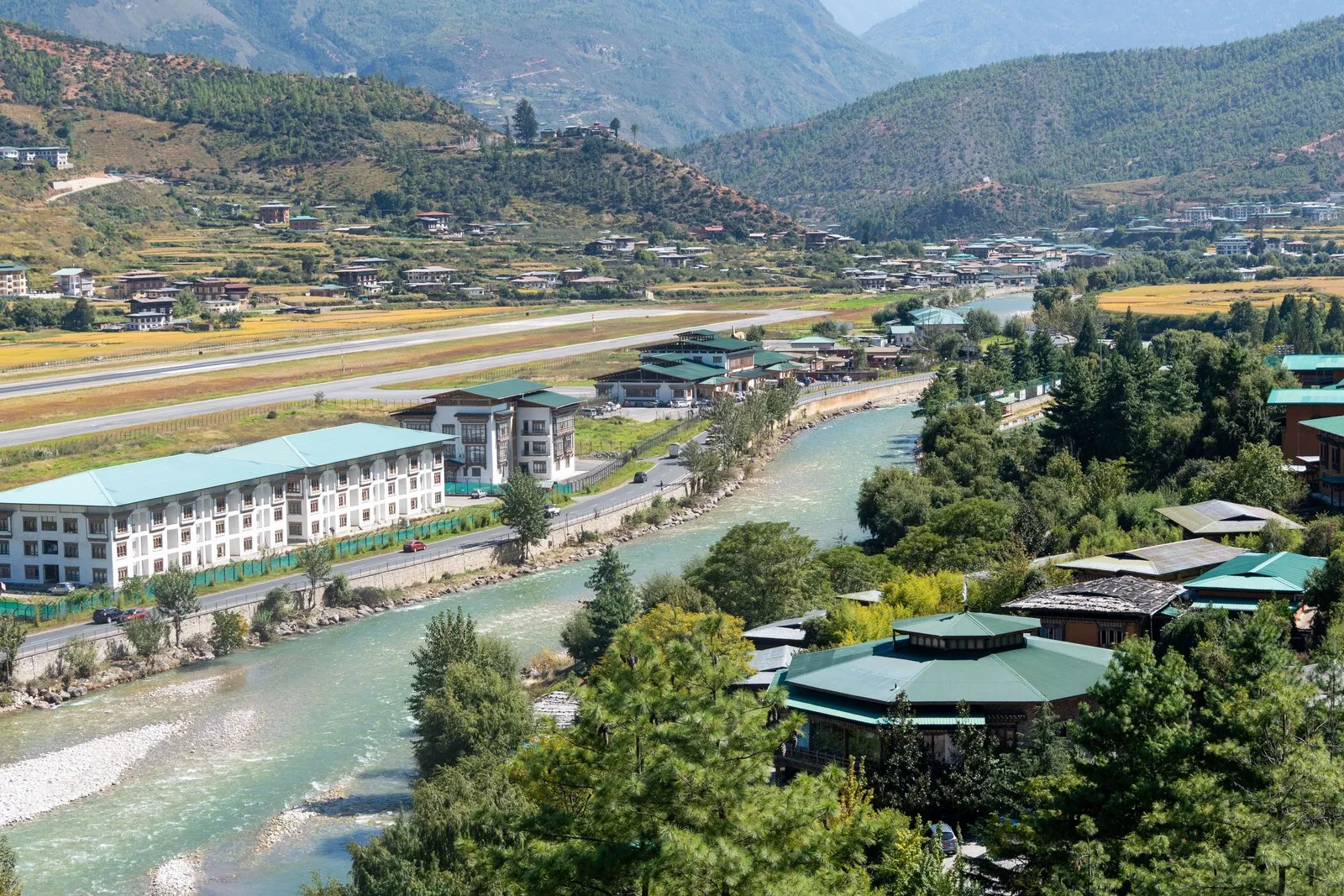
  7. The Paro valley from above, the river and the airport runway below the hills

    07

    Departure

    Departure

    A slow breakfast, then the short drive to Paro airport for your flight onward.

Like the route? We will write it for your dates.

The price

What the price covers

The commonest reason travellers abandon an enquiry is not knowing what is covered. Every Rang Travels quotation itemises it — this is the usual shape for this journey.

Included

  • 6 nights in hotels with breakfast
  • A private car with driver, and a licensed English-speaking Bhutanese guide throughout
  • Your Bhutan visa and the Sustainable Development Fee, arranged with your booking
  • Airport transfers at Paro, and the sightseeing and walks in the programme

Not included

  • Flights to and from Paro
  • Entrance fees at dzongs, temples and museums
  • Lunches and dinners
  • Travel insurance and tips
  • Drinks, laundry and personal expenses

Price on request

Quoted to your dates,
your hotels and your pace

Before you book

Visas, dress and the Tiger’s Nest walk

Bhutan is easy to travel in once a few things are settled. Please read these before you confirm.

Visa and fees

  • Bhutan’s visa and its daily Sustainable Development Fee are arranged through us with your booking.
  • Your passport should be valid for at least six months from the day you arrive.
  • Indian nationals travel on a permit rather than a visa and pay a lower fee; tell us your nationality when you enquire.

At dzongs and temples

  • Wear long sleeves and long trousers or skirts, and take your hat off inside.
  • Photographs are not allowed inside the temples and shrine rooms; your guide will tell you where the line is.
  • Walk clockwise around chortens, temples and prayer wheels.

Opening days

  • The Textile Museum, the National Library and the painting school close at weekends and on government holidays, and the painting school also closes for exams and holidays. We arrange the Thimphu days around them.
  • Tashichho Dzong opens to visitors in the evening on weekdays, when the offices close, and during the day at weekends.

The Tiger’s Nest walk

  • About two hours up to the viewpoint, uphill all the way, and less coming down. You need to be reasonably fit.
  • Wear walking shoes with a good grip and carry water and a warm layer; the path is dusty in dry weather and slippery after rain.

Flights

  • Only Bhutan’s own two airlines fly into Paro, and only in daylight. Weather can delay them, so leave some slack in onward connections.

Questions

Before you go

The questions travellers ask about this journey, answered from the itinerary itself. Anything else — ask, and a curator replies.

When is the best time to go?

Spring, from March to May, when the rhododendrons flower, and autumn, from September to November, when the skies are clearest; many of the tsechu festivals fall in these months. Winter is cold but bright, and the monsoon, from June to August, brings cloud and rain.

How fit do I need to be?

Most of the week is easy. The walk to the Tiger’s Nest viewpoint is the hard day: about two hours uphill, finishing at about 3,000 metres. If that is too much, tell us and we will plan a shorter walk.

Do I need a visa for Bhutan?

Yes, unless you hold an Indian, Bangladeshi or Maldivian passport. The visa and the daily Sustainable Development Fee are arranged through us with your booking; Indian nationals travel on a permit, which we also arrange.

What should I wear?

Layers: in spring and autumn the days are mild and the evenings cool. For dzongs and temples, long sleeves and long trousers or skirts; for the Tiger’s Nest, comfortable walking shoes.

Can I add days?

Yes. The commonest additions are the Phobjikha valley, a few hours east of Punakha, or Bumthang in central Bhutan. Ask, and we will write them in.

The gallery

On the road

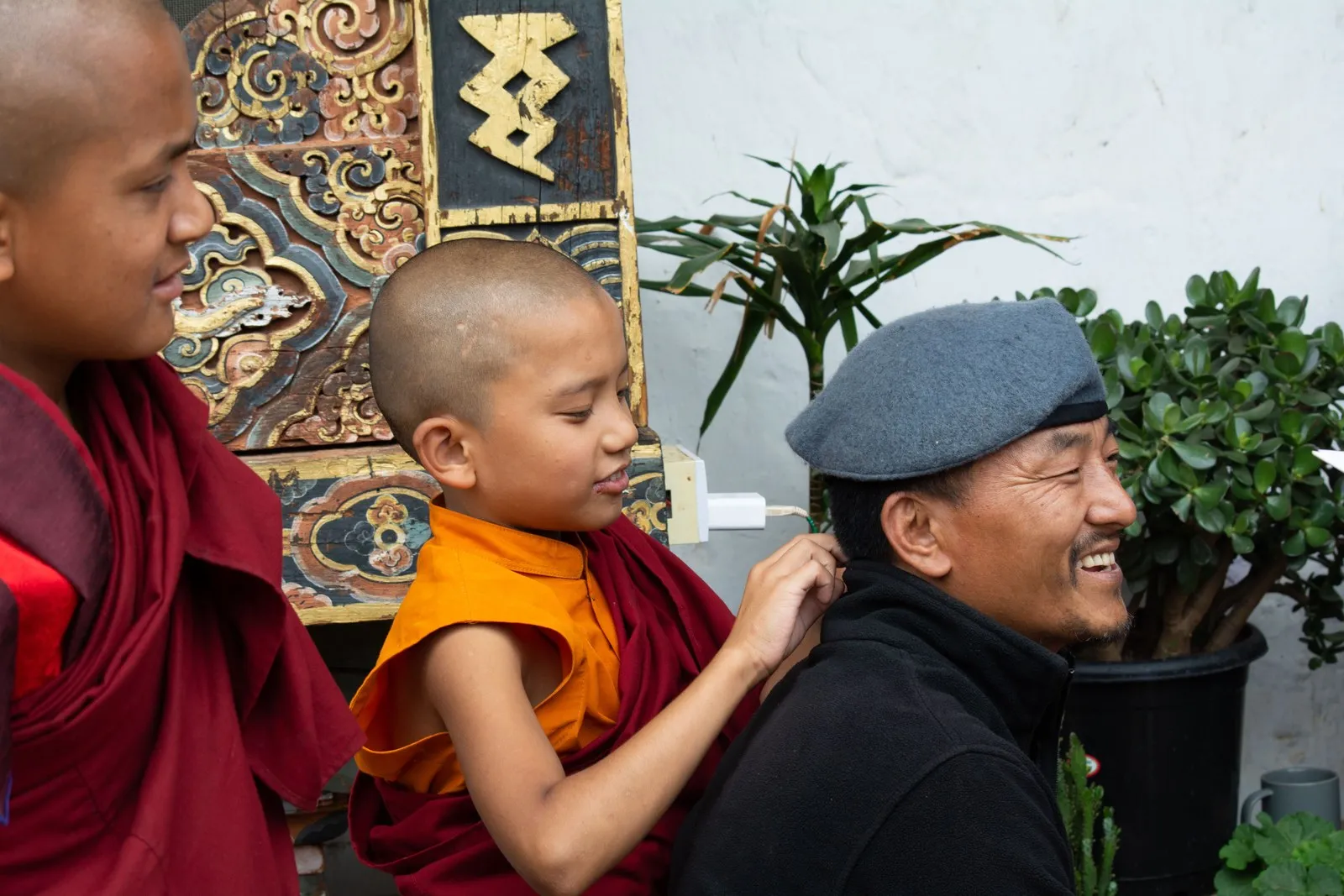
  • A young monk teasing a laughing man in a temple courtyard, Bhutan
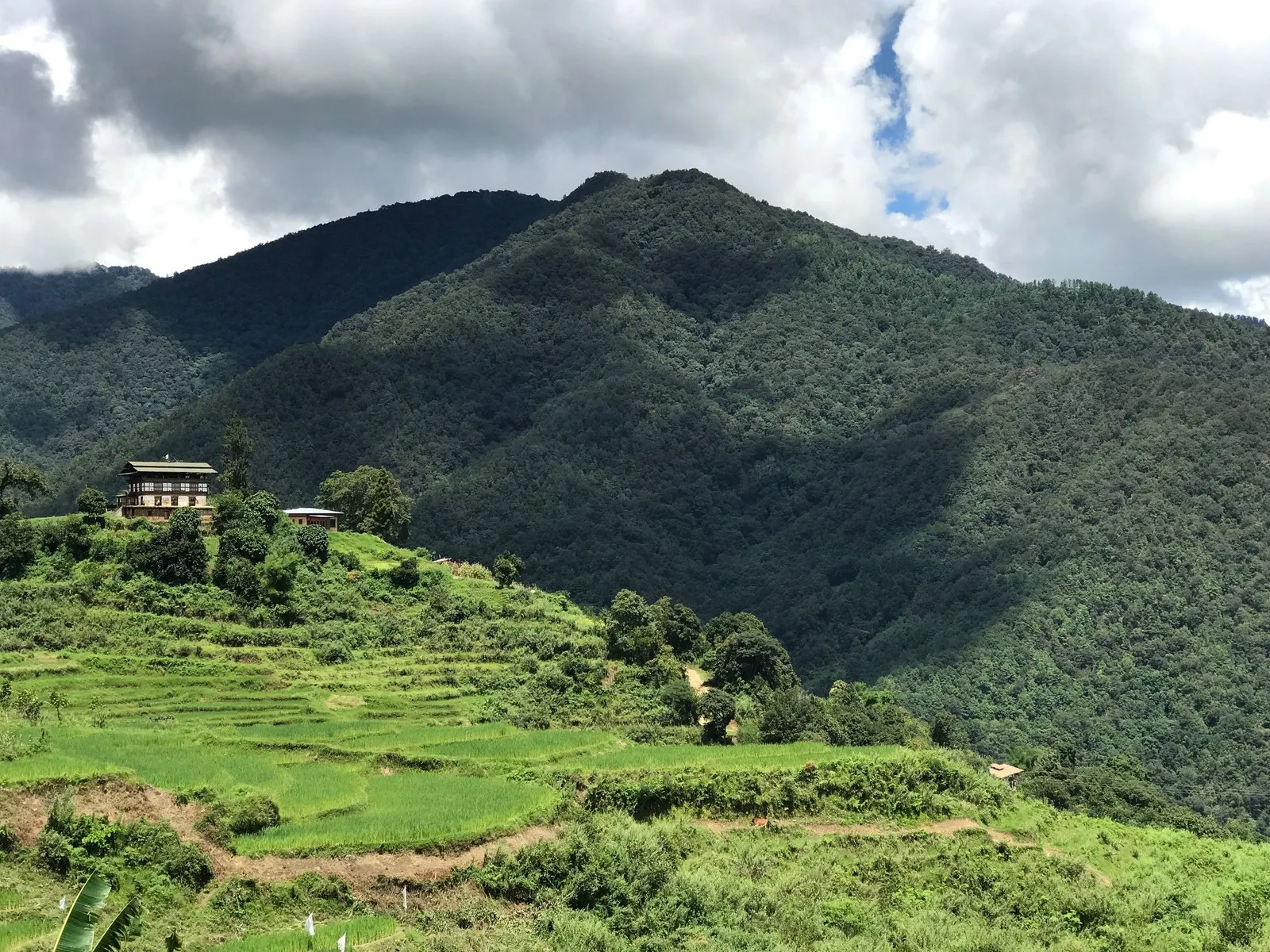
  • Rice terraces and a farmhouse in the Punakha valley
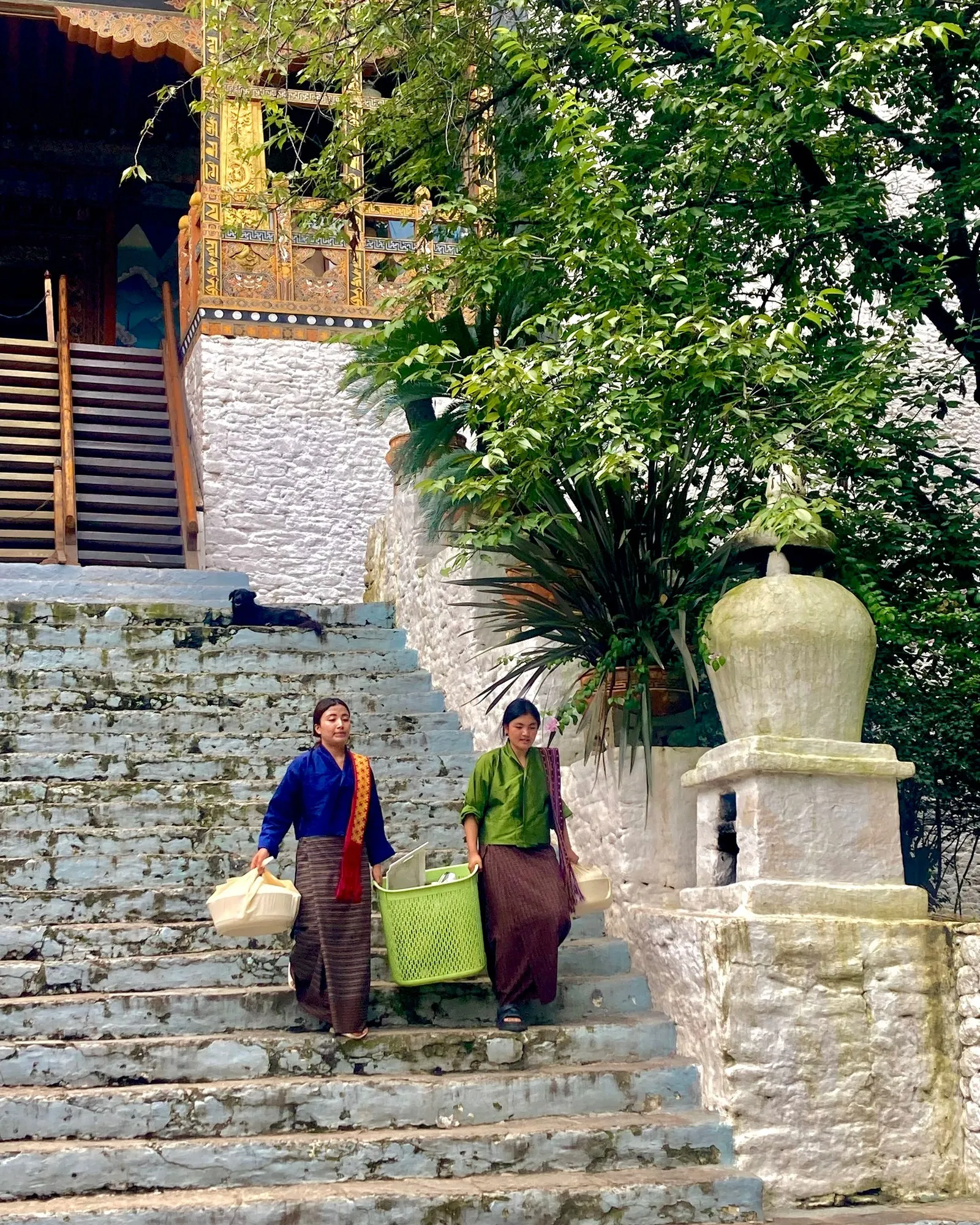
  • Two women in kira carrying bags down the steps of a monastery, Bhutan
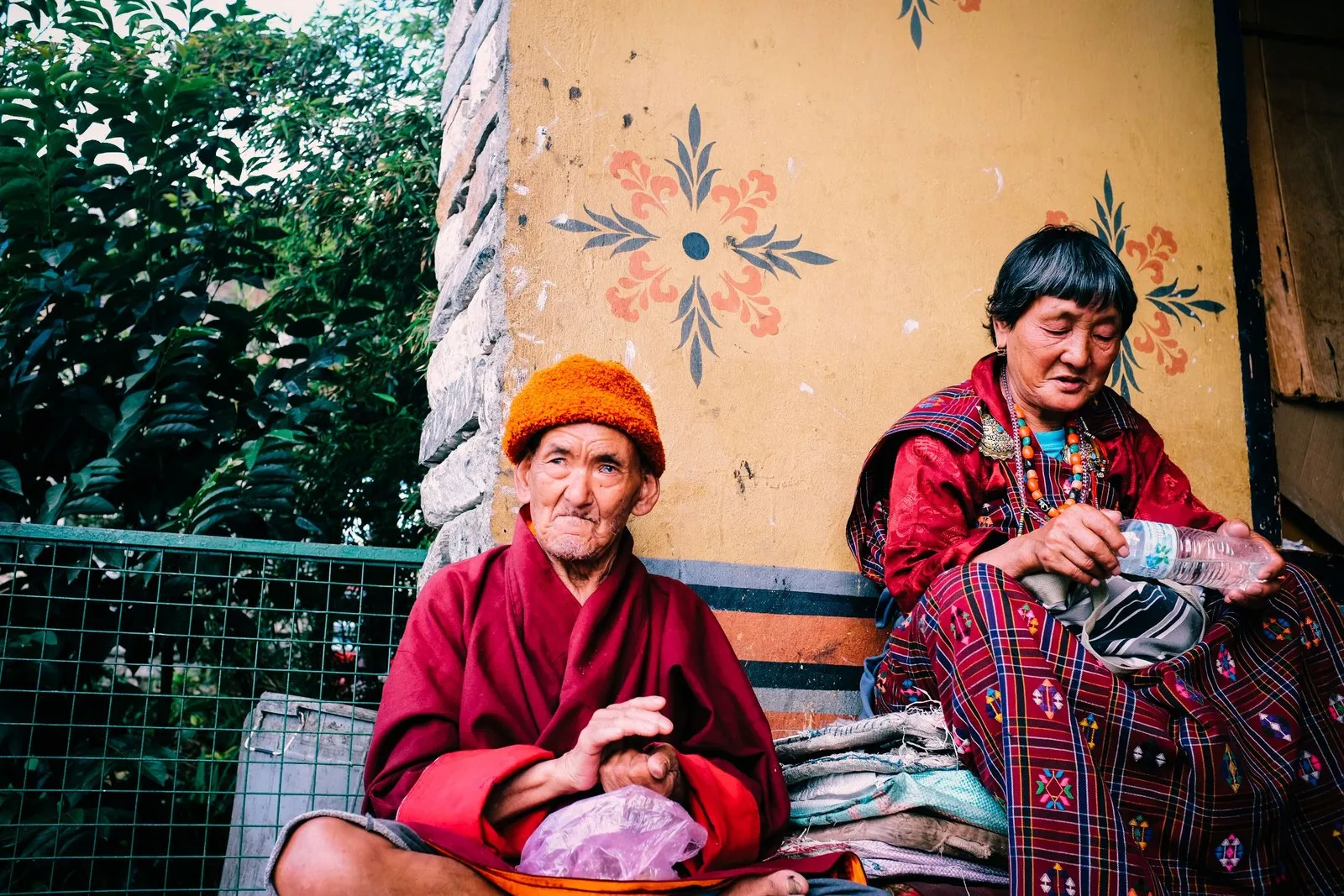
  • An elderly couple resting by a painted wall with their bundles of cloth, Bhutan
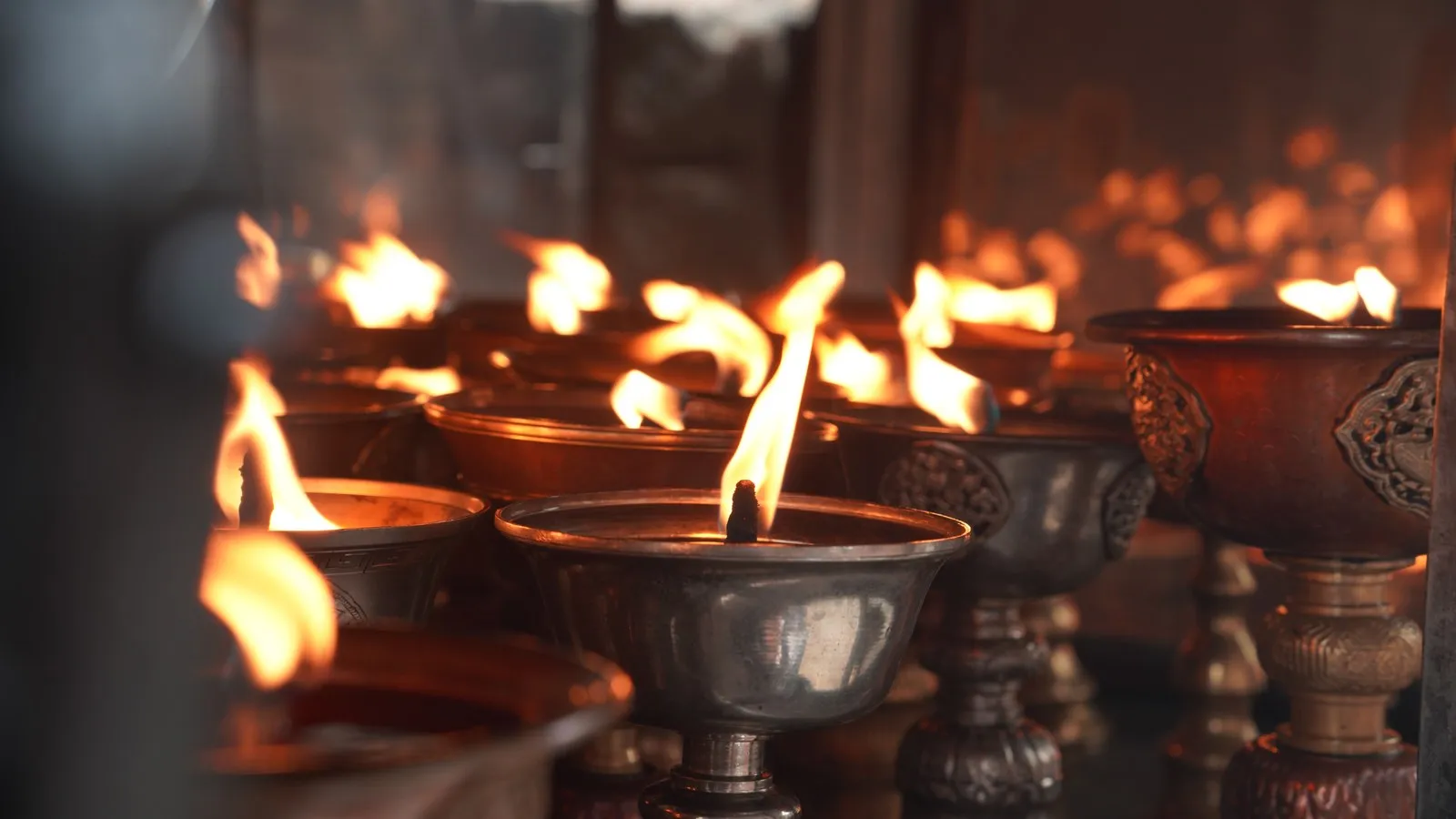
  • Butter lamps burning in a temple, Bhutan
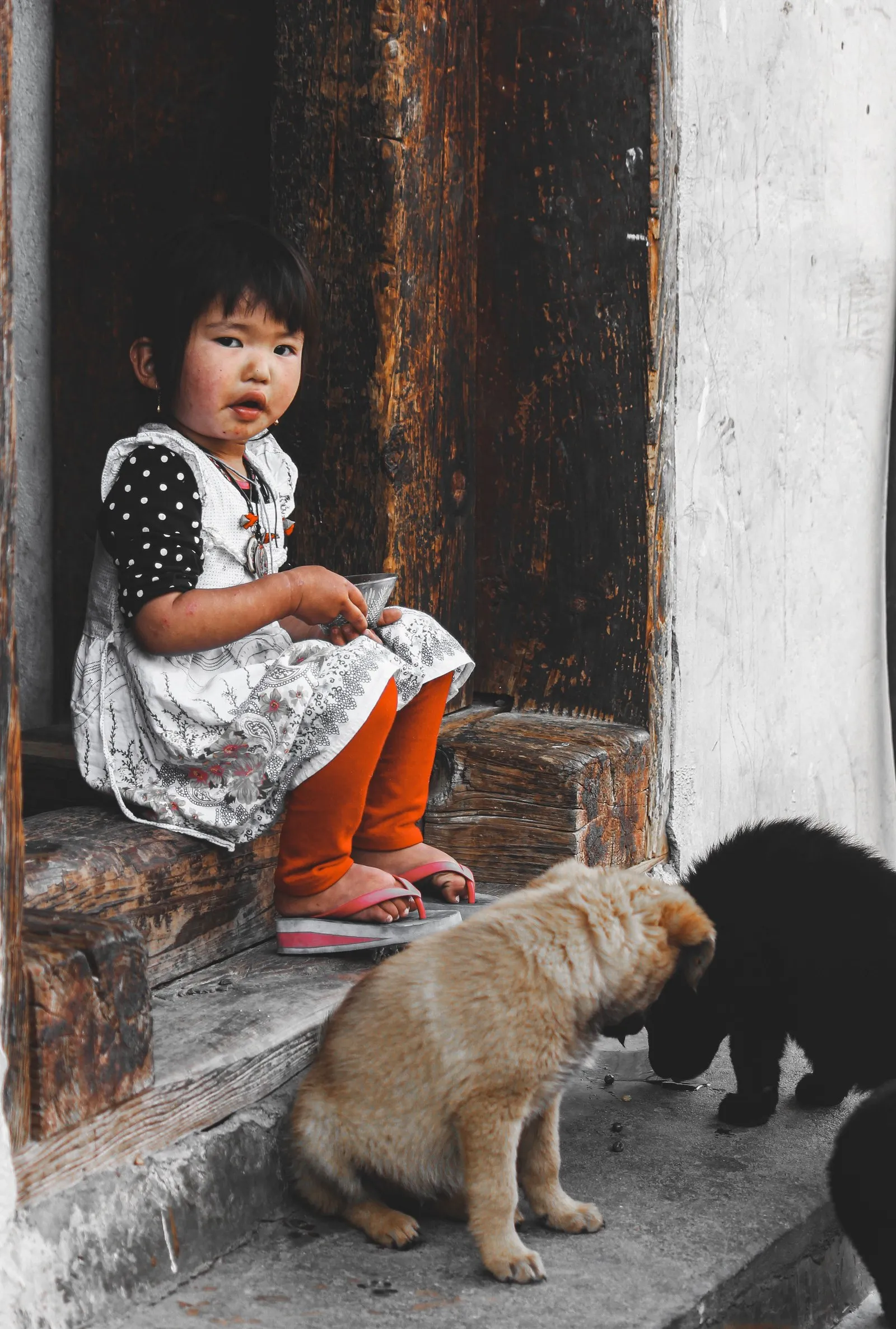
  • A small girl on a doorstep with two puppies, Bhutan

Reviews

In their own words

Word for word, several in Italian, because Italy found us early. 5.0 from 146 reviews on Google, and 5.0 from 200 on TripAdvisor.

I had an incredible adventure with Rang Travels in Northern India earlier this year! The tour was jam packed. I loved the beautiful forts and buildings we visited, the markets, as well as the stunning World Heritage hotels. This tour gave me a real taste for India, and I felt very comfortable for my first time visiting!

Read the whole review on Google

Jess Foster

Northern India · May 2025

1 / 19

Enquire

Plan my journey

Tell us where your India begins — we reply with a written itinerary.

Travellers
When, roughly
Interests
Or ask on WhatsApp

No obligation. We reply with a written itinerary, not a sales call.