Rang Travels — explore the colors of India
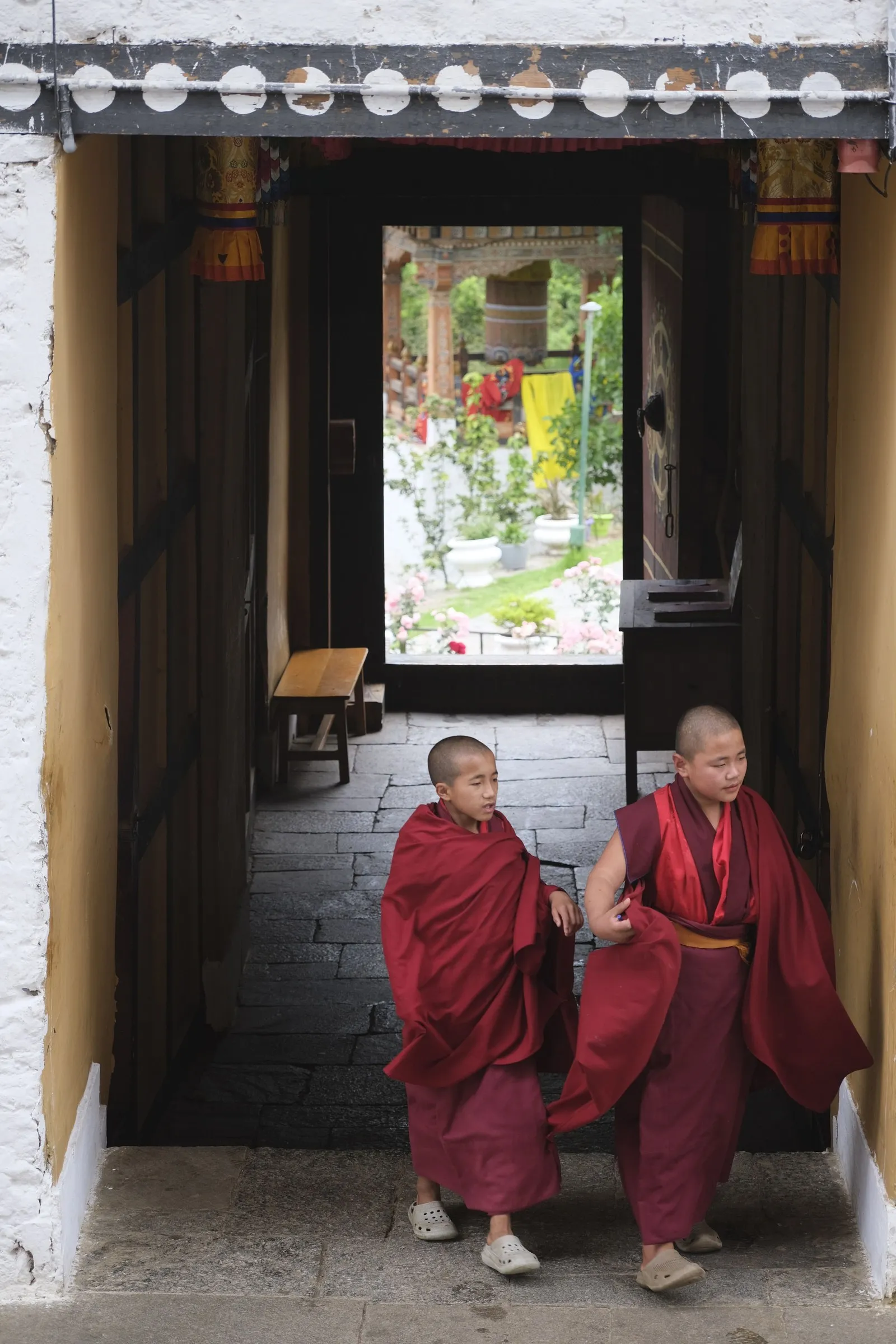
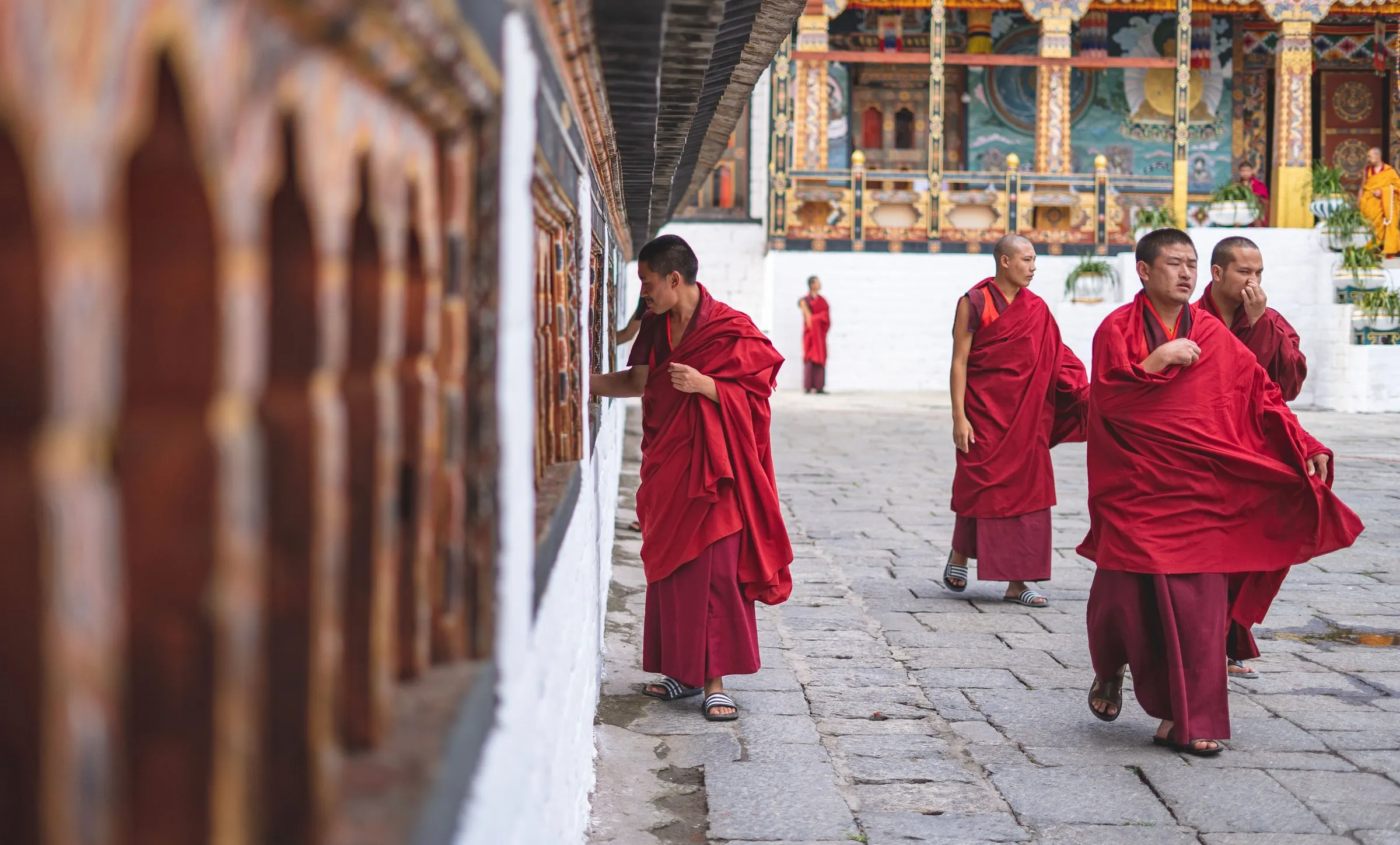
Monks walking past prayer wheels in a temple courtyard, Bhutan

Heritage · Spiritual · Himalaya

Bhutan, the Dragon Kingdom

Thimphu, Punakha, the temple valleys of Bumthang, Phobjikha and the Tiger’s Nest

See the day-by-day
Duration
9 days · 8 nights
Halts
5
Paro to Paro
Best months
March – May · September – November
Price
On request
quoted to your dates

The journey

Nine days across Bhutan: Thimphu, Punakha, the temple valleys of Bumthang where Guru Rinpoche meditated, the crane valley of Phobjikha and the Tiger’s Nest.

Most short journeys in Bhutan turn back at Punakha. This one keeps going, east over the high passes to Bumthang, the cultural heartland: four valleys — Chumey, Choekhor, Tang and Ura — of buckwheat fields, woollen weaving and some of the oldest temples in the country. Guru Rinpoche meditated here in the eighth century, and the rock at Kurjey that holds the print of his body is one of the most sacred places in Bhutan.

On the way out you see the classic west: Thimphu’s dzong, library and craft school, the chortens of Dochu La, and Punakha Dzong where two rivers meet. On the way back come a night in Phobjikha, the wide glacial valley where black-necked cranes spend the winter, below the great monastery of Gangtey; then Paro, Rinpung Dzong, and the climb to the Tiger’s Nest on the last full day.

Highlights

What you will remember

  • Tashichho Dzong, the National Library and the school of the thirteen crafts in Thimphu

  • Over Dochu La to Punakha Dzong and Chimi Lhakhang

  • Yathra weaving in Chumey, on the road into Bumthang

  • Jambay Lhakhang, Kurjey Lhakhang and Tamshing in the Bumthang valleys

  • Ura village, or the walk towards the Swan Temple, Ngang Lhakhang

  • Phobjikha, winter home of the black-necked crane, and Gangtey Goemba

  • Rinpung Dzong and the walk to the Tiger’s Nest in Paro

The route

6 halts, in order

  1. Paro
  2. Thimphu2 nights
  3. Punakha1 night
  4. Bumthang2 nights
  5. Gangtey1 night
  6. Paro

Experiences

The moments it is built around

Everything else on this page is logistics. These are the reasons to come.

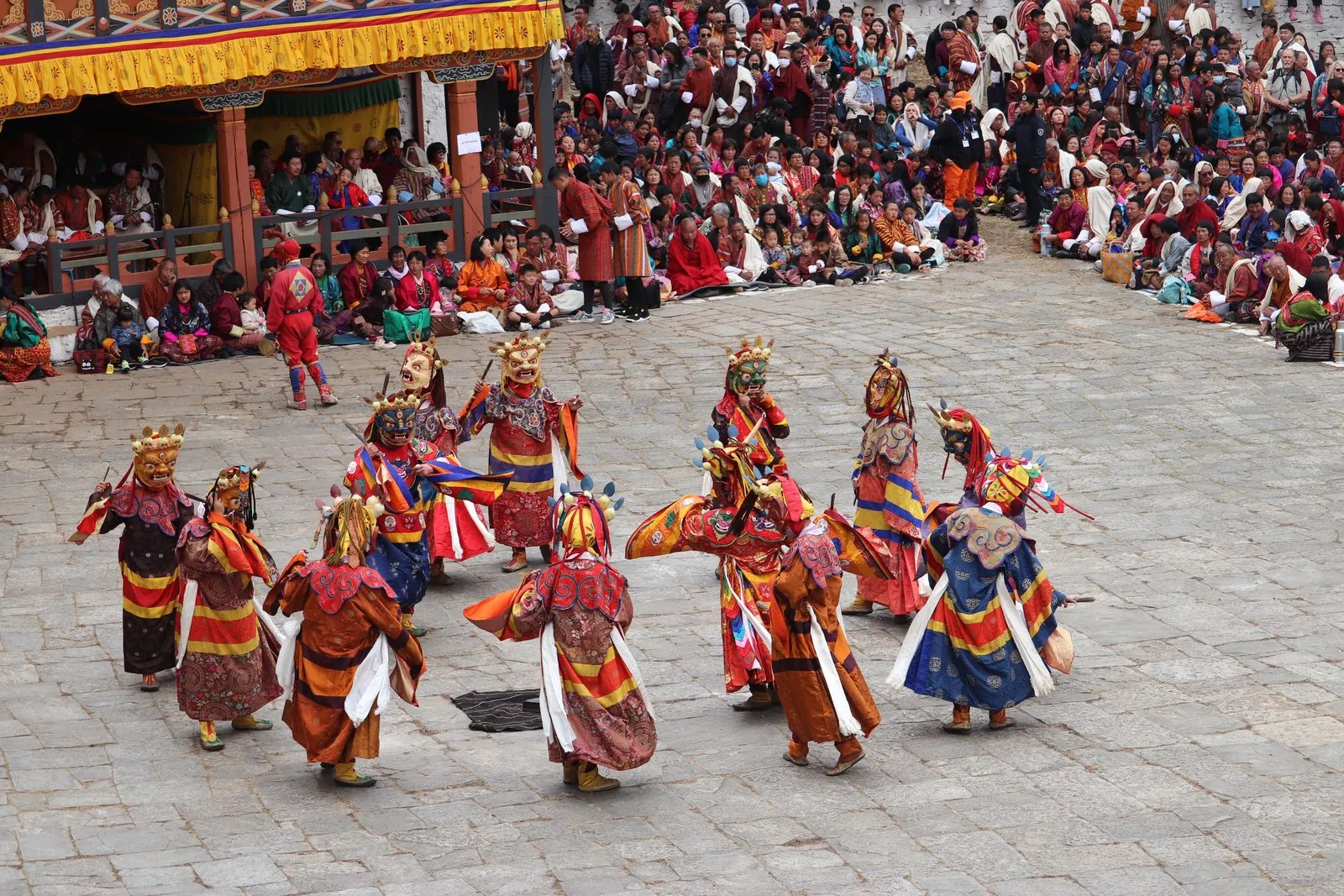
  • Masked dancers turning in a dzong courtyard at a tsechu, the crowd watching, Bhutan

    The masked dances

    Time your journey to a tsechu and masked dancers fill the dzong courtyard; Bumthang keeps several of its own.

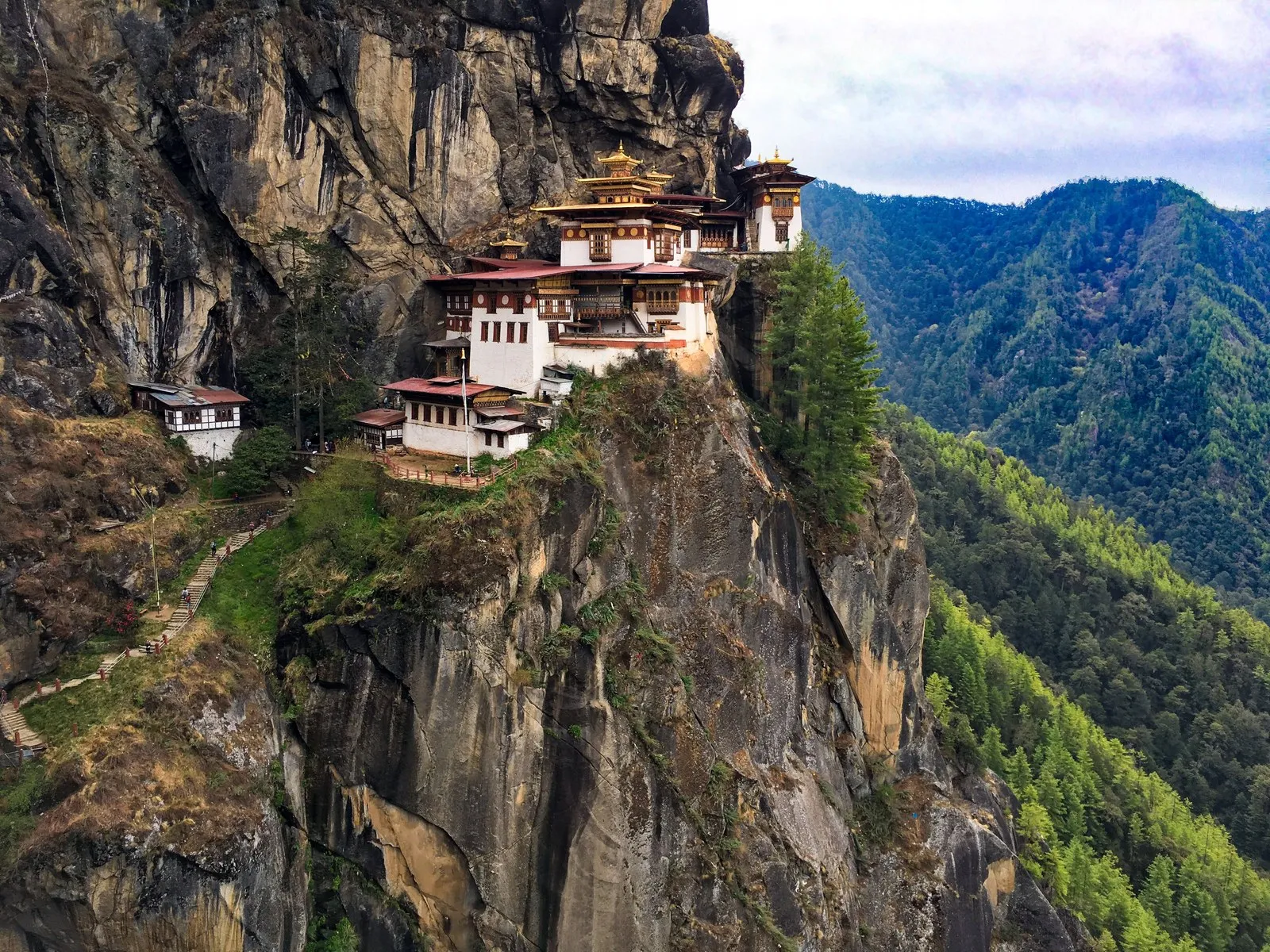
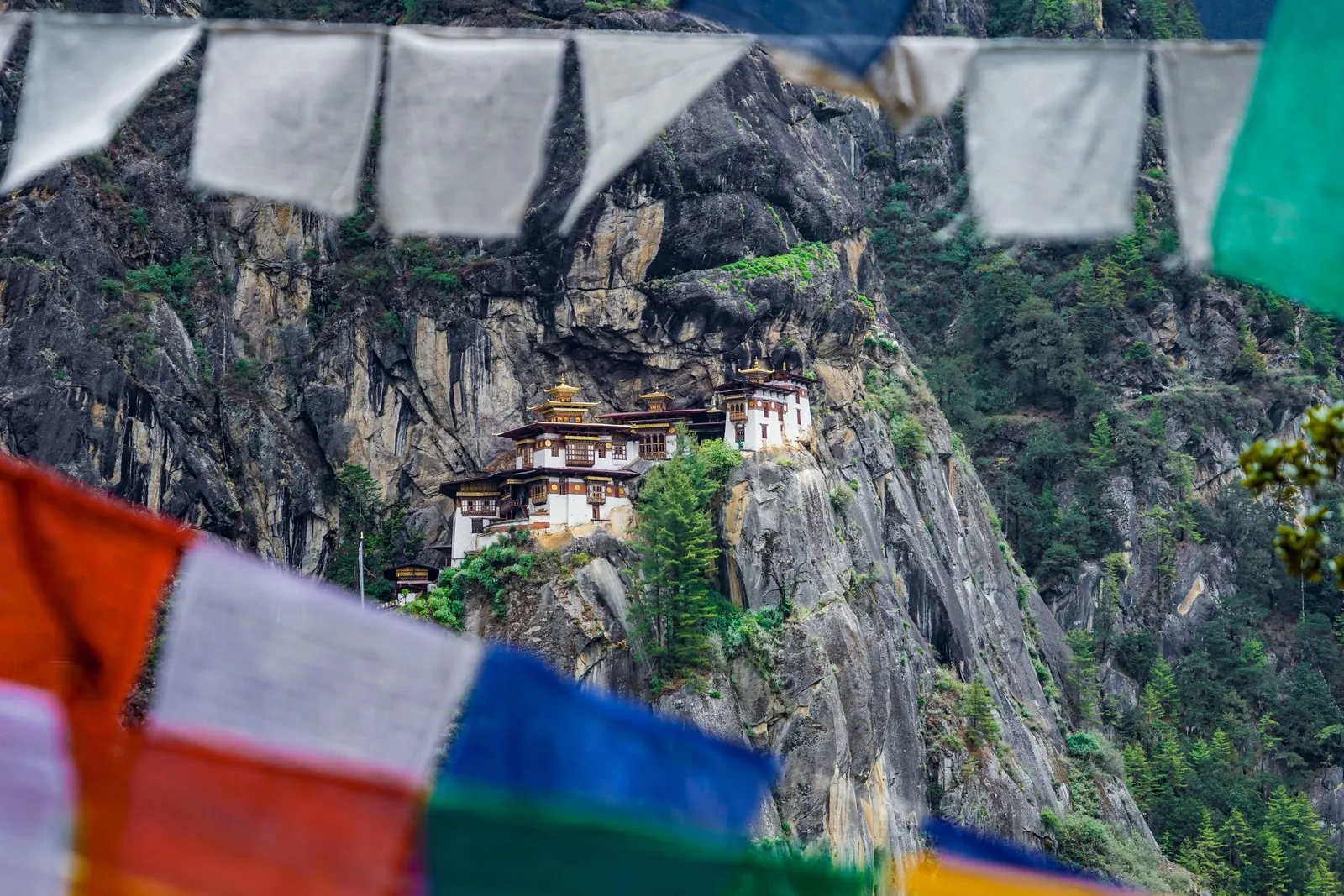
  • The Tiger’s Nest on its cliff above the Paro valley, seen through prayer flags

    The Tiger’s Nest

    Up through the pines to the cafeteria and the viewpoint, the monastery fixed to the cliff across the gorge.

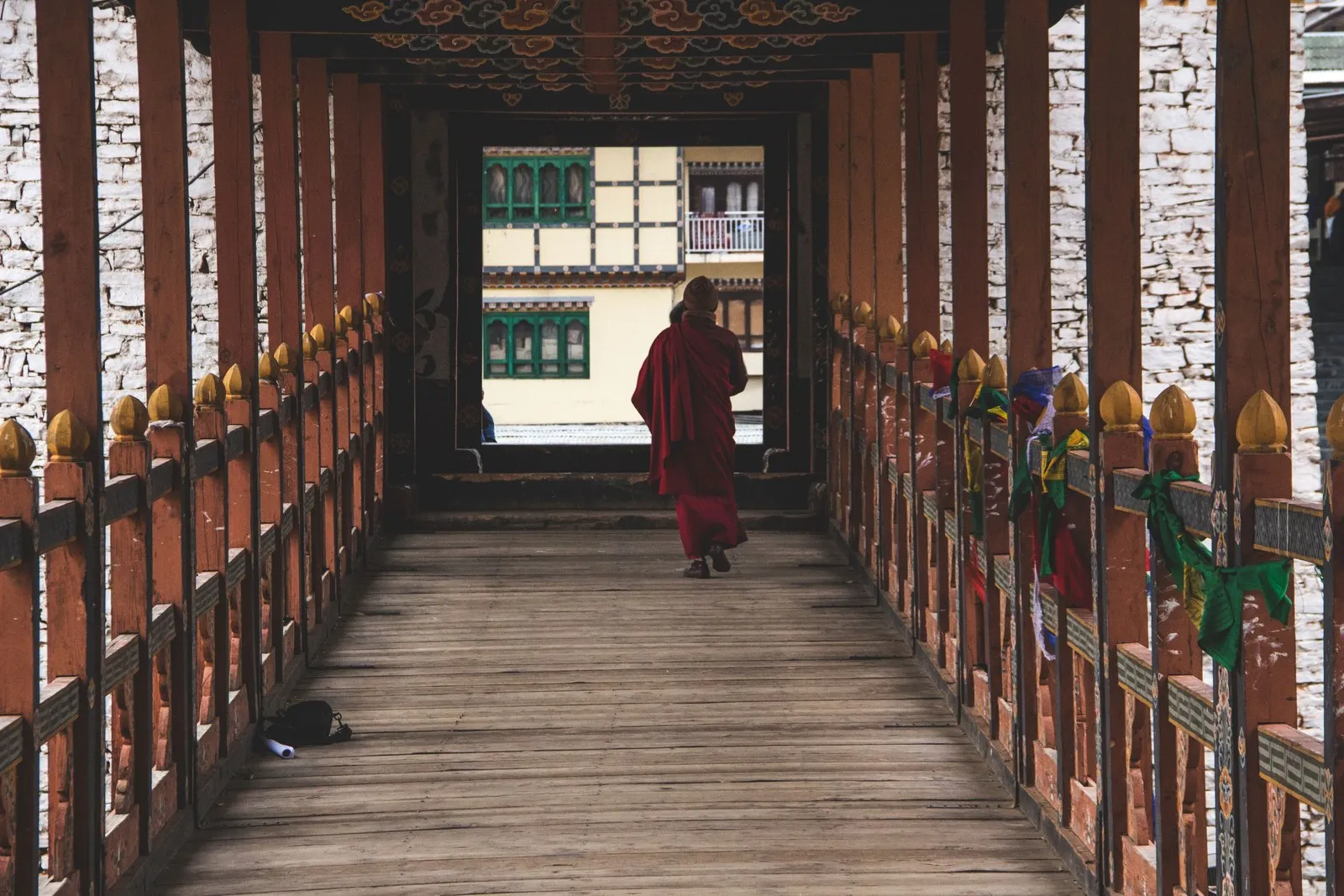
  • A monk crossing a covered wooden bridge in Thimphu

    Thimphu’s weekend market

    Chillies, red rice and dried cheese on one bank, handicrafts across the covered footbridge on the other.

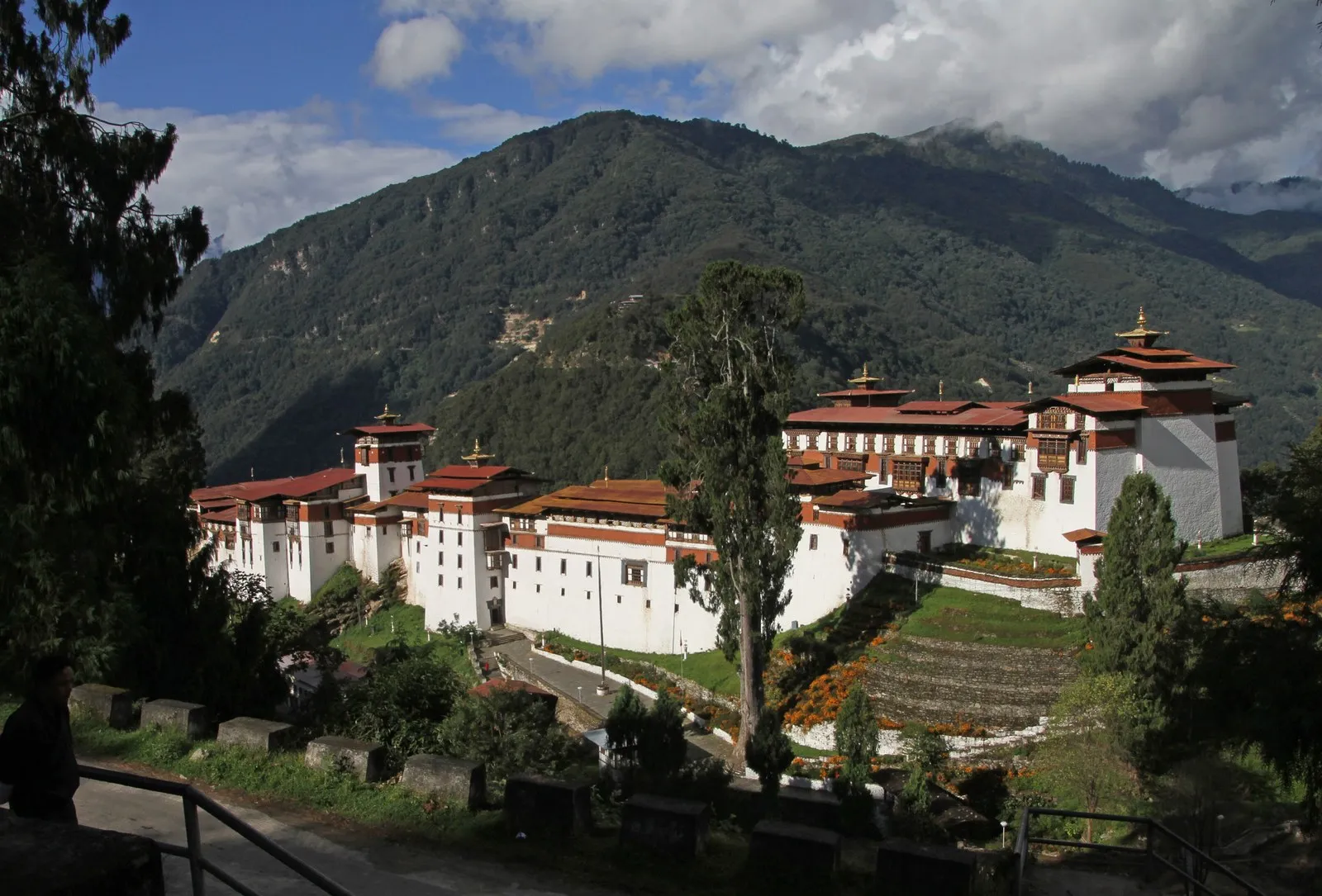
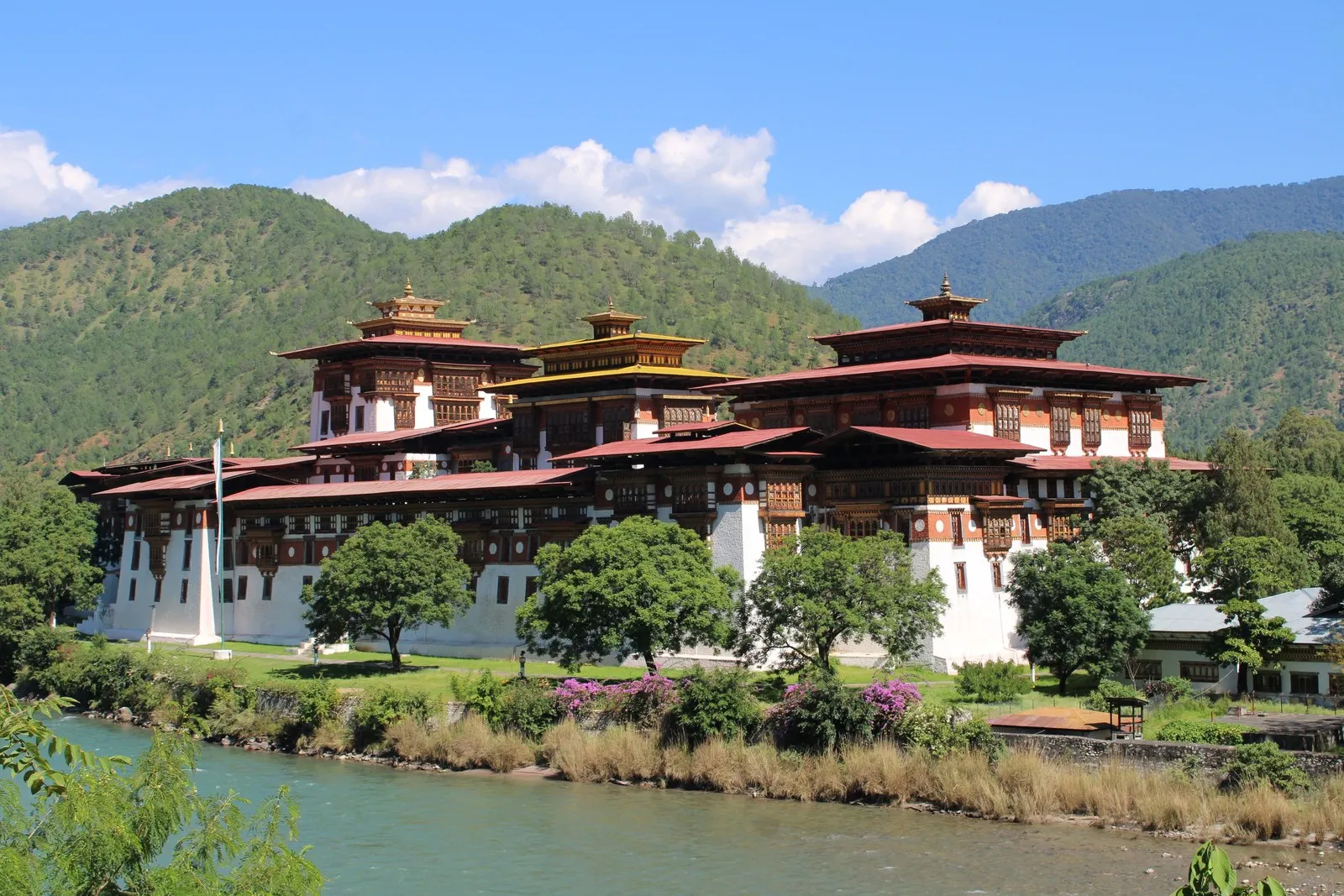
  • Punakha Dzong on the river, below forested hills

    Punakha Dzong

    The old capital’s fortress, where the Pho Chhu and the Mo Chhu meet and the monk body spends the winter.

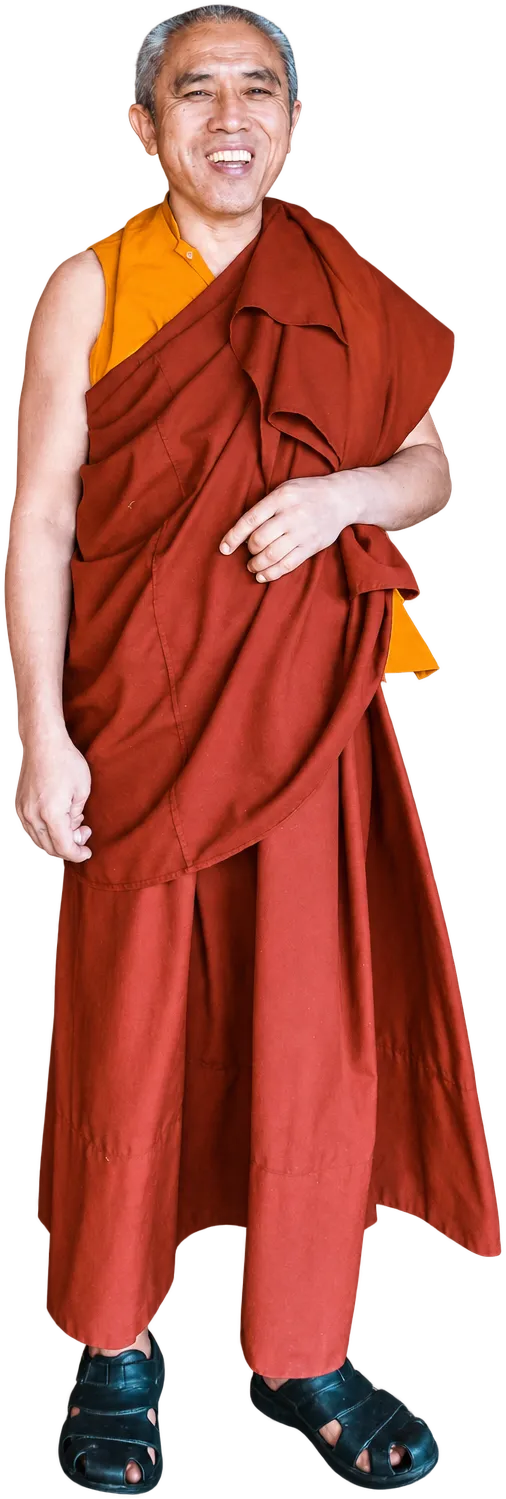
A smiling monk in a maroon robe and saffron vest, Bhutan

Heritage · Spiritual · Himalaya

Thimphu, Punakha, the temple valleys of Bumthang, Phobjikha and the Tiger’s Nest

9 days, 8 nights

The route, day by day

Every halt, every overnight and every drive, published in full.

  1. Paro
  2. Thimphu
  3. Punakha
  4. Bumthang
  5. Gangtey
  6. Paro
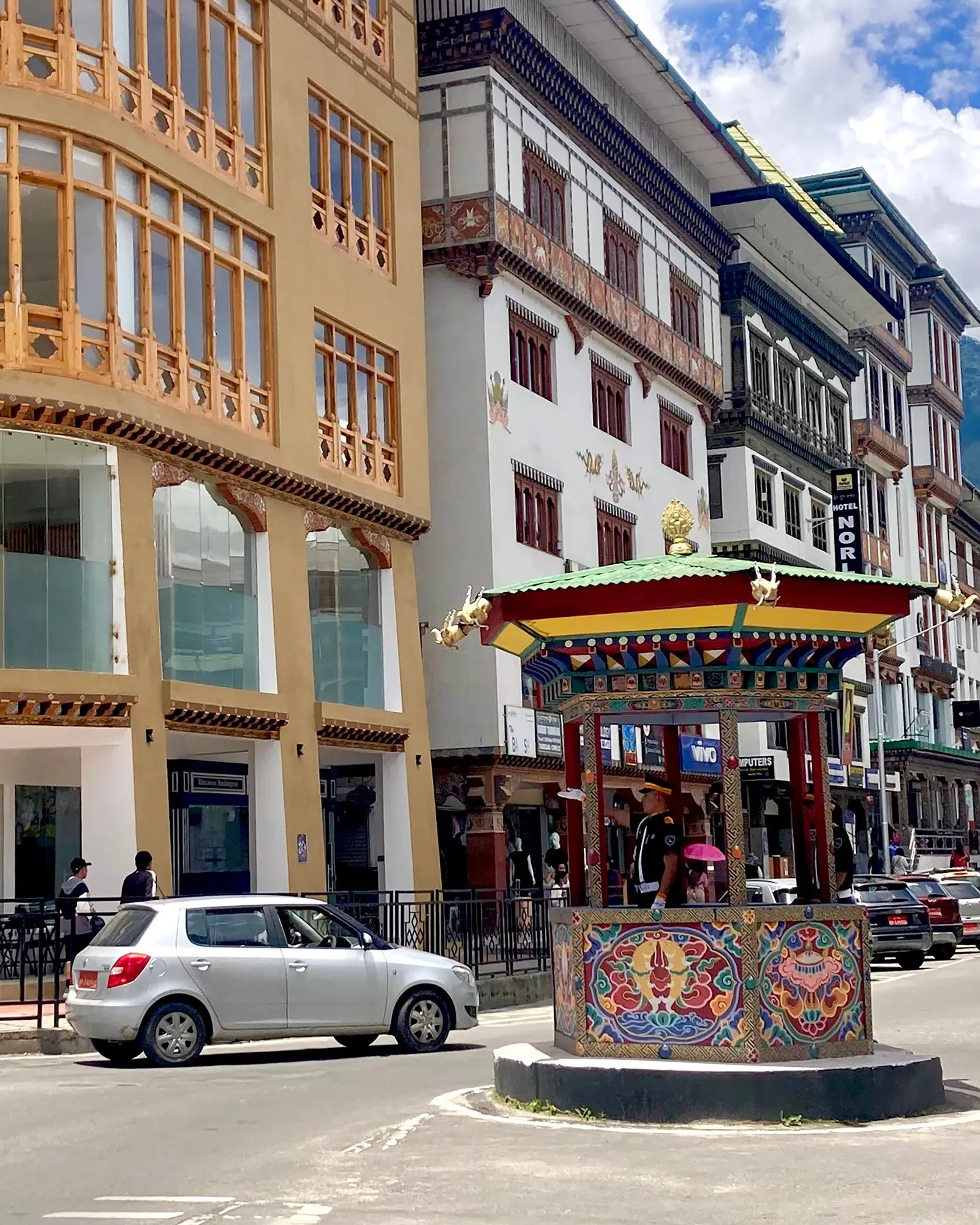
  1. The painted traffic pavilion at a junction on Thimphu’s main street

    01

    Overnight Thimphu

    50 km · about 1½ hrs

    Paro to Thimphu

    Met at Paro airport and driven to the capital, about an hour and a half away. Just off the road stands Tamchog Lhakhang, the temple of Thangtong Gyalpo, the saint of the fourteenth and fifteenth centuries who hung bridges of iron chain across the Himalaya; it still belongs to his descendants.

    Further on the road reaches Chuzom, the ‘meeting of the rivers’, where the Paro river joins the Thimphu river. Bhutanese believe evil gathers at such places, so three chortens stand guard here, one each in the Nepali, Tibetan and Bhutanese styles, and your driver registers the car at the checkpoint.

    Thimphu runs along its river valley, a capital where the traditional and the modern sit side by side, and where there are still no traffic lights: at the main junction a policeman in white gloves conducts the cars from a painted pavilion. The rest of the day is yours to settle in.
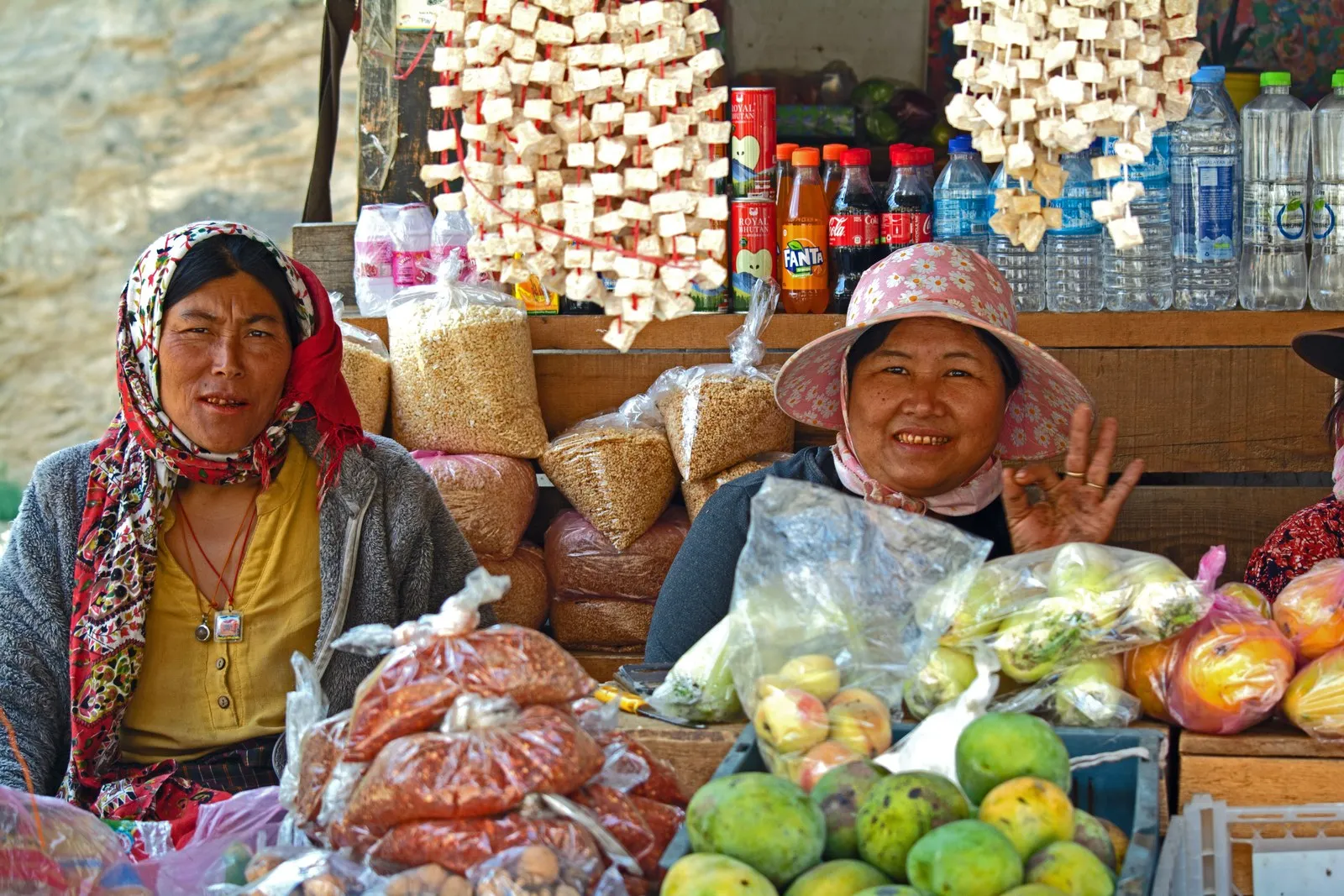
  2. Two women at their market stall in Thimphu, strings of dried cheese overhead

    02

    Overnight Thimphu

    Thimphu: dzong, library and the thirteen crafts

    The day takes in Tashichho Dzong, the seat of government and the king’s offices, and in summer the home of the monk body; on weekdays it opens to visitors once the offices close. It was rebuilt in the traditional way, without nails or written plans. The National Library is a tall traditional building of old Dzongkha and Tibetan texts, with an altar and statues of the country’s great historical and religious figures on every floor; people walk around the outside in prayer, for the holy books it holds.

    At the school of arts and crafts, students learn the thirteen traditional crafts of Bhutan — painting, carpentry, carving, sculpture, casting, blacksmithing, bamboo work, gold and silver smithing, weaving, embroidery, masonry, leatherwork and papermaking — and sell their work in a shop nearby. At the end of the week the Centenary Farmers’ Market, where all Thimphu buys its groceries, has a handicraft section across the footbridge, and the town’s emporium and craft shops fill any time left.

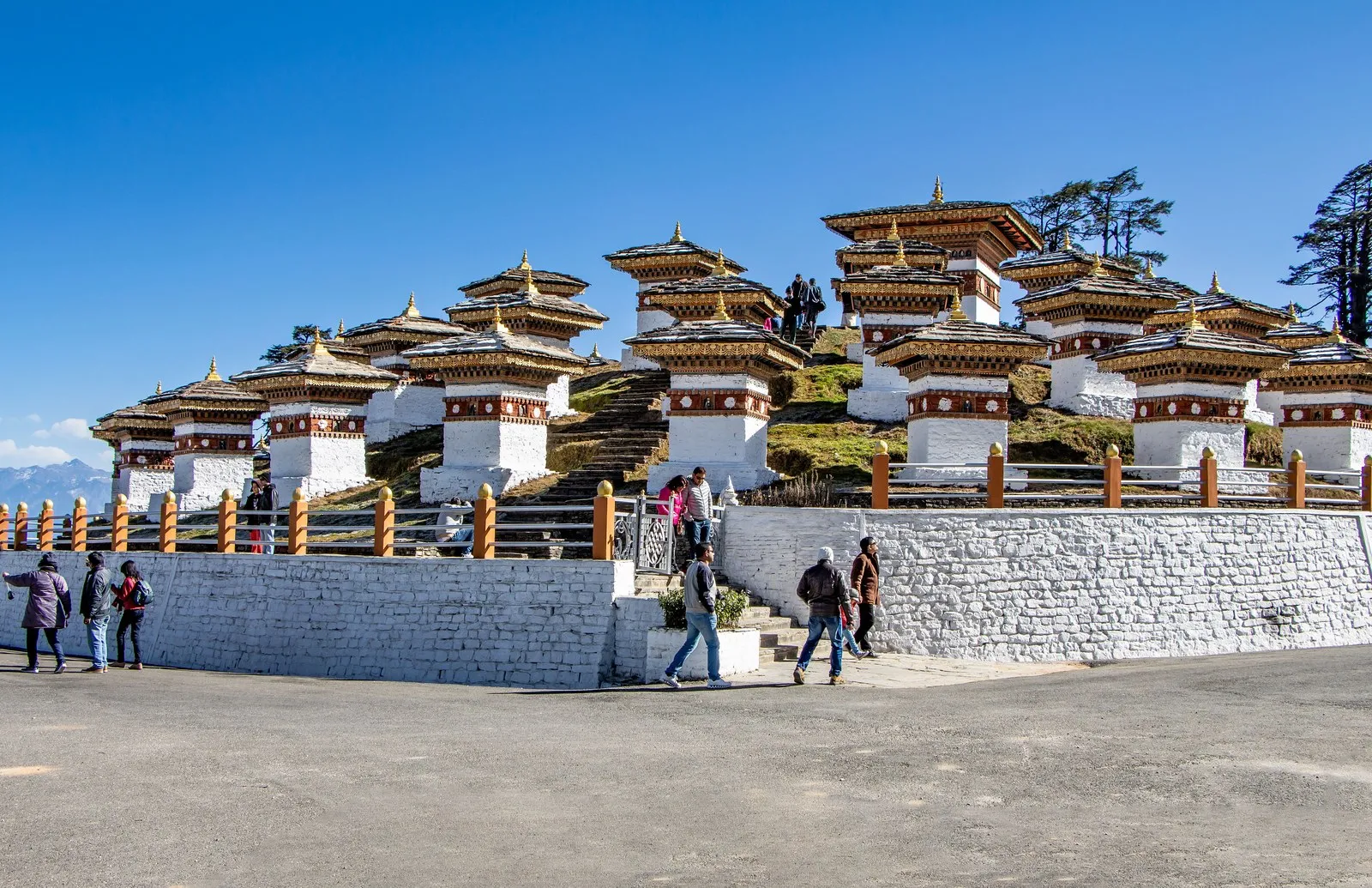
  3. The chortens of Dochu La on their terraced knoll, visitors below

    03

    Overnight Punakha

    75 km · about 3 hrs

    Over Dochu La to Punakha

    The road out of Thimphu passes Simtokha Dzong, the first fortress the Zhabdrung built, in 1629, then climbs past the checkpoint at Hongtsho to Dochu La, at over 3,000 metres, where 108 chortens crown the pass. On a clear day the whole line of the eastern Himalaya stands along the horizon.

    The last stretch runs downhill into the warm Punakha valley, past prayer wheels turned by running water. Punakha is the old capital, and its dzong, at the meeting of the Pho Chhu and the Mo Chhu, is still the winter home of the monk body. A short walk across the fields leads to Chimi Lhakhang, the temple of the Divine Madman, where people come to pray for children. A visit to a farming village, or a longer walk between villages, can be added.

  4. Trongsa Dzong on its ridge above the Mangde Chhu, central Bhutan

    04

    Overnight Bumthang

    215 km · about 6½ hrs

    East to Bumthang

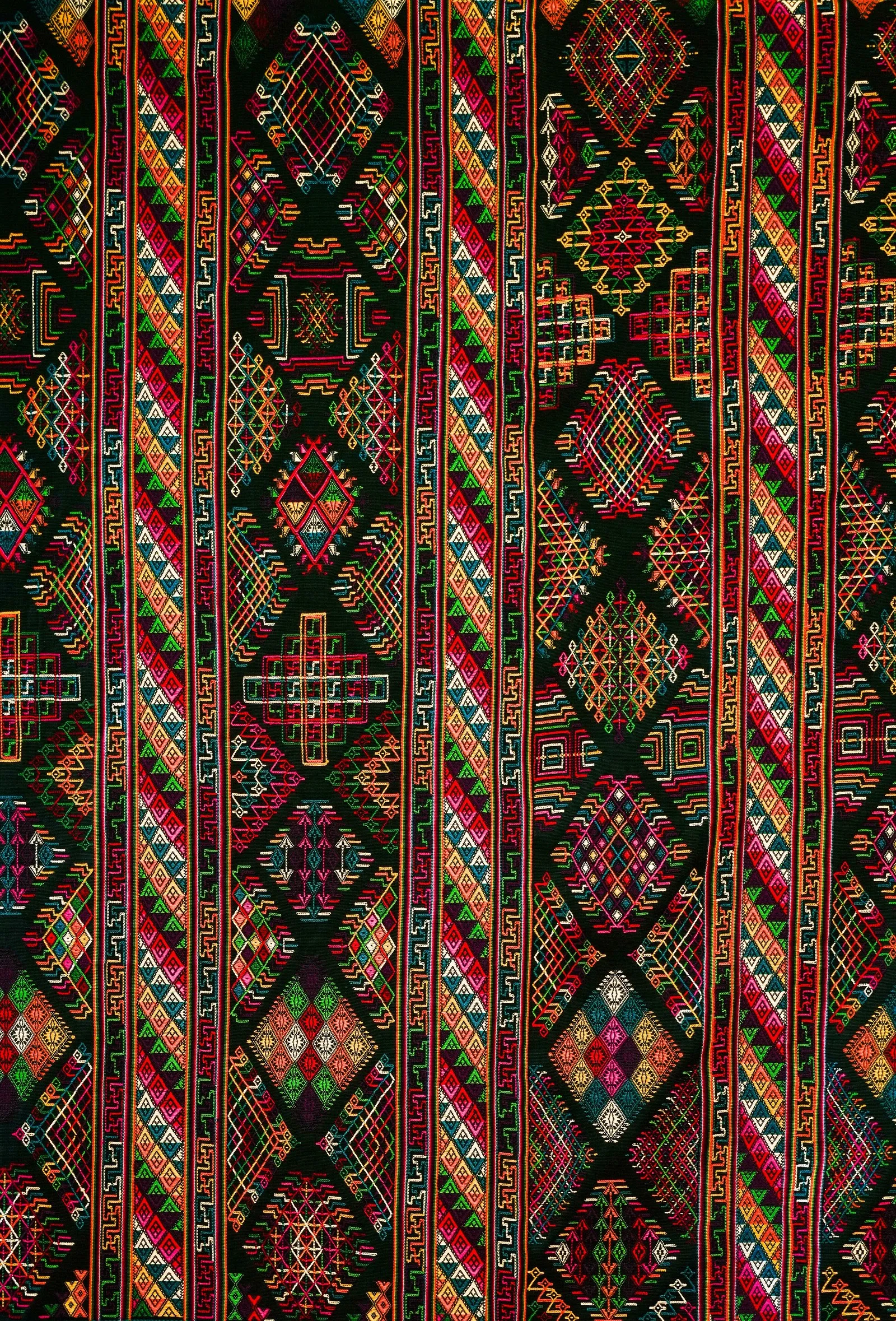
    An early start for the long drive east to Bumthang. The road climbs first, then settles into long, winding stretches: over Pele La, past the great dzong of Trongsa above its gorge, and over one more pass into the Chumey valley. In Chumey you pass the workshops where yathra is woven, the patterned woollen cloth that belongs to Bumthang.

    Bumthang is the cultural heartland of Bhutan. Guru Rinpoche came here in the eighth century at the invitation of a local king, and its four valleys are thick with the temples that followed. It also keeps several festivals of its own: if your dates meet one, we fit it in alongside the sights.

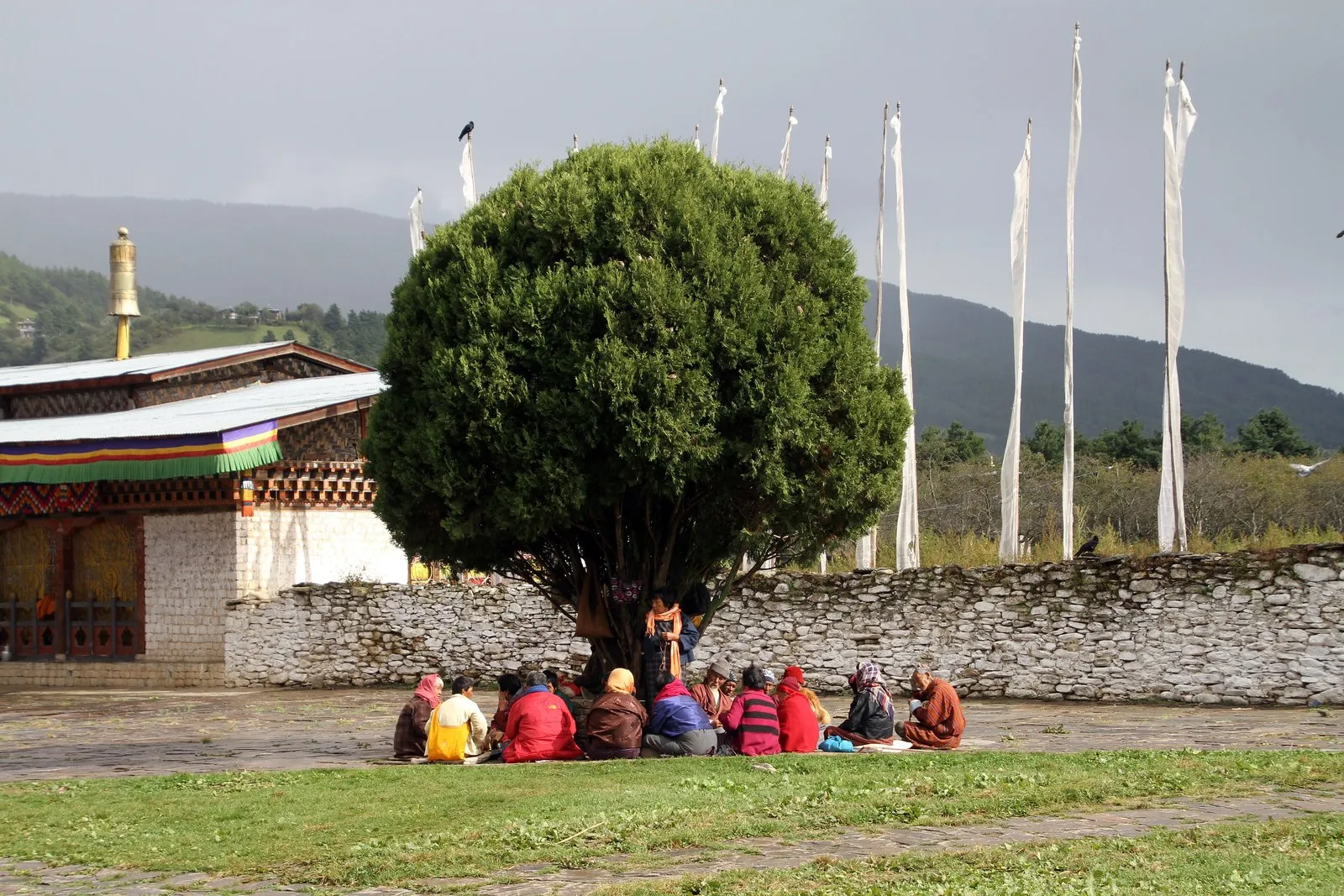
  5. Pilgrims resting under a tree beside Jambay Lhakhang, Bumthang

    05

    Overnight Bumthang

    The temples of Bumthang

    A day among some of the oldest temples in Bhutan. Jambay Lhakhang was built by the Tibetan king Songtsen Gampo in the seventh century. Inside are three steps said to stand for the three ages — of the historical Buddha, of Guru Rinpoche, which is ours, and of the age to come — and when all three have sunk into the ground, the world as we know it will end.

    At Kurjey Lhakhang three temples stand together: the oldest holds a rock with the print of Guru Rinpoche’s body, the first king built the second and the fourth king’s mother the third, and a spring above them is said to heal. Tamshing was founded in 1501 by the treasure-revealer Pema Lingpa, with the help, it is said, of fairies; on the lower floor is a coat of chain mail he made, and carrying it three times around the temple brings good fortune.

    The rest of the day is your choice. Ura, about two hours’ drive away, is a village of cobbled lanes and close-set houses that holds a festival every spring. Or walk from Thangbi Goemba, among buckwheat fields, through blue pine and scrub bamboo towards Ngang Lhakhang, the Swan Temple, built where Lama Namkha Samdrup’s arrow fell. Closer to town are Sey and Chakhar Lhakhang, and Mebar Tsho, the Burning Lake, where Pema Lingpa dived in with a lit butter lamp and came up with a hidden treasure, the lamp still burning.

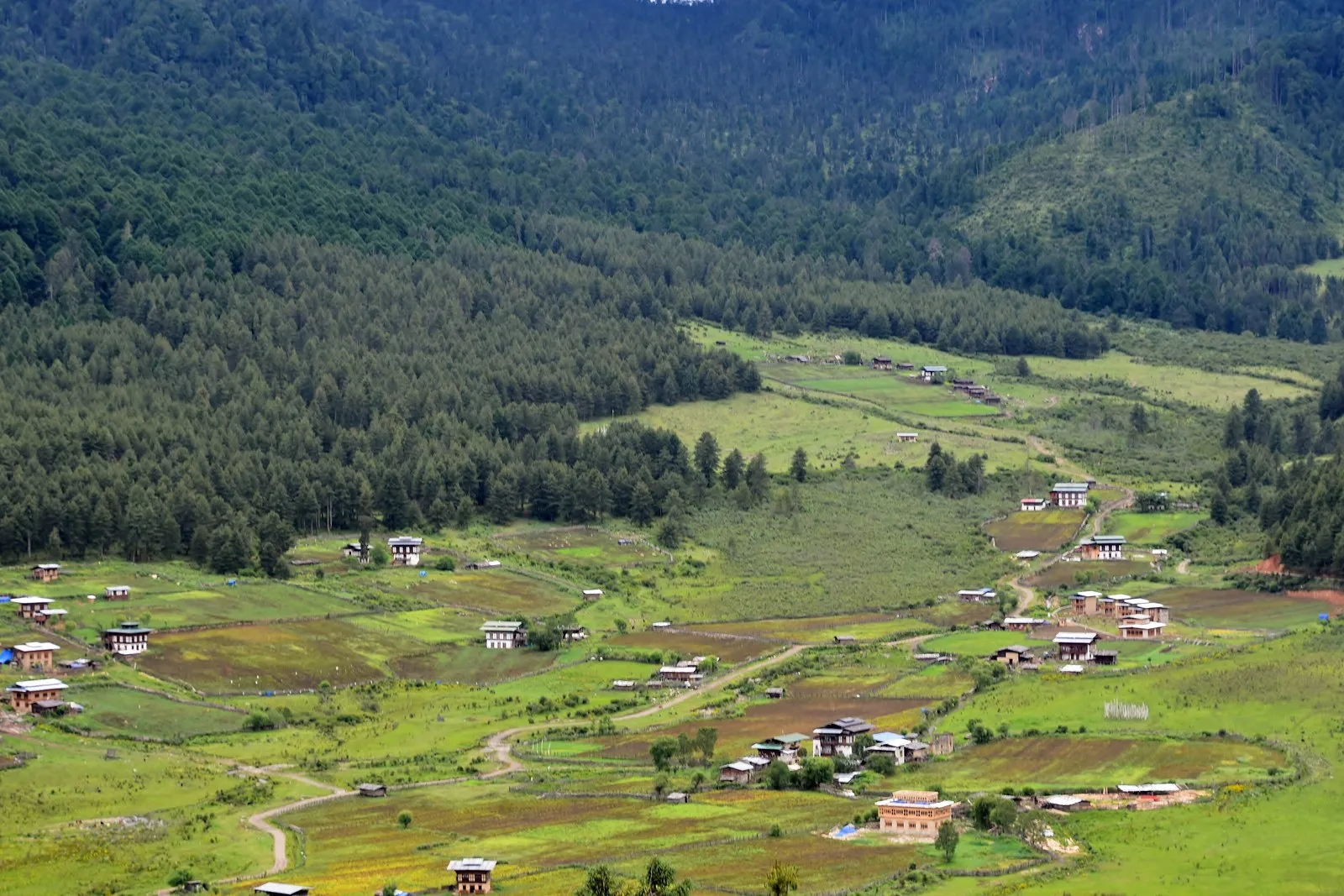
  6. The wide glacial valley of Phobjikha, its farmhouses among the fields

    06

    Overnight Gangtey

    155 km · about 4½ hrs

    Over Pele La to Phobjikha

    Back west through Trongsa and over Pele La, a drive of waterfalls beside the road on the long way down, then up into Phobjikha, the wide valley below Gangtey. It is one of the beyul, the hidden valleys where it is believed refuge can be found, and a protected area, because the black-necked cranes come here from the Tibetan plateau to spend the winter.

    Above the valley floor stands Gangtey Goemba, founded in 1613 by a grandson of Pema Lingpa, the treasure-revealer of Tamshing, and restored in recent years to its former glory. Walk up to it in the late afternoon, when the light lies low across the marshes.

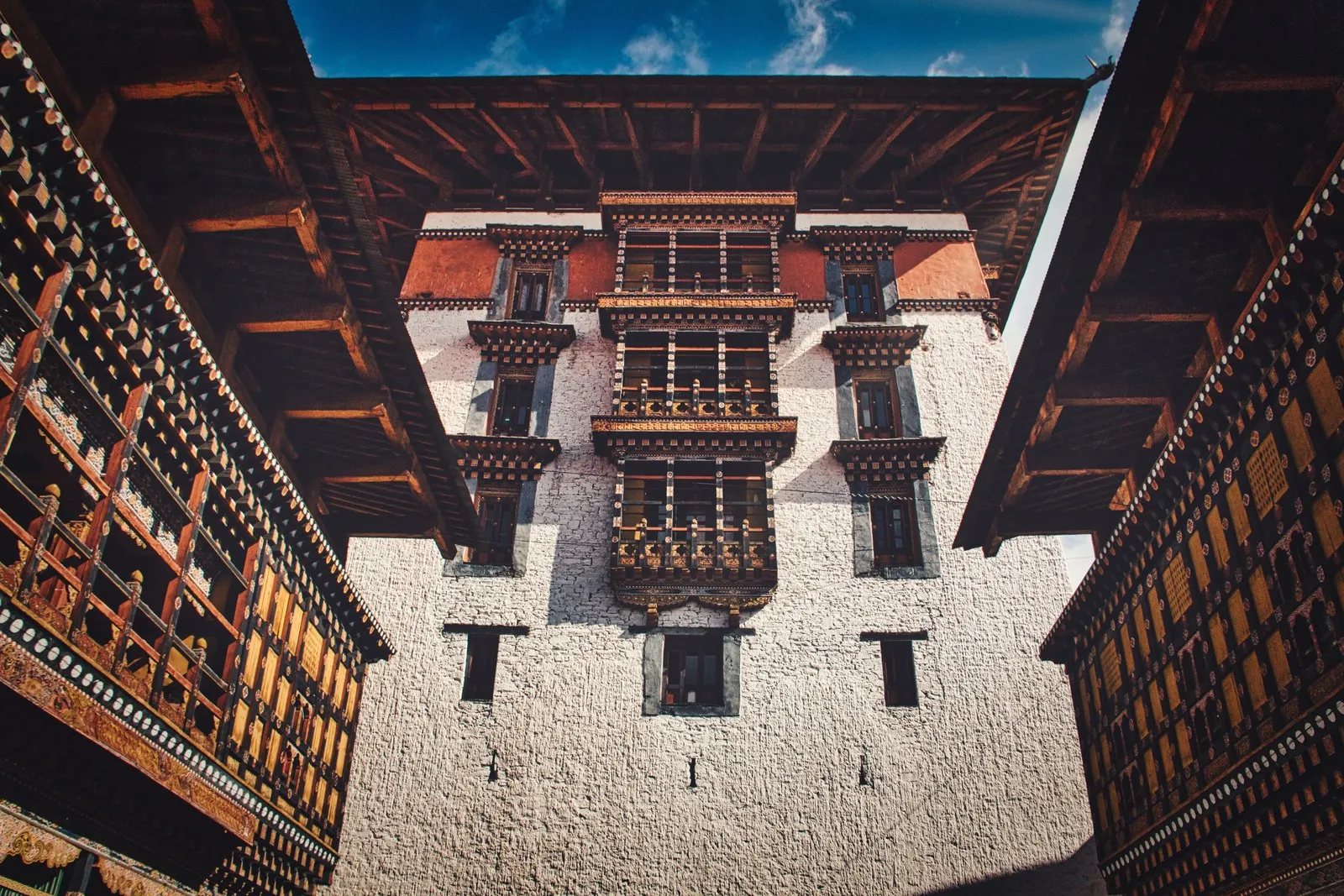
  7. The central tower of Rinpung Dzong seen from its courtyard, Paro

    07

    Overnight Paro

    170 km · 6–7 hrs

    Across the country to Paro

    A long day on the road, so an early start: back past Wangdue Phodrang and over Dochu La to Paro. The Paro valley runs from Jomolhari on the Tibetan border down to Chuzom, where the Paro and Thimphu rivers meet.

    In the afternoon, Rinpung Dzong, the ‘fortress on a heap of jewels’, built by the Zhabdrung in 1646, where the district administration and the monk body still share the courtyards. Above it, in the round watchtower of the Ta Dzong, is the National Museum, with its thangkas and the Tshogshing Lhakhang, the temple of the tree of wisdom.

  8. The Tiger’s Nest on its cliff above the Paro valley, seen through prayer flags

    08

    Overnight Paro

    The Tiger’s Nest

    The walk to the Tiger’s Nest, Taktsang, which stands where Guru Rinpoche is said to have flown on the back of a tigress. It is about two hours up to the viewpoint, uphill all the way through pine forest; lunch is on the trail, or at the cafeteria, which looks straight across at the monastery.

    Much of the monastery burned in 1998. The people of the valley gave their labour to rebuild it — in Bhutan, work on a holy place earns merit — and it was finished in 2005. Back at the hotel the rest of the day is free: after the climb, rest, or book a massage at the spa.

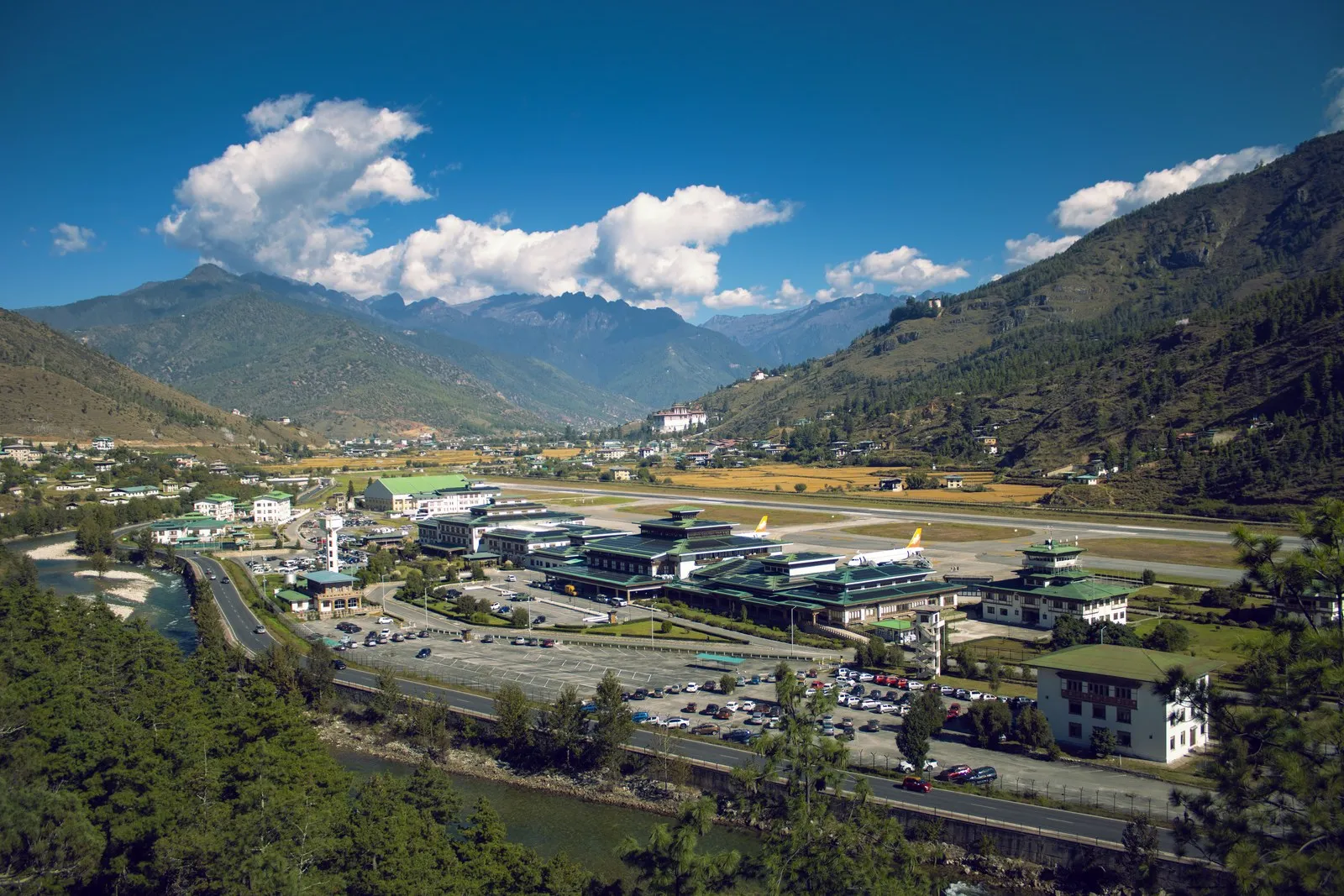
  9. Paro airport in its valley from the hillside above, the town and the river beside it

    09

    Departure

    Departure

    After breakfast, the transfer to Paro airport for your flight onward.

Like the route? We will write it for your dates.

The price

What the price covers

The commonest reason travellers abandon an enquiry is not knowing what is covered. Every Rang Travels quotation itemises it — this is the usual shape for this journey.

Included

  • 8 nights in hotels with breakfast
  • A private car with driver, and a licensed English-speaking Bhutanese guide throughout
  • Your Bhutan visa and the Sustainable Development Fee, arranged with your booking
  • Airport transfers at Paro, and the sightseeing and walks in the programme

Not included

  • Flights to and from Paro
  • Entrance fees at dzongs, temples and museums
  • Lunches and dinners
  • Spa treatments
  • Travel insurance and tips
  • Drinks, laundry and personal expenses

Price on request

Quoted to your dates,
your hotels and your pace

Before you book

Visas, long drives and the Tiger’s Nest

Nine days cover a good part of the country. Please read these before you confirm.

Visa and fees

  • Bhutan’s visa and its daily Sustainable Development Fee are arranged through us with your booking.
  • Your passport should be valid for at least six months from the day you arrive.
  • Indian nationals travel on a permit rather than a visa and pay a lower fee; tell us your nationality when you enquire.

The long drives

  • Three days are long ones on winding mountain roads: about six and a half hours from Punakha to Bumthang, four and a half from Bumthang to Phobjikha, and six to seven from Phobjikha to Paro.
  • If you are prone to car sickness, bring what you usually take; your driver will stop whenever you need to.
  • Weather and roadworks can slow the mountain roads, especially in the monsoon, and the times can stretch.

At dzongs and temples

  • Wear long sleeves and long trousers or skirts, and take your hat off inside.
  • Photographs are not allowed inside the temples and shrine rooms; your guide will tell you where the line is.
  • Tashichho Dzong opens to visitors on weekdays after office hours, and during the day at weekends.

The Tiger’s Nest walk

  • About two hours up to the viewpoint, uphill all the way, and less coming down. You need to be reasonably fit.
  • Wear walking shoes with a good grip and carry water and a warm layer; the path is dusty in dry weather and slippery after rain.

Flights

  • Only Bhutan’s own two airlines fly into Paro, and only in daylight. Weather can delay them, so leave some slack in onward connections.

Questions

Before you go

The questions travellers ask about this journey, answered from the itinerary itself. Anything else — ask, and a curator replies.

When is the best time to go?

Spring, from March to May, and autumn, from September to November, when the skies are clearest. The black-necked cranes are in Phobjikha from late autumn until the end of winter, so a November departure brings both.

How long are the drives?

Three days are long: about six and a half hours from Punakha to Bumthang, four and a half from Bumthang to Phobjikha, and six to seven from Phobjikha to Paro. The passes, the villages and the stops break them up.

Will we see a festival?

Only if your dates meet one. Bumthang, Punakha, Thimphu and Paro all hold tsechus, many of them in spring and autumn; tell us your window and we will check the calendar.

Do I need a visa?

Yes, unless you hold an Indian, Bangladeshi or Maldivian passport. We arrange the visa and the daily Sustainable Development Fee with your booking, and the permit for Indian nationals.

How fit do I need to be?

Fit enough for the Tiger’s Nest: about two hours uphill to the viewpoint, at around 3,000 metres. The rest is sightseeing and short walks, with longer ones in Punakha and Bumthang if you want them.

Can I break the drive to Bumthang?

Yes. A night in Trongsa, with a visit to its dzong, turns one long day into two easy ones. Ask, and we will write it in.

The gallery

On the road

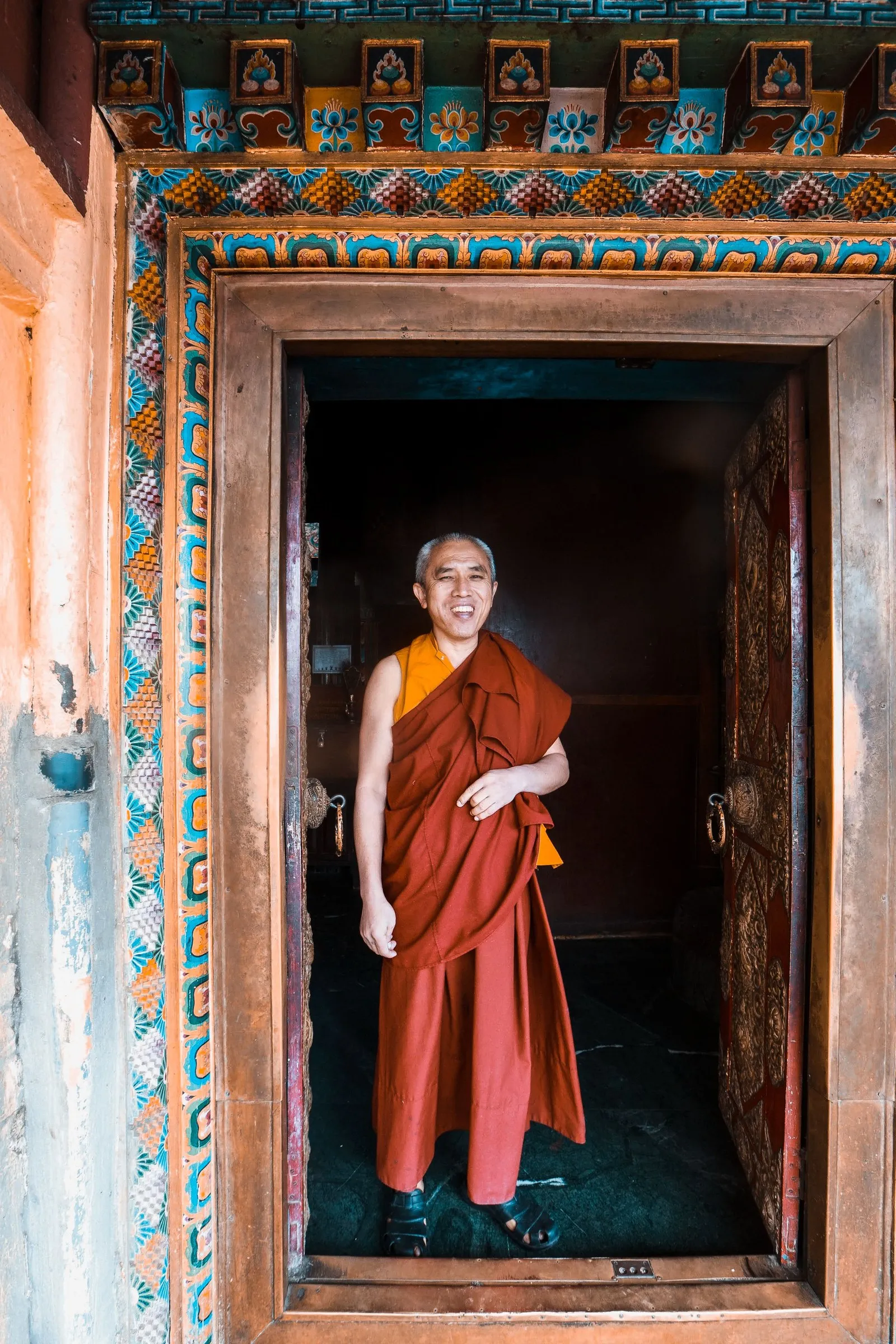
  • A monk smiling in the painted doorway of a temple, Bhutan
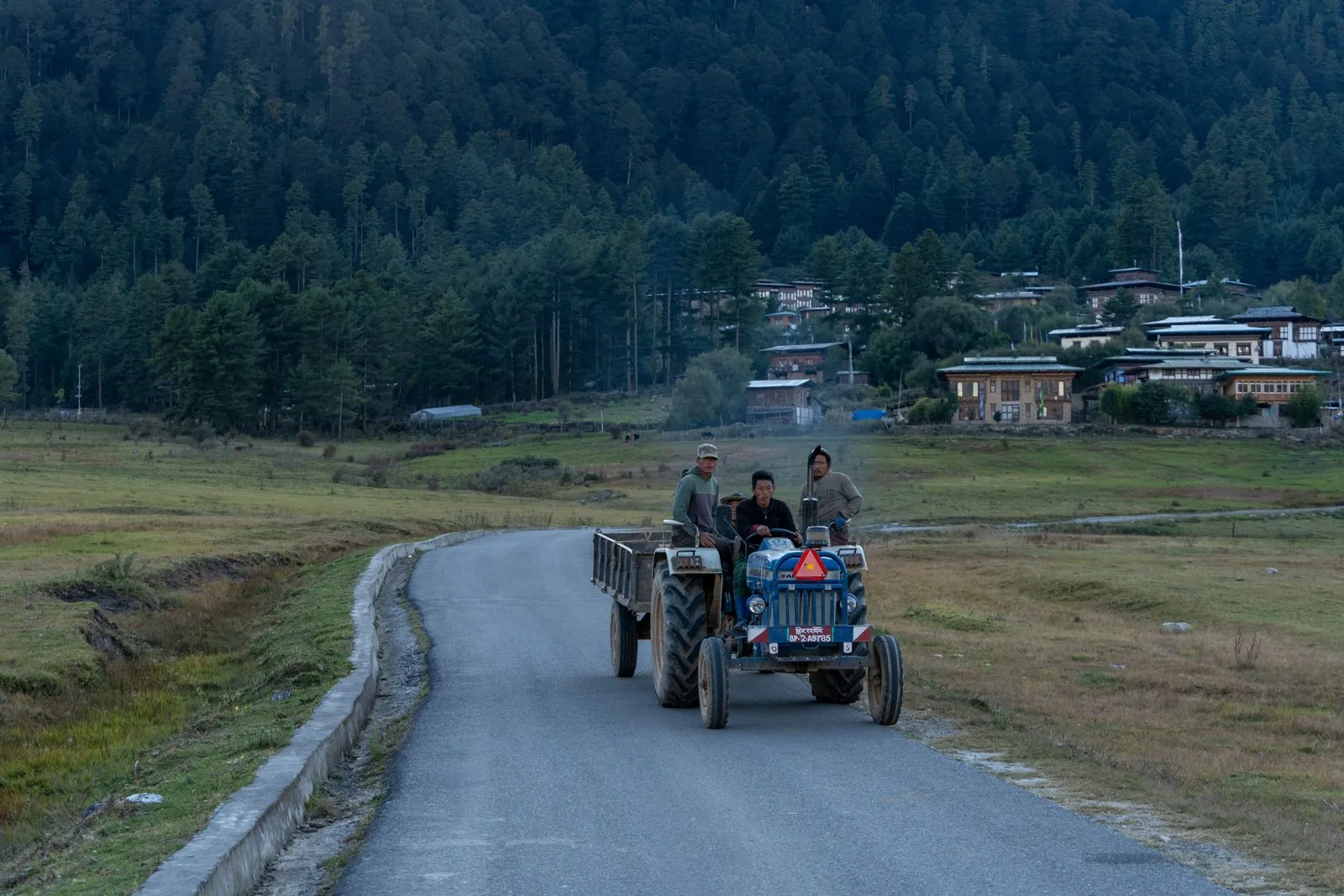
  • Farmers riding a tractor along a valley road in Bhutan
  • A handwoven Bhutanese textile, patterned in reds, greens and gold
  • Two novice monks walking through a monastery passage, Bhutan

Reviews

In their own words

Word for word, several in Italian, because Italy found us early. 5.0 from 146 reviews on Google, and 5.0 from 200 on TripAdvisor.

I had an incredible adventure with Rang Travels in Northern India earlier this year! The tour was jam packed. I loved the beautiful forts and buildings we visited, the markets, as well as the stunning World Heritage hotels. This tour gave me a real taste for India, and I felt very comfortable for my first time visiting!

Read the whole review on Google

Jess Foster

Northern India · May 2025

1 / 19

Enquire

Plan my journey

Tell us where your India begins — we reply with a written itinerary.

Travellers
When, roughly
Interests
Or ask on WhatsApp

No obligation. We reply with a written itinerary, not a sales call.