Rang Travels — explore the colors of India
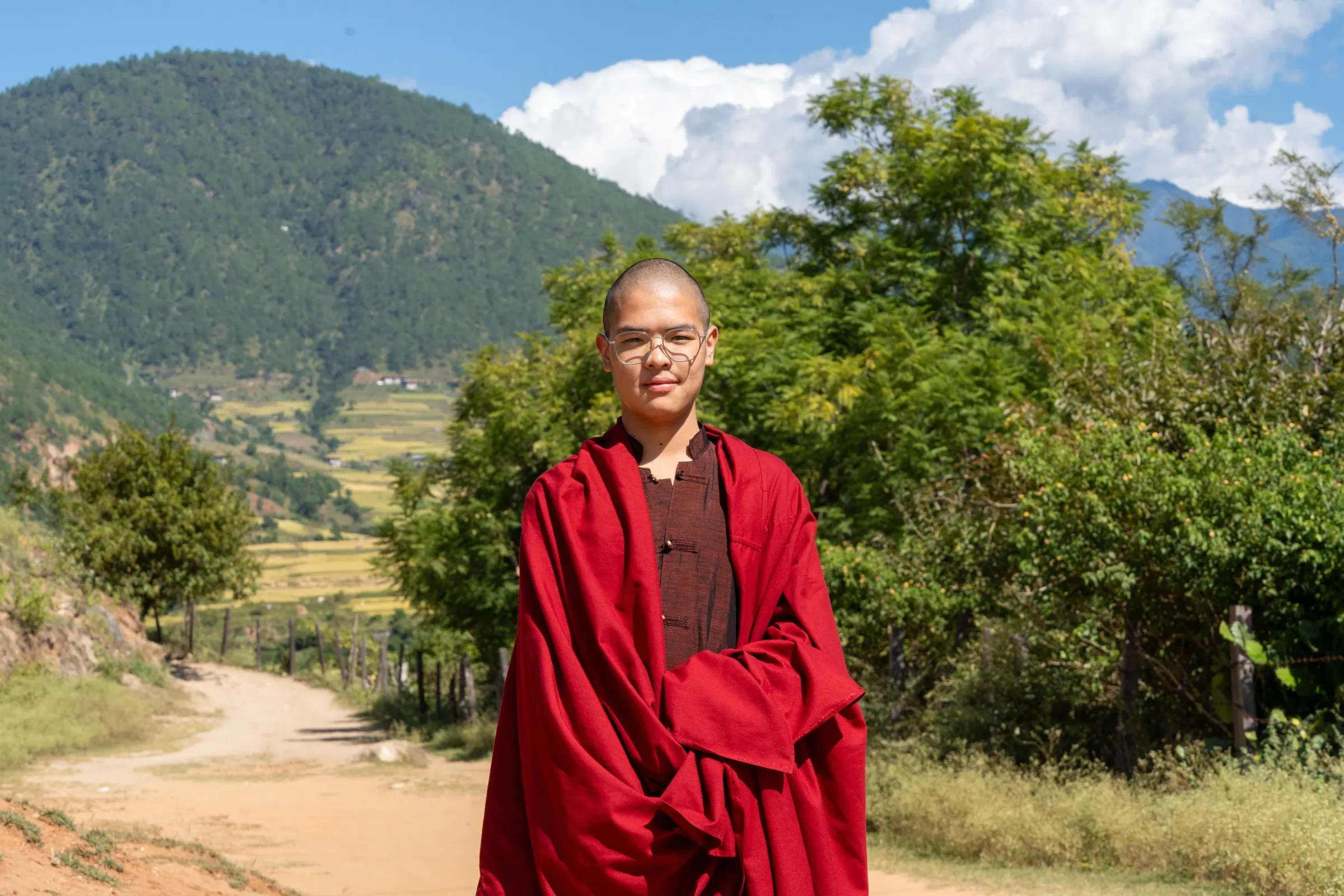
A young monk in a red robe on a farm track, terraced fields and forested hills behind, Bhutan

Trekking · Himalaya · Spiritual

Trekking in Bhutan

Three days on foot from the Phobjikha valley, with Paro, Thimphu and Punakha either side

See the day-by-day
Duration
11 days · 10 nights
Halts
9
Paro to Paro
Best months
March – May · September – November
Price
On request
quoted to your dates

The journey

Eleven days in Bhutan with a three-day camping trek from the Phobjikha valley to Gogona and Khotokha, plus the Tiger’s Nest, Thimphu and Punakha.

This is Bhutan on foot as well as on wheels. The first days go to the great sights of the west — the Tiger’s Nest, Thimphu, Dochu La — and then the road gives out in the Phobjikha valley, where black-necked cranes winter below Gangtey’s monastery. From there you walk for three days with a camp crew, over three passes and through forest of juniper, magnolia and rhododendron, to the herding villages of Gogona and Khotokha, and down to the river.

The trek is moderate rather than hard — five to seven hours a day, with camps at around 3,000 metres — and it comes after five days in the valleys, so you are used to the height before you start. Afterwards come the rewards of the road again: Punakha Dzong at the meeting of its two rivers, the great bronze Buddha above Thimphu, a try at archery at Simply Bhutan, and a last evening in Paro.

Highlights

What you will remember

  • The walk to the Tiger’s Nest, and Drukgyel Dzong below Jomolhari

  • Thimphu’s Memorial Chorten, Changangkha Lhakhang and the takin preserve

  • Over Dochu La to Wangdue Phodrang

  • The Phobjikha valley, winter home of the black-necked crane, and Gangtey Goemba

  • Three days’ trekking over Tsele La, Shobju La and Tashi La, camping at Gogona and Khotokha

  • Punakha Dzong, Buddha Dordenma and Simply Bhutan

  • Rinpung Dzong and the National Museum in Paro

The route

10 halts, in order

  1. Paro
  2. Thimphu1 night
  3. Wangdue1 night
  4. Gangtey1 night
  5. Gogona1 night
  6. Khotokha1 night
  7. Wangdue1 night
  8. Punakhapass through
  9. Thimphu1 night
  10. Paro

Experiences

The moments it is built around

Everything else on this page is logistics. These are the reasons to come.

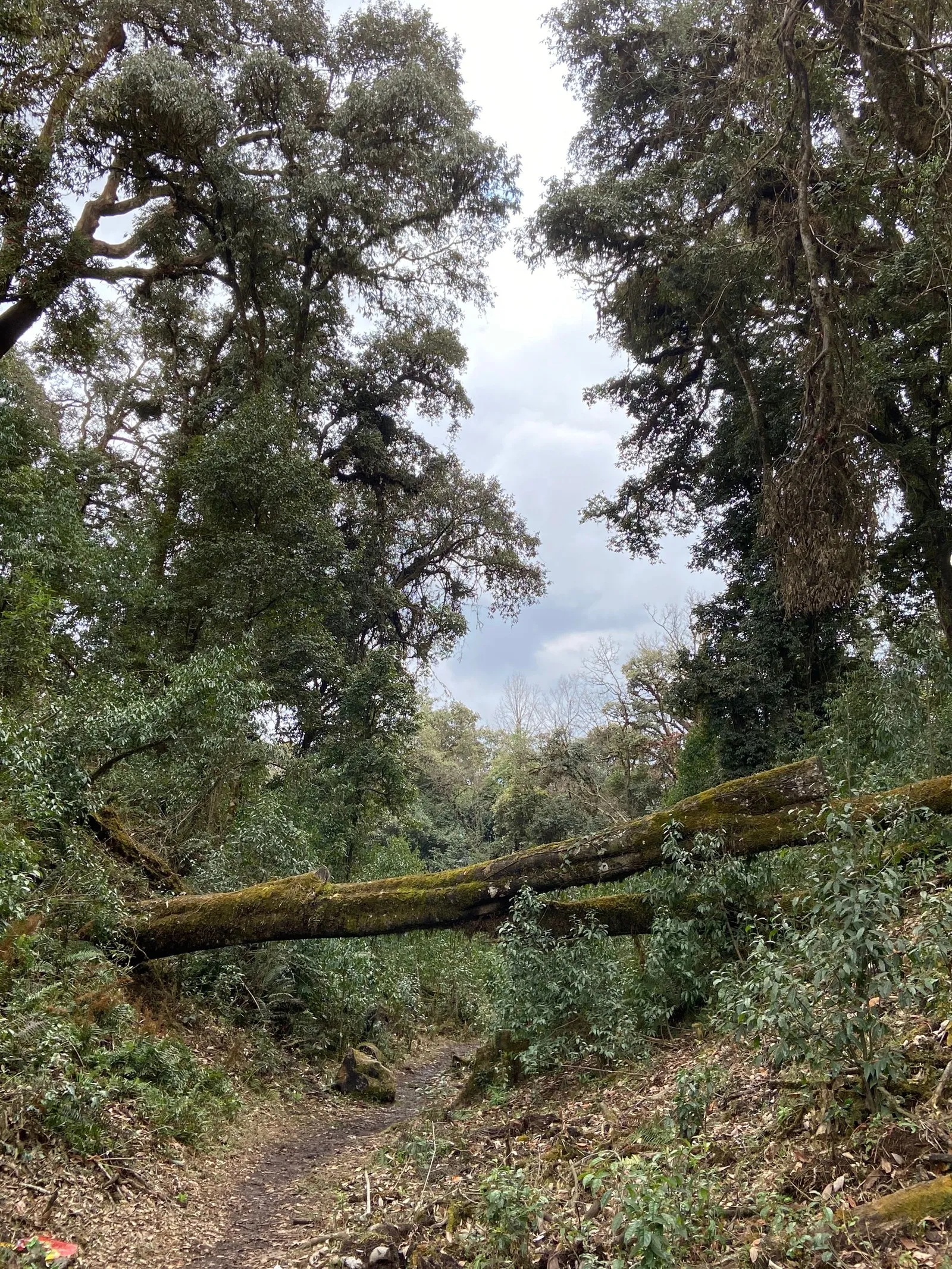
  • A forest trail under old trees near Punakha

    Three days on foot

    Meadows, juniper and rhododendron forest, and three passes between Phobjikha, Gogona and Khotokha.

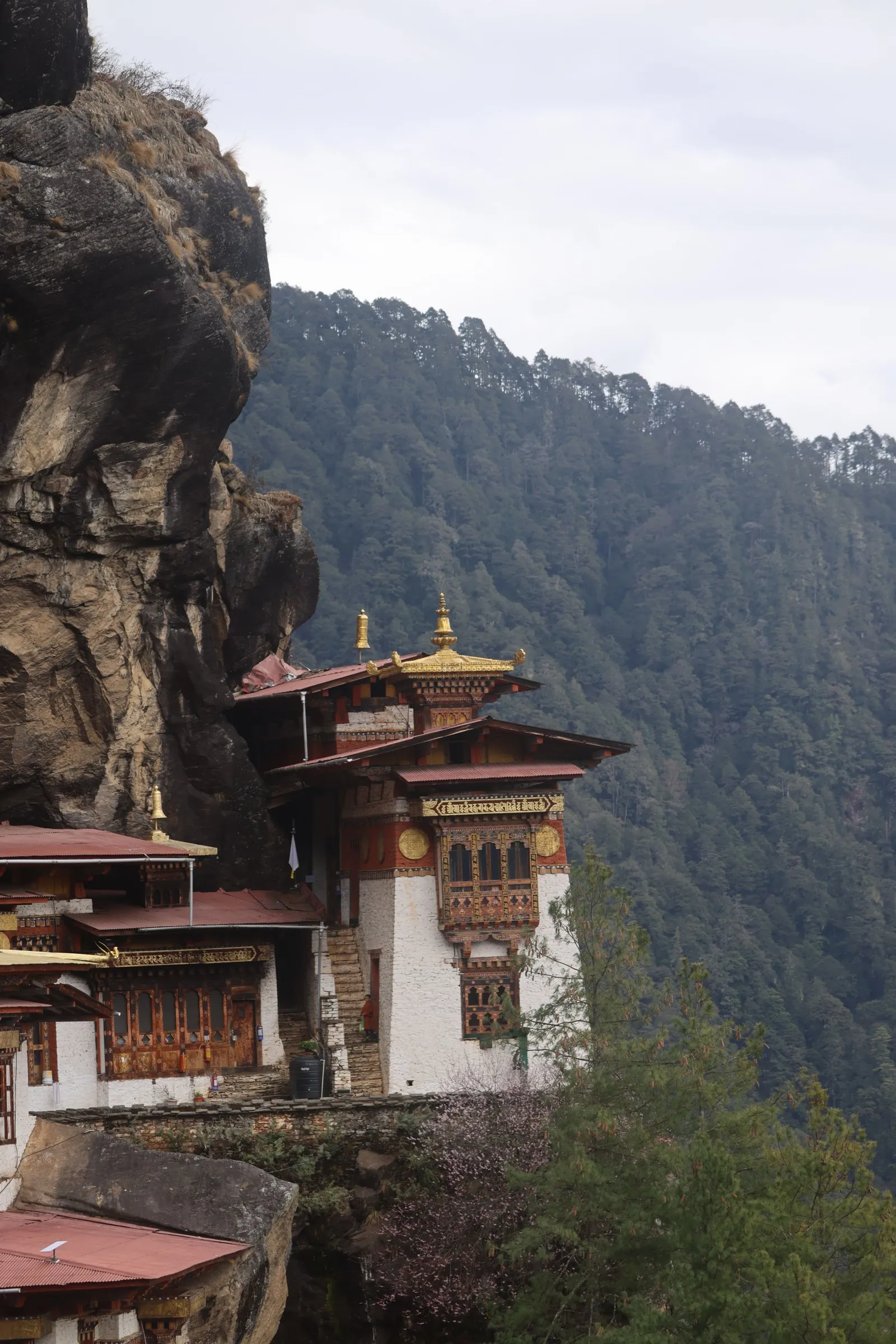
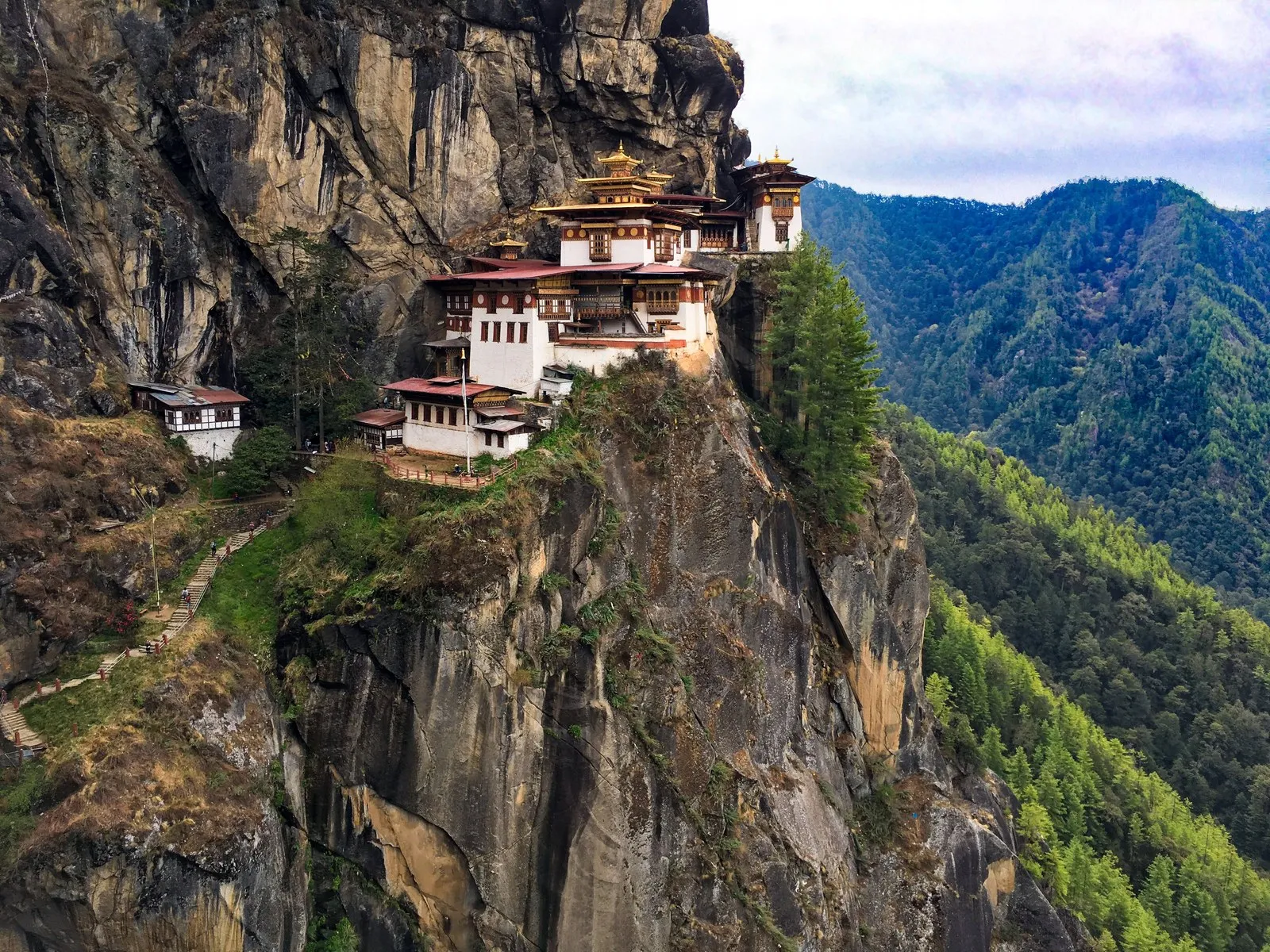
  • The Tiger’s Nest monastery against its granite cliff, forest below, Paro

    The Tiger’s Nest

    Two to three hours uphill through villages and pine forest to the viewpoint across from the monastery.

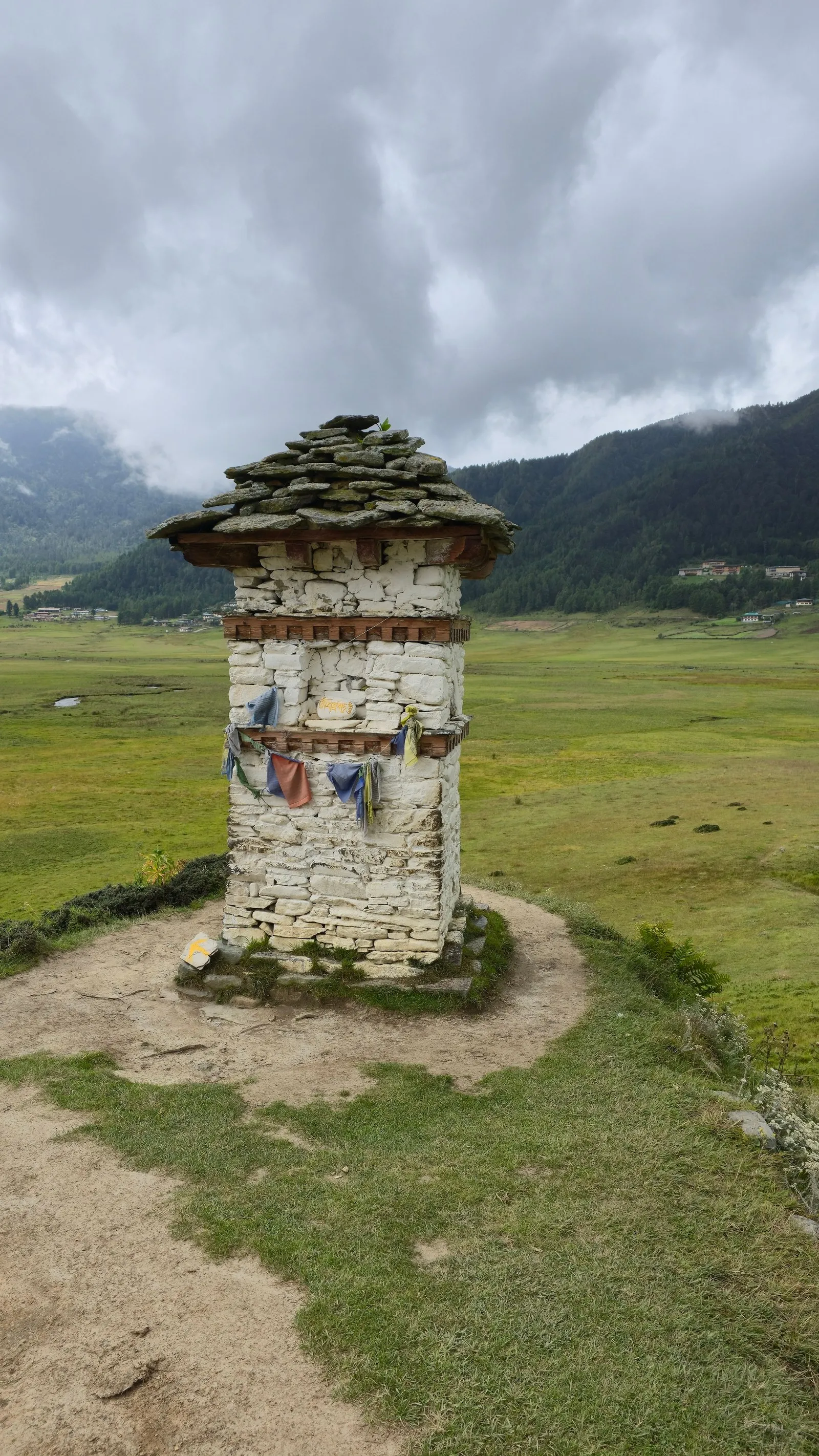
  • A chorten on the open grassland of a high valley in Wangdue Phodrang

    The Phobjikha valley

    A wide glacial valley below Gangtey’s monastery, where black-necked cranes come for the winter.

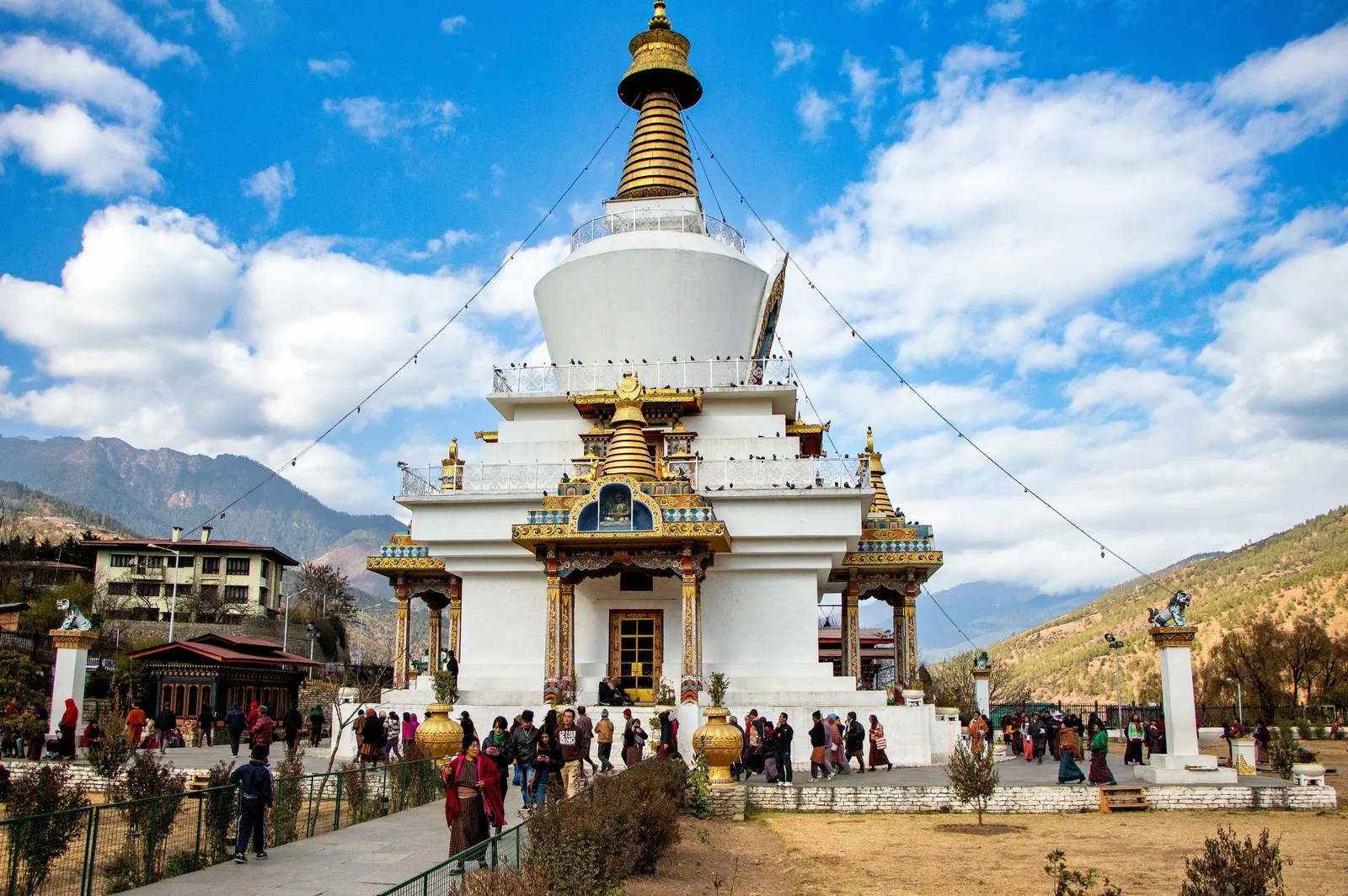
  • The Memorial Chorten in Thimphu, people walking around it

    The Memorial Chorten

    Built in 1974 for the third king, and walked around from morning to night by Thimphu’s faithful.

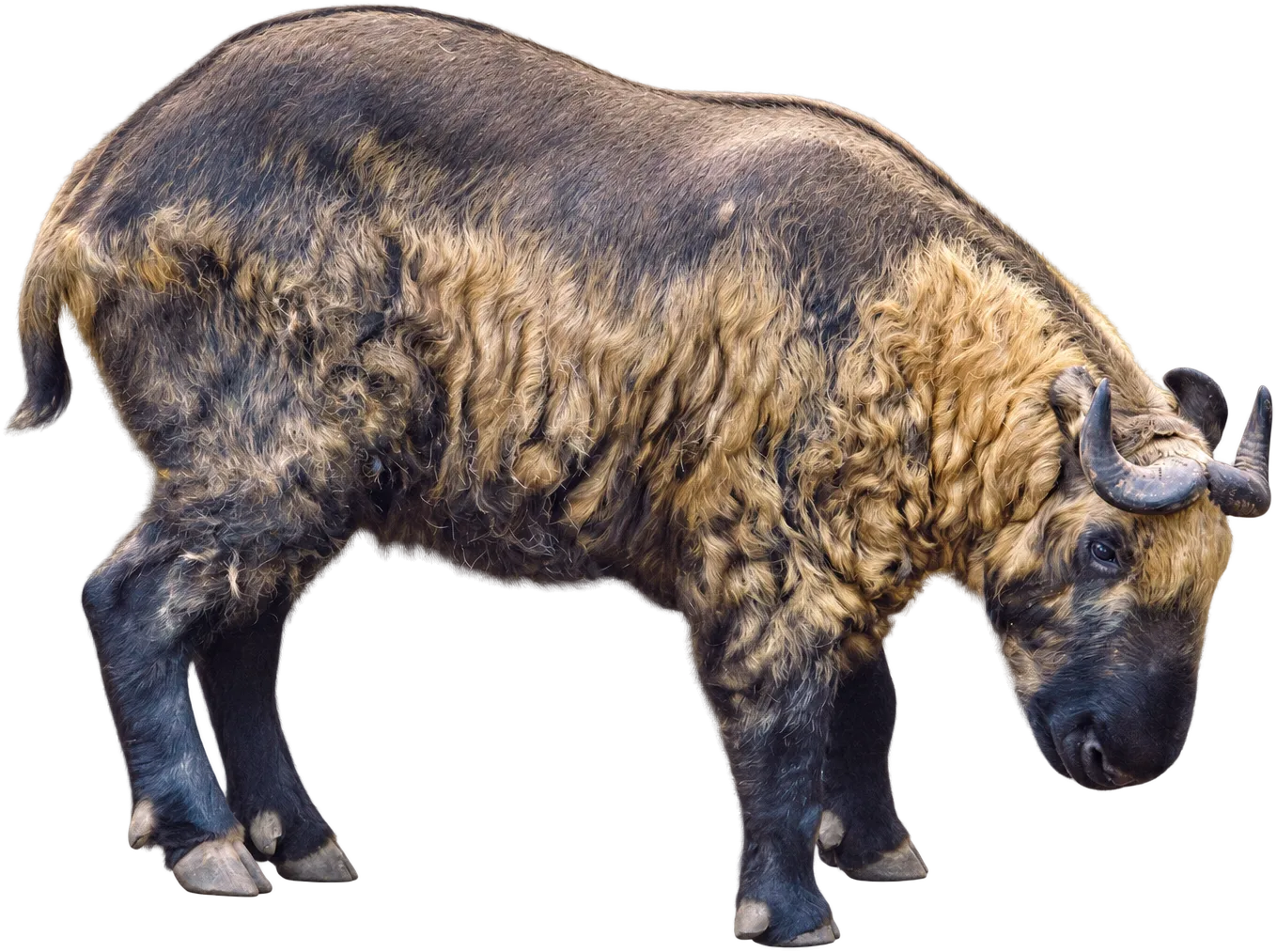
A takin, Bhutan’s national animal, its head lowered to a stream

Trekking · Himalaya · Spiritual

Three days on foot from the Phobjikha valley, with Paro, Thimphu and Punakha either side

11 days, 10 nights

The route, day by day

Every halt, every overnight and every drive, published in full.

  1. Paro
  2. Thimphu
  3. Wangdue
  4. Gangtey
  5. Gogona
  6. Khotokha
  7. Wangdue
  8. Punakha
  9. Thimphu
  10. Paro
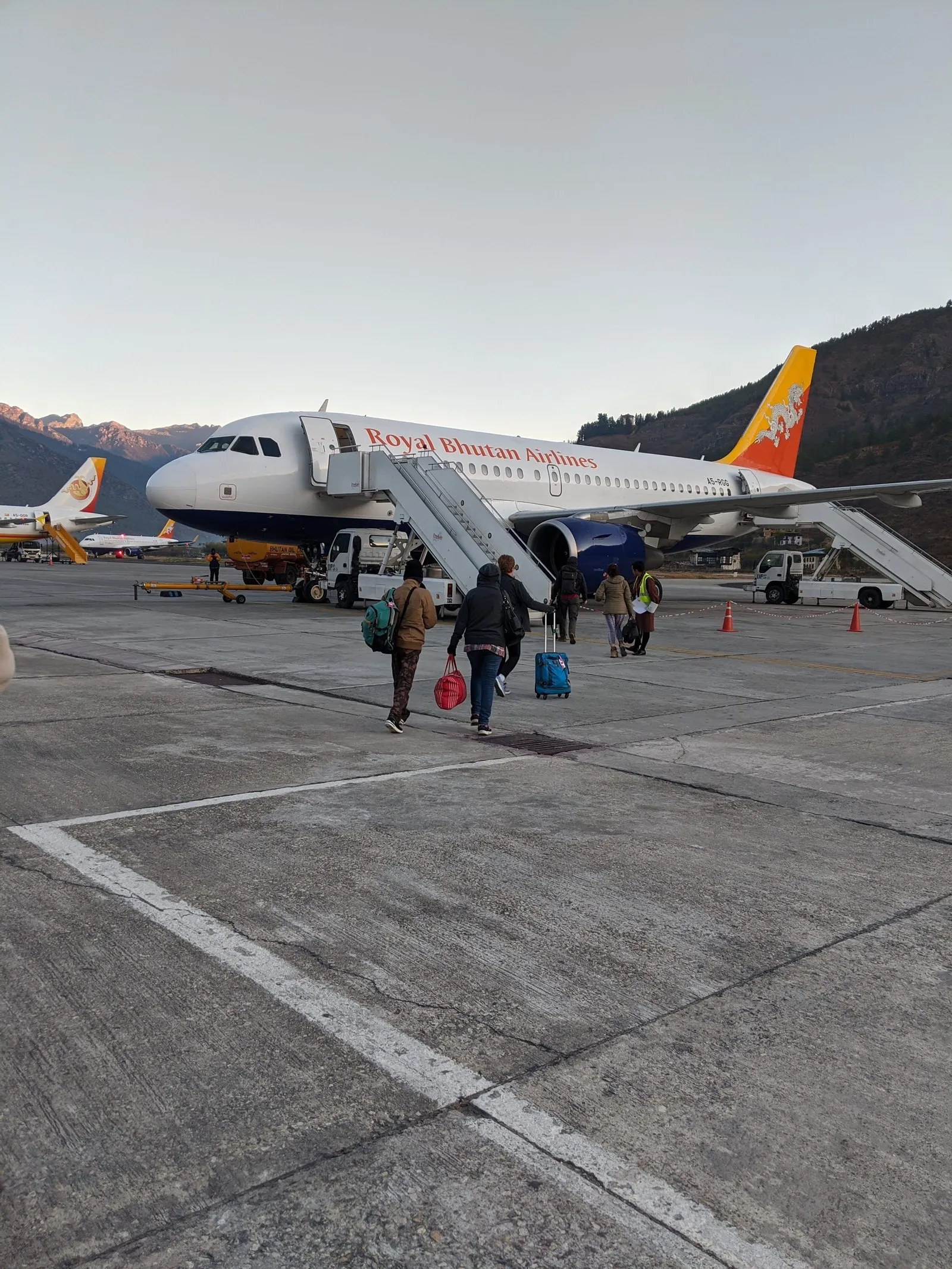
  1. Passengers crossing the apron to a Druk Air plane at Paro airport, the hills behind

    01

    Overnight Paro

    Arrival in Paro

    The flight into Paro is one of the finest in the Himalaya: snow peaks along the window on a clear day, then a steep, turning descent between wooded ridges into the valley. Met at the airport and taken to your hotel, you have the rest of the day to breathe the mountain air and settle in.

  2. The Tiger’s Nest monastery against its granite cliff, forest below, Paro

    02

    Overnight Paro

    The Tiger’s Nest and Drukgyel Dzong

    A day hike to the viewpoint opposite Taktsang, the Tiger’s Nest: two to three hours uphill all the way, through villages and pine forest. The monastery clings to a granite cliff some 900 metres above the valley. Guru Rinpoche is said to have flown here on a tigress in the eighth century and meditated in a cave in the rock, subduing the demons who stood in the way of Buddhism; the monastery was built over the cave at the end of the seventeenth century, and every Bhutanese hopes to make the pilgrimage once in a lifetime.

    Later, Drukgyel Dzong, at the head of the valley, built in the seventeenth century to hold the road against the armies of Tibet. On a clear day Jomolhari, more than 7,300 metres high, rises white behind it.

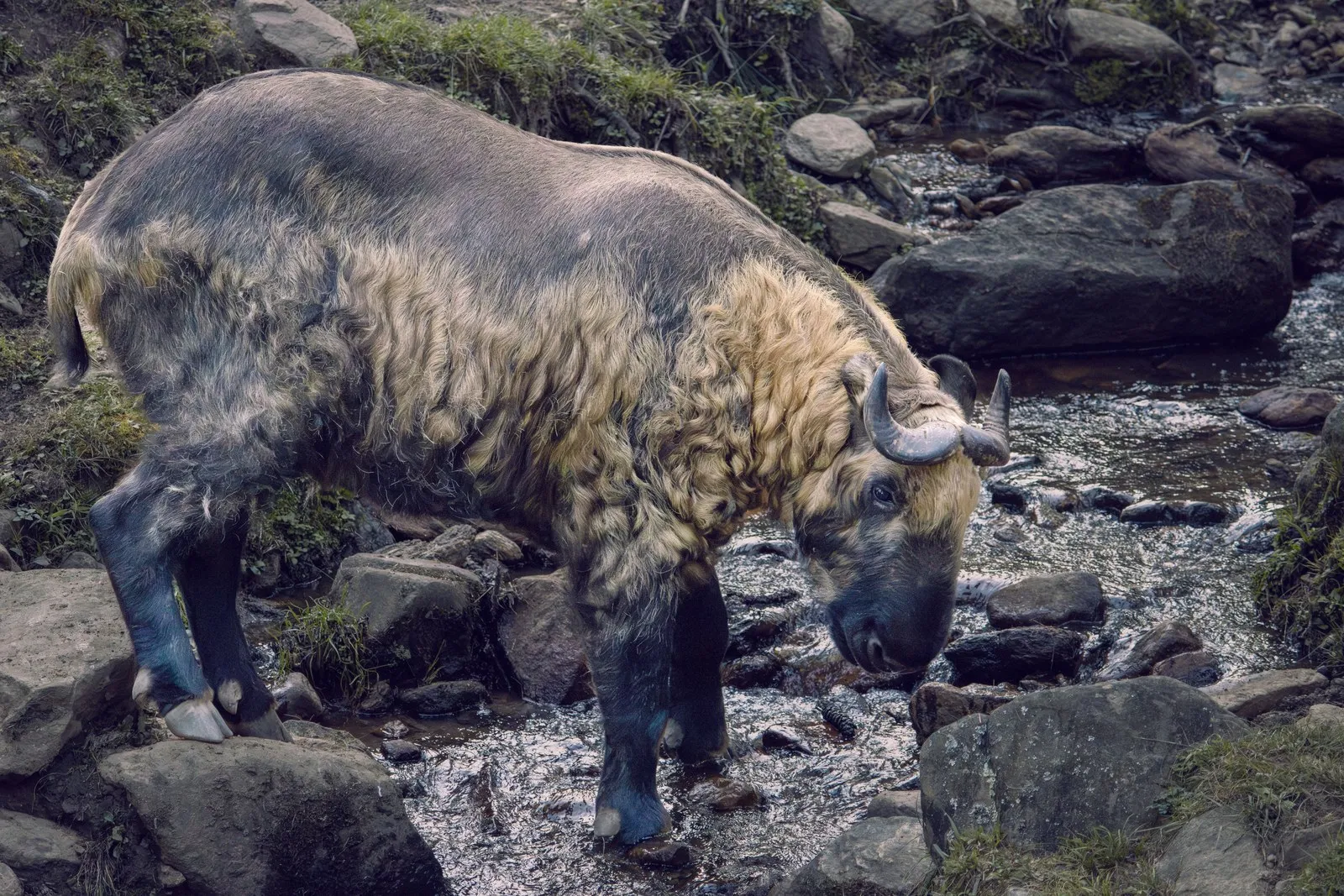
  3. A takin, Bhutan’s national animal, at a forest stream in Thimphu

    03

    Overnight Thimphu

    50 km · about 1½ hrs

    Paro to Thimphu

    The drive to Thimphu, and an afternoon in the capital. The Memorial Chorten was built for the third king, Jigme Dorji Wangchuck, and Changangkha Lhakhang, on its ridge, dates from the fifteenth century. At the Motithang Takin Preserve you meet Bhutan’s national animal, the takin, a heavy, shaggy cousin of the goat that the Divine Madman is said to have made from the bones of a cow and the head of a goat.

    Then drive on up the hill for the long view down the valley, call at the Drubthob nunnery at Zilukha, which looks down on Tashichho Dzong, and finish with free time in the town, among the shops and the market stalls.

  4. Wangdue Phodrang Dzong on its ridge above the river

    04

    Overnight Wangdue

    80 km · about 3 hrs

    Over Dochu La to Wangdue Phodrang

    A morning of crafts in Thimphu: the painting school, the National Library, a goldsmith’s workshop and the handicraft centres. In the afternoon, three hours east over Dochu La, at over 3,000 metres, where on a fine day the eastern Himalaya is laid out along the horizon, Gangkhar Puensum among them — the highest mountain in Bhutan, and the highest in the world never climbed.

    From the pass the road drops all the way to the low, warm valley at Lobesa and on to Wangdue Phodrang, where you see the dzong from outside, on its ridge above the rivers, and walk through the market.

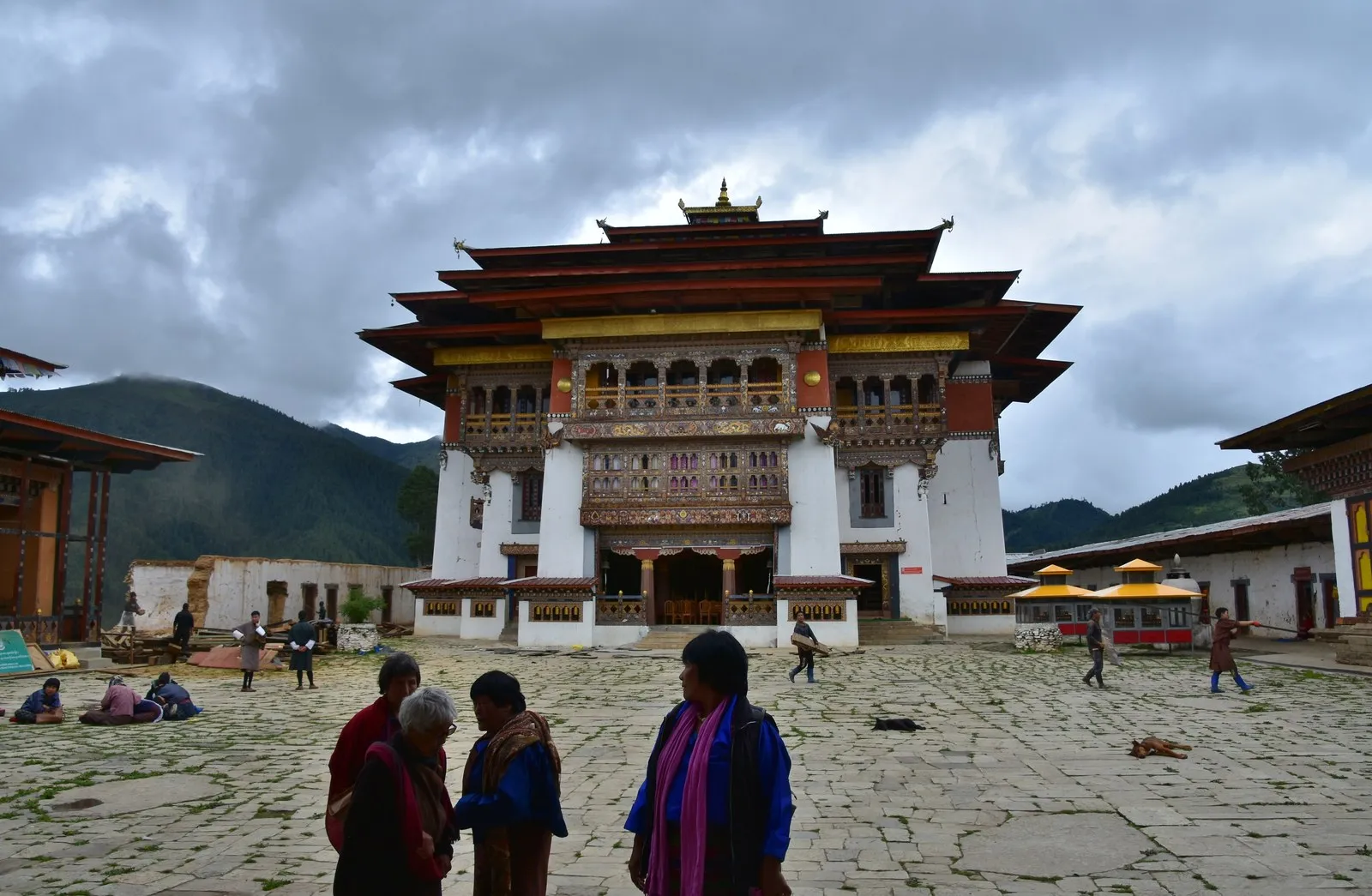
  5. Gangtey Goemba above the Phobjikha valley, people crossing its courtyard

    05

    Overnight Gangtey

    65 km · about 2 hrs

    Up to the Phobjikha valley

    Up into the Phobjikha valley, below Gangtey, at about 2,800 metres. Gangtey Goemba, the monastery over the valley, belongs to the Nyingma school, the oldest in Tibetan Buddhism. The valley is the winter home of the black-necked crane: several hundred birds fly in from the Tibetan plateau and stay four or five months, and the Royal Society for Protection of Nature watches over them. While they are here, the villagers avoid loud noise and do not fish in the river.

    In the afternoon, explore the wide glacial valley on foot — the marshes, the potato fields and the villages along its edge — before the first night under canvas, at a camp the crew has set up ahead of you.

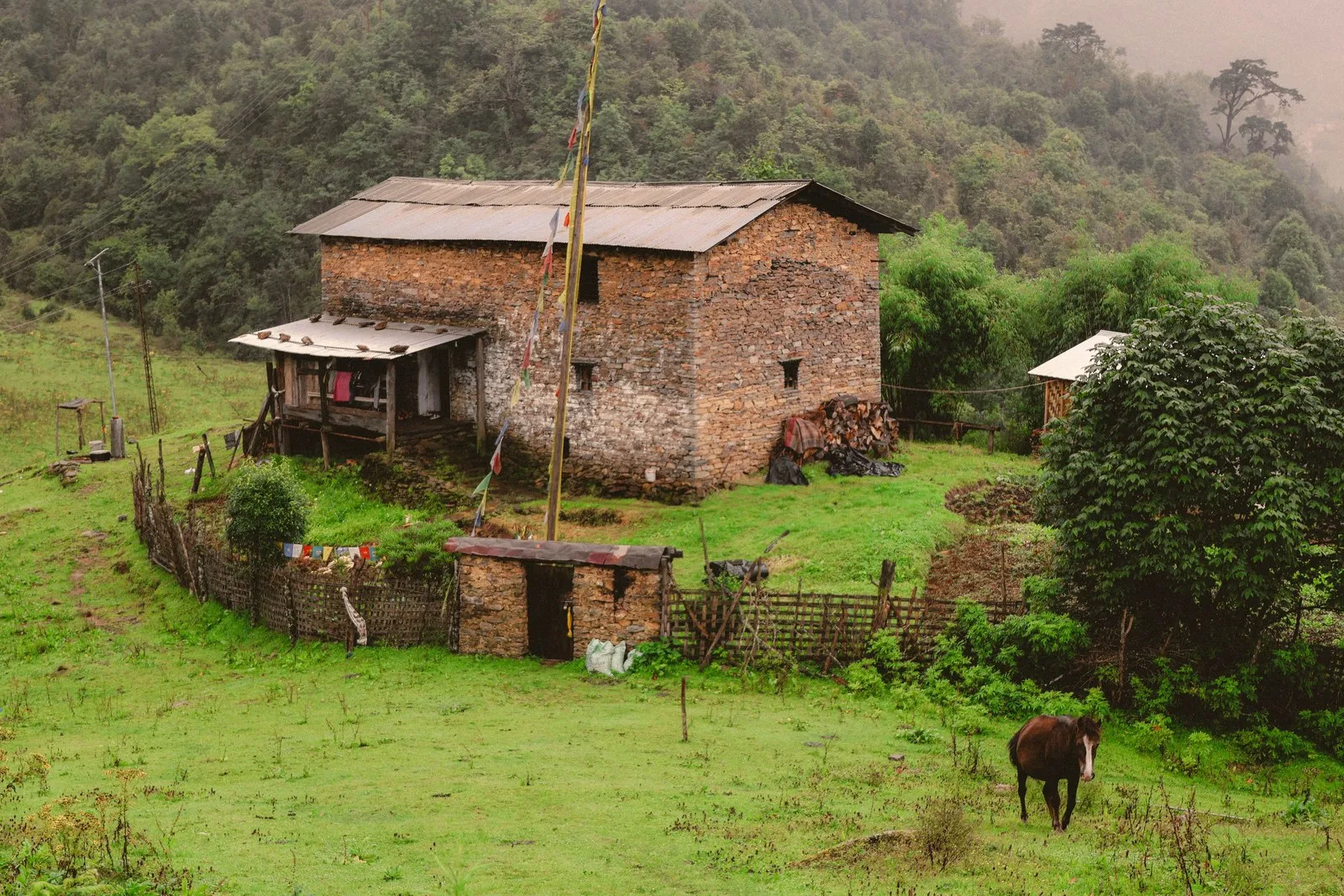
  6. A stone farmhouse and its fields in the green hills of Bhutan

    06

    Overnight Gogona

    Trek · 5–6 hrs

    Trek to Gogona

    The trek begins. A moderate trail runs through meadows and fields, then climbs to Tsele La, through forest of juniper, bamboo, magnolia and rhododendron. On the far side lies Gogona, a village of herders who speak their own dialect. The camp is at about 3,200 metres, and the walking takes five to six hours.

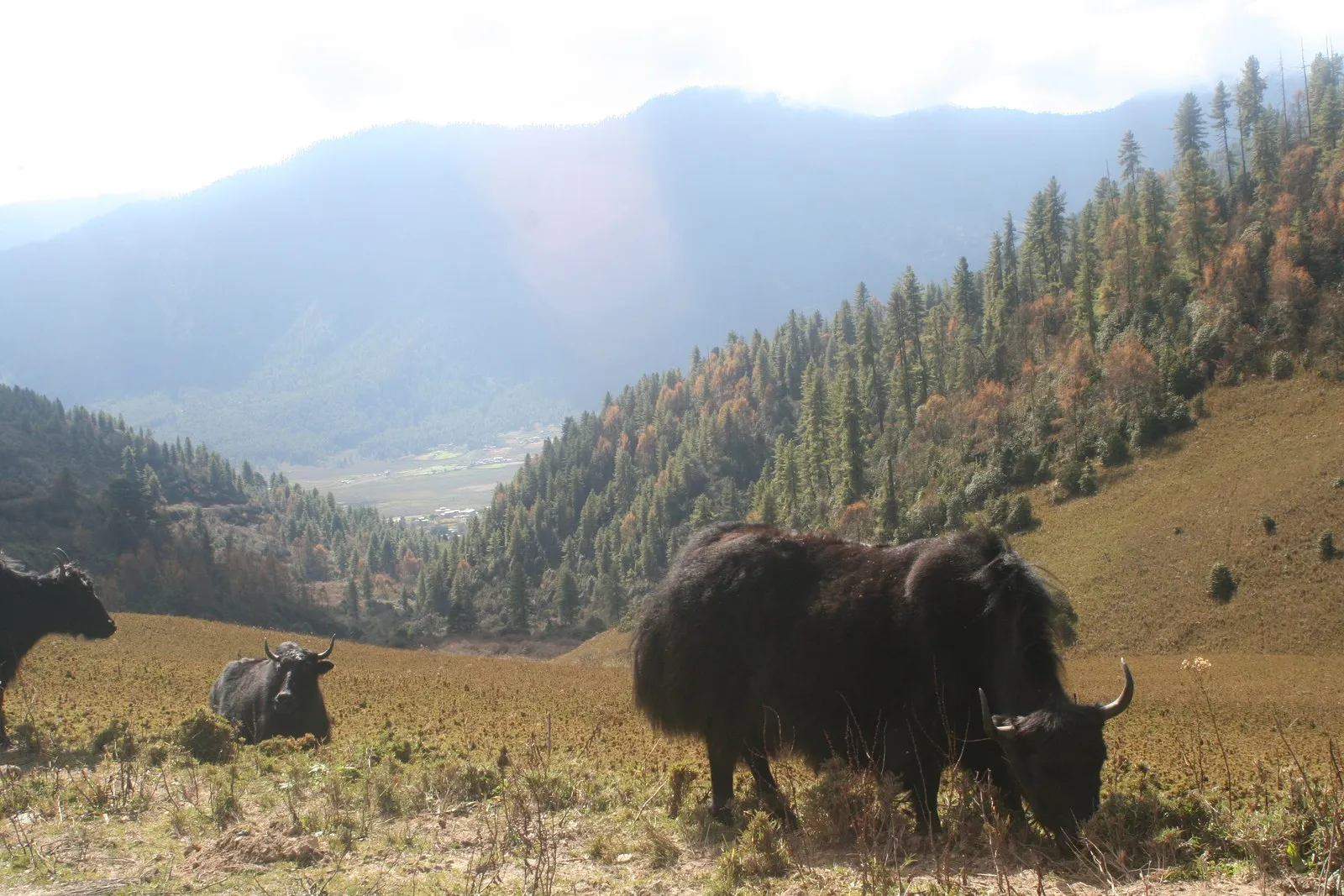
  7. Yaks grazing on the slopes above the Phobjikha valley

    07

    Overnight Khotokha

    Trek · 5–6 hrs

    Trek to Khotokha

    A gentle climb to Shobju La, at about 3,700 metres, the highest point of the trek, with a view over a wide, open valley. Then a long, gradual descent to camp at Khotokha, at about 3,100 metres. Another five to six hours on foot, and the last night under canvas.

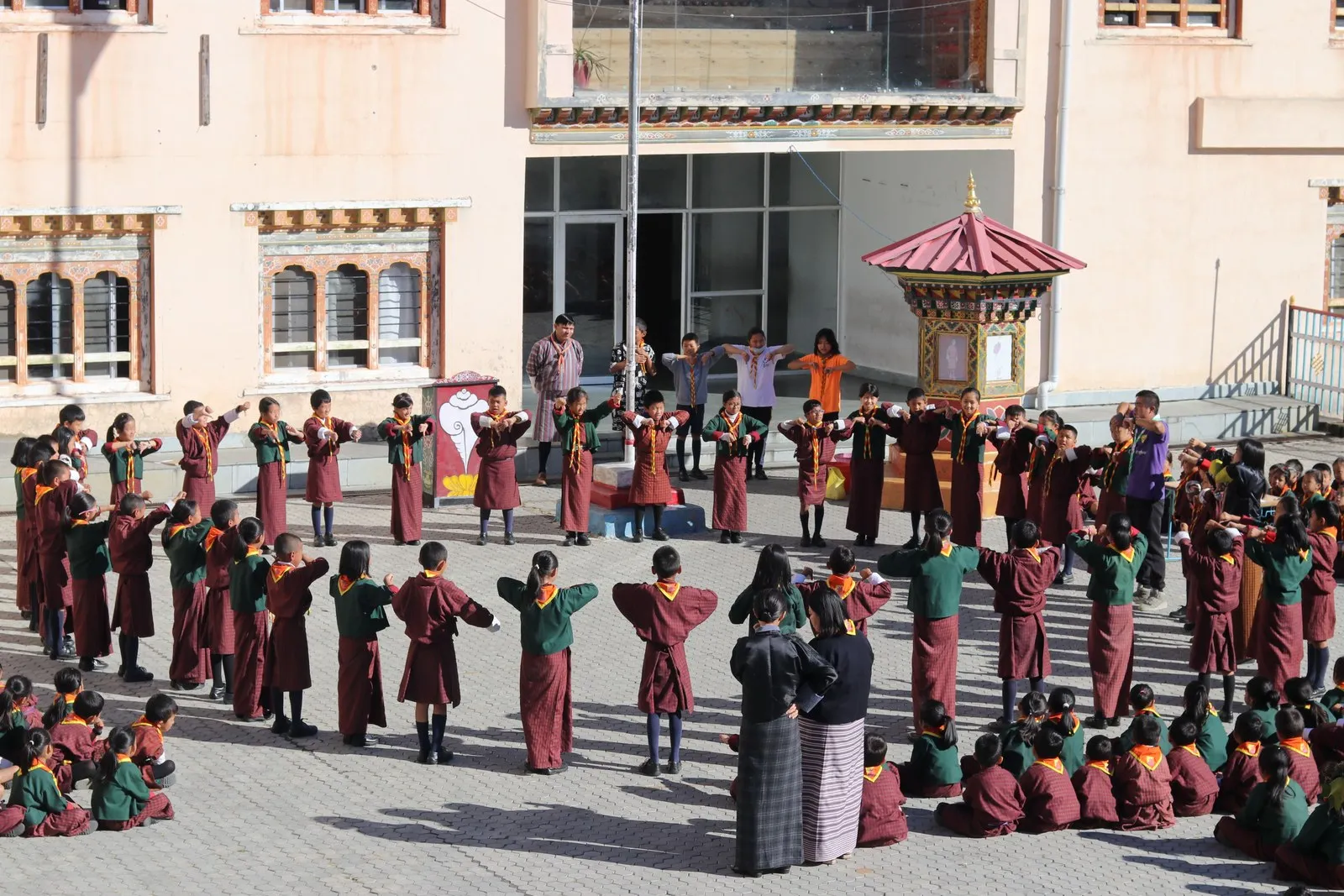
  8. Schoolchildren in gho and kira at a morning assembly in Wangdue Phodrang

    08

    Overnight Wangdue

    Trek · 6–7 hrs · then 15 km by road · about 40 min

    Over Tashi La, and down to Wangdue

    The last day’s walking, from Khotokha by way of Nizergang: a short climb to Tashi La, at about 3,300 metres, then a long descent. Fill your water bottles soon after the pass, because the way down is very dry. The forest changes as you drop, all the way to the Dang Chhu at about 1,400 metres and the road at Chuzomsa, six to seven hours in all. The car is waiting for the forty-minute drive to Wangdue Phodrang, a hotel and a hot shower.

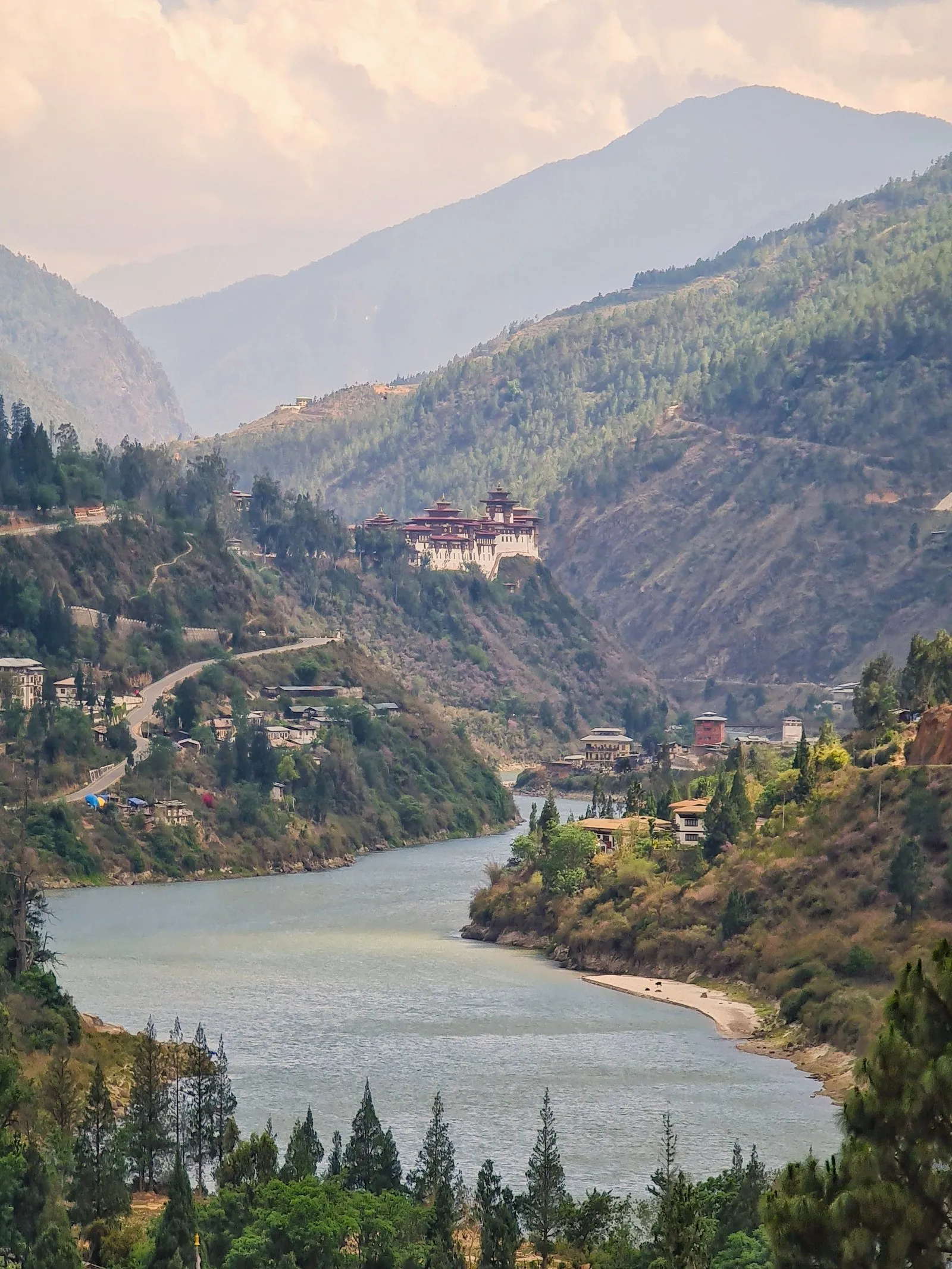
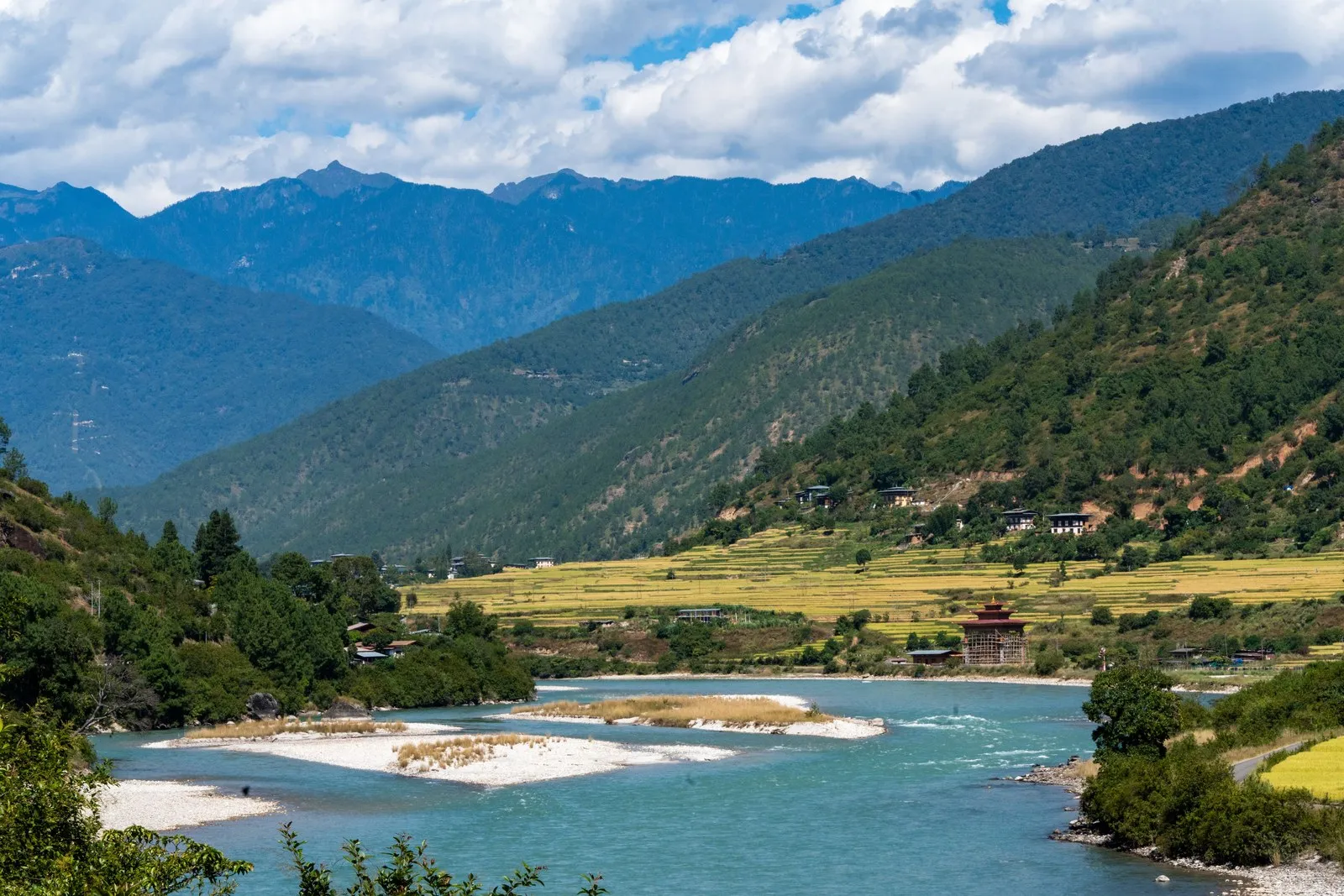
  9. The Punakha valley: a turquoise river, rice fields and forested hills

    09

    Overnight Thimphu

    90 km · about 3 hrs

    Punakha Dzong, and back to Thimphu

    In the morning, Punakha Dzong, the fortress of the old capital, built between two rivers. Fire, glacial floods and earthquake have all damaged it over the centuries, and it has been restored each time. Each year, around February, a procession called the Punakha Serda marks the old victory over the Tibetan armies. Then back over Dochu La to Thimphu for the night.

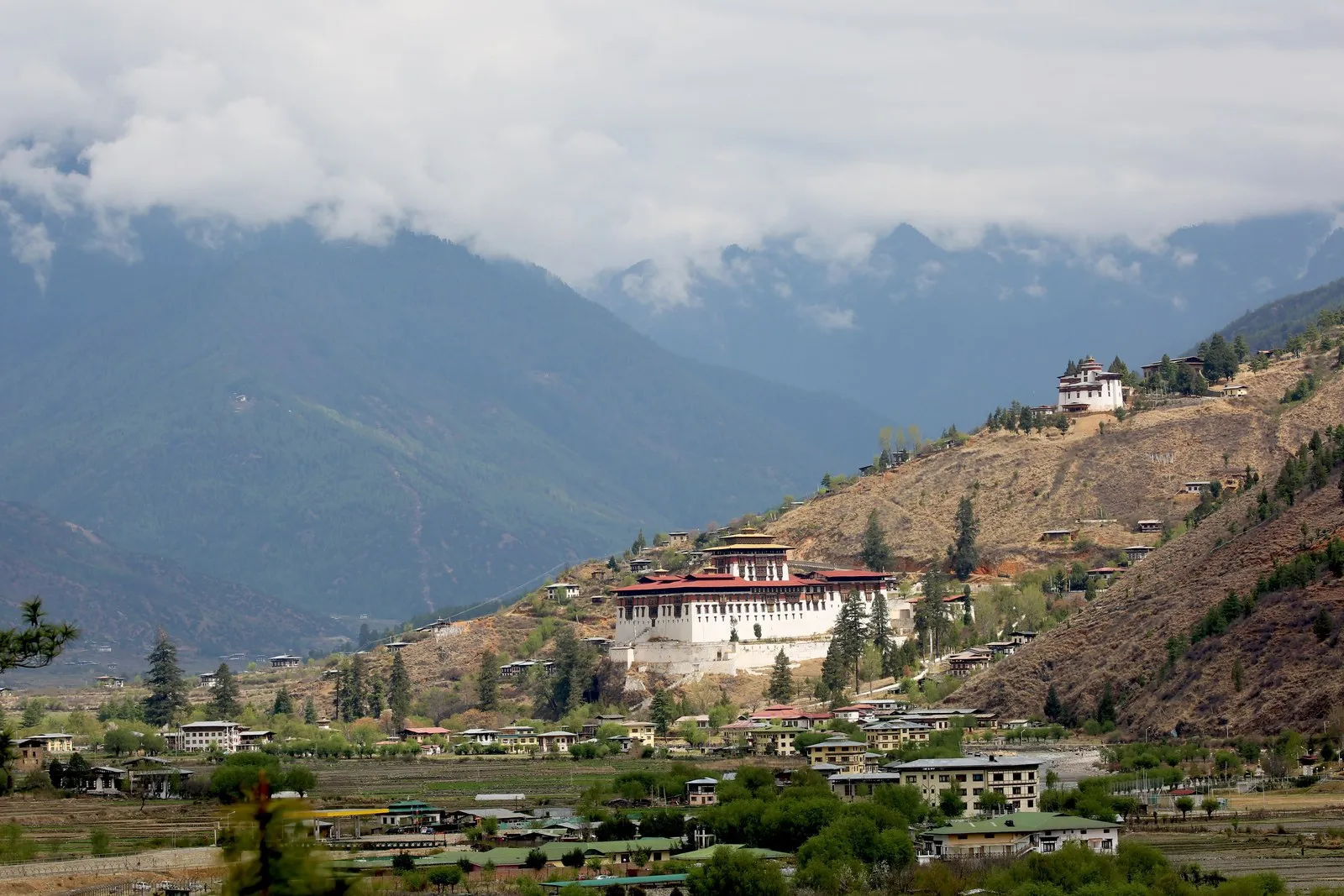
  10. The Paro valley, Rinpung Dzong and the Ta Dzong watchtower above the town

    10

    Overnight Paro

    50 km · about 1½ hrs

    Buddha Dordenma, Simply Bhutan and Paro

    Buddha Dordenma sits on a hill in Kuensel Phodrang Nature Park, watching over the southern entrance to the Thimphu valley. The seated Shakyamuni is bronze, gilded and 51.5 metres tall, the largest statue in Bhutan; inside it are 125,000 smaller Buddhas, gilded bronze too, and its throne is a great meditation hall. It is said to fulfil a prophecy of the eighth century revealed by the treasure-finder Pema Lingpa.

    At Simply Bhutan, a living museum run with young Bhutanese to keep the old ways alive, you dress in gho or kira, watch ara, the local spirit, being distilled, and try your hand at archery, the national sport — and learn why culture is one of the four pillars of Gross National Happiness.

    Then the drive to Paro. The Ta Dzong, the old watchtower above the town, became the National Museum in the 1960s under the third king, with galleries on Bhutanese history and culture going back to the seventh century. Walk down to Rinpung Dzong, still the district’s administrative centre and a school for monks, then over the old covered bridge into the town and its market.

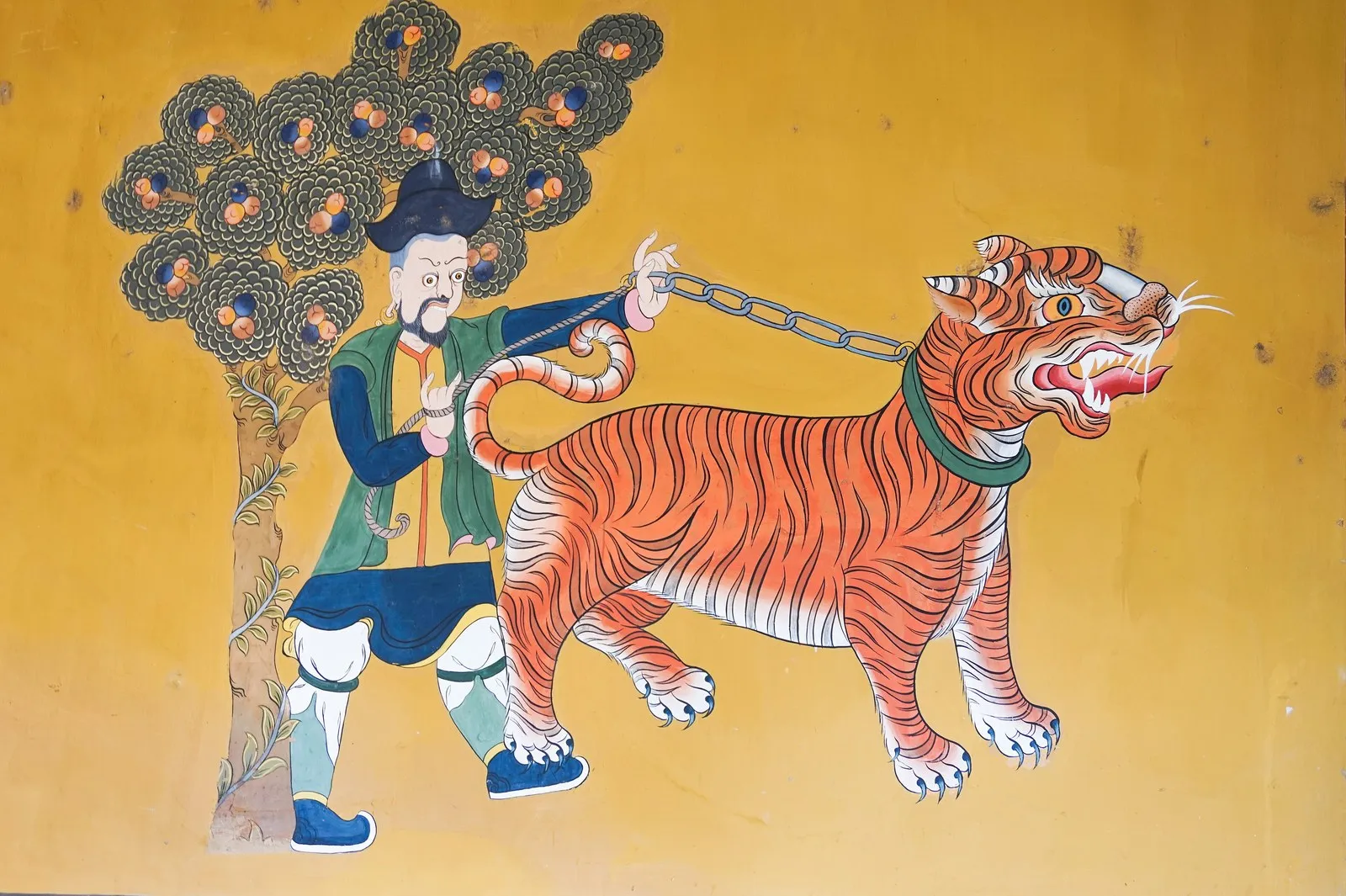
  11. A wall painting of a man leading a tiger, Rinpung Dzong, Paro

    11

    Departure

    Departure

    The transfer to Paro airport for your flight onward.

Like the route? We will write it for your dates.

The price

What the price covers

The commonest reason travellers abandon an enquiry is not knowing what is covered. Every Rang Travels quotation itemises it — this is the usual shape for this journey.

Included

  • 10 nights: 7 in hotels with breakfast, and 3 in camp with all meals
  • The trek crew — guide, cook and helpers — with the tents, the camp kitchen, and pack horses for the camp and your bags
  • A private car with driver on the road days, and a licensed English-speaking Bhutanese guide throughout
  • Your Bhutan visa and the Sustainable Development Fee, arranged with your booking
  • Airport transfers at Paro, and the sightseeing in the programme

Not included

  • Flights to and from Paro
  • Entrance fees at dzongs, temples and museums
  • Lunches and dinners on the hotel days
  • Sleeping bag and personal trekking gear
  • Travel insurance, which should cover trekking, and tips
  • Drinks, laundry and personal expenses

Price on request

Quoted to your dates,
your hotels and your pace

Before you book

The trek: fitness, altitude and camp

Three days of walking in the mountains, with camps at around 3,000 metres. Please read these before you confirm.

Fitness

  • The trek is moderate: five to seven hours of walking a day for three days, over three passes, on trails that climb steadily and then descend for long stretches. You should be used to full days of hill walking.
  • The Tiger’s Nest walk on day 2, two to three hours uphill, is a good test of how you will manage.
  • If you have a heart or lung condition, or trouble with your knees or balance, talk to your doctor and to us before you book.

Altitude

  • By the programme’s figures the camps are at about 3,100–3,200 metres and the highest pass, Shobju La, at about 3,700 metres. The days in Paro, Thimphu and Phobjikha before the trek help you acclimatise.
  • Walk at your own pace and drink plenty of water. Tell your guide at once about a headache, nausea or unusual breathlessness; the cure for altitude sickness is to go down.

Camping

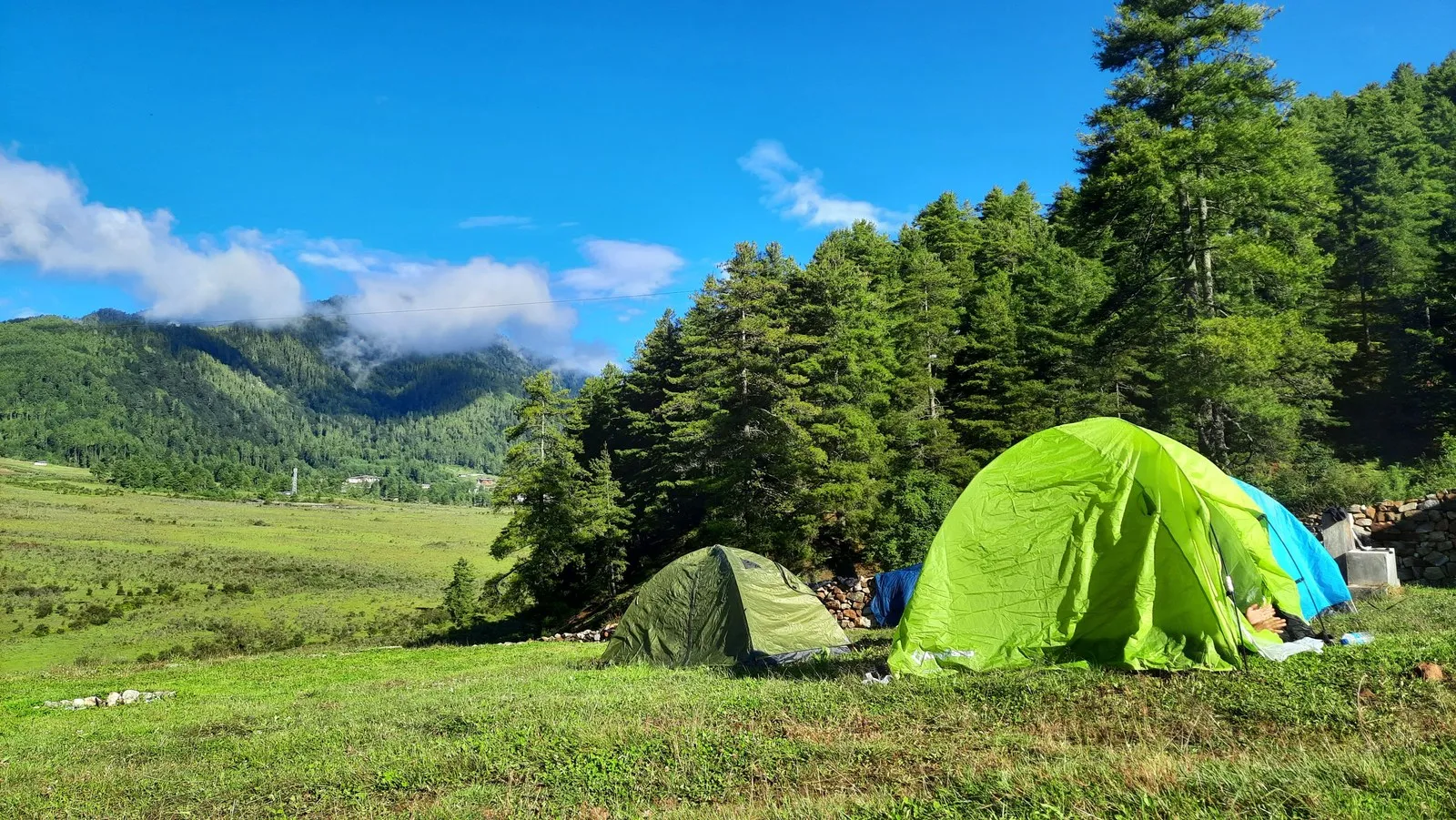
  • Three nights under canvas: in the Phobjikha valley, at Gogona and at Khotokha. The crew sets up each camp and cooks every meal.
  • Camps are simple: tents for sleeping and eating, a toilet tent, and warm water for washing. Nights are cold in every season, so bring a warm sleeping bag, or ask us about hiring one.

What the crew carries

  • Pack horses and their horsemen carry the tents, the kitchen, the food and your main bag. You carry only a daypack: water, a warm layer, rain gear, sun cream and snacks.
  • Pack your main bag soft, not a hard suitcase, and keep it light; we tell you the weight limit when you book.

Weather and season

  • Spring and autumn are the seasons for this trek. In the monsoon, from June to August, the trails are wet and muddy and there are leeches in the forest; in winter the camps are frosty, though the cranes are in Phobjikha.
  • Mountain weather changes quickly: carry rain gear and a warm layer every day, however clear the morning.

Visa and fees

  • Bhutan’s visa and its daily Sustainable Development Fee are arranged through us with your booking. Your passport should be valid for at least six months from the day you arrive.

Questions

Before you go

The questions travellers ask about this journey, answered from the itinerary itself. Anything else — ask, and a curator replies.

How hard is the trek?

Moderate: five to seven hours of walking a day for three days, over three passes, none of them technical. If you walk in the hills at home and manage the climb to the Tiger’s Nest viewpoint comfortably, you can manage this.

How high does it go?

The highest pass, Shobju La, is given at about 3,700 metres, and the camps at about 3,100–3,200 metres. You spend five days in the valleys first, which helps you acclimatise.

When can I see the cranes?

The black-necked cranes spend the winter in Phobjikha, arriving in autumn and leaving towards the end of winter. A late-autumn departure gives you both the cranes and good trekking weather.

What is camping like?

Simple and comfortable enough: the crew pitches the tents, cooks every meal and moves the camp on pack horses, so you walk with a daypack. Nights are cold, so bring a good sleeping bag.

What should I bring?

Walking boots you have already broken in, a warm sleeping bag, layers for cold nights, rain gear, a sun hat and sun cream, a water bottle and a head torch.

Do I need a visa?

Yes, unless you hold an Indian, Bangladeshi or Maldivian passport. We arrange the visa and the daily Sustainable Development Fee with your booking, and the permit for Indian nationals.

The gallery

On the road

  • Tents pitched in a meadow below a pine forest, Bhutan
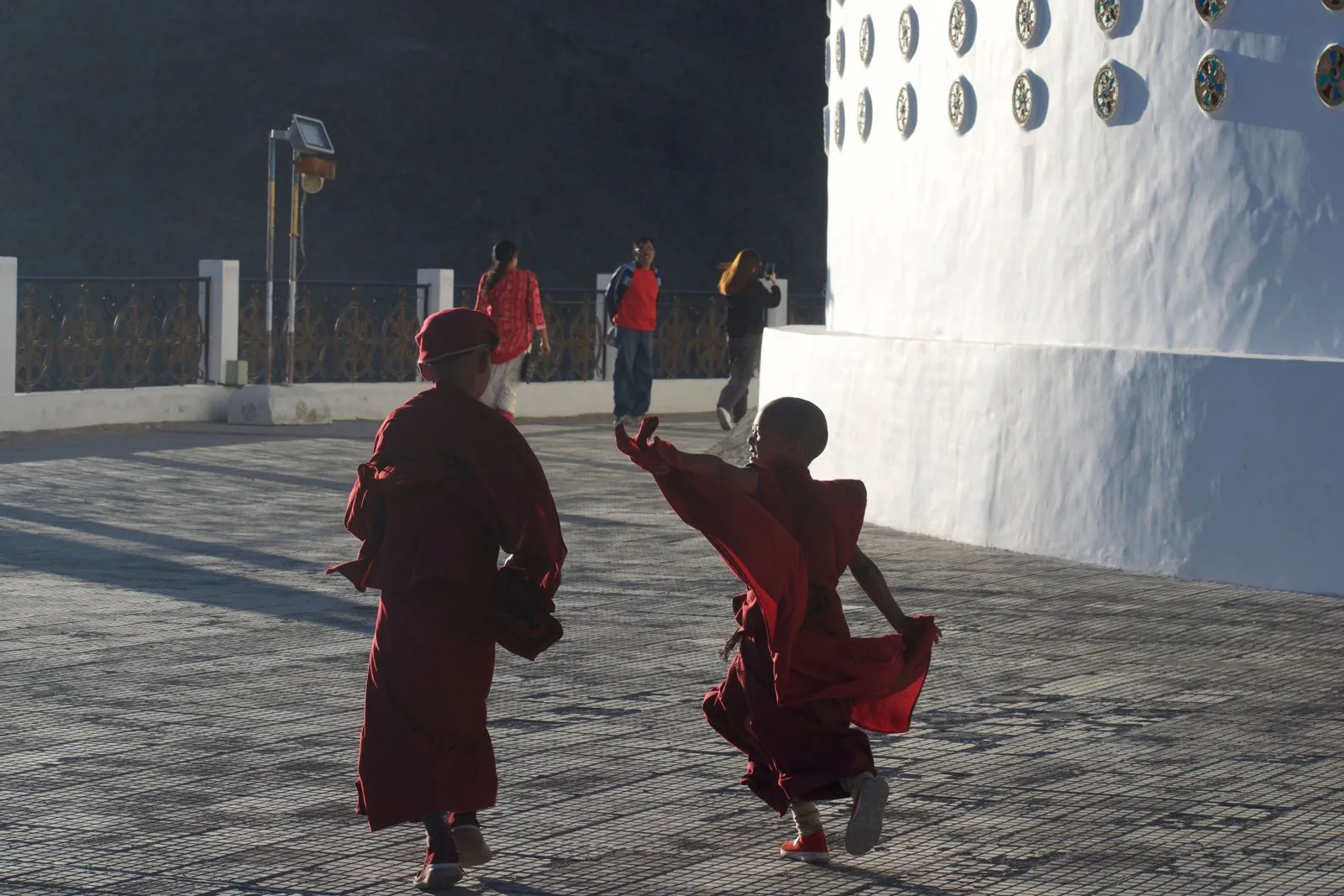
  • Two novice monks playing in a temple courtyard, Bhutan
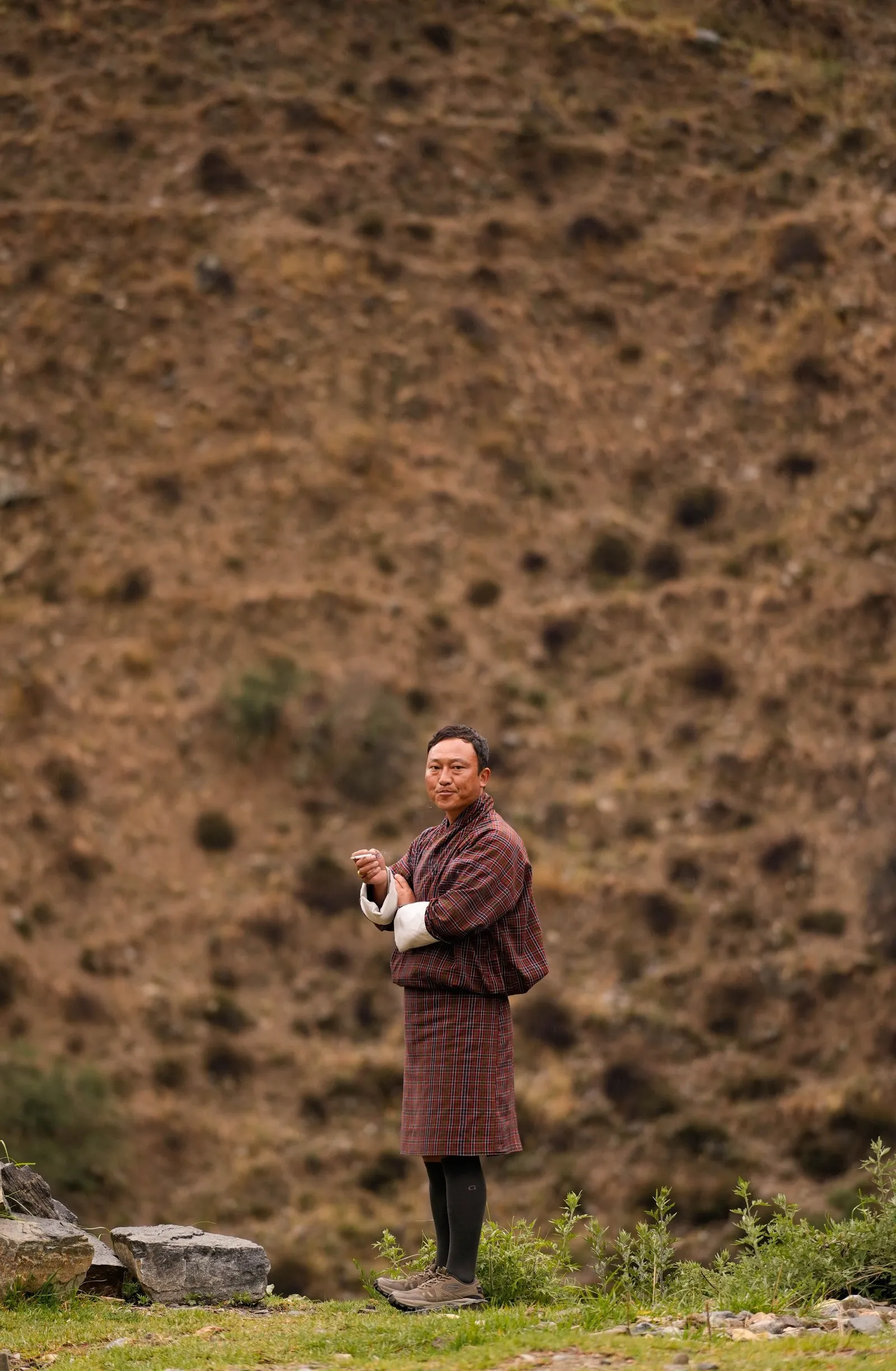
  • A man in a gho standing on a grassy hillside, Bhutan
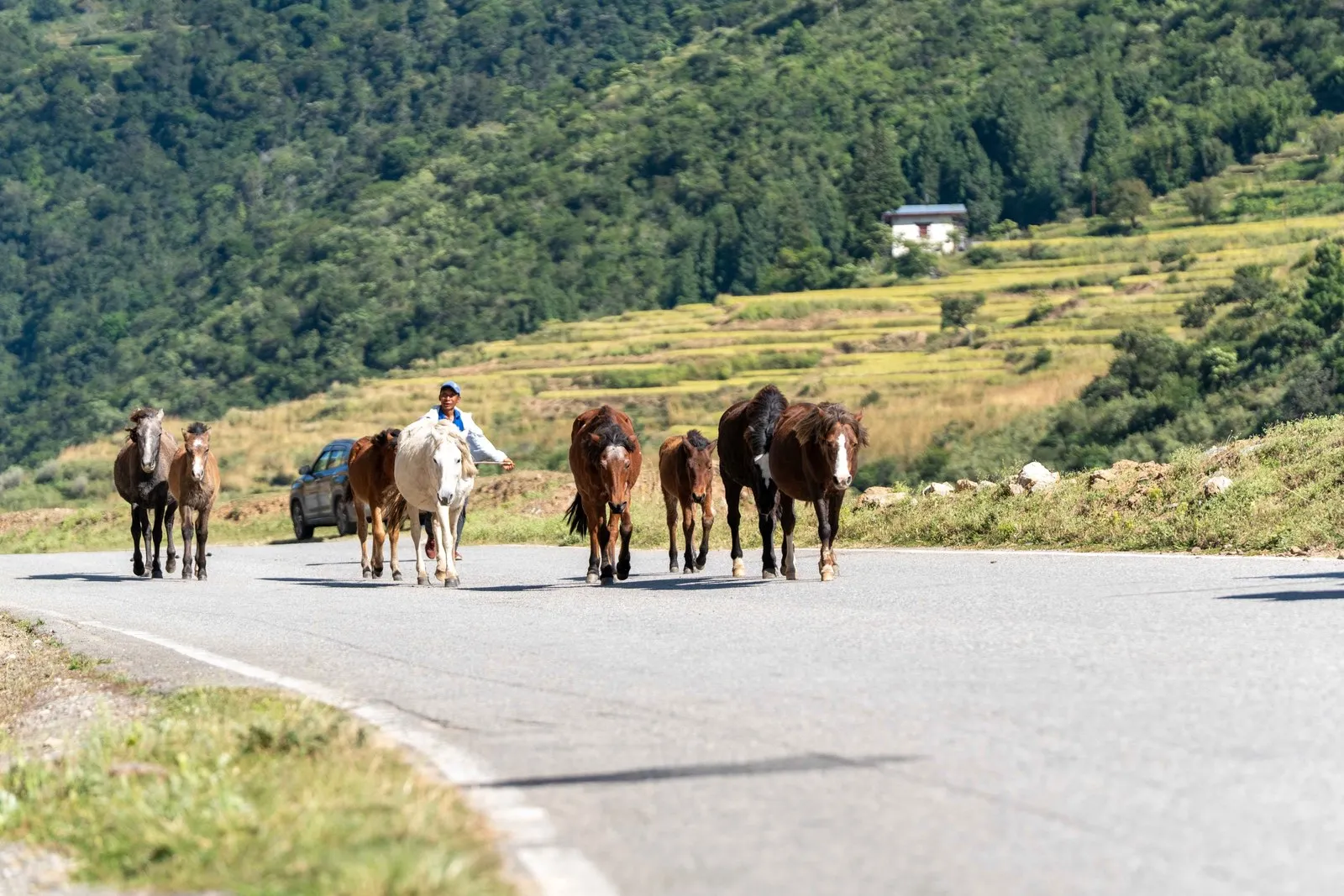
  • A horseman bringing his horses along a country road, terraced hills behind, Bhutan
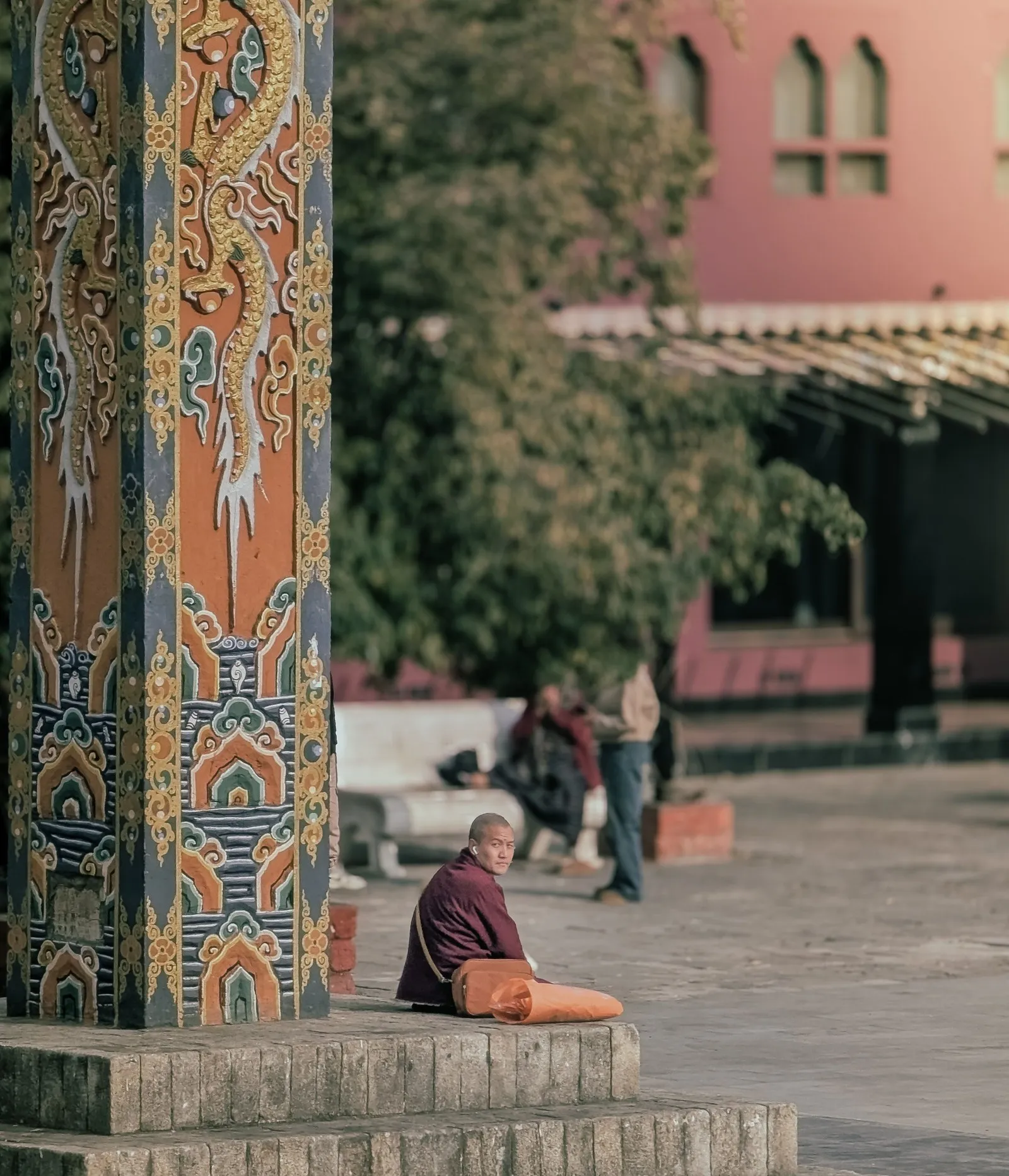
  • A monk sitting by a painted pillar in a temple courtyard, Bhutan
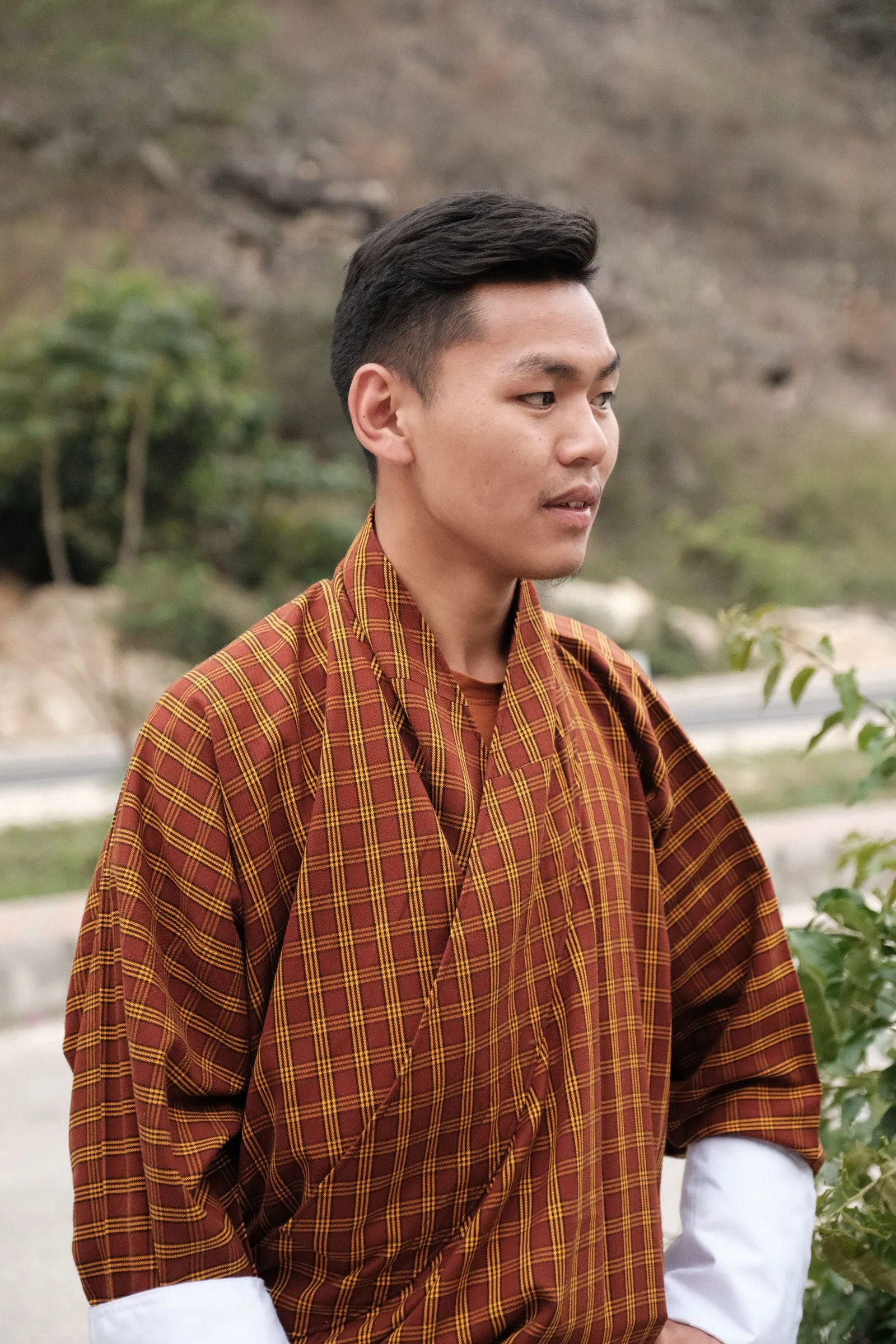
  • A young man in a checked gho near Thimphu

Reviews

In their own words

Word for word, several in Italian, because Italy found us early. 5.0 from 146 reviews on Google, and 5.0 from 200 on TripAdvisor.

I had an incredible adventure with Rang Travels in Northern India earlier this year! The tour was jam packed. I loved the beautiful forts and buildings we visited, the markets, as well as the stunning World Heritage hotels. This tour gave me a real taste for India, and I felt very comfortable for my first time visiting!

Read the whole review on Google

Jess Foster

Northern India · May 2025

1 / 19

Enquire

Plan my journey

Tell us where your India begins — we reply with a written itinerary.

Travellers
When, roughly
Interests
Or ask on WhatsApp

No obligation. We reply with a written itinerary, not a sales call.