Rang Travels — explore the colors of India
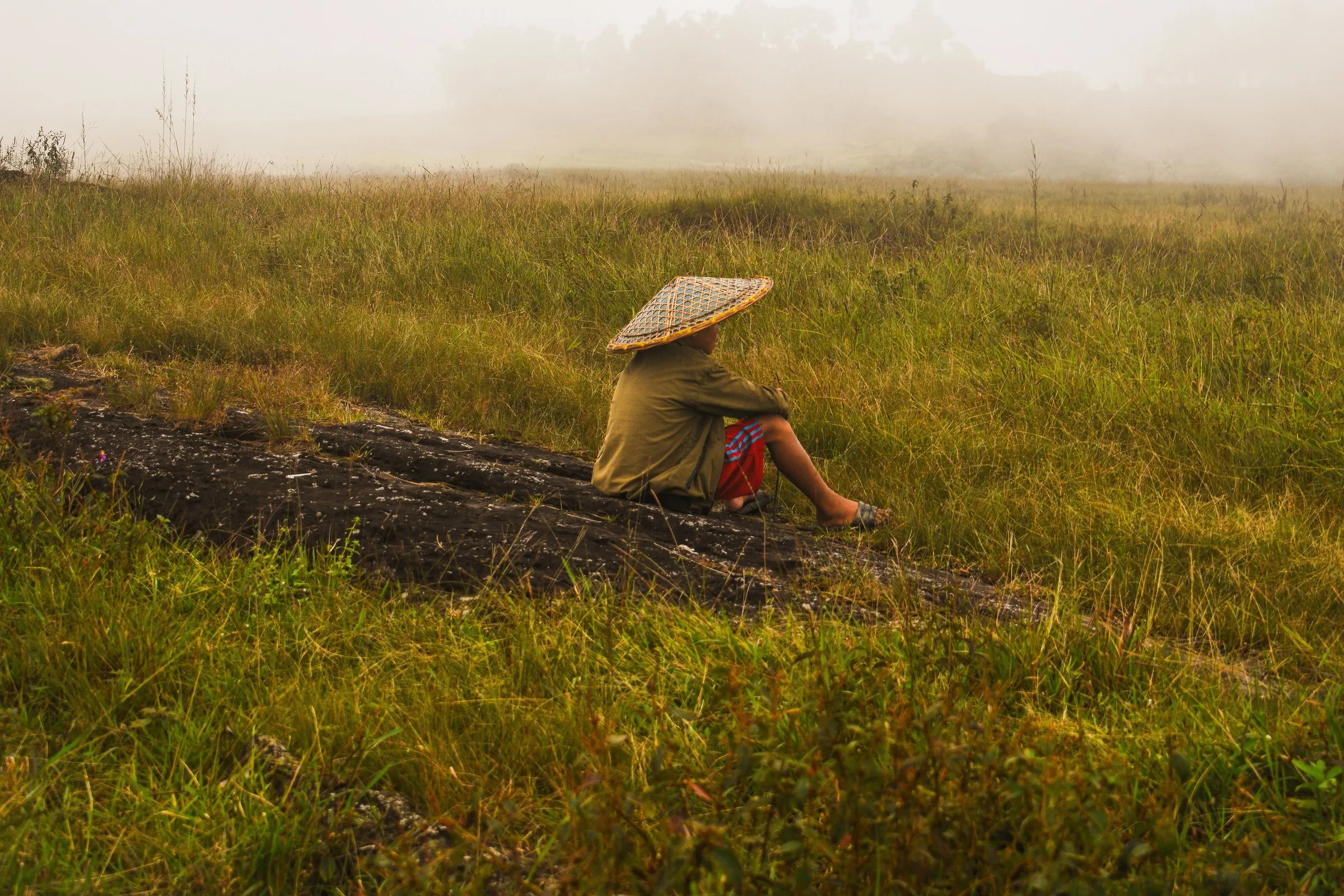
A farmer in a woven bamboo hat, resting on a rock in a misty meadow in Meghalaya

Wildlife · Waterfalls · Northeast

Assam & Meghalaya: Kaziranga to Cherrapunji

Kamakhya, Kaziranga’s rhinos, Shillong, Cherrapunji’s falls and a living root bridge

See the day-by-day
Duration
8 days · 7 nights
Halts
8
Guwahati to Guwahati
Best months
November – April
Price
On request
quoted to your dates

The journey

Eight days in Assam and Meghalaya: Kamakhya and the Brahmaputra, rhinos at Kaziranga, Shillong, Cherrapunji’s falls, a living root bridge and the Dawki river.

Two states a day’s drive apart, and two different worlds. Assam is the plain of the Brahmaputra: evening light on the river at Guwahati, the goddess’s temple on its hill above the water, and at Kaziranga the tall grass where two-thirds of the world’s one-horned rhinoceroses live. Meghalaya, the abode of clouds, is the plateau to the south and the home of the Khasi and Jaintia peoples: pine hills round Shillong, gorges that fall away to the plains of Bangladesh, and some of the wettest country on earth. Three nights on the plain, four in the hills.

Along the way: a boat on the Brahmaputra at sunset, the pilgrims at Kamakhya, a jeep through Kaziranga’s central range and the orchids of the Northeast. Then Umiam Lake and the evening stalls of Shillong; Elephant Falls; Nohkalikai, the caves and the falls of Cherrapunji; Mawlynnong, the village that keeps its lanes spotless, and the root bridge at Riwai, trained by Khasi villagers from the living roots of a fig; a boat on the clear Umngot at Shnongpdeng; and on the last full day the blue pool of Krang Suri and the standing stones of the Jaintia kings at Nartiang.

Highlights

What you will remember

  • A boat on the Brahmaputra at sunset, and the Kamakhya temple on Nilachal Hill

  • Kaziranga’s one-horned rhinoceroses, from a jeep in the central range

  • Umiam Lake, the Shillong markets and Elephant Falls

  • Nohkalikai Falls, Mawsmai Cave and the falls around Cherrapunji

  • Mawlynnong, and the living root bridge at Riwai

  • A boat on the clear Umngot at Shnongpdeng

  • Krang Suri falls and the monoliths of Nartiang in the Jaintia Hills

The route

9 halts, in order

  1. Guwahati
  2. Kaziranga2 nights
  3. Shillong1 night
  4. Cherrapunji1 night
  5. Mawlynnongpass through
  6. Pynursla1 night
  7. Jowaipass through
  8. Shillong1 night
  9. Guwahati

Experiences

The moments it is built around

Everything else on this page is logistics. These are the reasons to come.

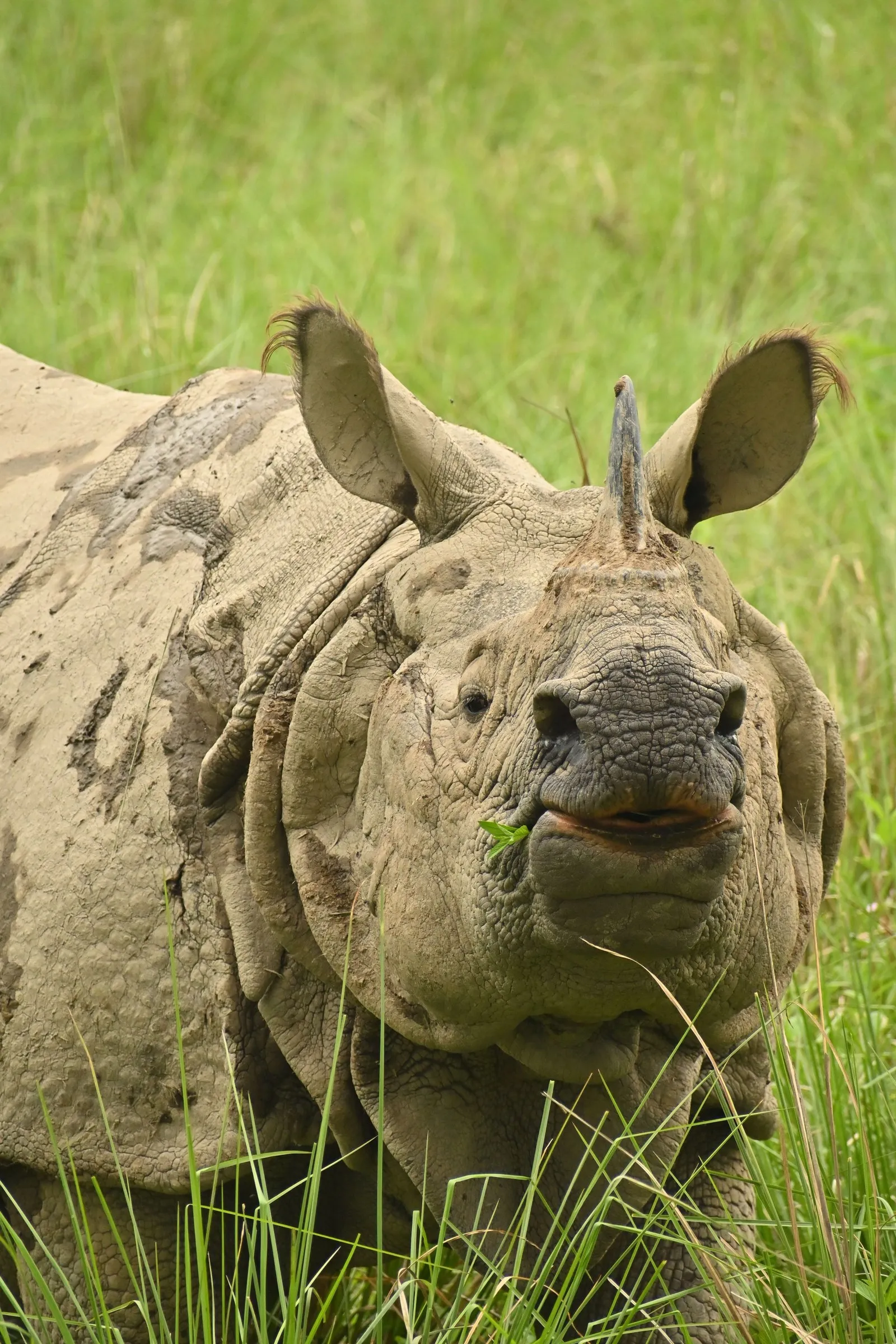
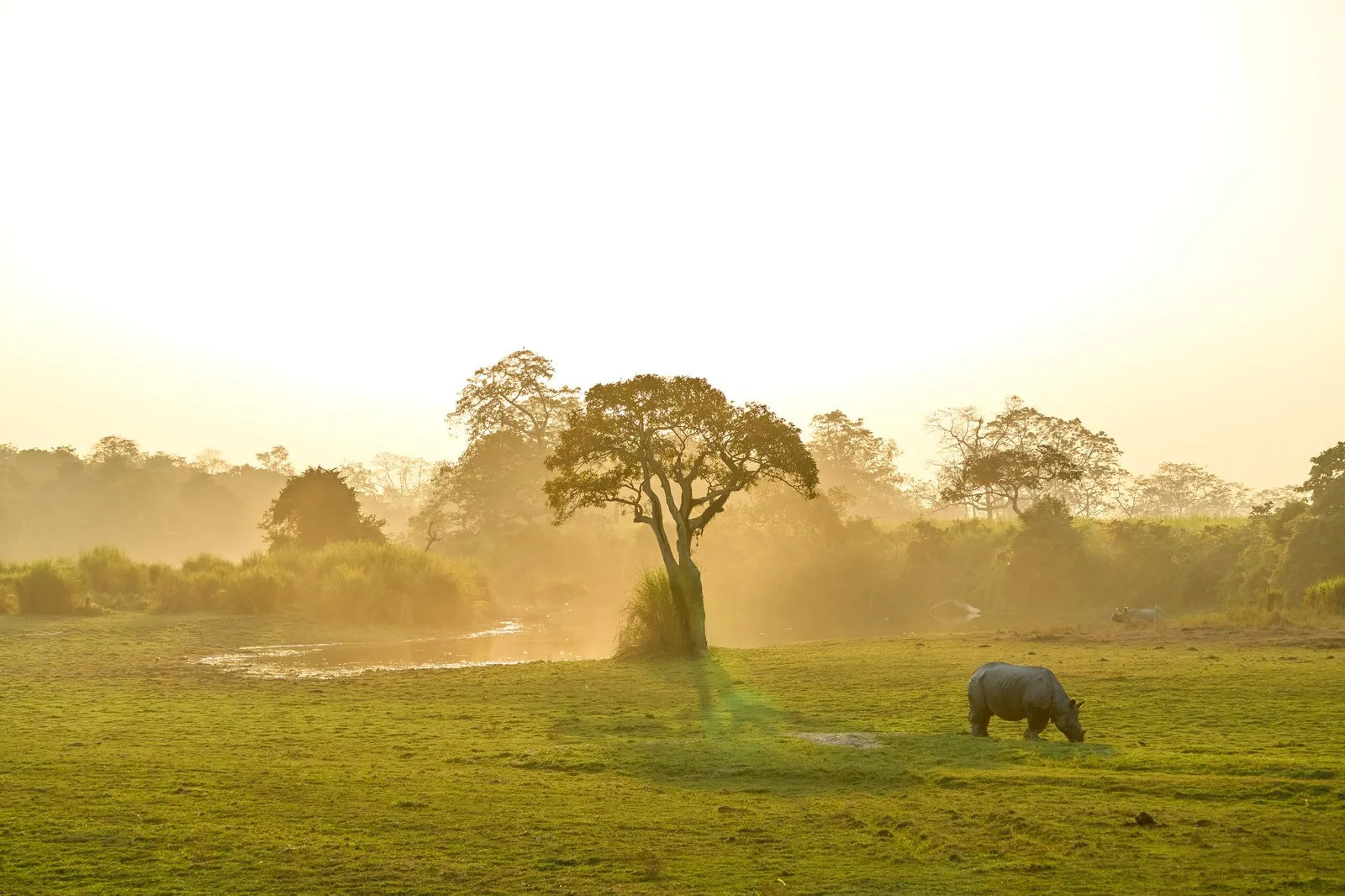
  • A one-horned rhinoceros in tall grass at Kaziranga, the folds of its hide caked with mud

    The one-horned rhinoceros

    Two-thirds of all the world’s one-horned rhinos live in Kaziranga’s grass; the jeep takes you among them.

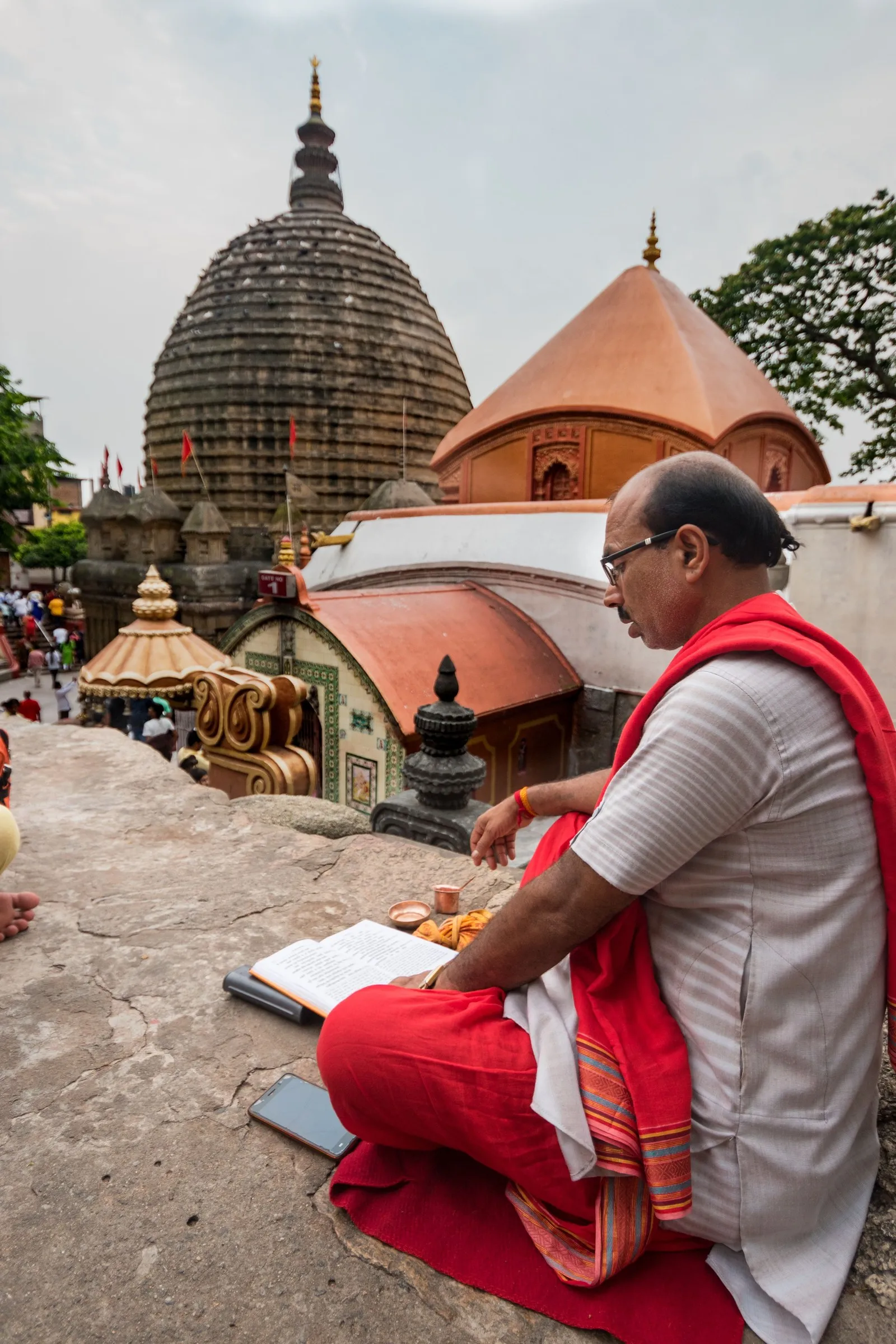
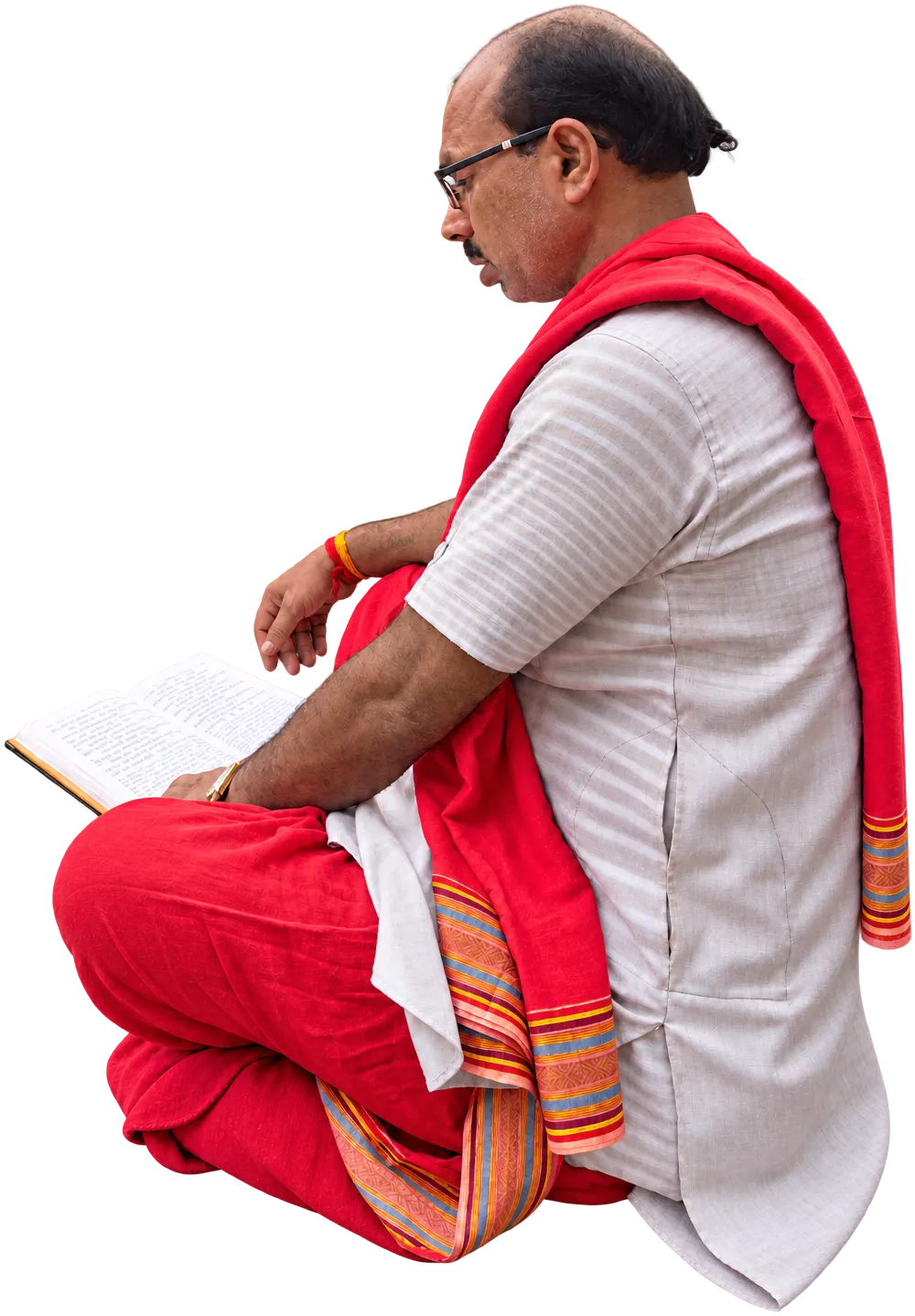
  • A priest reading scripture on the rock below the beehive spire of the Kamakhya temple, Guwahati

    Kamakhya on Nilachal Hill

    A shrine of the goddess above the Brahmaputra, one of the holiest in India, where pilgrims queue from dawn.

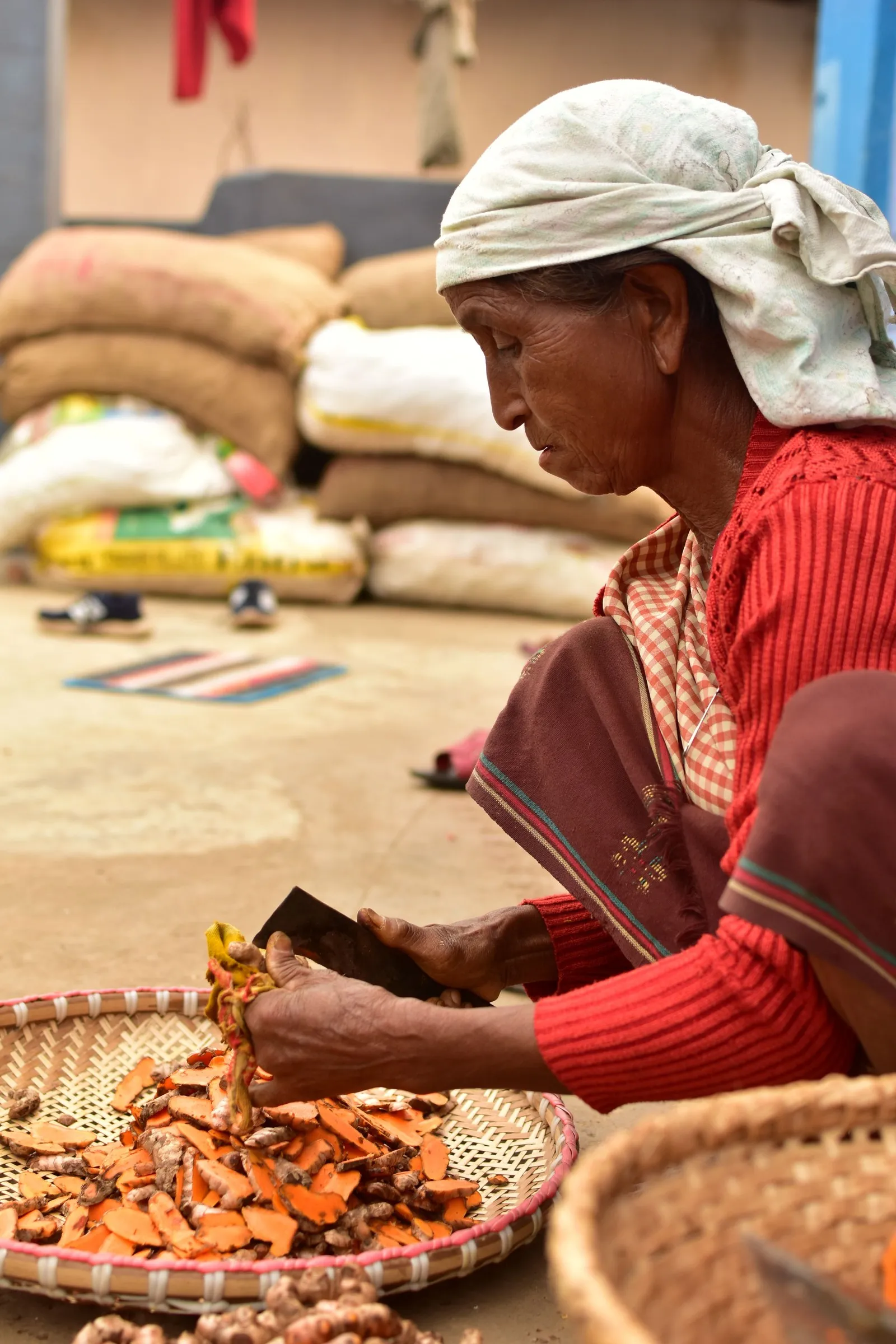
  • A woman cutting fresh turmeric at her stall in a Shillong market

    Shillong’s markets

    Turmeric, betel leaf, Khasi oranges and pork, sold at stalls that are often run by Khasi women.

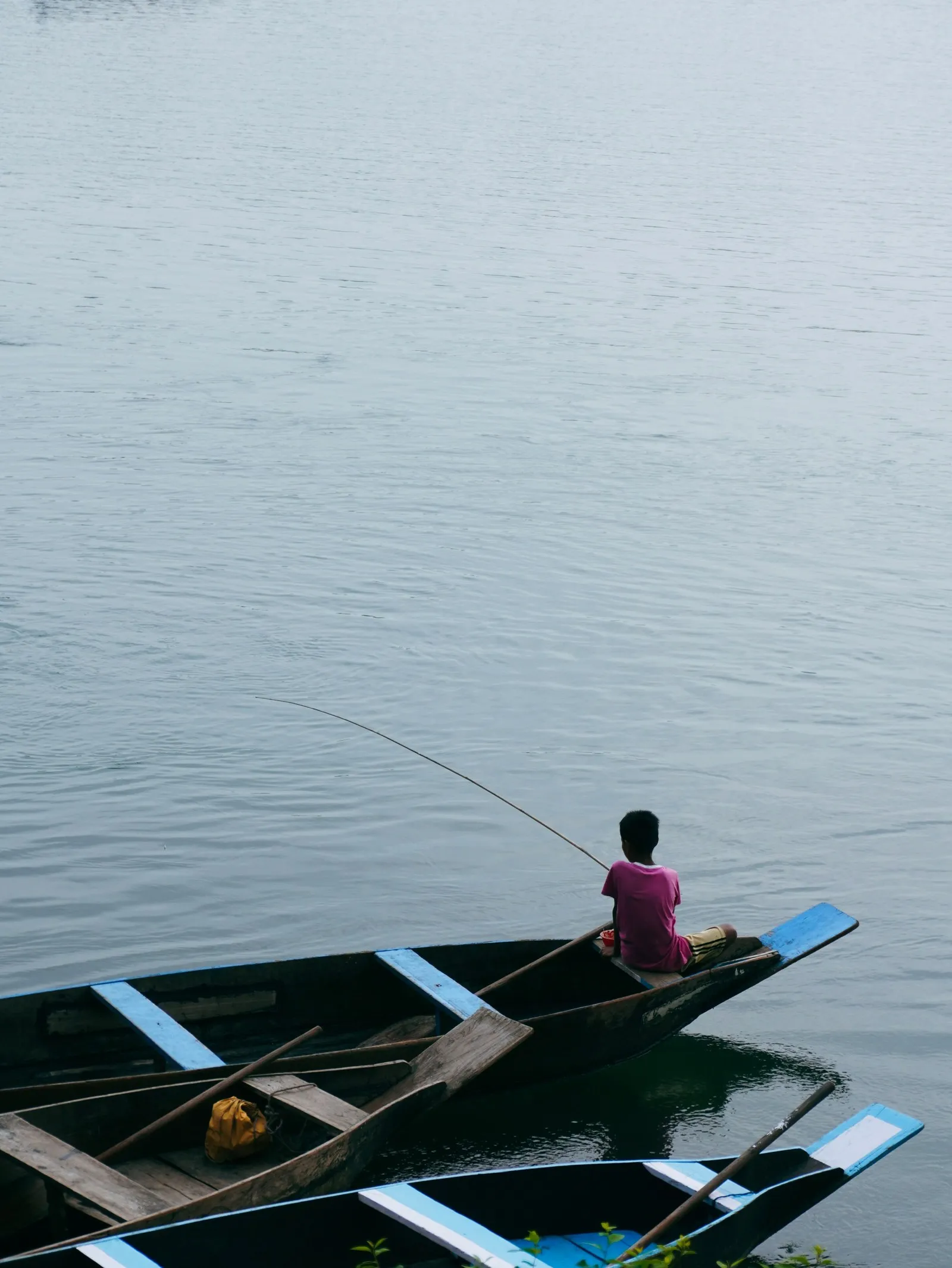
  • A fisherman casting from a wooden boat on the Umngot, the Dawki river

    The clear Umngot

    At Shnongpdeng the river runs so clear in the dry months that the boats seem to hang in the air.

A priest in a red stole, seated cross-legged, reading scripture at the Kamakhya temple

Wildlife · Waterfalls · Northeast

Kamakhya, Kaziranga’s rhinos, Shillong, Cherrapunji’s falls and a living root bridge

8 days, 7 nights

The route, day by day

Every halt, every overnight and every drive, published in full.

  1. Guwahati
  2. Kaziranga
  3. Shillong
  4. Cherrapunji
  5. Mawlynnong
  6. Pynursla
  7. Jowai
  8. Shillong
  9. Guwahati
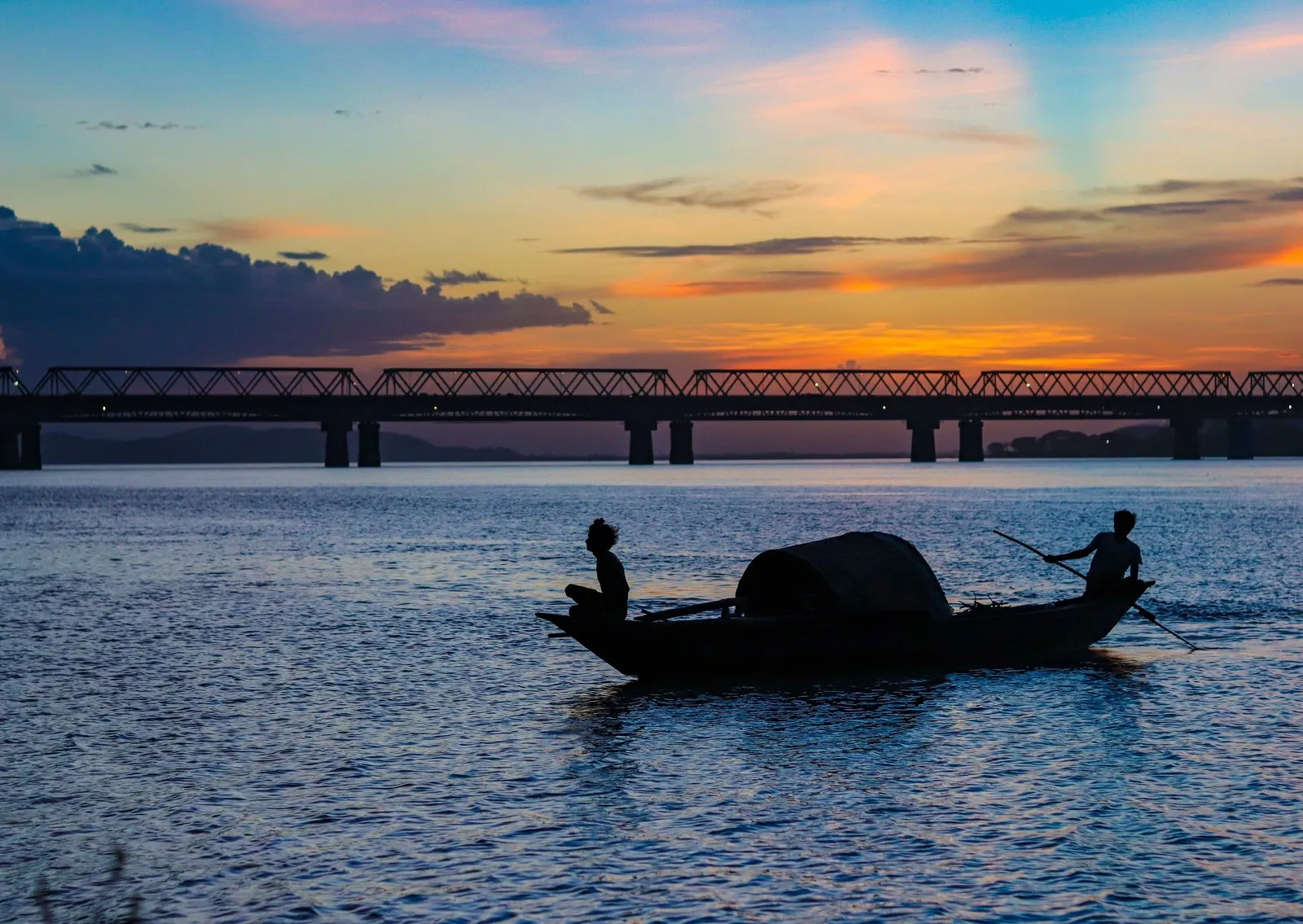
  1. Fishermen in a country boat on the Brahmaputra at sunset, a long bridge behind them

    01

    Overnight Guwahati

    Arrival, and sunset on the Brahmaputra

    Met at Guwahati airport and driven into the city, the largest in the Northeast, which runs for miles along the south bank of the Brahmaputra; Dispur, the capital of Assam, is one of its suburbs. Check in at your hotel and rest after the flight.

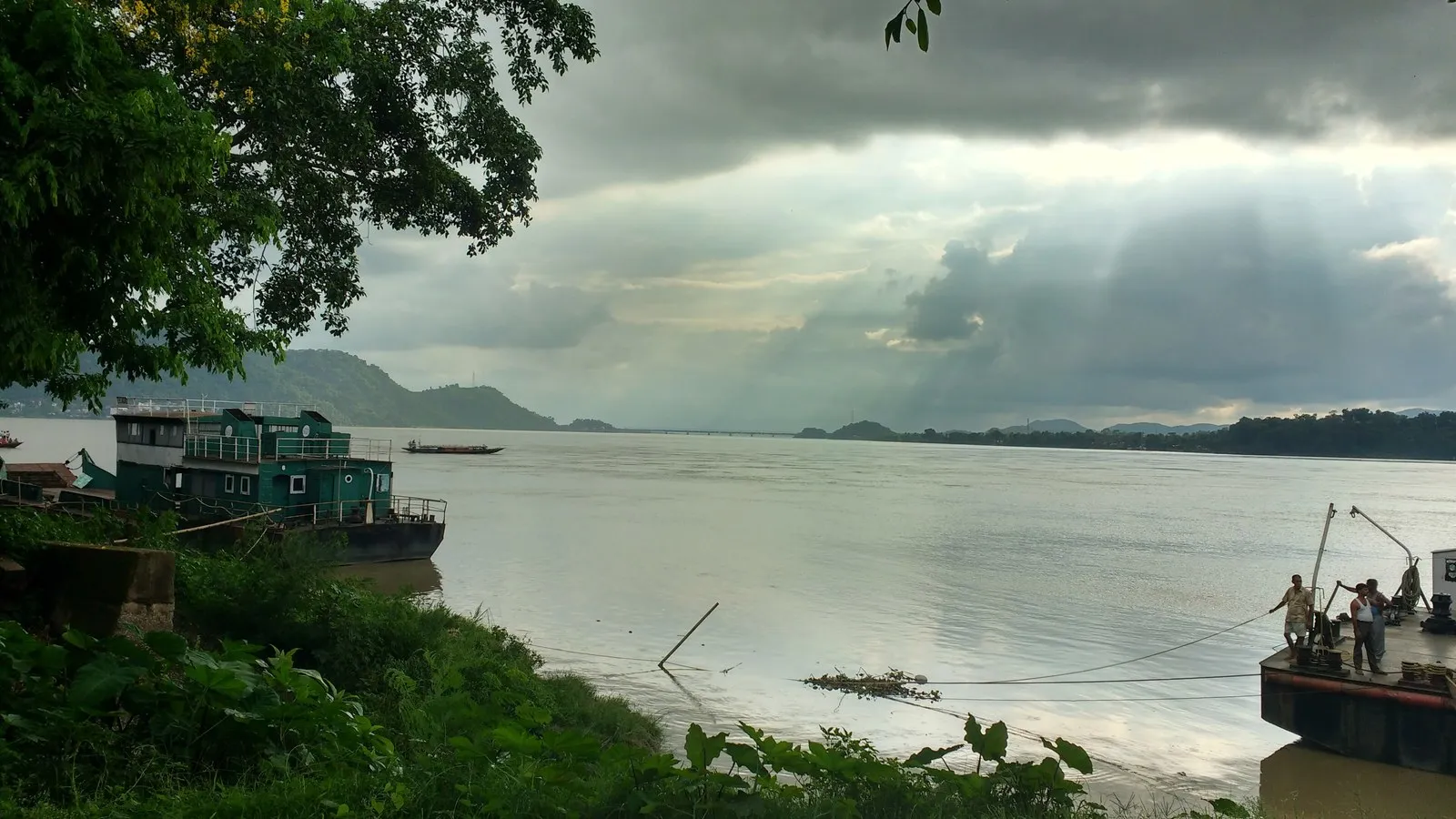
    Towards evening, a boat out on the river. Even in the dry months the Brahmaputra is wide here, with sandbanks, ferries and fishermen’s country boats working the current, and in midstream the small island of Umananda, with its temple to Shiva. The sun sets downstream, to the west, and the boats and the long Saraighat bridge turn to silhouettes against it.
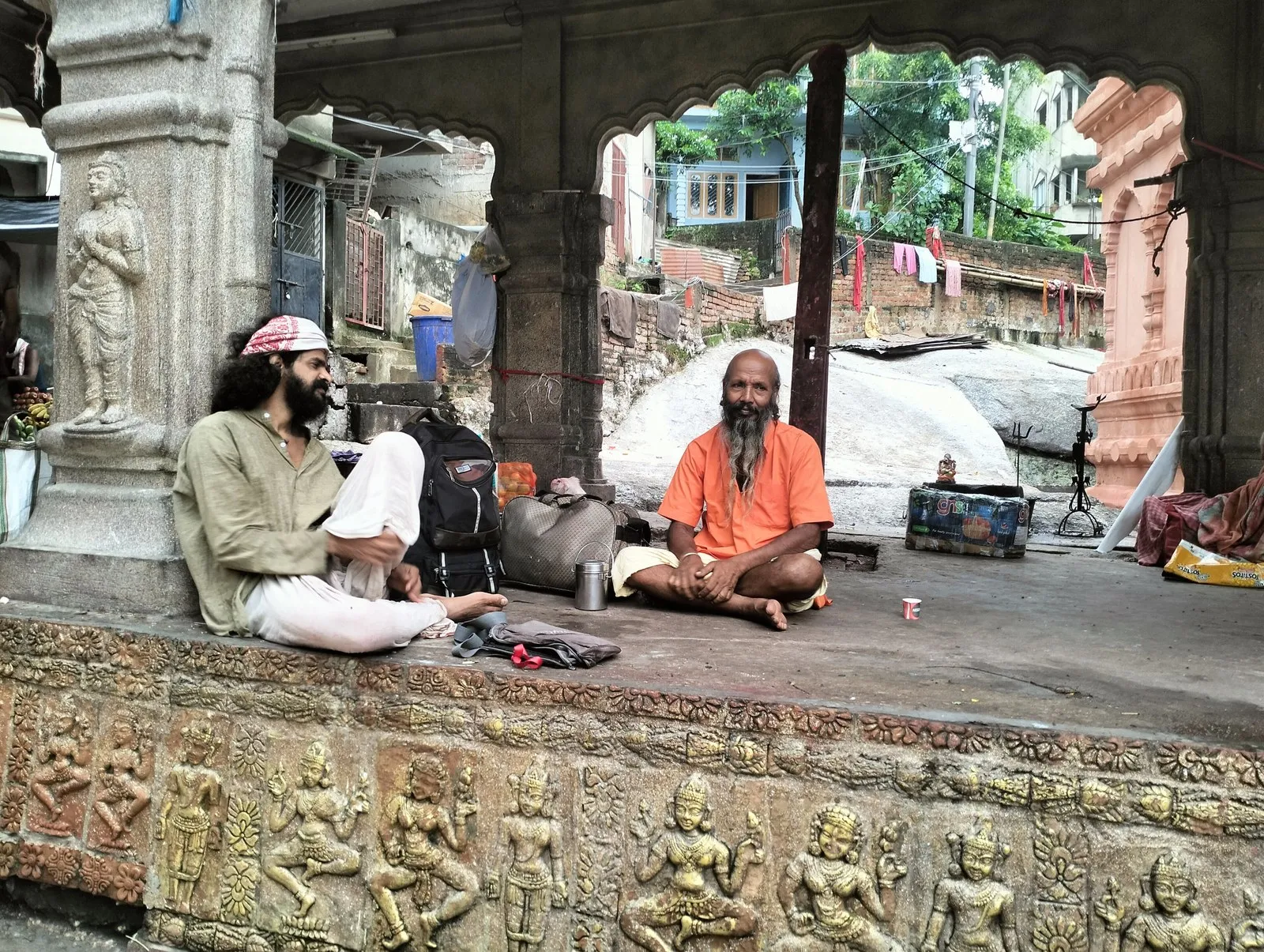
  2. Two holy men seated on the carved plinth of the Kamakhya temple, Guwahati

    02

    Overnight Kaziranga

    200 km · about 4 hrs

    Kamakhya, then east to Kaziranga

    Early to Kamakhya, on Nilachal Hill on the west side of the city: one of the most revered temples of the goddess in India, and a Shakti Peetha, where tradition says a part of Sati’s body fell to earth. The temple was rebuilt in the sixteenth century under the Koch kings, and its beehive-shaped spire is a style of its own. There is no image in the sanctum. Pilgrims go down into a dim chamber in the rock, where a spring keeps a cleft in the stone always wet, and that stone is worshipped as the goddess herself.

    Then east up the valley to Kaziranga, past paddy fields and bamboo villages and, near the park, the first tea gardens, their bushes shaded by tall trees. Check in at your resort on the edge of the park; the night is quiet, and the morning starts before dawn.

  3. A rhinoceros grazing in the low golden light of Kaziranga’s grasslands

    03

    Overnight Kaziranga

    Kaziranga by elephant and jeep

    The day begins with the elephant-back safari that the forest department runs in the park, at five, six or seven in the morning; the department allots the slot. The elephants and their mahouts go out into the grassland of the central range, among the one-horned rhinoceros, wild buffalo and swamp deer. Back to the resort for breakfast.

    Late in the morning, the Kaziranga Orchid Park — the National Orchid and Biodiversity Park at Durgapur, near Kohora — set up by local people to keep the wild orchids of the Northeast: hundreds of kinds, with beds of bamboo, cane and the region’s rice, fruit and vegetables.

    In the afternoon, a jeep safari of about two and a half hours in the central range of Kaziranga National Park, through elephant grass, wetland and patches of forest. Kaziranga, a UNESCO World Heritage Site since 1985, holds about two-thirds of the world’s one-horned rhinoceroses, and you are likely to see many, with wild elephants, buffalo and hog deer; tigers live here too, though they are seldom seen. The evening is free, for a walk, or for Assam tea from the estates around the park.

  4. Umiam Lake and its wooded islands below the hills, on the road to Shillong

    04

    Overnight Shillong

    260 km · about 6½ hrs

    Umiam Lake, and up to Shillong

    A long day on the road, so an early start. Back west along the valley to Jorabat, on the edge of Guwahati, where the road turns south, leaves Assam and climbs into Meghalaya. The air cools as you rise, and the bamboo gives way to pine.

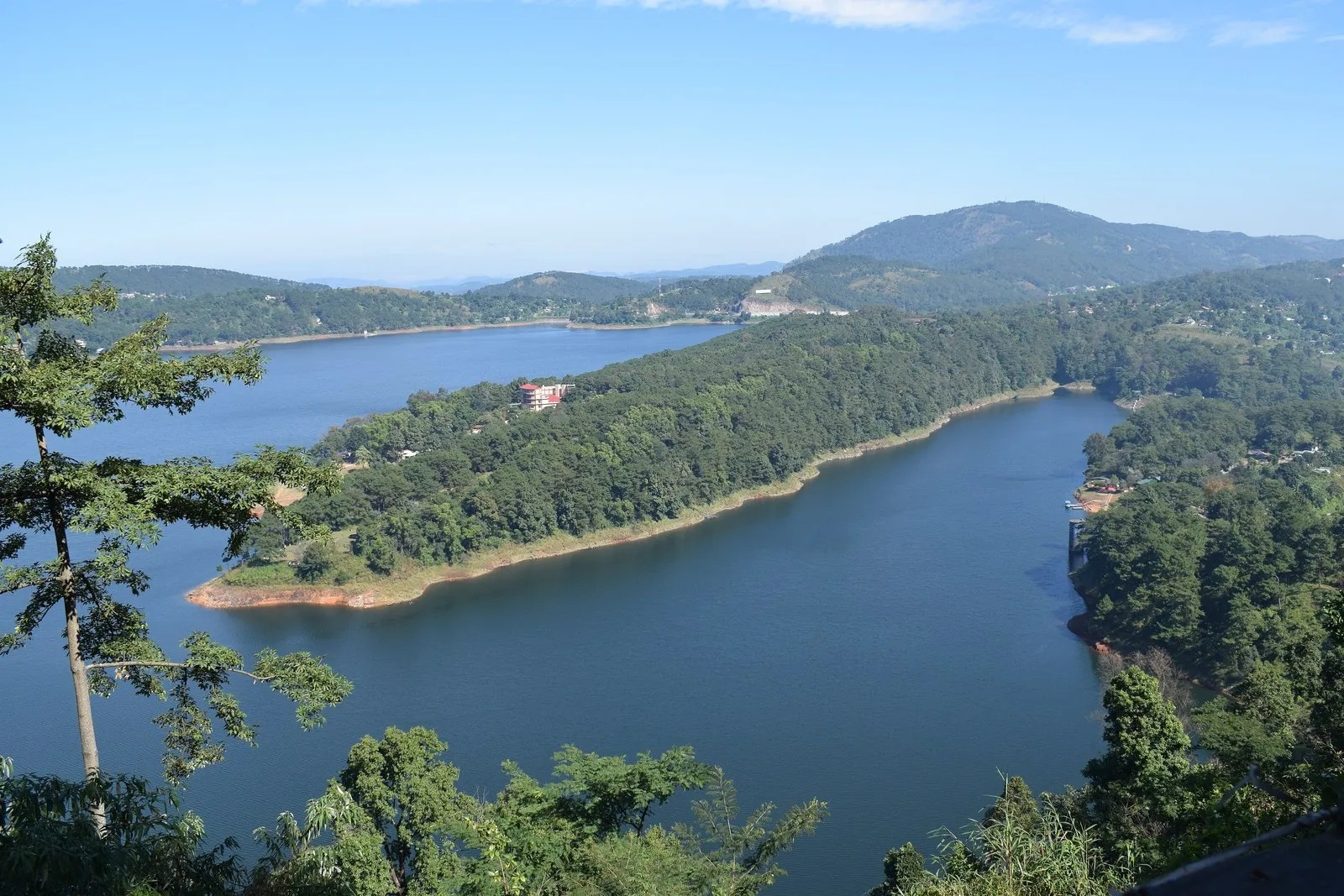
    A stop at Umiam Lake, which most people here still call Barapani, ‘big water’: a reservoir made in the early 1960s by damming the Umiam river, its arms reaching far in between the wooded hills. Then the last climb into Shillong, the capital of Meghalaya and long the capital of British Assam, whose pine-covered hills and cool air earned it the name of the Scotland of the East.

    In the evening, the food stalls and lanes around Police Bazaar, the heart of the town, with your guide. Try jadoh, rice cooked with pork, or dohneiiong, pork in a sauce of black sesame, and look over the shawls, cane baskets and Khasi oranges on the way.

  5. Nohkalikai Falls dropping from the plateau edge into its green pool, near Cherrapunji

    05

    Overnight Cherrapunji

    56 km · about 2 hrs

    Elephant Falls, Shillong Peak and Cherrapunji

    The morning just outside Shillong. Elephant Falls is Ka Kshaid Lai Pateng Khohsiew in Khasi, the three-step falls, for the three drops it makes through the forest; the British named it for a rock like an elephant at its foot, which the great earthquake of 1897 destroyed. Then Shillong Peak, the highest point in Meghalaya, with the town spread out below — it lies inside an Air Force station, and entry is at the Air Force’s discretion (see Before you book).

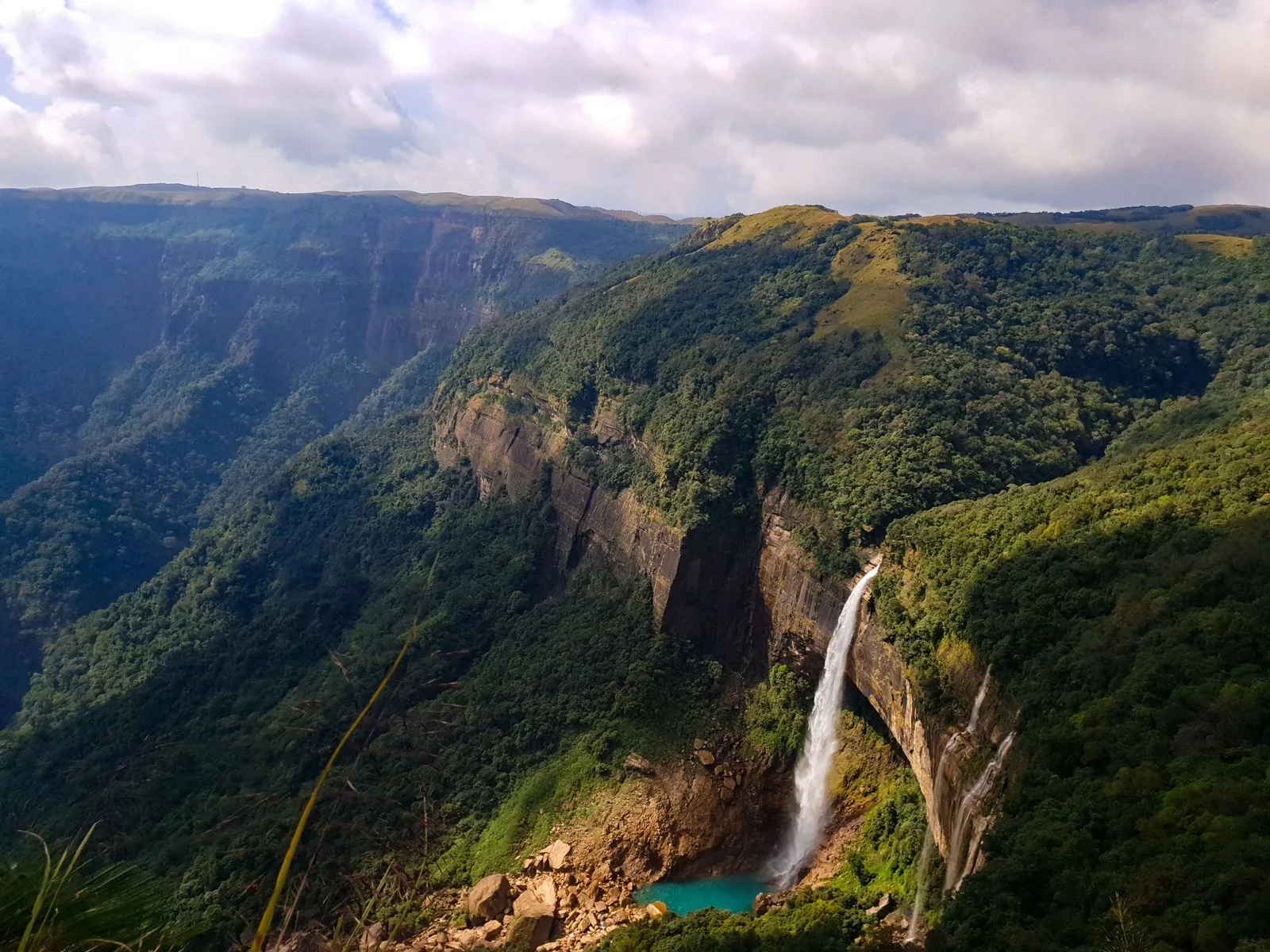
    Then south across the plateau to Cherrapunji — Sohra, as it is also called — one of the wettest places on earth. At Nohkalikai Falls a single stream leaps off the plateau edge into a green pool far below; the name means ‘the leap of Ka Likai’, after a Khasi story your guide will tell you. Then Mawsmai Cave, lit inside, where the limestone passages narrow so that in places you turn sideways to pass.

    Two more falls on the plateau: Dainthlen, named for the thlen, the great serpent of a Khasi legend, said to have been killed here; and Wei Sawdong, which drops in three tiers into blue pools at the foot of a steep path. Last, the Eco Park on the rim of the gorges, from which on a clear day you look down to the plains of Bangladesh. The night in Cherrapunji.

  6. The living root bridge at Riwai, near Mawlynnong, over a forest stream

    06

    Overnight Pynursla

    110 km · about 2½ hrs, plus the detour to Shnongpdeng

    Mawlynnong, the root bridge and the Umngot

    East to Mawlynnong, a Khasi village of flowering lanes and bamboo dustbins, famous across India as the cleanest village in Asia. The cleanliness is the villagers’ own doing, kept by everyone and by the community’s rules, so walk its lanes as you would a neighbour’s garden. Khasi families are matrilineal: children take their mother’s clan name, and the youngest daughter keeps the family home. See the church, and the bamboo lookout built into a tree above the plains.

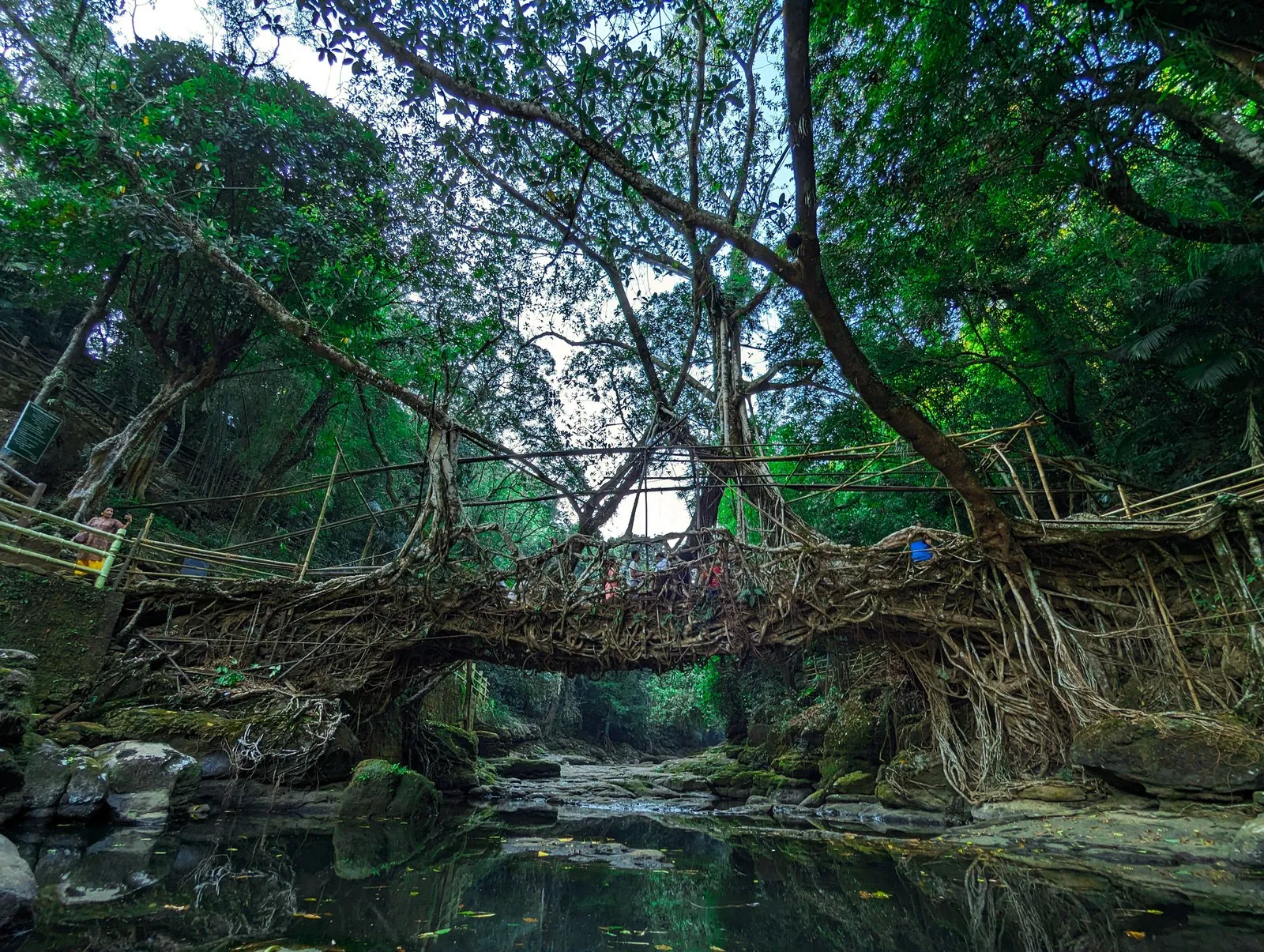
    From the next village, Riwai, a short path of steps leads down to a living root bridge. Its span is the aerial roots of a rubber fig, Ficus elastica, guided across the stream by Khasi villagers over many years until they had grown thick and strong enough to walk on. In Khasi these bridges are jingkieng jri, and they grow stronger as they age.

    Then down to Shnongpdeng on the Umngot — the Dawki river, as most people call it, after the border town downstream. In the dry months it runs so clear that the boats seem to hang above the stones of the riverbed, and a boatman rows you out on it. Then back up the hill road to Pynursla for the night.

  7. Krang Suri falls pouring from a sandstone ledge into a blue pool, Jaintia Hills

    07

    Overnight Shillong

    160 km · about 5 hrs

    Krang Suri, Nartiang and back to Shillong

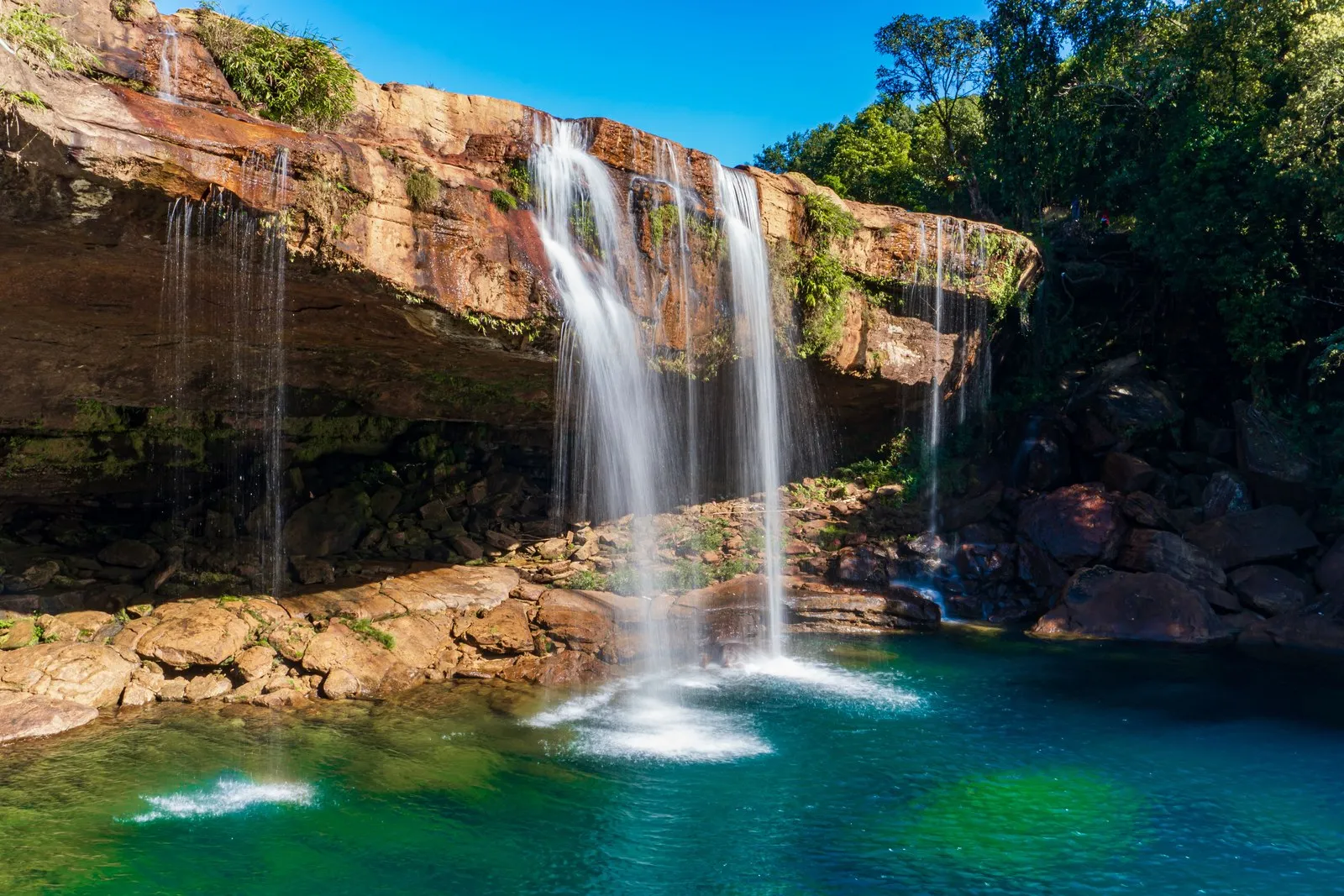
    Into the Jaintia Hills, the country of the Pnar people, on the road that climbs from Dawki towards Jowai. Near Amlarem a flight of stone steps leads down through the forest to Krang Suri, where the water pours off a sandstone ledge into a pool of clear, deep blue. On the same road, a walk of about half an hour through open country brings you to Phe Phe Falls, which comes down in two tiers to a pool of its own.

    Then through Jowai to Nartiang, the summer capital of the Jaintia kings, and the largest gathering of monoliths in Meghalaya: upright stones, moo shynrang, and flat table stones, moo kynthai, raised between about 1500 and 1835 for the dead, for victories and for the great of the kingdom. The tallest was set up by U Mar Phalyngki, a lieutenant of the king, after a victory in battle. Nearby, on a hillock, is the kings’ Durga temple, a plain building of stone and wood, where the goddess is represented by a plantain stem hung with marigolds. Then back over the hills to Shillong.

  8. Ferry boats on the Brahmaputra at Guwahati under a gathering sky

    08

    Departure

    120 km · about 3 hrs

    Departure

    Down from the hills, past Umiam Lake and through Jorabat, to Guwahati airport for your flight home, or on to your next journey. Allow the whole morning for the drive.

Like the route? We will write it for your dates.

The price

What the price covers

The commonest reason travellers abandon an enquiry is not knowing what is covered. Every Rang Travels quotation itemises it — this is the usual shape for this journey.

Included

  • 7 nights with breakfast
  • A private air-conditioned car with driver from Guwahati airport and back, for every transfer and sightseeing day
  • Local guides for the sightseeing
  • The sunset boat on the Brahmaputra, the elephant and jeep safaris at Kaziranga, and the boat on the Umngot at Shnongpdeng
  • Tolls, parking and the driver’s allowances

Not included

  • Flights to and from Guwahati
  • Entrance and camera fees at the temples, falls and caves, and the park fees at Kaziranga
  • Lunches and dinners
  • Indian visa, travel insurance and tips

Price on request

Quoted to your dates,
your hotels and your pace

Before you book

Kaziranga, the hills and the season

Assam and Meghalaya are easy, friendly places to travel. A few things are worth knowing before you confirm.

Kaziranga

  • Kaziranga closes through the monsoon, usually from late May, and reopens in stages from October; not every range, nor the elephant safari, opens at once. The forest department sets the dates each year, so the journey runs from November to April.
  • The safaris are run by the forest department, which allots the slots and can change or cancel them for weather or work in the park. We book them for you, but they cannot be guaranteed.

Shillong Peak

  • The viewpoint on Shillong Peak lies inside an Indian Air Force station, and entry is at the Air Force’s discretion. In recent years foreign passport holders have not been let in, and visitors may be asked to leave their cameras at the gate.
  • Indian visitors need original photo ID. If you cannot go up, your guide will take you to another viewpoint over the town.

At the temples and in the villages

  • At Kamakhya, cover your shoulders and knees and take off your shoes where you are asked to. The queue for the inner shrine can be long; your guide knows the quieter hours.
  • Kamakhya is a temple of the Shakta tradition, where animal sacrifice is still part of worship on some days. If you would rather not see it, tell your guide.
  • Mawlynnong and the root-bridge villages are people’s homes. Ask before you photograph anyone, keep to the paths, and leave nothing behind.

Steps, caves and the season

  • There is no trekking, but there are steps: down to the root bridge at Riwai, to Krang Suri and Wei Sawdong, and the half-hour walk to Phe Phe Falls. Stone steps are slippery when wet, so wear shoes with a good grip. Mawsmai Cave has narrow, damp passages; you can skip it if you dislike tight spaces.
  • Shillong and Cherrapunji are cool, and cold on winter nights; bring a warm layer, and a rain jacket whatever the month.
  • The Umngot is clearest in the dry months, from about November to April. After heavy rain it turns green and cloudy, and the boats may not go out.
  • Assam and Meghalaya need no special permit for foreign travellers beyond an Indian visa.

Questions

Before you go

The questions travellers ask about this journey, answered from the itinerary itself. Anything else — ask, and a curator replies.

When is the best time to go?

November to April. Kaziranga is open, the hills are dry and clear, and the Umngot is at its clearest. The falls of Meghalaya are at their fullest in the monsoon, from June to September, but Kaziranga is closed then and the hill roads are slow.

Will we see a rhino?

Very likely. Kaziranga holds about two-thirds of the world’s one-horned rhinoceroses, and most visitors see many in a single safari. Wild elephants and buffalo are common too; tigers live in the park but are seldom seen.

How fit do I need to be?

Fit enough for flights of stone steps, some steep and slippery in the wet: down to the root bridge at Riwai, at Wei Sawdong and at Krang Suri, and a half-hour walk to Phe Phe Falls. There is no trekking, and you can always stay at the top.

Is the Umngot always so clear?

Only in the dry months. From about November to April the water is clear enough to see the stones on the riverbed; after heavy rain it turns green and cloudy, and boating may stop.

What should I pack?

Layers: Guwahati and Kaziranga are mild by day, Shillong and Cherrapunji cool and cold at night. Bring a rain jacket in any month, shoes with a good grip for wet steps, and clothes that cover your shoulders and knees for Kamakhya.

Can we add days?

Yes. A second night at Cherrapunji allows the long, steep walk down to the double-decker root bridge at Nongriat, and two nights on Majuli, the great river island of the Brahmaputra, fit well after Kaziranga. Ask, and we will write them in.

The gallery

On the road

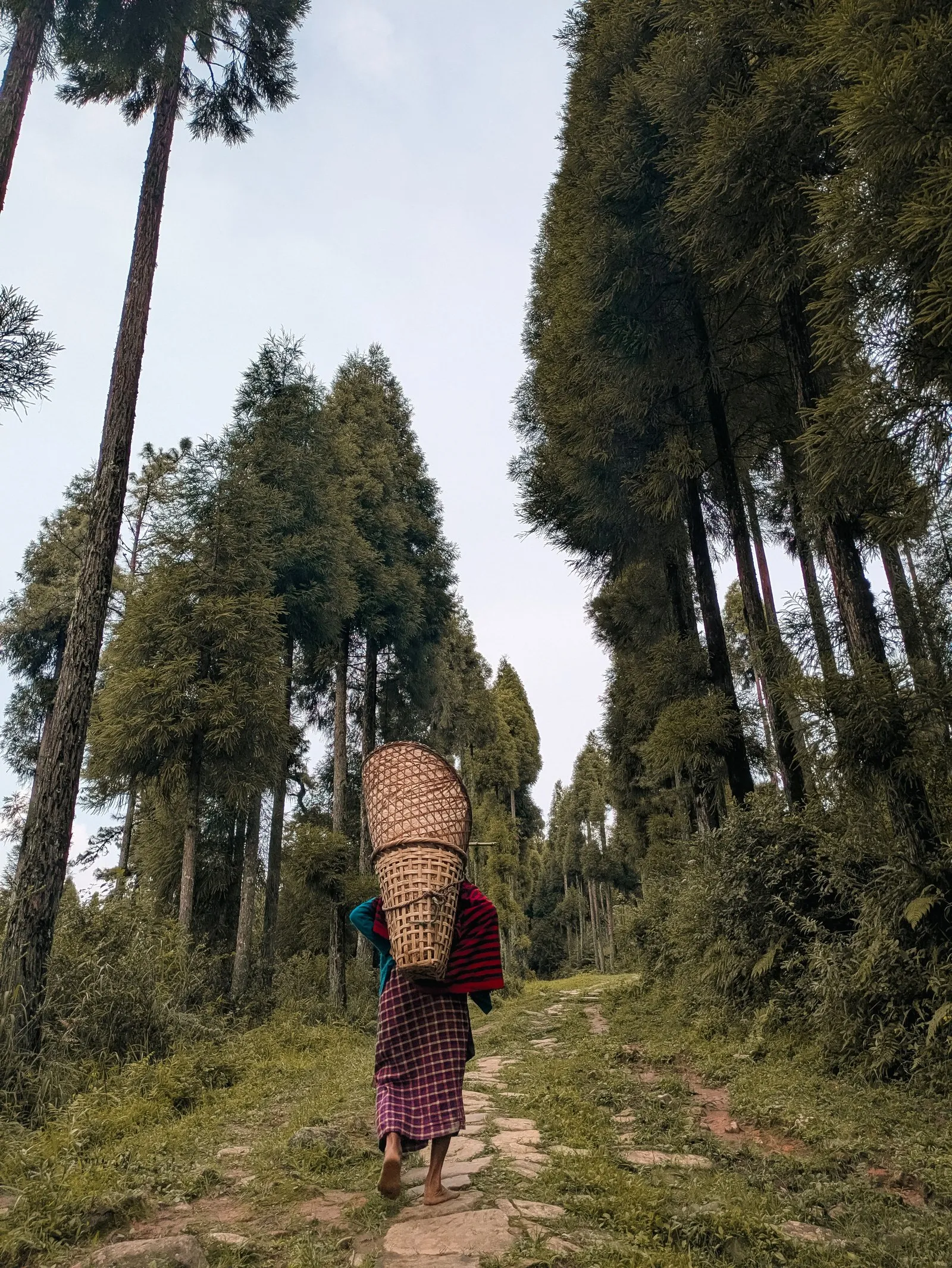
  • A woman carrying a cone-shaped cane basket along a path through pines in Meghalaya
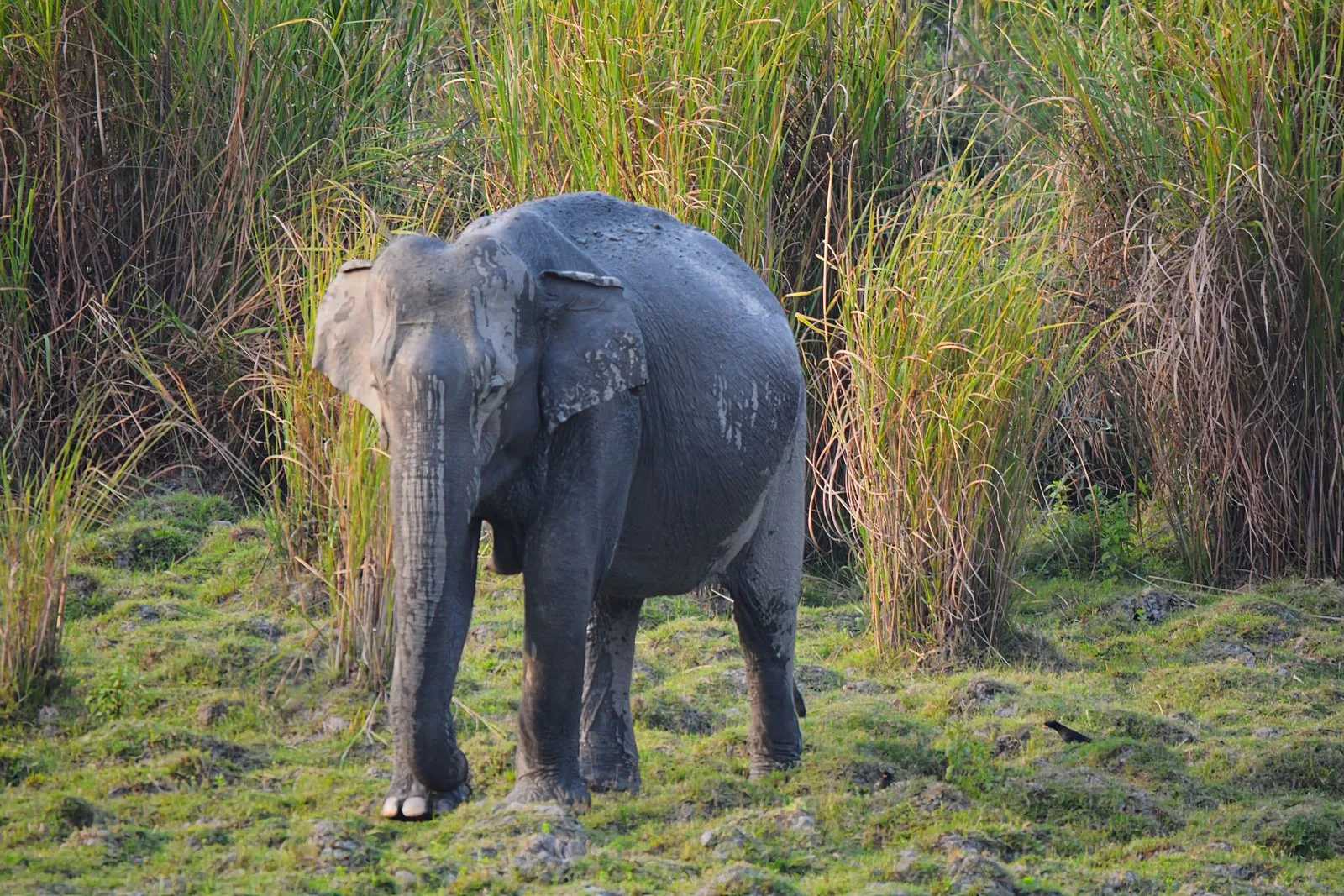
  • A wild elephant stepping out of the tall grass in Kaziranga National Park
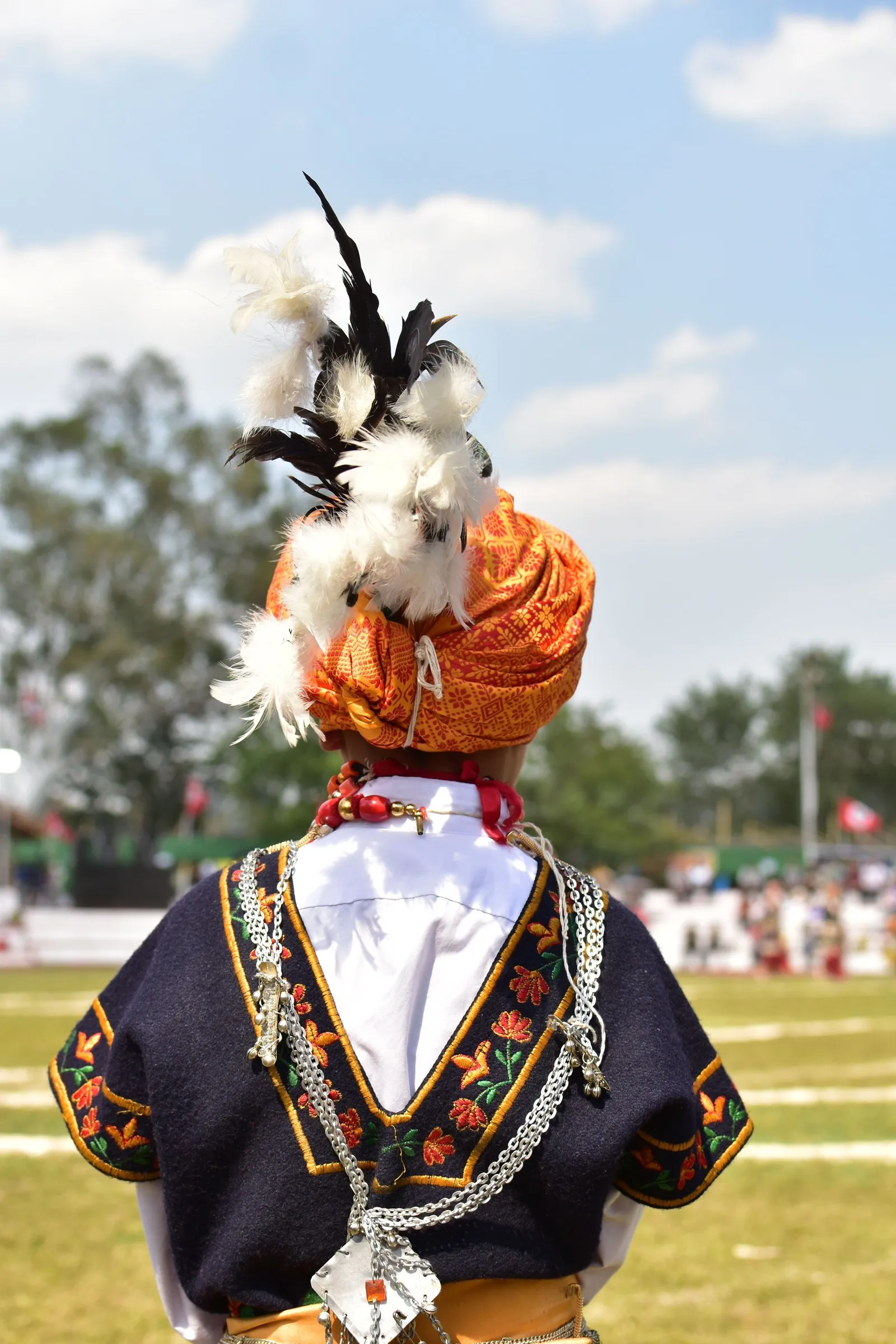
  • A Khasi dancer in a plumed orange turban and silver ornaments at a festival in Shillong
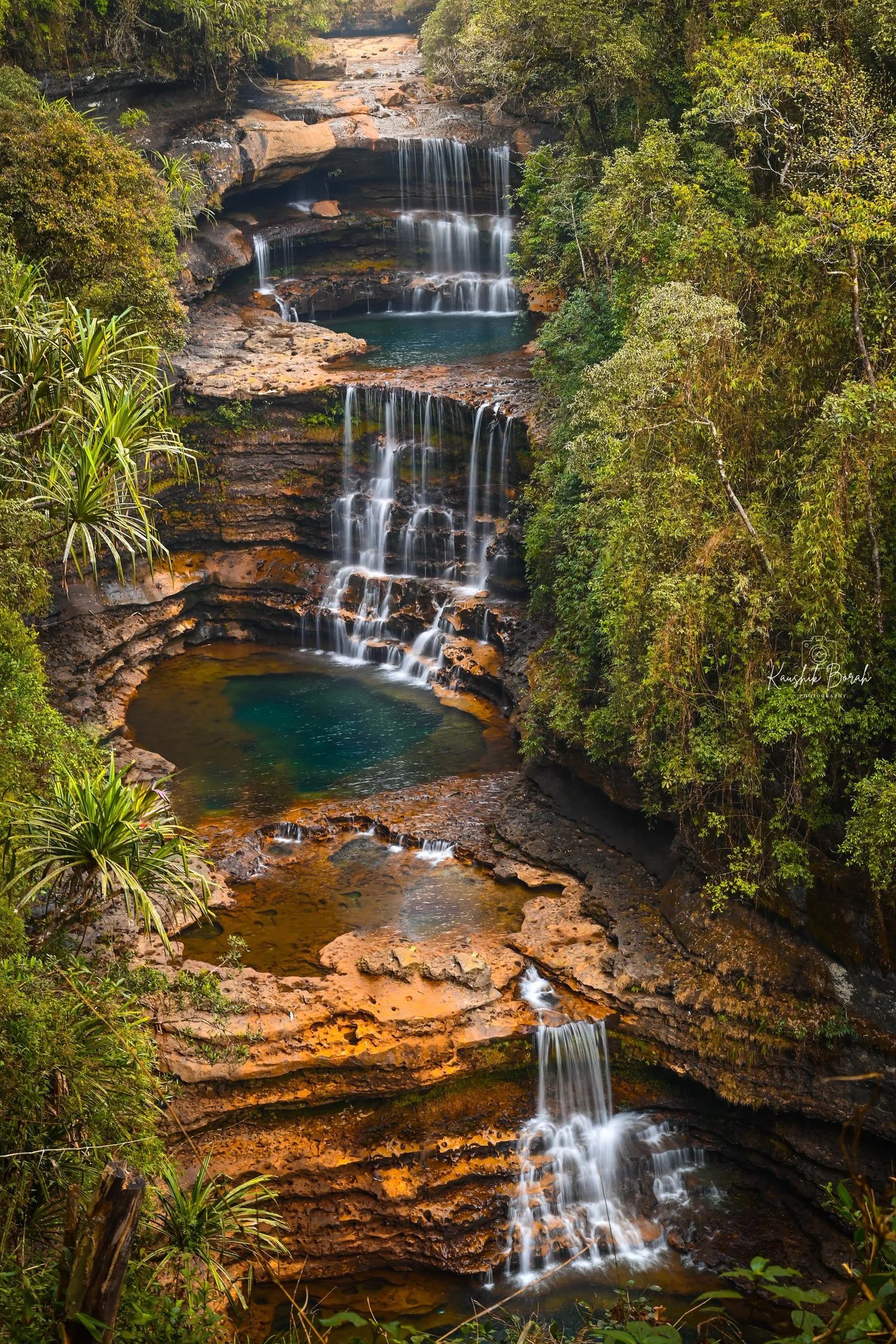
  • The three tiers and blue pools of Wei Sawdong falls near Cherrapunji
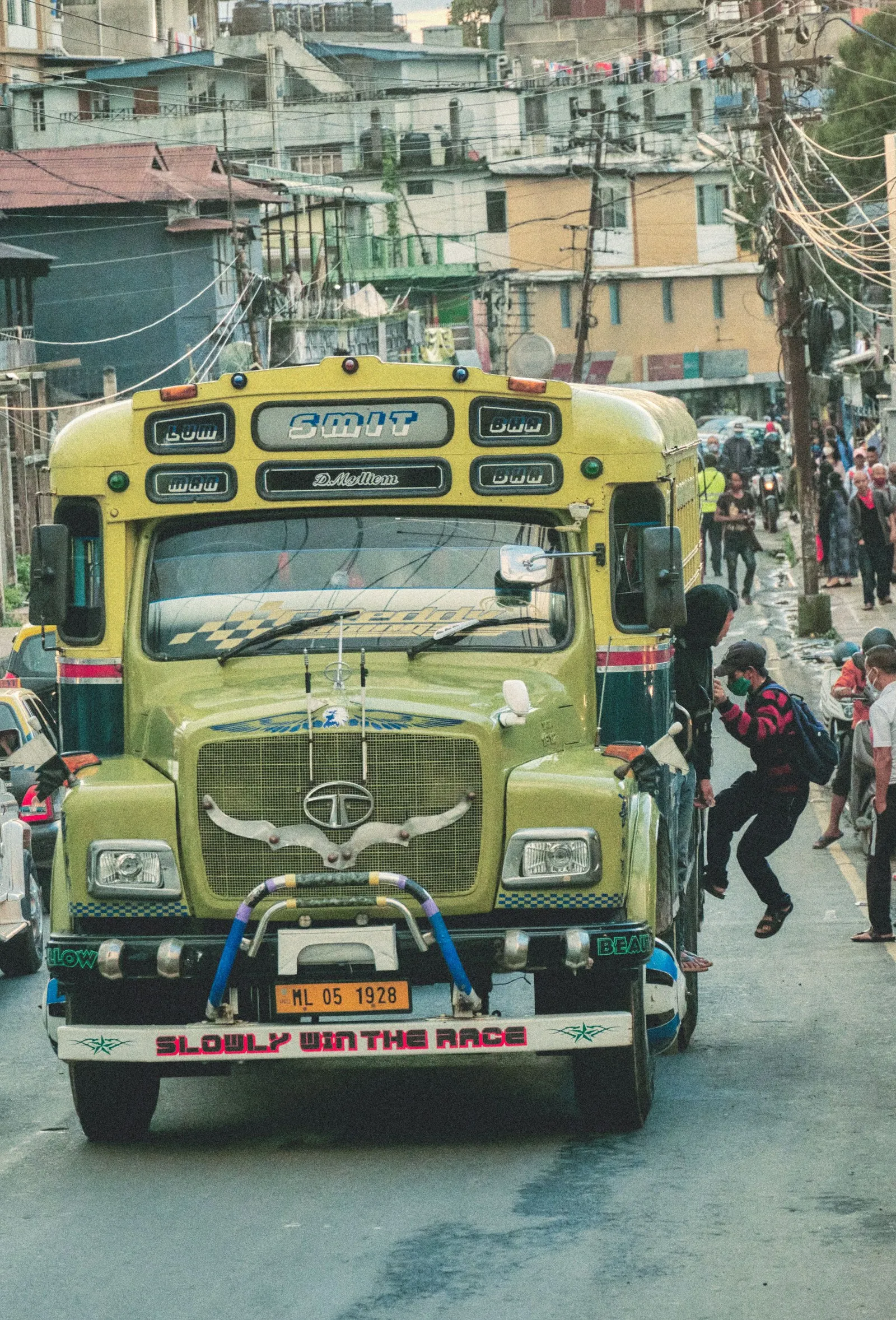
  • Passengers hopping on to a painted Tata bus on a hill street in Shillong
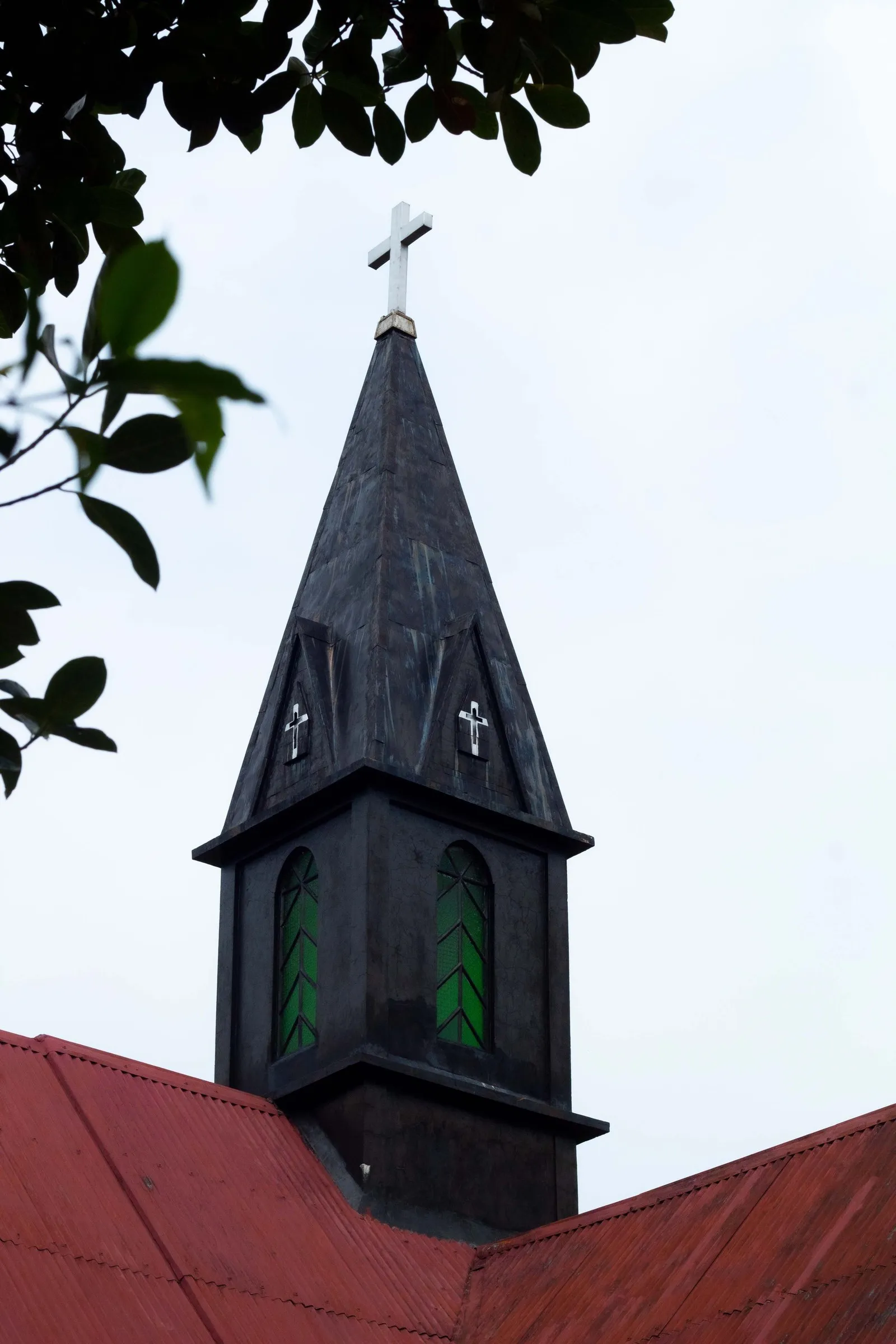
  • The steeple of the church at Mawlynnong, above its red tin roof
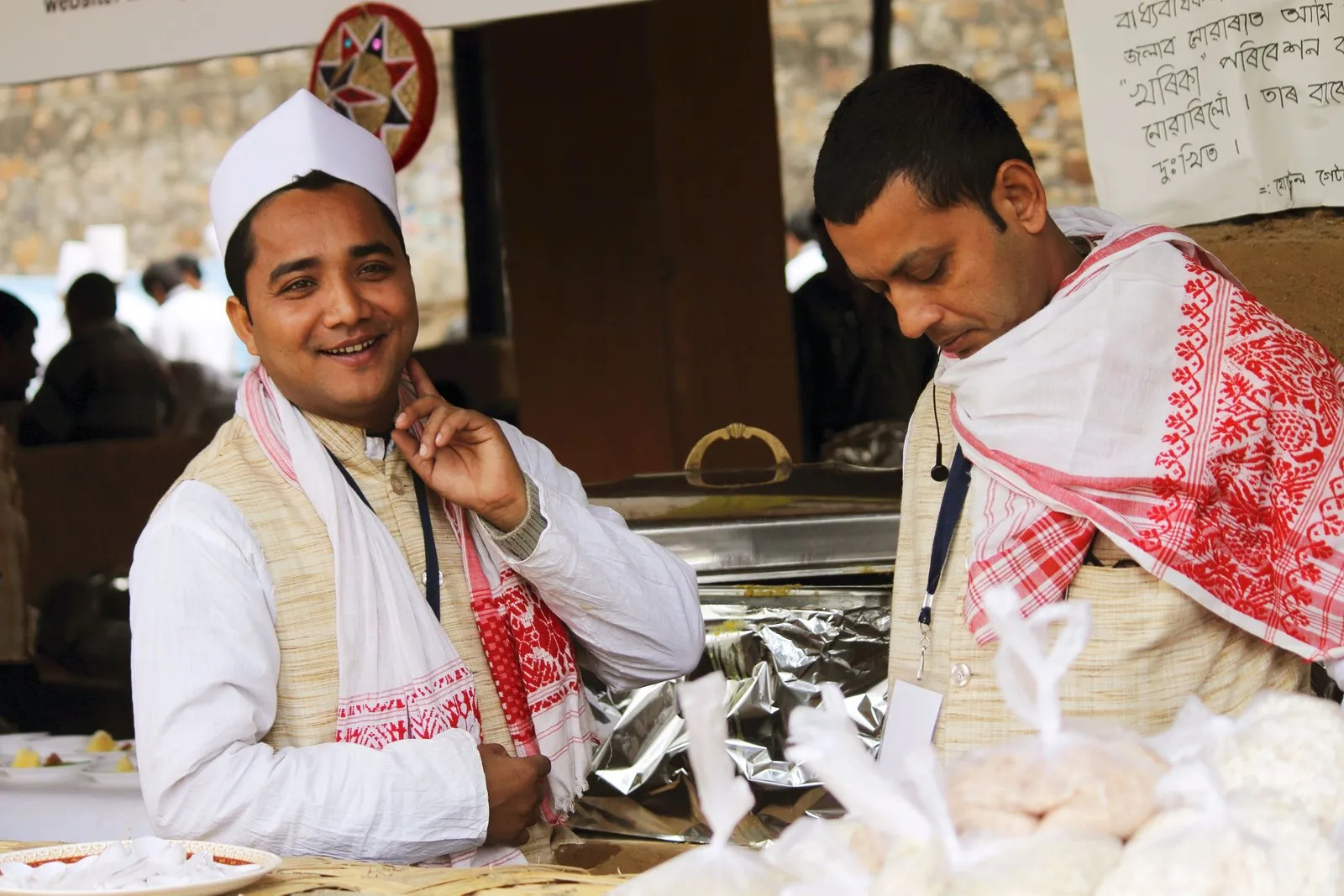
  • Two Assamese men in red-and-white gamosas at a market stall in Assam

Reviews

In their own words

Word for word, several in Italian, because Italy found us early. 5.0 from 146 reviews on Google, and 5.0 from 200 on TripAdvisor.

I had an incredible adventure with Rang Travels in Northern India earlier this year! The tour was jam packed. I loved the beautiful forts and buildings we visited, the markets, as well as the stunning World Heritage hotels. This tour gave me a real taste for India, and I felt very comfortable for my first time visiting!

Read the whole review on Google

Jess Foster

Northern India · May 2025

1 / 19

Enquire

Plan my journey

Tell us where your India begins — we reply with a written itinerary.

Travellers
When, roughly
Interests
Or ask on WhatsApp

No obligation. We reply with a written itinerary, not a sales call.