Rang Travels — explore the colors of India
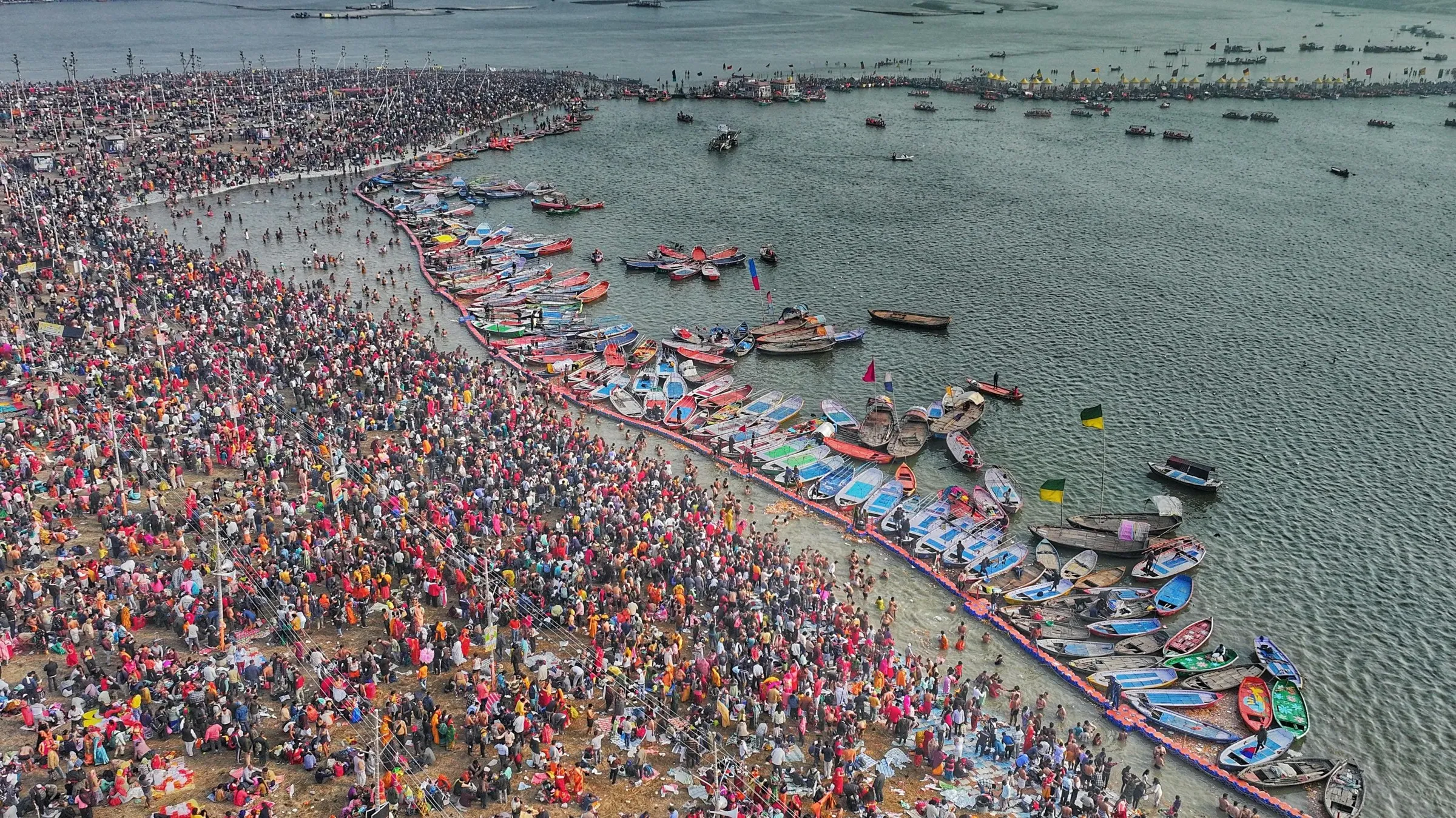
Pilgrims crowding the sandbank at the Triveni Sangam, with rowing boats massed along the water, Prayagraj

Festival · Spiritual · Photography

Prayagraj Ardh Kumbh Mela 2031

The complete guide to India’s great gathering at the Sangam, and our 12-day journey to it

See the day-by-day
Duration
12 days · 11 nights
Halts
4
Delhi to Delhi
Best months
January – February 2031
Price
On request
quoted to your dates

The journey

Prayagraj Ardh Kumbh Mela 2031: what it is, the expected bathing dates, where to stay and how to get about, and our 12-day journey from Delhi and Agra.

Ardh Kumbh means the half Kumbh: the gathering held at Prayagraj six years after each Maha Kumbh, the last of which was in 2025. Kumbh Melas are kept at four places — **Prayagraj**, Haridwar, Nashik and Ujjain — where, in the story of the churning of the ocean, drops of amrit fell from the pot the gods and demons fought over. The calendar and the stars decide when each one comes round.

Prayagraj holds a place of its own among them. The city was known for centuries as Prayag, and as **Teertharaj**, the king of pilgrimage places, because here the Ganga meets the Yamuna, with the hidden Saraswati said to join them: the **Triveni Sangam**. For some weeks in 2031 the sandbanks around it become a city of tents, temples and camps, and millions come to bathe. It is not simply a festival. It is a pilgrimage, a meeting of India’s spiritual orders, a feat of organisation, and millions of private acts of faith, all at once.

Festival calendar
Ardh Kumbh Mela 2031

Expected 8 January – 20 February 2031

The bathing days follow the Hindu lunar calendar. These are the expected dates; the Mela authority publishes the official programme nearer the time, and we confirm your journey against it.

Highlights

What you will remember

  • Sunrise on the Triveni Sangam by boat, as the pilgrims go down to the water

  • The camps of the akharas, and a discourse or devotional programme to sit in on

  • The Kalpavasis’ month by the river, and the free kitchens of the Mela

  • The Taj Mahal at sunrise, and Agra Fort, where Shah Jahan watched it in his last years

  • Prayagraj itself: the fort, Anand Bhavan, the Mankameshwar temple and Khusro Bagh

  • Varanasi: the evening aarti, the ghats at dawn, and Sarnath

The route

5 halts, in order

  1. Delhi
  2. Agra1 night
  3. Prayagraj4 nights
  4. Varanasi3 nights
  5. Delhi

Ardh Kumbh Mela 2031 · the expected bathing days

The bathing days

Six days on which the whole Mela goes down to the water. On the three Amrit Snan days the akharas process to the Sangam at dawn, and the crowds are greatest.

  1. 8Jan

    Wednesday

    Paush Purnima

    The full moon of Pausha. The Kalpavasis begin their month by the river.

  2. 15Jan

    Wednesday

    Makar Sankranti

    Amrit Snan

    The Sun enters Capricorn: the first Amrit Snan.

  3. 23Jan

    Thursday

    Mauni Amavasya

    Amrit Snan

    The new moon of Magha, kept in silence: the greatest bathing day.

  4. 27Jan

    Monday

    Basant Panchami

    Amrit Snan

    Saraswati’s festival of spring, in yellow: the last Amrit Snan.

  5. 7Feb

    Friday

    Maghi Purnima

    The full moon of Magha. The Kalpavasis bathe and go home.

  6. 20Feb

    Thursday

    Maha Shivratri

    Shiva’s great night, and the last bathing day of the Mela.

Expected dates, worked out from the Hindu lunar calendar and checked against the published almanac. Do not book on them alone: the Mela authority confirms the bathing days nearer the time, and so do we.

The Kumbh

What you will find there

The river, the bath, the orders of ascetics, the pilgrims who live a month by the water, and the city that grows around them.

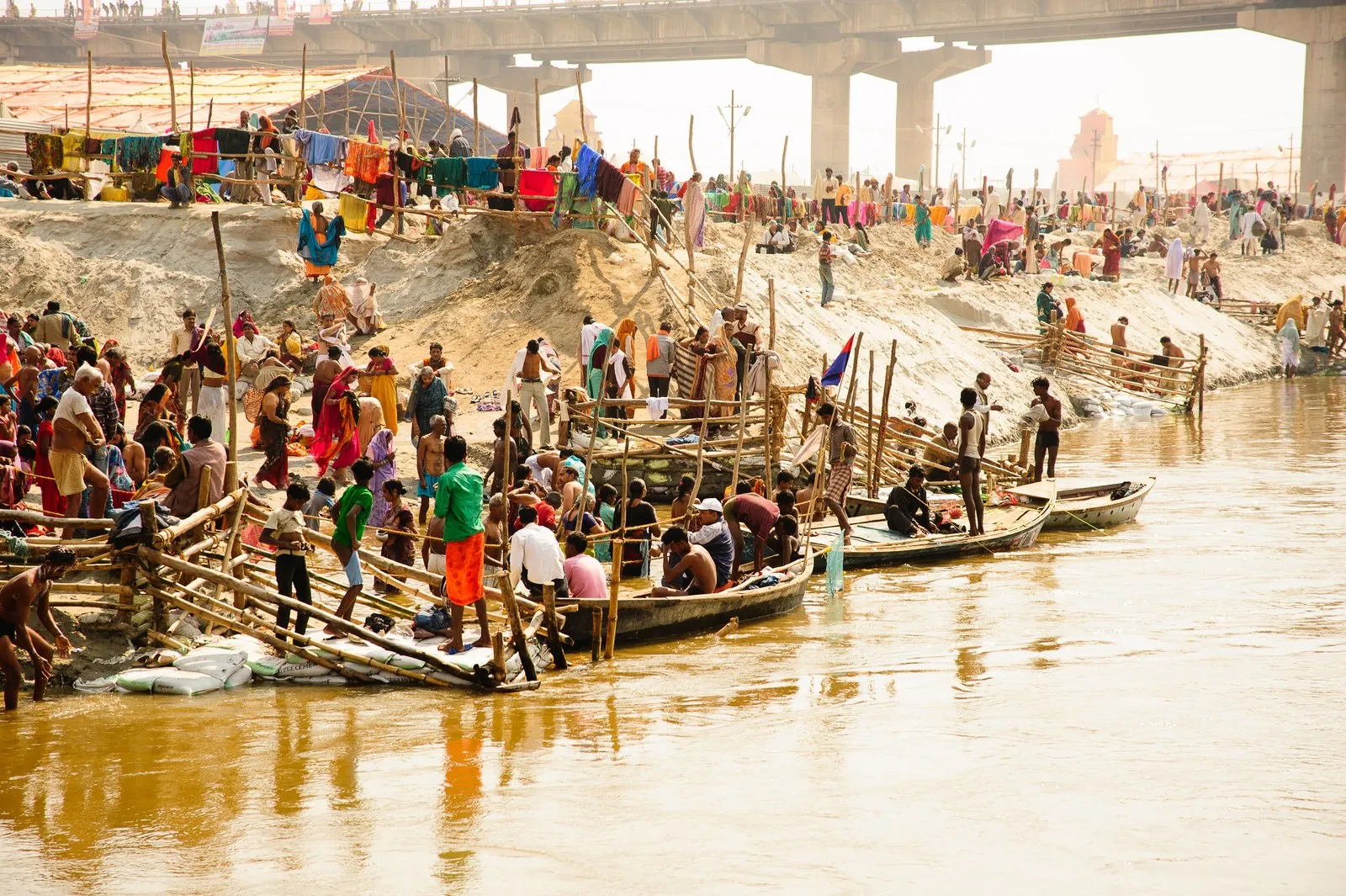
  1. Pilgrims climbing into wooden boats at the riverbank below a bridge, Prayagraj

    01 · The Triveni Sangam

    Where the rivers meet

    Everything at the Kumbh turns on one place: the Triveni Sangam, where the Ganga and the Yamuna meet and the invisible Saraswati is held to join them. For Hindu pilgrims there are few places more sacred in India, and for the weeks of the Mela the ordinary riverside becomes a landscape of pilgrimage, with its own roads, bridges, bathing places and temples.

    The best hour is sunrise, by boat. Pilgrims gather on the banks before they go into the water; some pray quietly, some perform rites with their families, some simply stand in the river with folded hands. Bells ring from the camps, songs carry across the water, smoke from the sacred fires hangs in the cold air — and through it all the rivers keep flowing. Remember that this is a place of devotion before it is a sight: photograph people at prayer only with care.
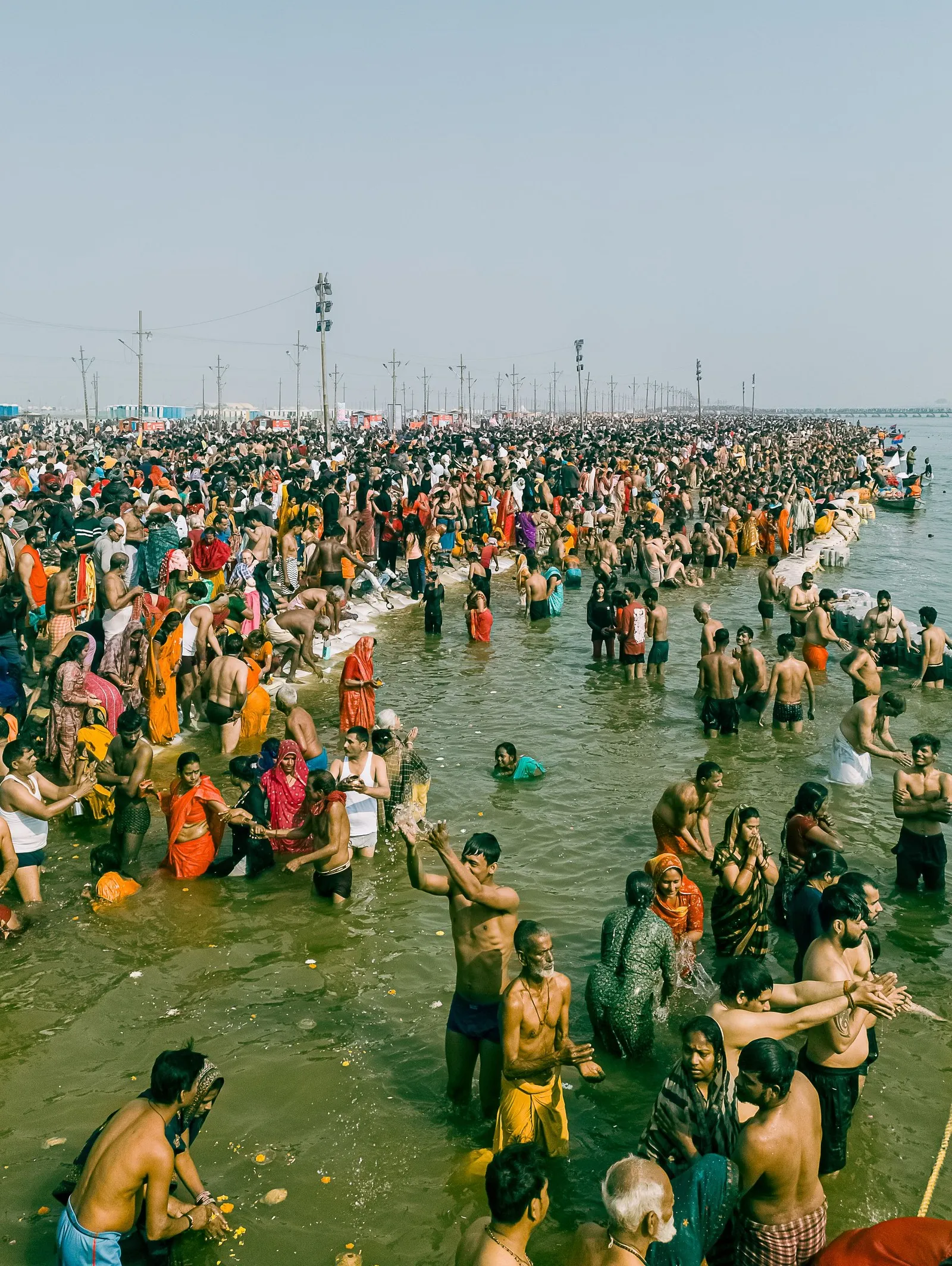
  2. Pilgrims bathing waist-deep at the confluence, Prayagraj

    02 · Snan

    The holy bath

    The snan, the sacred bath, is why millions come. For a Hindu pilgrim, bathing at the Sangam at an auspicious time is purification and renewal: a chance to begin again with a clean slate and renewed faith.

    On the great bathing days the atmosphere is unlike anything else. Pilgrims set out for the water in the small hours; the akharas process to the river in their fixed order for the Amrit Snan, the royal bath. These are acts of worship, not a spectacle, and the right way to see them is as a respectful witness.

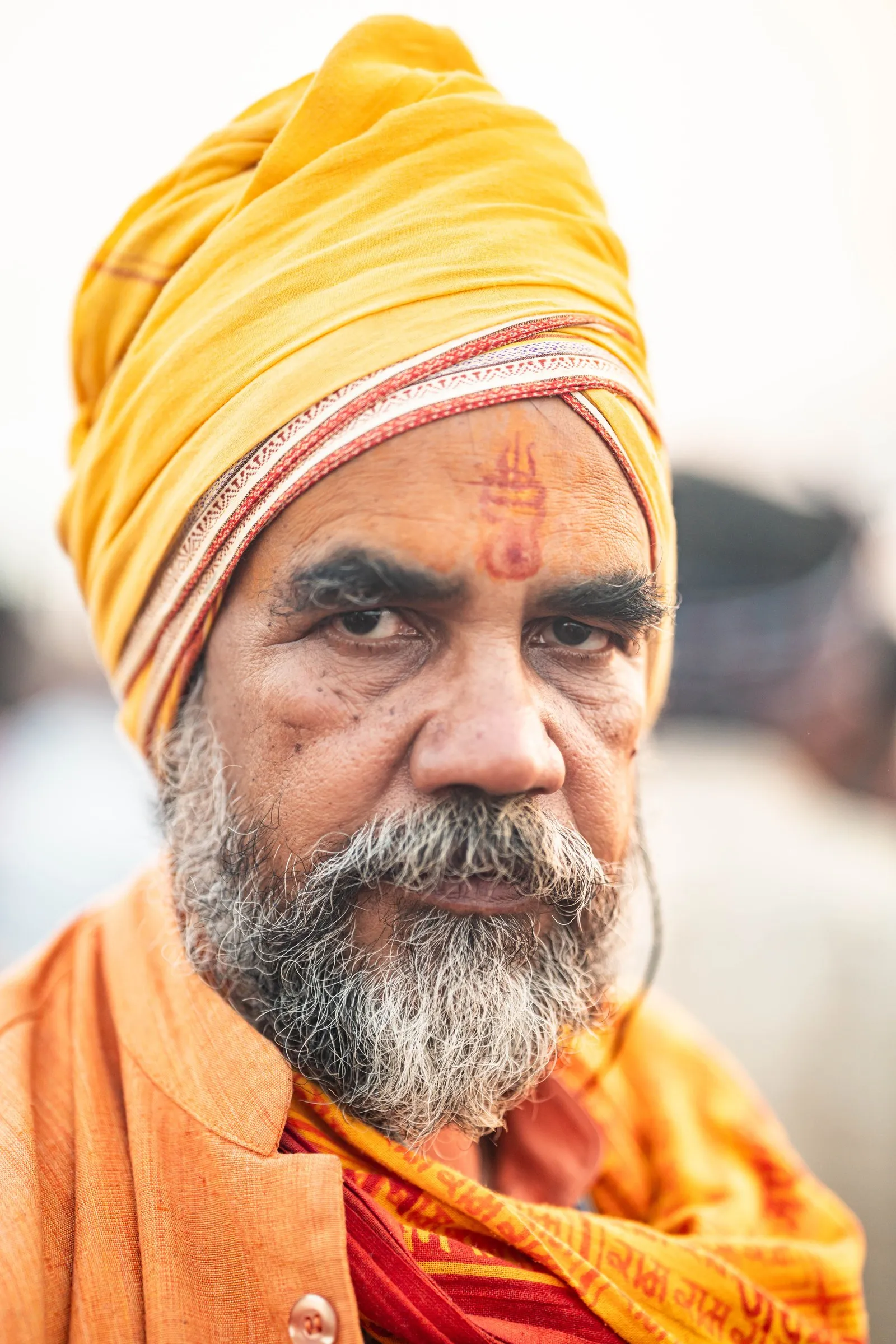
  3. An elderly sadhu in a yellow turban and saffron shawl at the Kumbh Mela, Prayagraj

    03 · The akharas

    The orders of ascetics, and the Naga sadhus

    The akharas are the traditional orders of India’s ascetics, each with its own lineage, practices and history, and at the Kumbh their camps are centres of the whole gathering: sadhus and monks, spiritual teachers and scholars, devotees, and the processions that carry them to the river.

    The Naga sadhus, the ascetics of the Shaiva orders who have renounced ordinary life for a demanding discipline, smeared with sacred ash, are the most famous faces of the Kumbh. They are religious practitioners at a sacred gathering, not performers. Ask before you photograph, never touch anyone without permission, and never interrupt; with a guide who can explain what you are seeing, time among the akharas can be the most meaningful part of the journey.

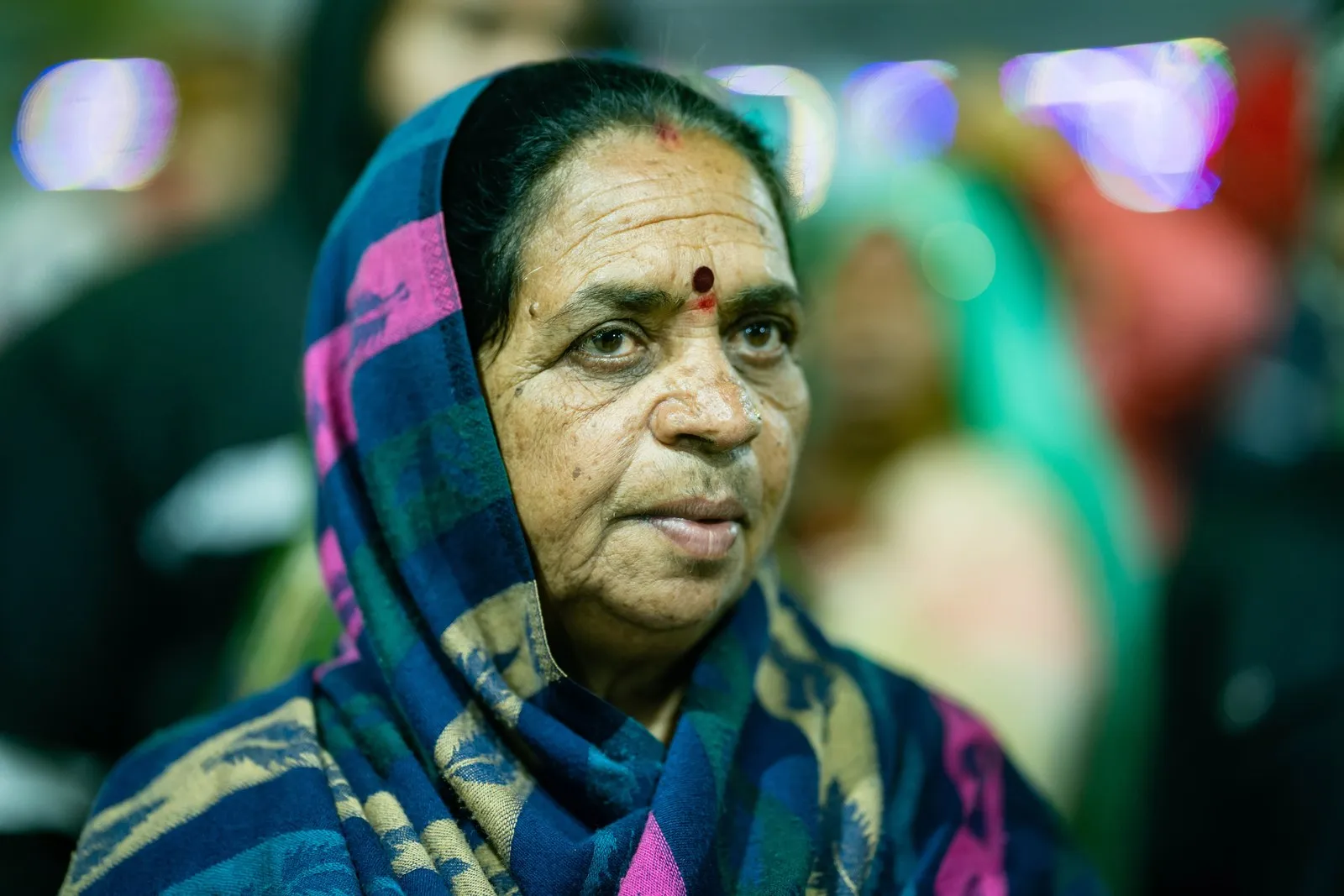
  4. An elderly woman pilgrim in a patterned shawl at the Mela, Prayagraj

    04 · Kalpavas

    A month by the river

    Kalpavas belongs above all to Prayagraj. The Kalpavasis — many of them older people, many of them women — spend the month of Magha living simply beside the river: bathing, praying, meditating, keeping the observances and eating plainly.

    For their families it is not a holiday but a serious religious vow, and their camps should be treated with the respect a home deserves. Walking quietly among them, you understand that the Kumbh is not only its great processions and its crowds. At its centre are millions of individual acts of faith.

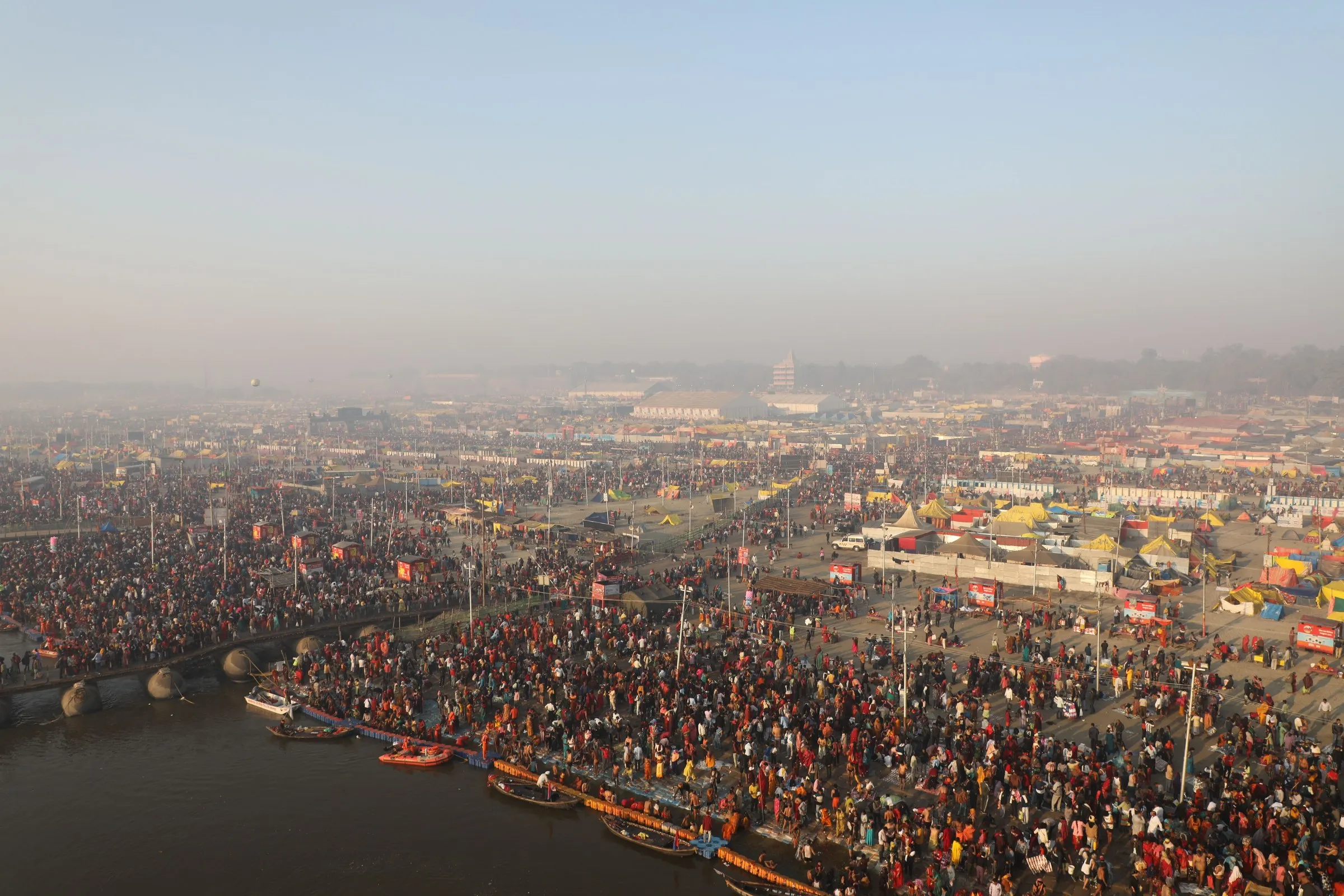
  5. The tent city of the Kumbh spread across the floodplain at dusk, Prayagraj

    05 · The Kumbh city

    A city of tents

    For some weeks a whole city stands on the floodplain around the Sangam, and then is taken down. For the Maha Kumbh of 2025 the authorities built hundreds of kilometres of temporary roads and a string of pontoon bridges, with water, electricity, sanitation, surveillance and public services for the millions who came; the arrangements for 2031 will be announced closer to the time.

    Think of it as a city, not a festival in one: tented camps, religious camps, kitchens, medical posts, information centres, transport points and long pedestrian routes. And walk — walking is part of the Kumbh.

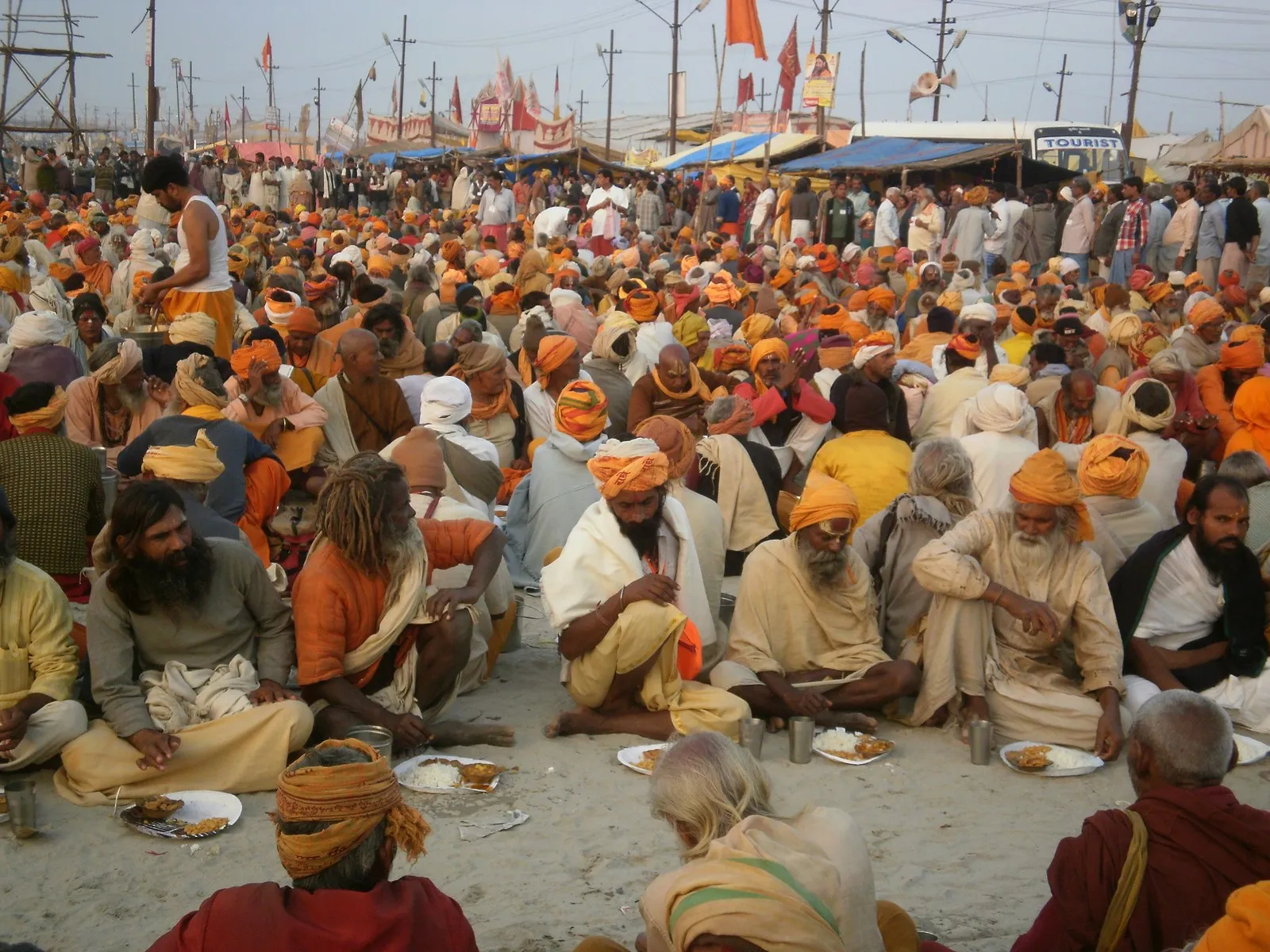
  6. Sadhus and pilgrims sitting down to a shared meal on the ground at the Kumbh Mela

    06 · Camps and kitchens

    Discourses, music, and the free kitchens

    Religious organisations and spiritual groups set up camps across the Mela, and in them there are lectures and discussions, meditation and yoga, bhajans and devotional music, ceremonies, and teachers who will talk with visitors. Some welcome everyone; some keep their own rules. A guide who knows them will take you to the right ones.

    Many camps feed all comers at their community kitchens, the bhandaras: dal, rice, roti, vegetables, khichdi, tea and sweets, and nothing else — the Mela is vegetarian throughout. Sitting down to eat on the ground with the pilgrims is one of its quiet pleasures.

Our own film

The Kumbh, from the ground

Shot by our own team at Prayagraj: the camps, the river and the bathing days.

12 days, 11 nights

Our Ardh Kumbh journey, day by day

Delhi and the Taj Mahal, four nights at the Kumbh, then Varanasi: the journey we recommend for a first visit, timed to the bathing days you choose.

  1. Delhi
  2. Agra
  3. Prayagraj
  4. Varanasi
  5. Delhi
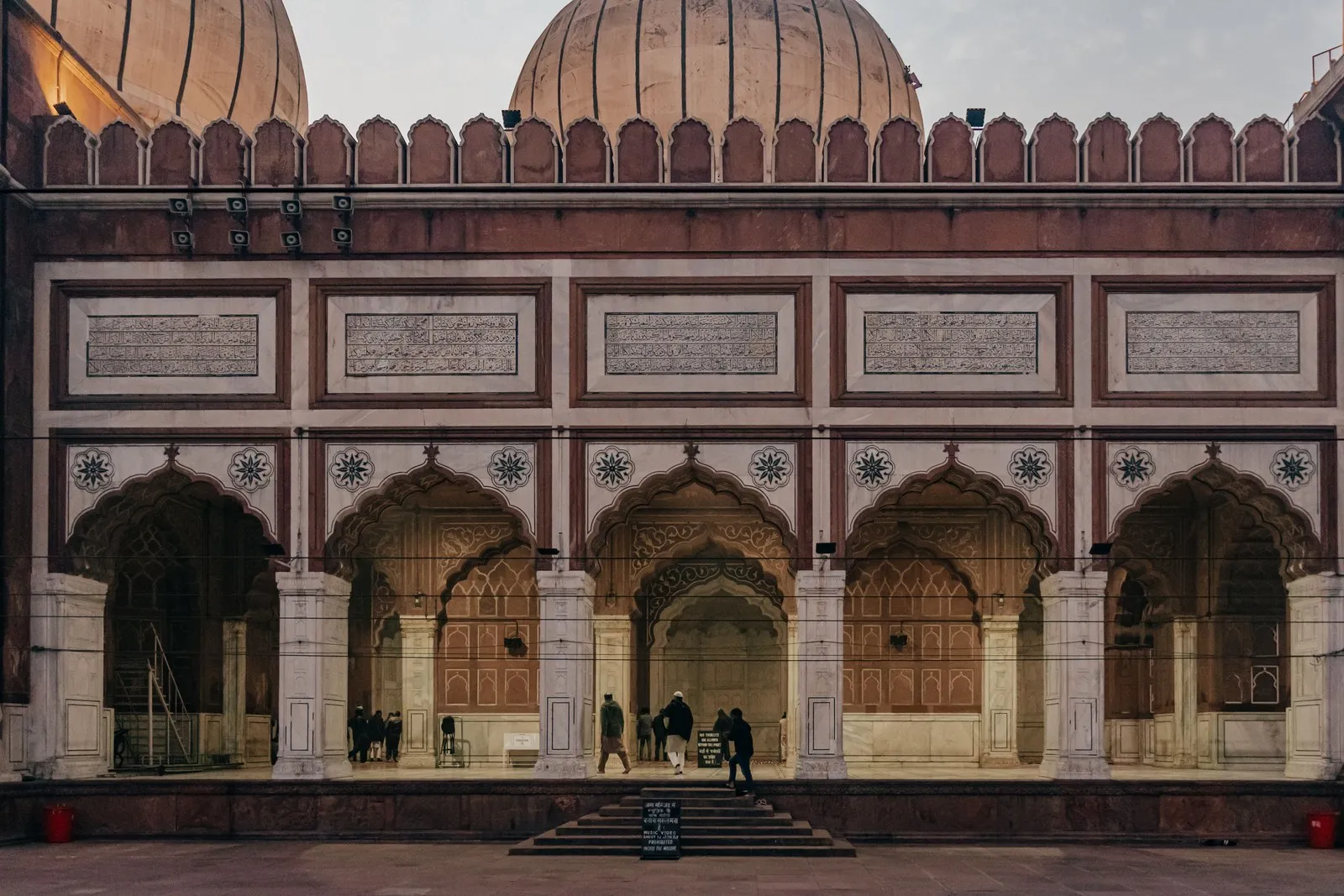
  1. The arcades and domes of the Jama Masjid, Delhi

    01

    Overnight Delhi

    Arrival in Delhi

    Met at the airport and driven to your hotel, with the room booked from the night before so that it is ready whenever your flight lands. The rest of the day is yours to recover from the journey.

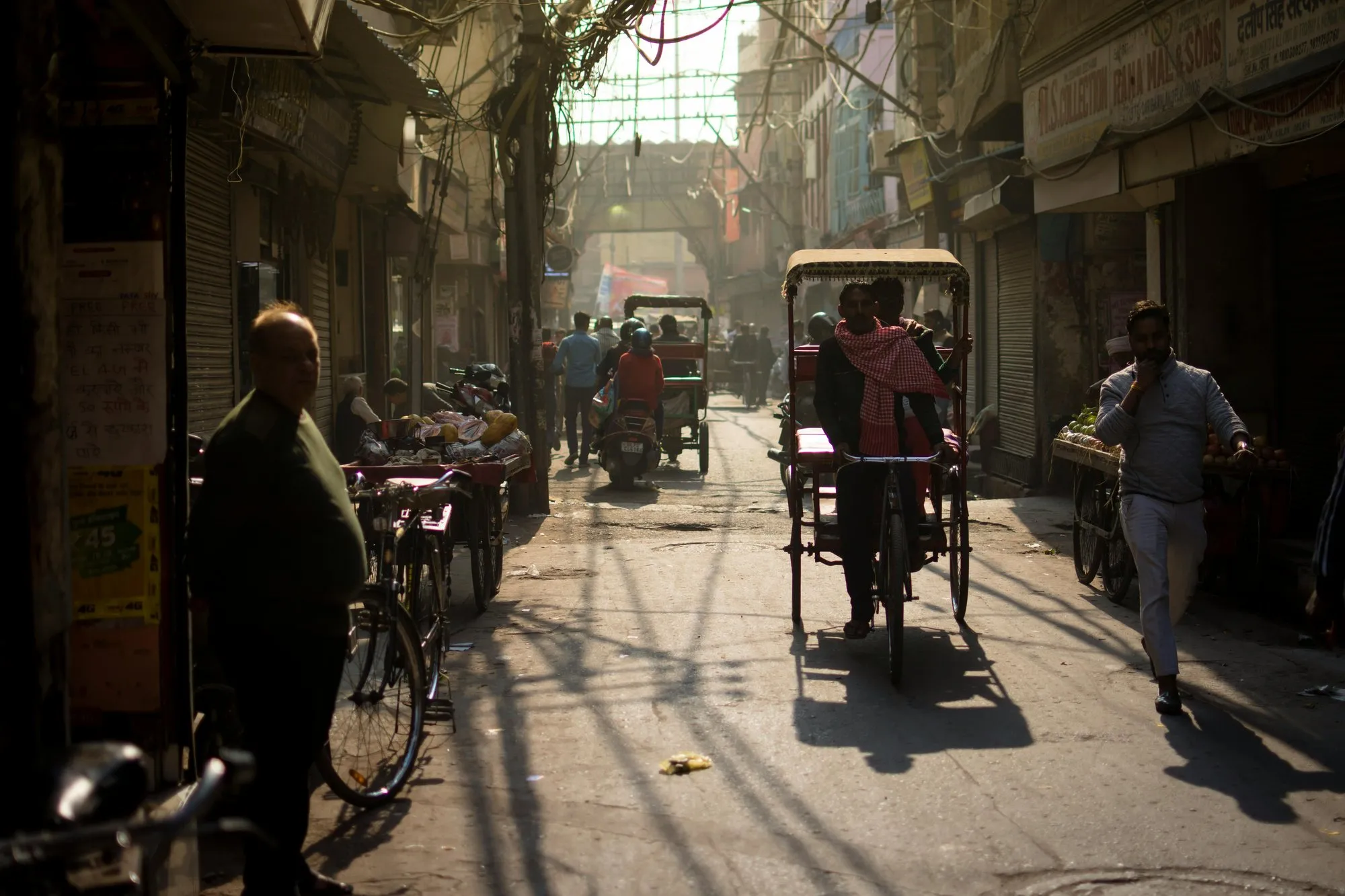
  2. A cycle rickshaw in a sunlit Old Delhi lane

    02

    Overnight Delhi

    Old Delhi and New Delhi

    Old Delhi first: the Red Fort, the Jama Masjid, and a cycle-rickshaw through the lanes of Chandni Chowk, where the spice market has traded for centuries. Then Raj Ghat, where Mahatma Gandhi was cremated.

    In the afternoon, Lutyens’ New Delhi — India Gate and the avenues of the capital — and Humayun’s Tomb, the garden tomb that the Taj Mahal would one day answer.

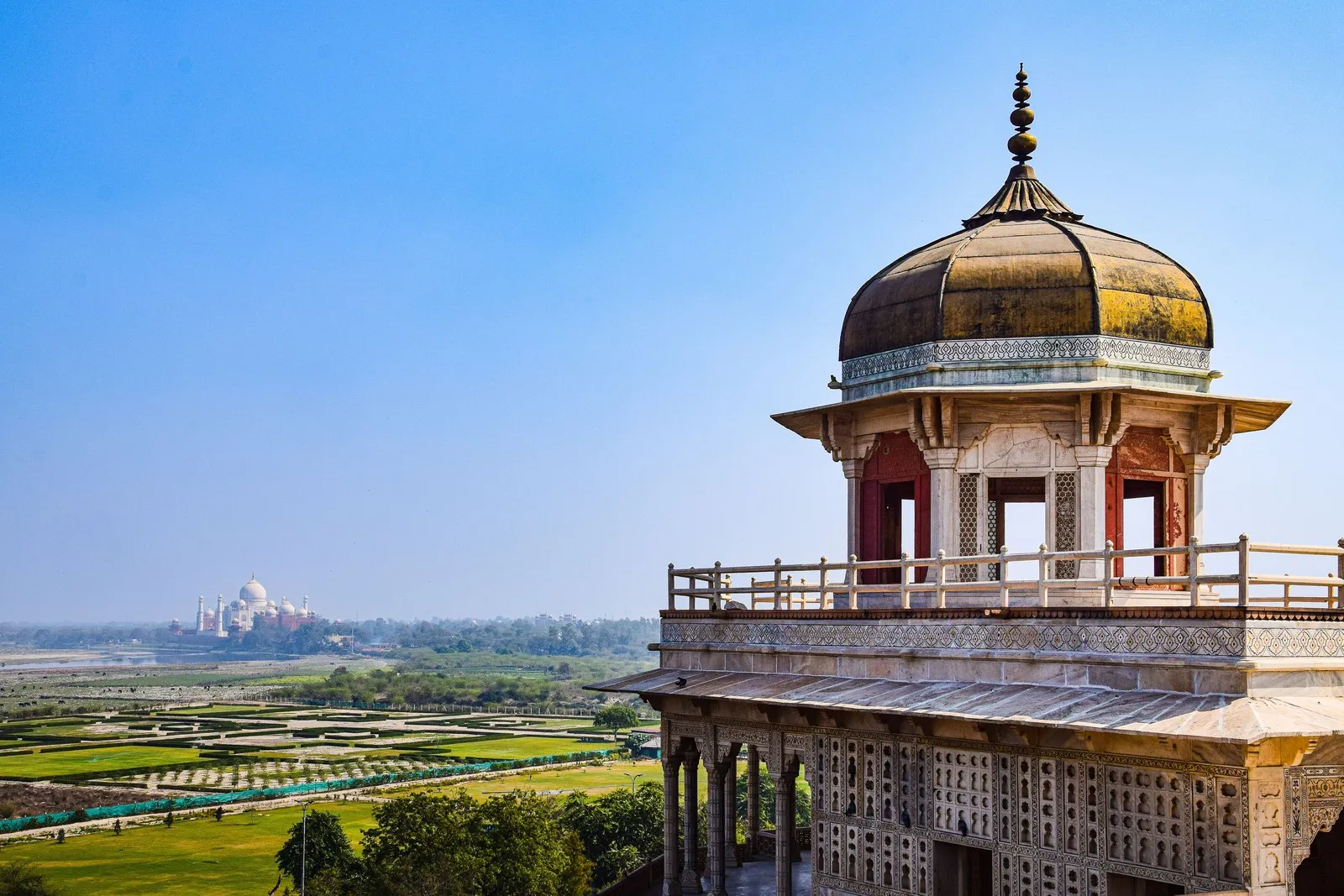
  3. The Musamman Burj of Agra Fort, with the Taj Mahal on the far bank of the Yamuna

    03

    Overnight Agra

    230 km · about 4 hrs

    To Agra, and the fort

    South on the expressway to Agra. In the afternoon, Agra Fort, the red sandstone citadel of Akbar and his grandson Shah Jahan, whose marble palaces look down the Yamuna to the Taj. From the octagonal Musamman Burj, Shah Jahan, deposed by his son, spent his last years looking at his wife’s tomb.

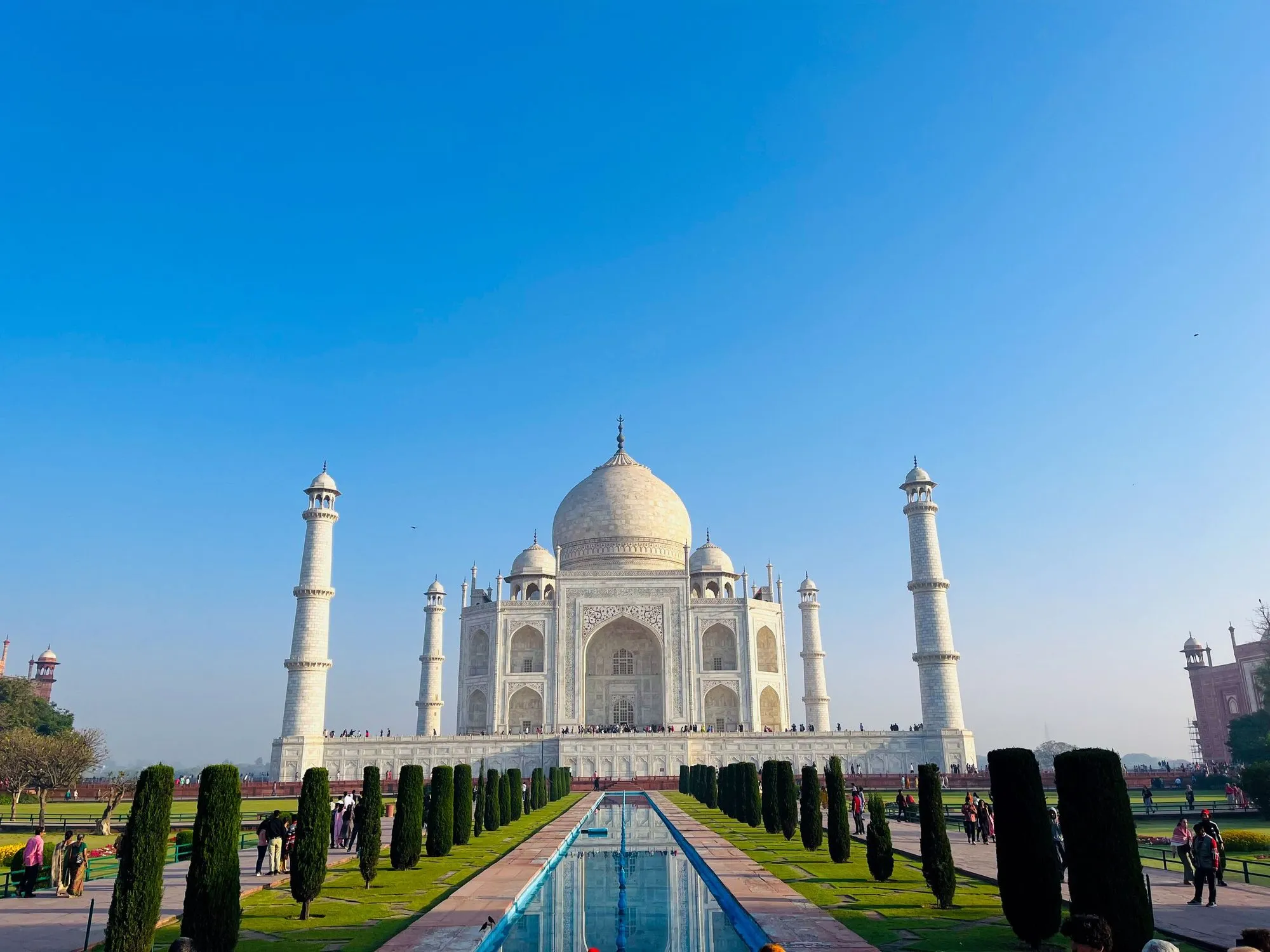
  4. The Taj Mahal from the gardens

    04

    Overnight Prayagraj

    Train or road Agra – Prayagraj · 7–8 hrs

    The Taj at sunrise, then Prayagraj

    The Taj Mahal at sunrise, when the marble turns from grey to rose to white (it is closed on Fridays, so the days are set around it). Then east to Prayagraj by train or by road, arriving in the evening at your camp or hotel for the Kumbh, where your local representative meets you with a briefing on the days ahead.

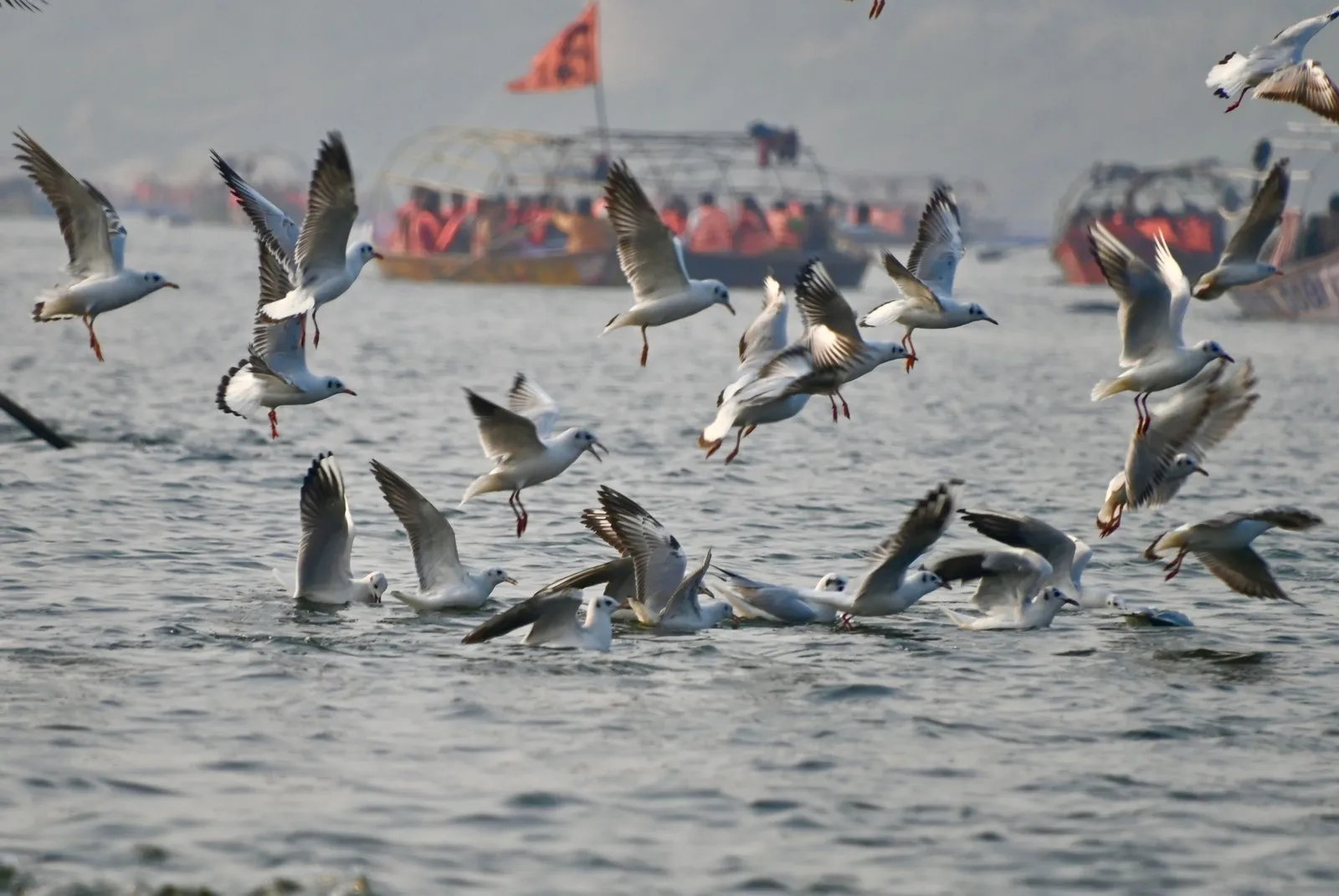
  5. Gulls wheeling low over the water at the Sangam, boats behind

    05

    Overnight Prayagraj

    The Triveni Sangam and the Kumbh

    Up before dawn for a boat to the Triveni Sangam, as the sun comes up over the rivers and the pilgrims go down to the water: some praying alone, some with their families, some simply standing in the river with folded hands. In winter, gulls from Central Asia gather over the water and follow the boats.

    Later, the Mela itself, with your guide: the pontoon bridges, the sectors of the tent city and the first of the religious camps.

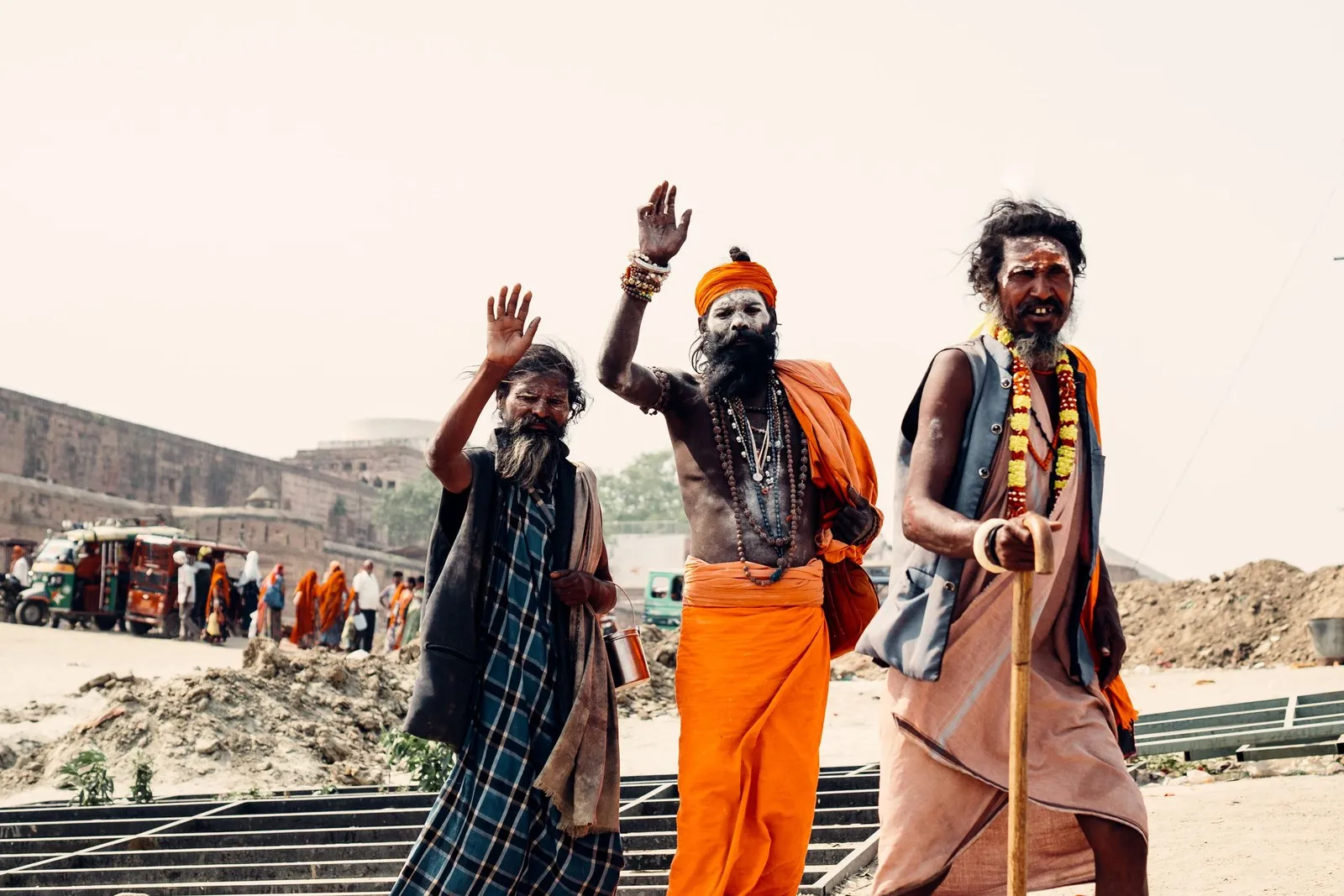
  6. Three sadhus, arms raised in greeting, walking by the river at Prayagraj

    06

    Overnight Prayagraj

    The akharas and the spiritual camps

    A day among the akharas, the orders of ascetics, as far as access and the day’s rules allow: the camps of the sadhus and the Naga sadhus, the gurus receiving their followers, the fires that burn all day. Your guide explains who is who and what is happening, and when to put the camera away.

    In the afternoon, a discourse or devotional programme at one of the spiritual camps when one is on, and the bhandaras, the free kitchens, where anyone may sit down to eat.

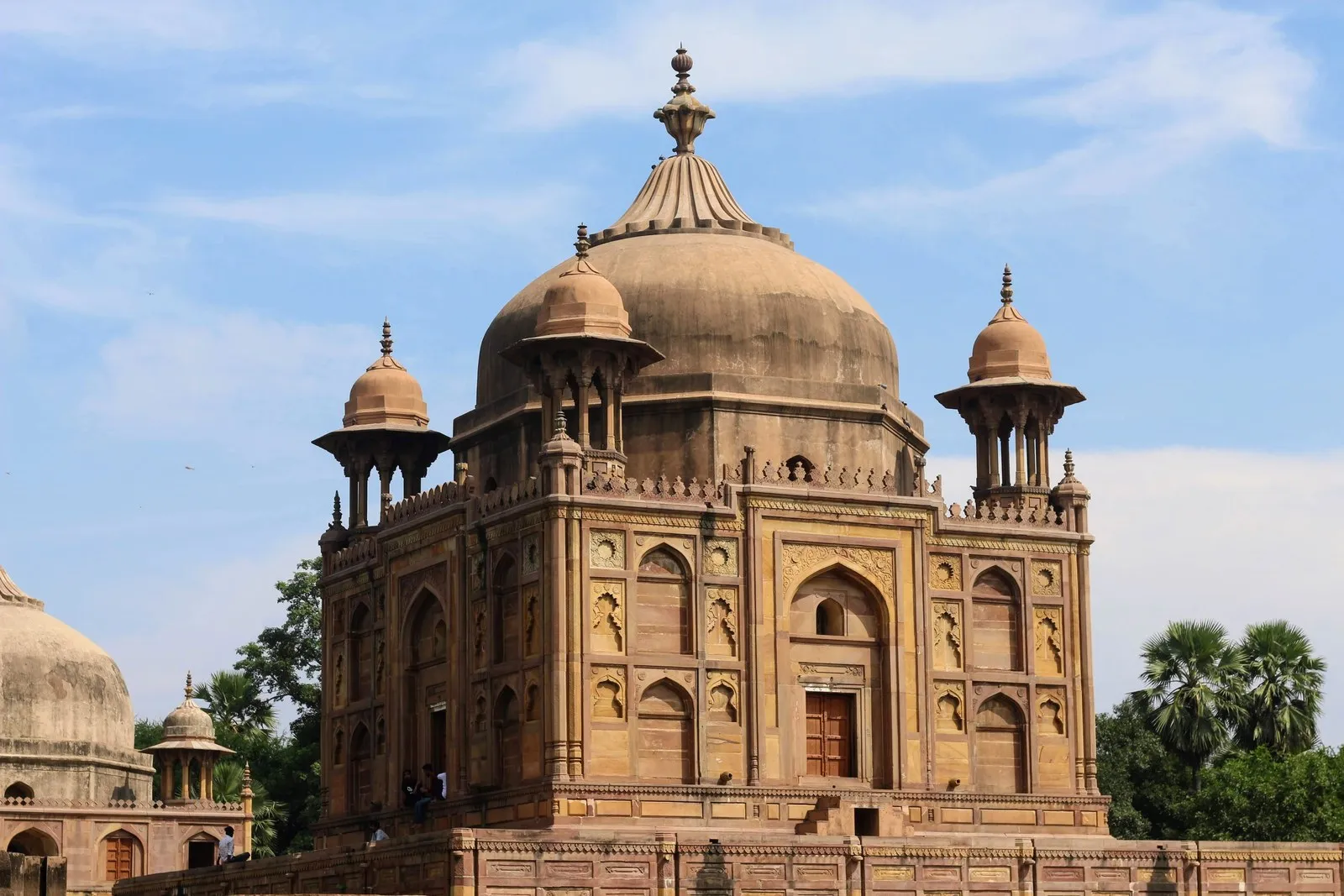
  7. A sandstone Mughal tomb in the Khusro Bagh garden, Prayagraj

    07

    Overnight Prayagraj

    Prayagraj’s heritage

    A break from the crowds, in the city itself: the walls of Akbar’s fort above the Sangam and the Akshayavat, the undying banyan revered inside it; Anand Bhavan, the Nehru family home, now a museum of the freedom movement; the Mankameshwar temple to Shiva on the Yamuna bank; and Khusro Bagh, the walled Mughal garden with the tombs of Prince Khusrau and his mother. Back to the Mela later in the day if you wish.

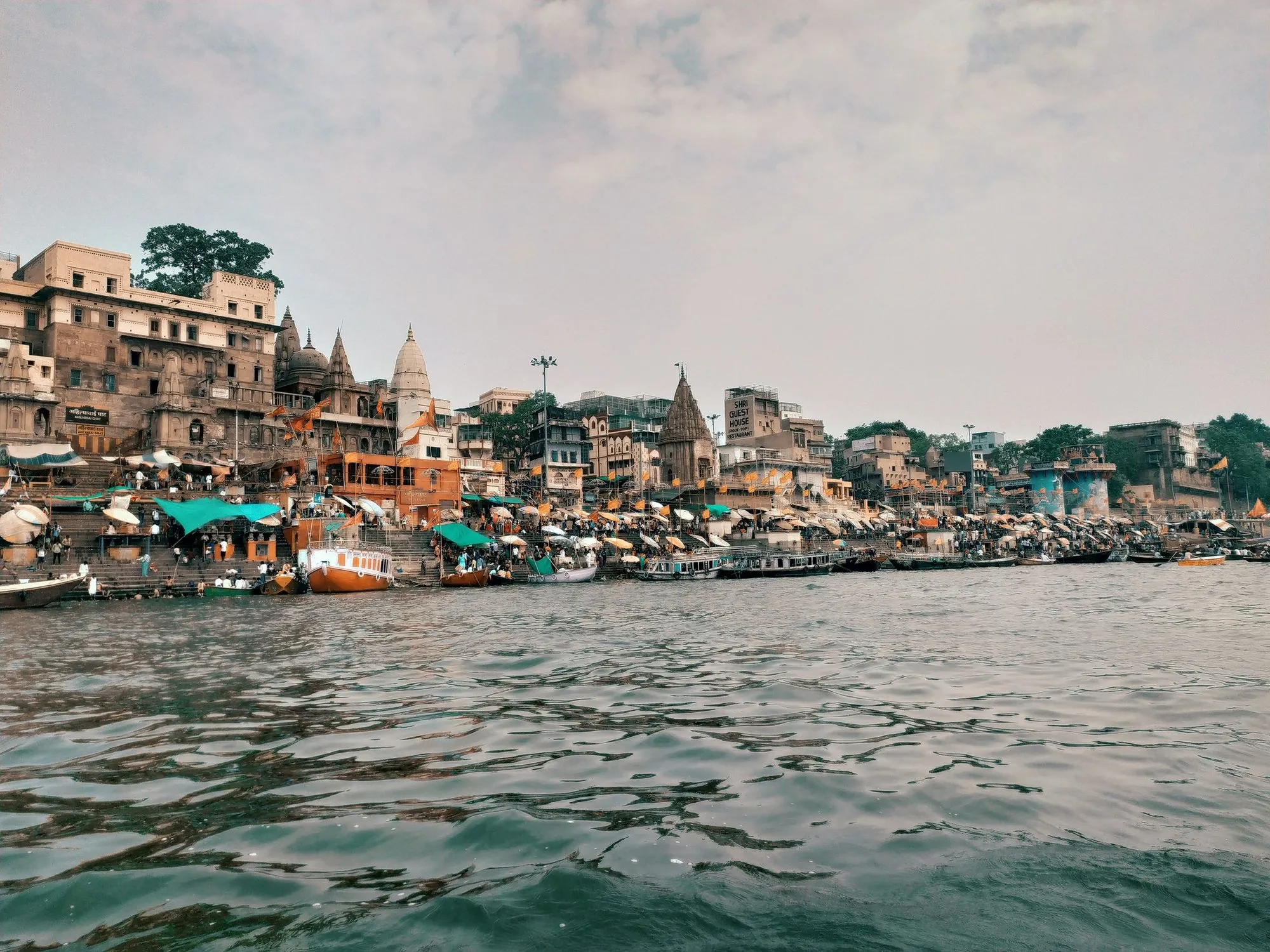
  8. The ghats of Varanasi seen from the river

    08

    Overnight Varanasi

    120 km · about 3 hrs, more after a bathing day

    To Varanasi

    East along the Ganga to Varanasi. In the evening, a boat on the river for the Ganga aarti at Dashashwamedh Ghat, where the priests raise their great brass lamps in unison.

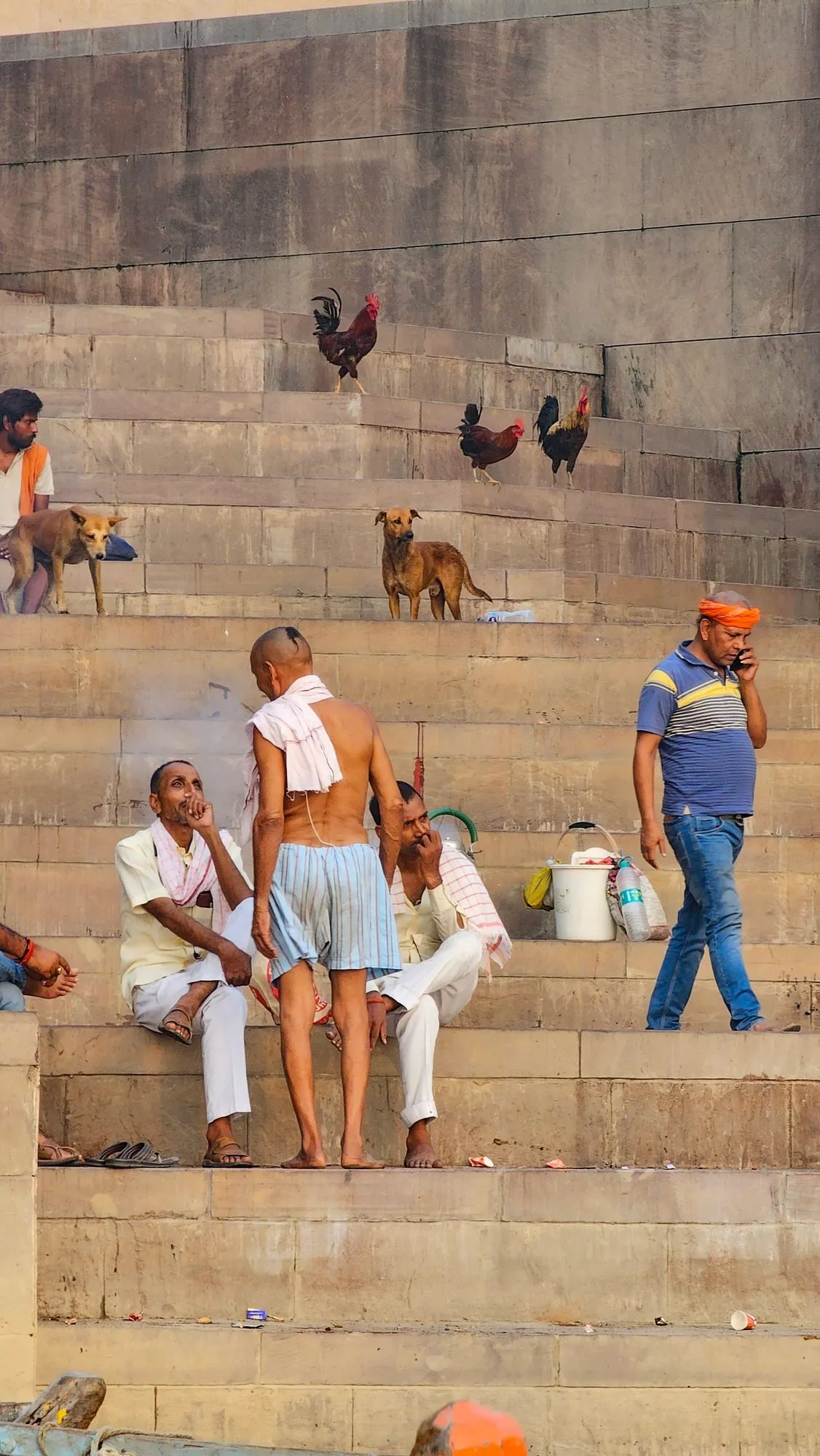
  9. People on the steps of a ghat in Varanasi

    09

    Overnight Varanasi

    The temples and the ghats

    On foot through the old city to the Kashi Vishwanath temple, and along the ghats: the washermen, the wrestlers, the pilgrims, the burning ghat of Manikarnika, where the fires are never allowed to go out. Varanasi is one of the oldest living cities on earth, and it is lived at the water’s edge.

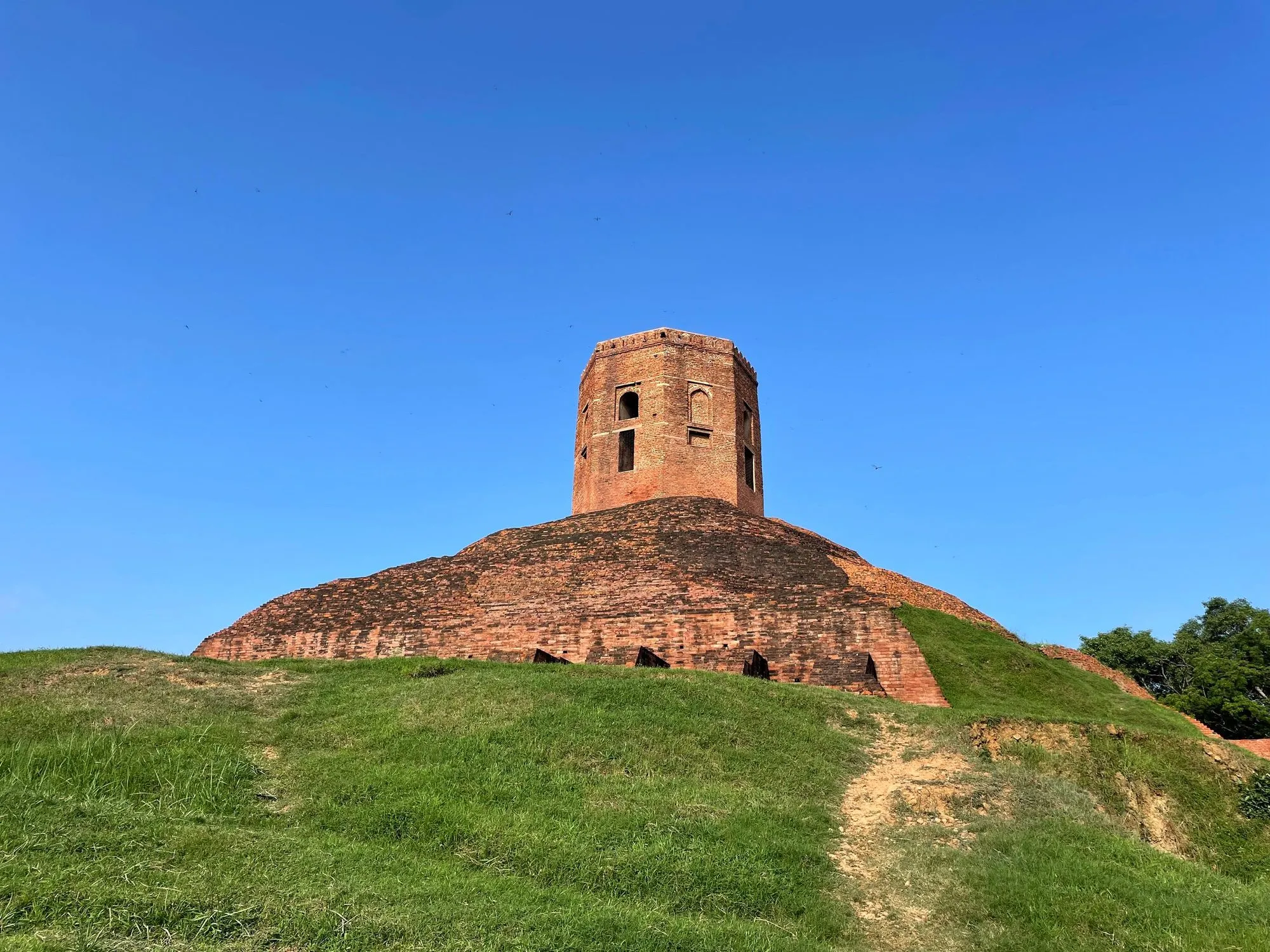
  10. The Chaukhandi Stupa at Sarnath

    10

    Overnight Varanasi

    Sunrise on the Ganga, and Sarnath

    A boat at sunrise past the bathing ghats. In the afternoon, Sarnath, where the Buddha gave his first sermon: the Dhamek Stupa, the Chaukhandi Stupa and the museum with Ashoka’s lion capital.

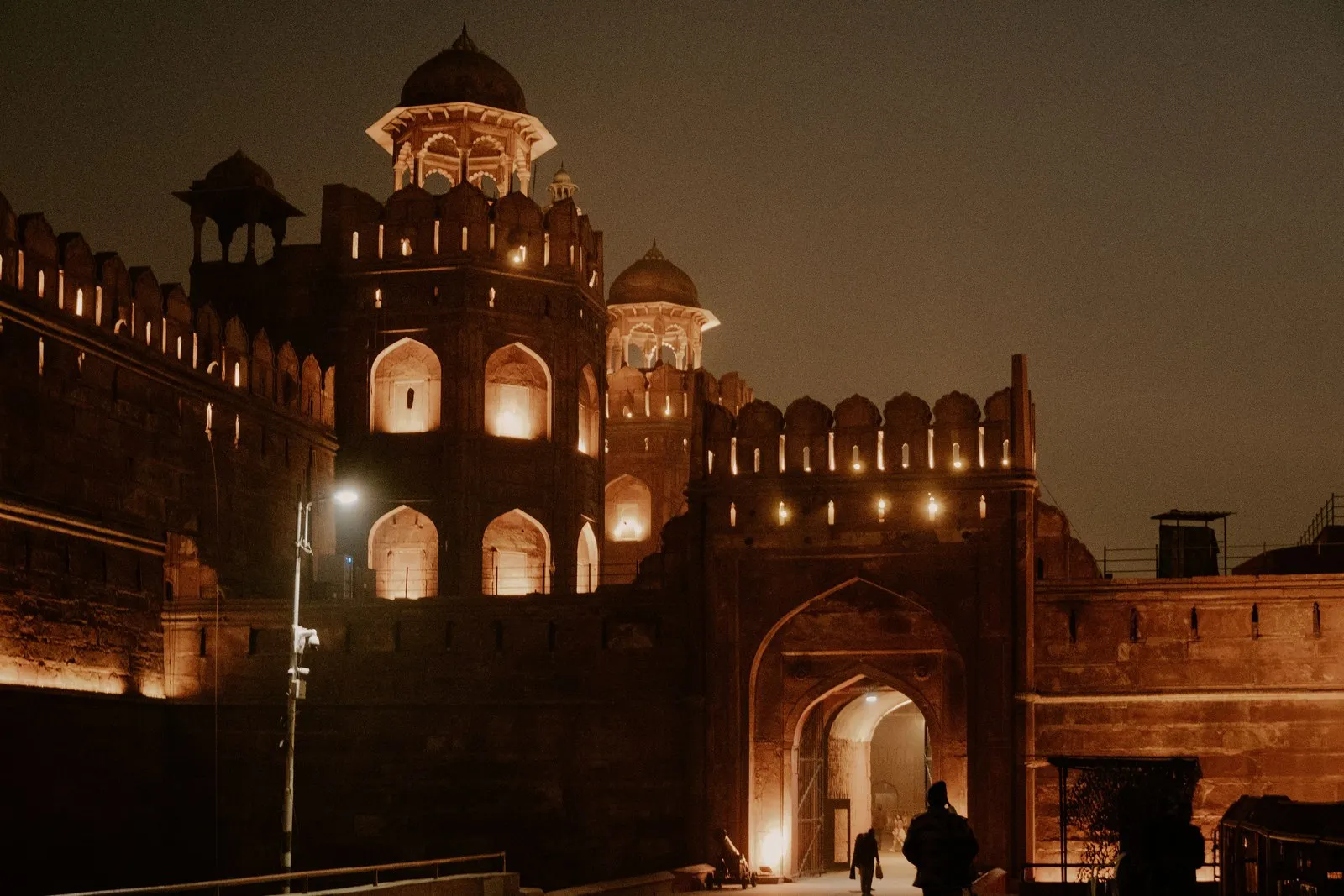
  11. The Red Fort lit up at night, Delhi

    11

    Overnight Delhi

    Flight Varanasi – Delhi

    To Delhi

    The flight back to Delhi, and a last evening in the capital.

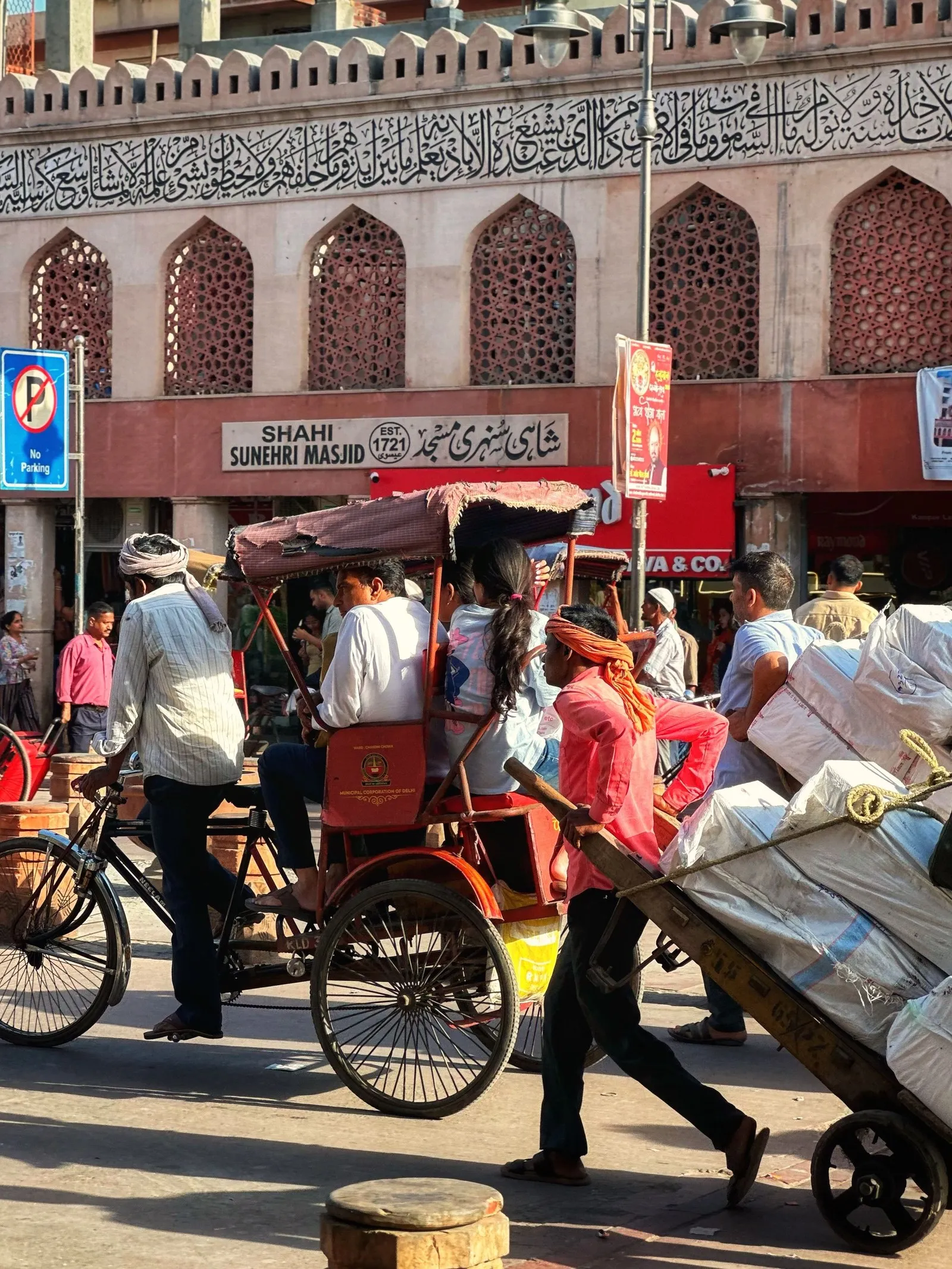
  12. Rickshaws and shoppers below the Sunehri Masjid in Chandni Chowk, Old Delhi

    12

    Departure

    Departure

    Transfer to the airport for your flight home.

Like the route? We will write it for your dates.

The price

What the price covers

The commonest reason travellers abandon an enquiry is not knowing what is covered. Every Rang Travels quotation itemises it — this is the usual shape for this journey.

Included

  • 11 nights with breakfast: 3 in Delhi, 1 in Agra, 4 at the Kumbh in a camp or a hotel in Prayagraj, 3 in Varanasi
  • A private vehicle with an experienced driver, wherever vehicles are allowed
  • English-speaking guides throughout, and Italian-speaking guides on request
  • A local representative with you at the Kumbh, clear meeting points, and help on the bathing days
  • The boats to the Sangam, the boat for the Varanasi aarti and the sunrise boat on the Ganga
  • The train or car from Agra to Prayagraj, the flight from Varanasi to Delhi, and every airport and station transfer

Not included

  • International flights
  • Monument entrance fees
  • Lunches and dinners
  • Visa, travel insurance and tips
  • Donations at the camps

Price on request

Quoted to your dates,
your hotels and your pace

Already in India?

Five days at the Kumbh

The Kumbh alone, from Prayagraj: for travellers already in India, or joining it from another journey.

  1. 01

    Arrival in Prayagraj

    Check in to your camp or hotel, meet your local representative for a briefing on the Kumbh, and, as time allows, walk down towards the Sangam in the evening.

  2. 02

    The Sangam and the Kumbh

    An early boat to the Triveni Sangam for sunrise over the rivers and the pilgrims’ morning prayers and bathing; later, the camps and religious quarters of the Mela.

  3. 03

    The akharas

    The akharas and spiritual camps, as access and the day’s rules allow; the traditions of the ascetic orders explained; a discourse or devotional programme if one is on.

  4. 04

    Prayagraj’s heritage

    A break from the crowds: the fort, Anand Bhavan, the Mankameshwar temple, the old city and the riverfront, and back to the Mela later if you wish.

  5. 05

    A last morning at the Sangam

    One more sunrise on the river, or a last visit to a camp, then on to your next destination.

How long, and when

Give it time

The best Kumbh is a slow one. One sunrise at the Sangam can stay with you longer than five monuments in a day.

3 nights

in Prayagraj

The Sangam, a holy bath if you wish, the camps, the akharas and the sights of Prayagraj.

4 nights

in Prayagraj

The same without hurrying, with time for a sunrise boat, the spiritual camps and photography.

5 nights or more

in Prayagraj

For photographers, researchers and anyone who wants to understand the Kumbh rather than see it. Nobody understands it in a day.

When to go

  1. On a great bathing day

    The Kumbh at its most intense: the akharas’ processions, the ceremonial bath, the largest crowds of pilgrims. Unforgettable, and the busiest time of all.

  2. Just away from them

    Often the better choice for a first visit: time to explore the camps, visit the spiritual centres, meet people, take photographs, take a boat, and see Prayagraj.

  3. Within a longer journey

    Delhi, the Taj Mahal, the Kumbh and Varanasi, as in our 12-day journey: India’s great monuments and its living faith, one after the other.

With Varanasi and Ayodhya

  • Delhi · Agra · Prayagraj · Varanasi · Delhi

    The Taj Mahal and the Kumbh, then the ghats of Varanasi — our 12-day journey.

  • Delhi · Ayodhya · Prayagraj · Varanasi

    Rama’s city, the Sangam and the Ganga: a journey through the heart of Hindu pilgrimage.

  • Varanasi · Prayagraj · Ayodhya · Lucknow · Delhi

    The same in reverse, with a day for Lucknow’s Nawabi city on the way back.

Planning

Planning your Kumbh

The Kumbh is not a festival in a permanent city: for some weeks a vast temporary settlement grows around the Sangam, with rules of its own. This is what our travellers most need to know.

Where you stay

  • There are hotels and guesthouses in Prayagraj, and at the Mela itself camps from simple to premium, and ashram-style lodgings. Availability and prices change a great deal during the festival.
  • A tent at the Mela puts you minutes from the river; a hotel in the city is quieter, and you come in by day. We advise on both, and book what suits you.
  • In a tent, what matters is a private bathroom, hot water, electricity, heating for the cold nights, the food, security, and how far you walk to the transport point and to the river. We check each of these before we book.
  • The good camps and hotels fill early for the bathing days. We hold rooms as soon as you confirm.

Food

  • The Mela is vegetarian throughout. Many camps run community kitchens: dal, rice, roti, vegetables, khichdi, tea and sweets.
  • Tell us of any dietary needs in advance. Drink bottled or filtered water, and take the usual care with food when the crowds are largest.

Getting there and getting about

  • Prayagraj has a railway junction and an airport; trains and flights are added for the Mela, and fill quickly.
  • Traffic rules change for the Kumbh, and vehicles are kept out of the pilgrimage zones: expect to walk long distances, on sand and over pontoon bridges.
  • We arrange a private vehicle where it is allowed, a driver who knows the Mela, pre-booked rooms, clear meeting points and a schedule that bends with the day.

Staying safe

  • Never underestimate the crowds: on the great bathing days millions move through the same ground. Avoid moving about at the peak hours.
  • Keep your passport and valuables secure and carry only what you need. Stay with your group, follow the authorities’ instructions and keep to the agreed meeting points.
  • Carry your camp or hotel details and the emergency numbers we give you, drink safe water, and wear comfortable walking shoes.

What to wear and bring

  • Comfortable, modest clothes; nothing short or revealing in temples or camps. Mornings by the river in January are cold.
  • A warm jacket, a sweater or fleece, trousers, walking shoes, a scarf and a hat, sunglasses, a small backpack, your medicines and a water bottle.

Photography and respect

  • Ask before a close portrait, and do not photograph private rituals without permission. The sadhus are not performers; they are at a sacred gathering.
  • Never interrupt a ceremony, never enter a restricted area for a photograph, and treat religious symbols and objects with respect. Professional filming may need permission.

Travelling responsibly

  • Avoid plastic, never throw anything into the river, and do not disturb religious ceremonies.
  • A responsible traveller does not simply see the Kumbh; they try to understand it.

Who it is for

Almost everyone, with the right guide

  • Spiritual travellers

    A deeper understanding of Indian spirituality, at its greatest gathering.

  • Cultural travellers

    India’s traditions, rituals and everyday life, all in one place.

  • Photographers

    Portraits, processions, river light and human stories — photographed with respect.

  • History lovers

    Prayagraj’s ancient and colonial past, from Akbar’s fort to Anand Bhavan.

  • Researchers

    Religion, anthropology, pilgrimage and Indian society, lived rather than read.

  • First-time visitors

    With the right guidance, an unforgettable first encounter with India.

The greatest thing the Kumbh offers is not the chance to see something extraordinary. It is the chance to understand why millions come.

Slow down, watch with respect, and travel with an open mind: Prayagraj is waiting at the meeting of the rivers.

The gallery

On the road

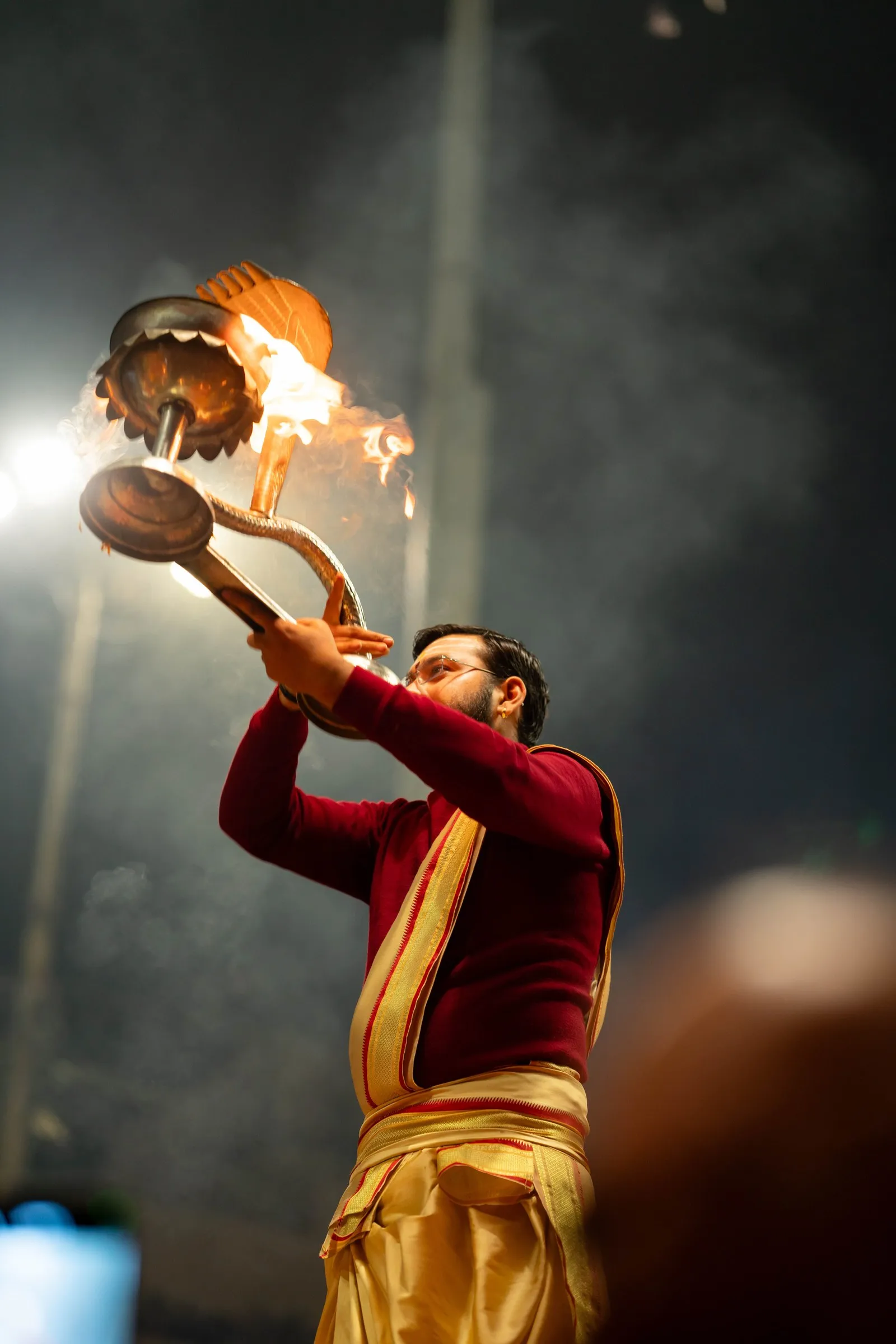
  • A priest raising a flaming lamp at the evening aarti, Kumbh Mela, Prayagraj
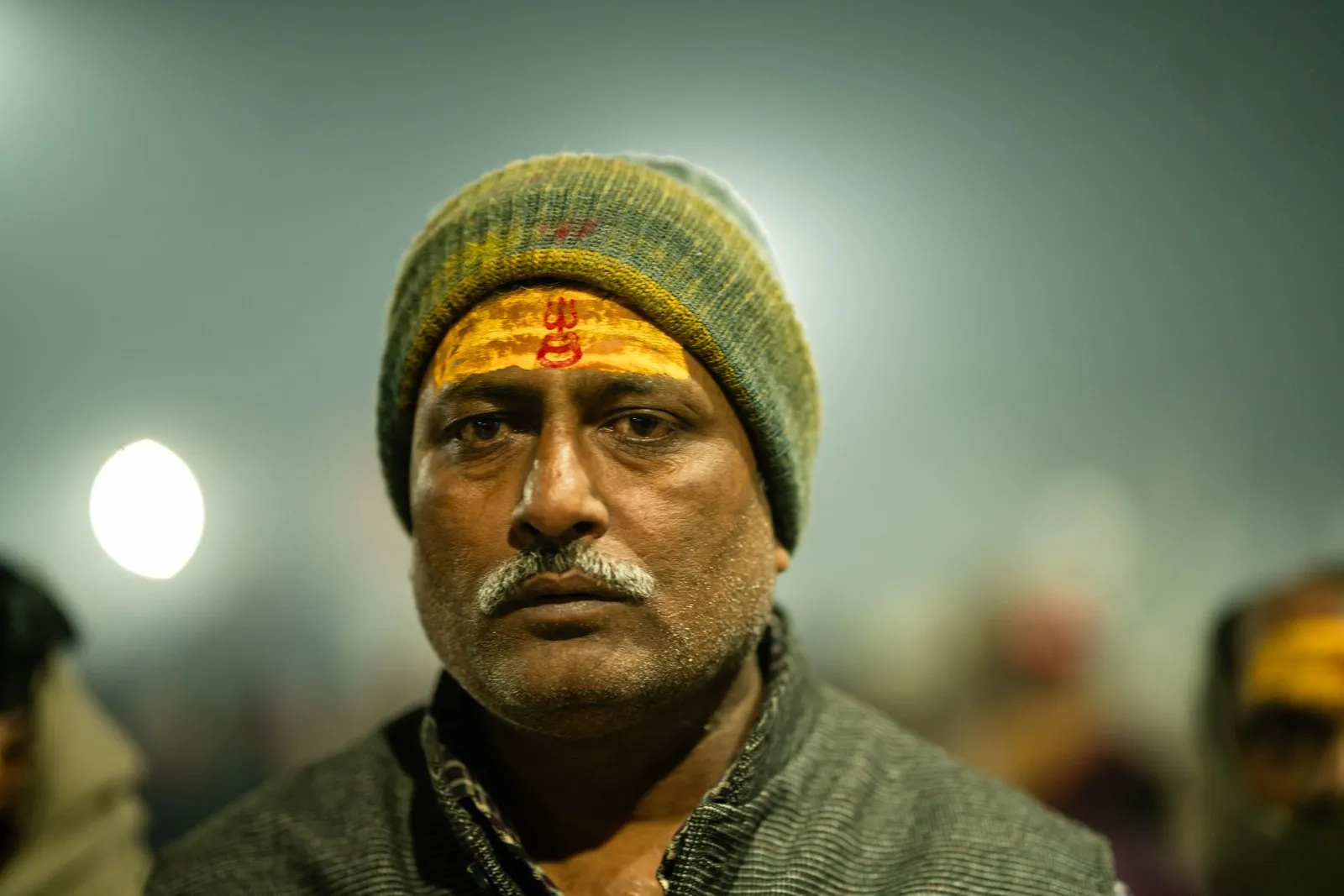
  • A pilgrim in a woollen cap with a tilak on his forehead, at the Kumbh Mela
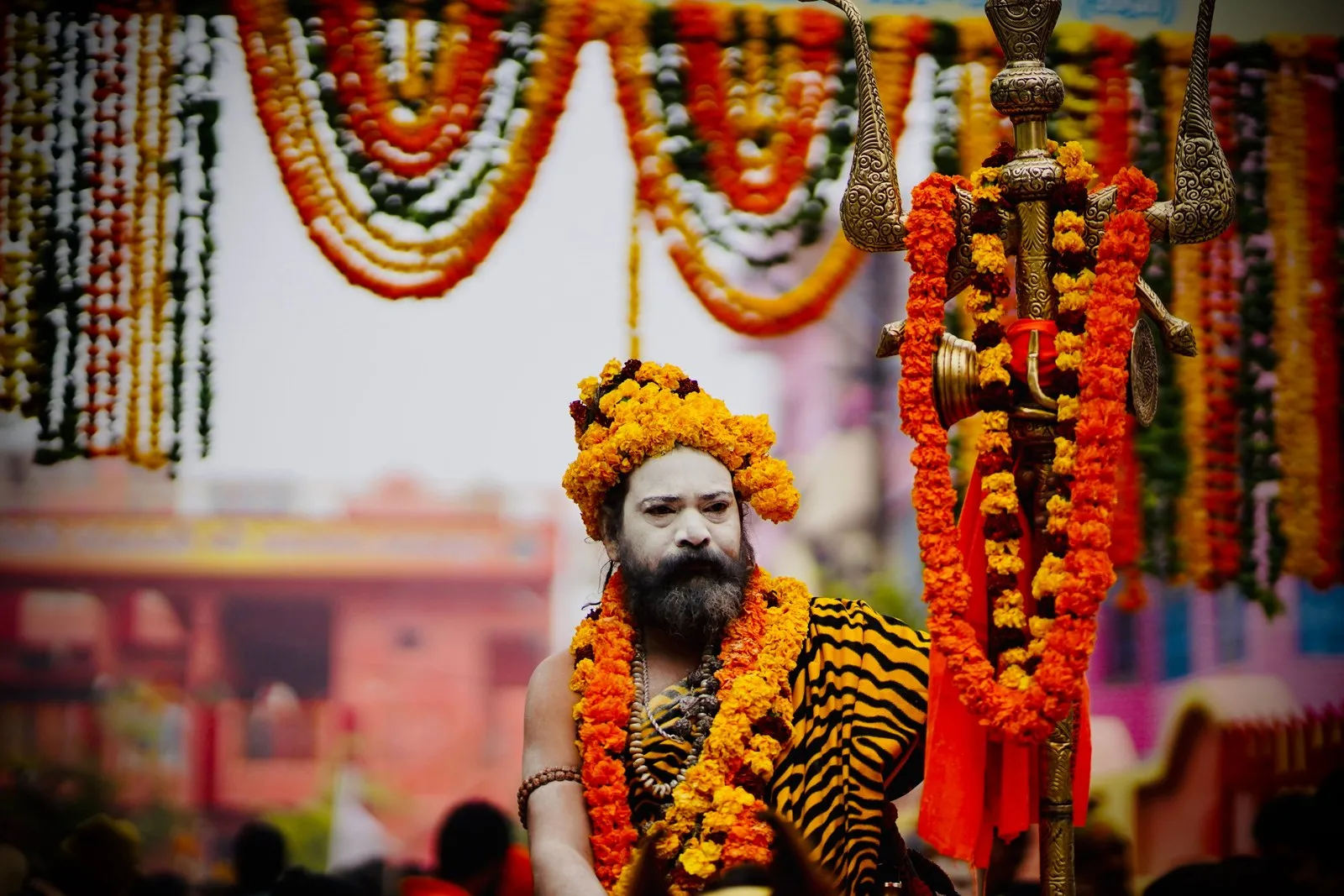
  • An ascetic among strings of marigolds at his camp, Prayagraj
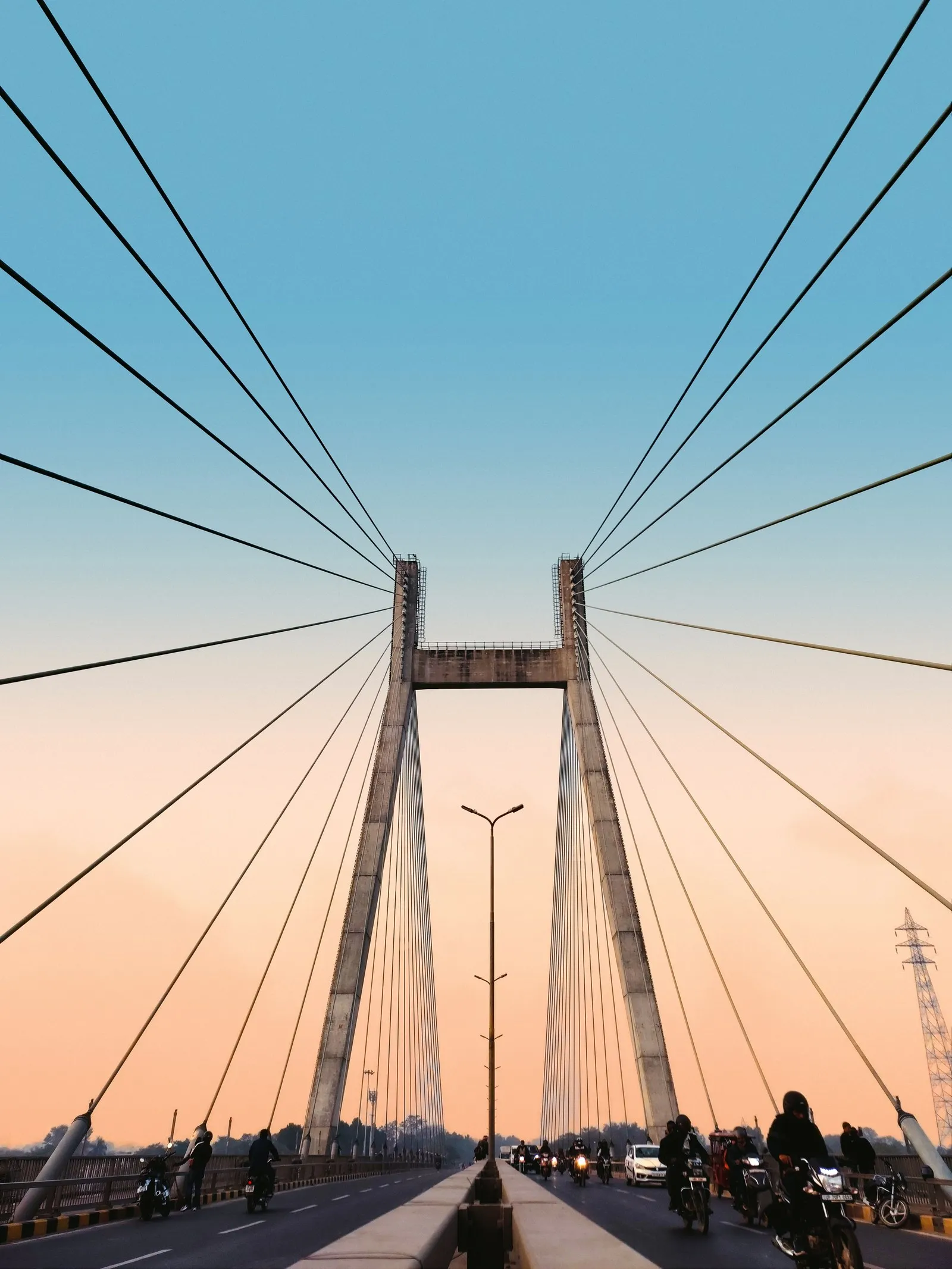
  • The New Yamuna Bridge at Prayagraj against the dawn sky
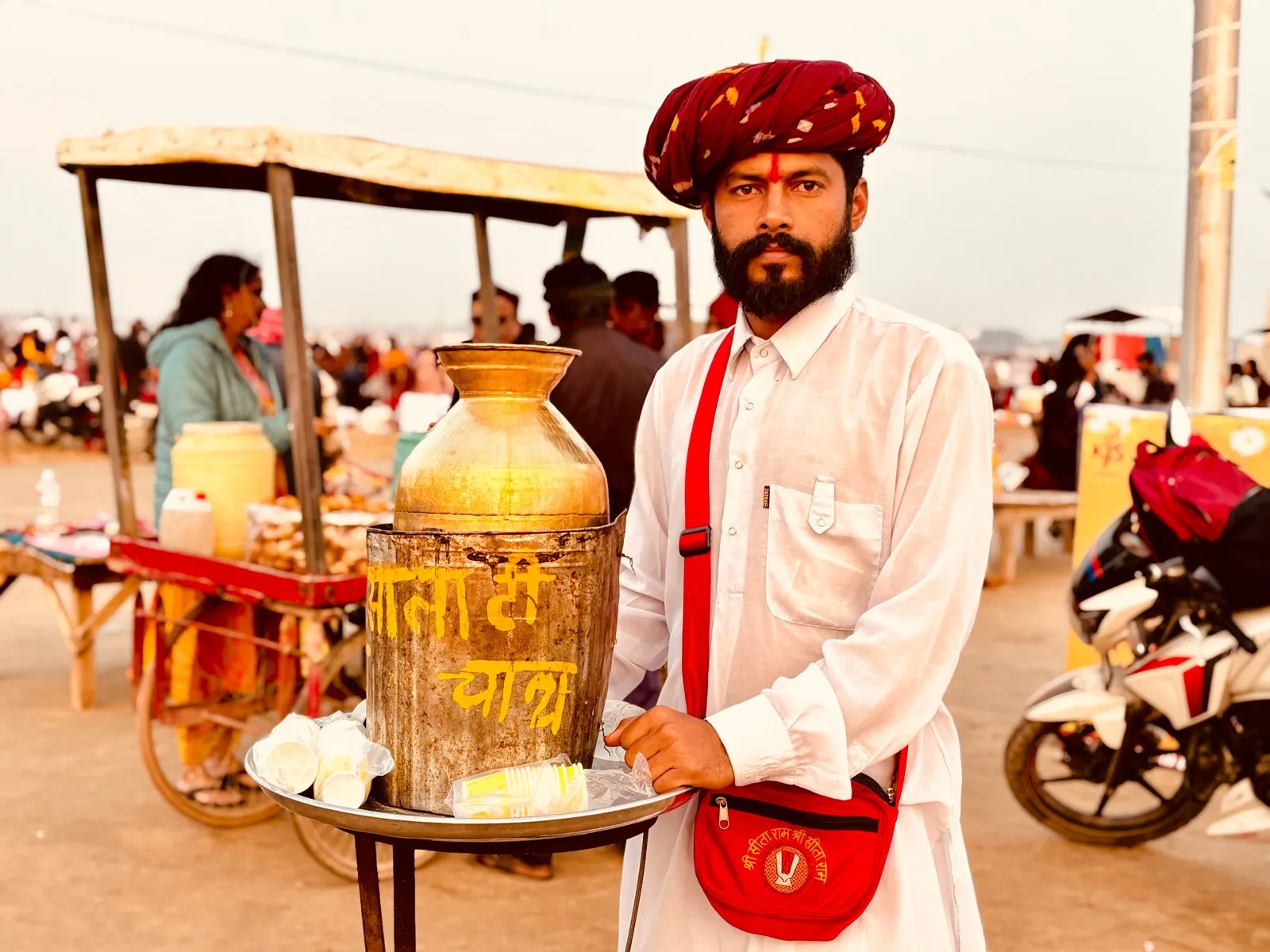
  • A chai seller in a red turban with his brass urn, Prayagraj
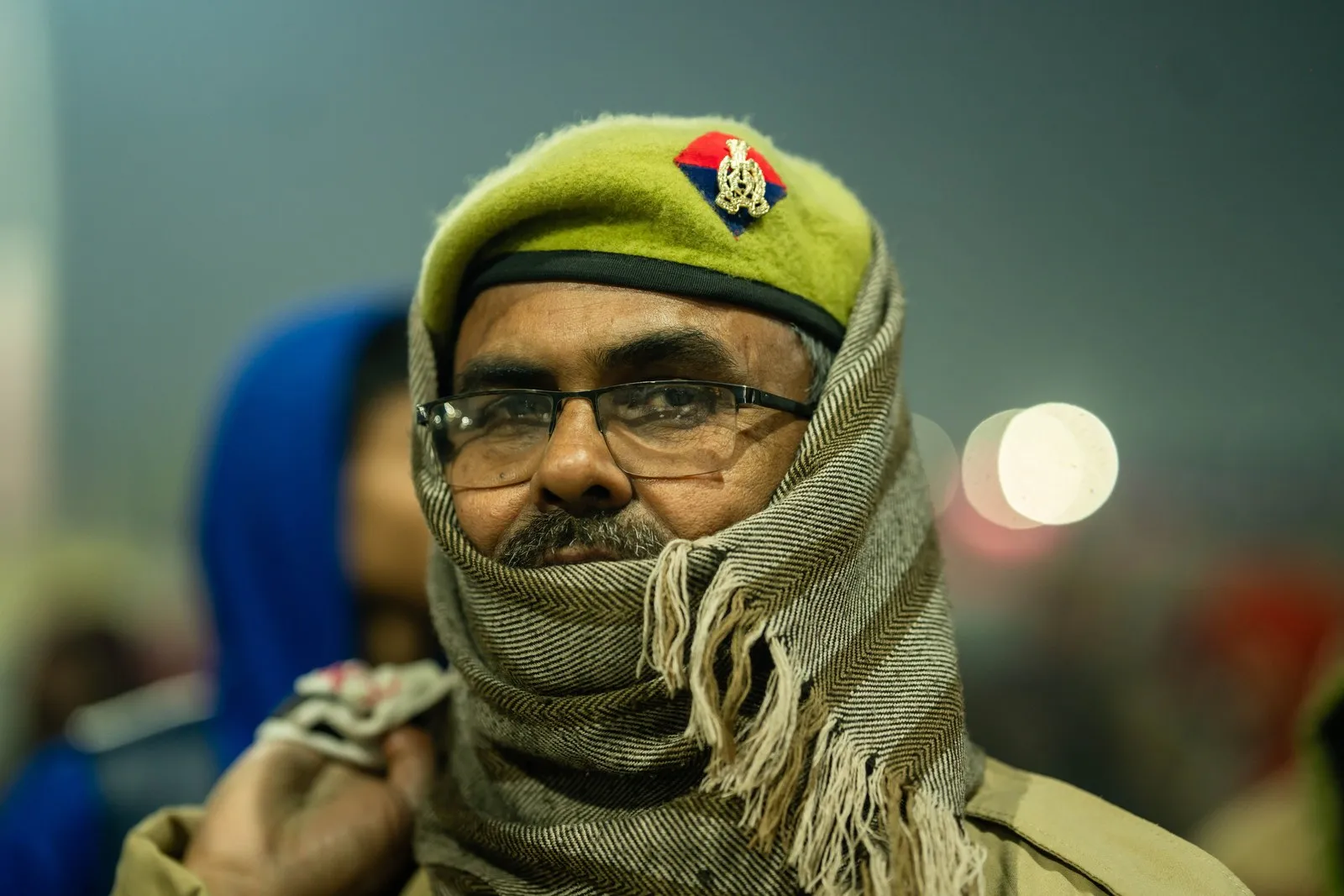
  • A police officer wrapped against the January cold, on duty at night at the Mela
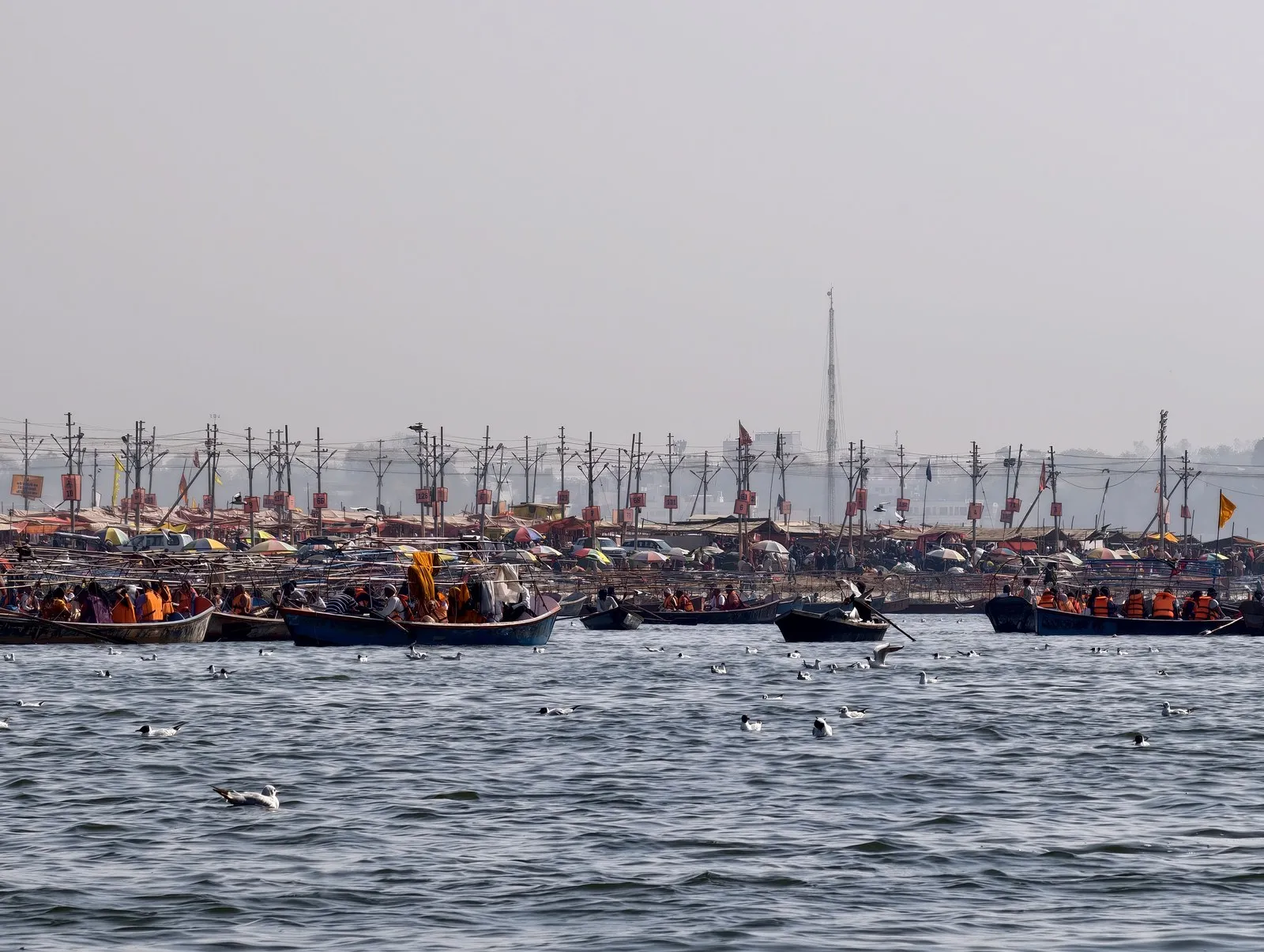
  • Boats on the Ganga below the flags and poles of the Mela

Questions

Before you go

The questions travellers ask about this journey, answered from the itinerary itself. Anything else — ask, and a curator replies.

When is the Ardh Kumbh Mela in 2031?

By the lunar calendar, from Paush Purnima on 8 January to Maha Shivratri on 20 February 2031, with Mauni Amavasya, the greatest bathing day, on 23 January. These are expected dates: the Mela authority publishes the official bathing calendar nearer the time, and we confirm your journey against it.

Is it the Maha Kumbh?

No. The Maha Kumbh at Prayagraj comes every twelve years — the last was in 2025 — and the Ardh Kumbh comes half-way between. It is smaller, but still one of the largest gatherings on earth.

Where is it held?

Around the Triveni Sangam at Prayagraj, in Uttar Pradesh, where the Ganga and the Yamuna meet.

What is the heart of it?

The sacred bath at the Sangam. On the great bathing days the akharas process to the river, and pilgrims bathe from before dawn.

Can foreign travellers visit?

Yes. International travellers are welcome, and come every time. Travel respectfully, and with people who know the Mela.

Do I have to bathe?

No. Many travellers come to watch and never go into the water. If you would like to bathe, your guide takes you to a quieter place at a time chosen for the crowd.

Is it suitable for older travellers?

It can be, with a carefully designed itinerary: we think about the walking distances, the crowds, where you stay and how close a vehicle can bring you.

Can children come?

Families do come. Be ready for very large crowds and a great deal of walking, and keep children close at all times.

How many days should I stay?

Three to five nights in Prayagraj is a good start: three for the Sangam, the camps and the akharas; four to see it without hurrying; five or more for photographers and anyone who wants to understand it more deeply.

Can I combine it with Varanasi, or the Taj Mahal?

Yes, and we recommend it. Our journey goes Delhi – Agra – Prayagraj – Varanasi; Ayodhya, Lucknow or Khajuraho can be added.

Why book so early?

Rooms, camps, guides, cars, trains and flights all fill as the Kumbh approaches. Book early, but stay flexible: crowd management and access rules can change, and we adjust the programme when they do.

Reviews

In their own words

Word for word, several in Italian, because Italy found us early. 5.0 from 146 reviews on Google, and 5.0 from 200 on TripAdvisor.

We designed a tailor-made 18-day program to travel from Delhi to Varanasi, including cities, safaris in 2 tiger reserves and several days in Maha Kumbh Mela 2025. It was not at all an easy trip to organize but Mamlesh understood perfectly what we wanted from the very first moment and prepared everything in detail: from the driver Anu who was fantastic, the accommodations, the safari reservations etc.

Read the whole review on Google

Susana

Delhi to Varanasi · tiger reserves · Maha Kumbh Mela 2025

2 / 19

Enquire

Plan my journey

Tell us where your India begins — we reply with a written itinerary.

Travellers
When, roughly
Interests
Or ask on WhatsApp

No obligation. We reply with a written itinerary, not a sales call.