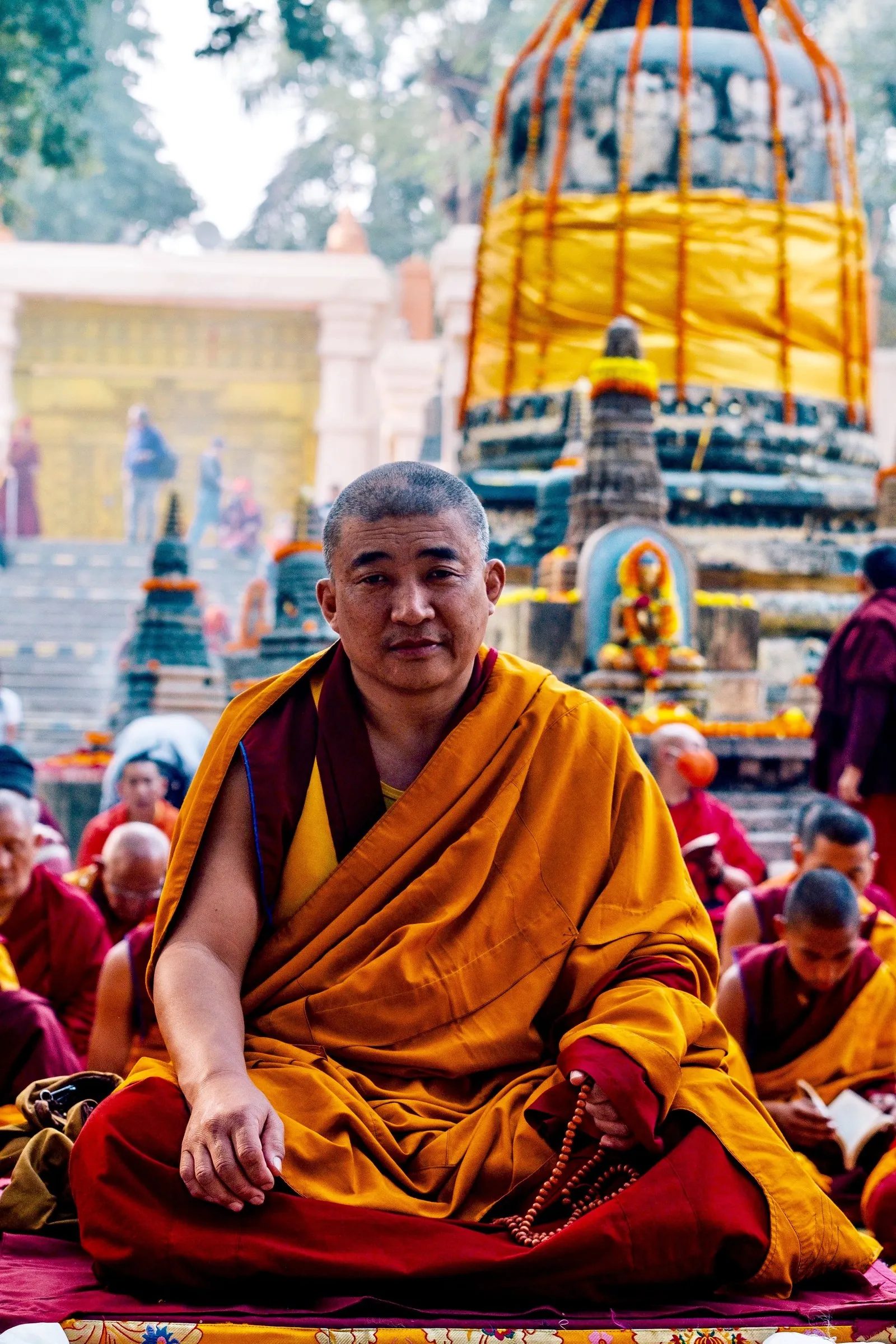
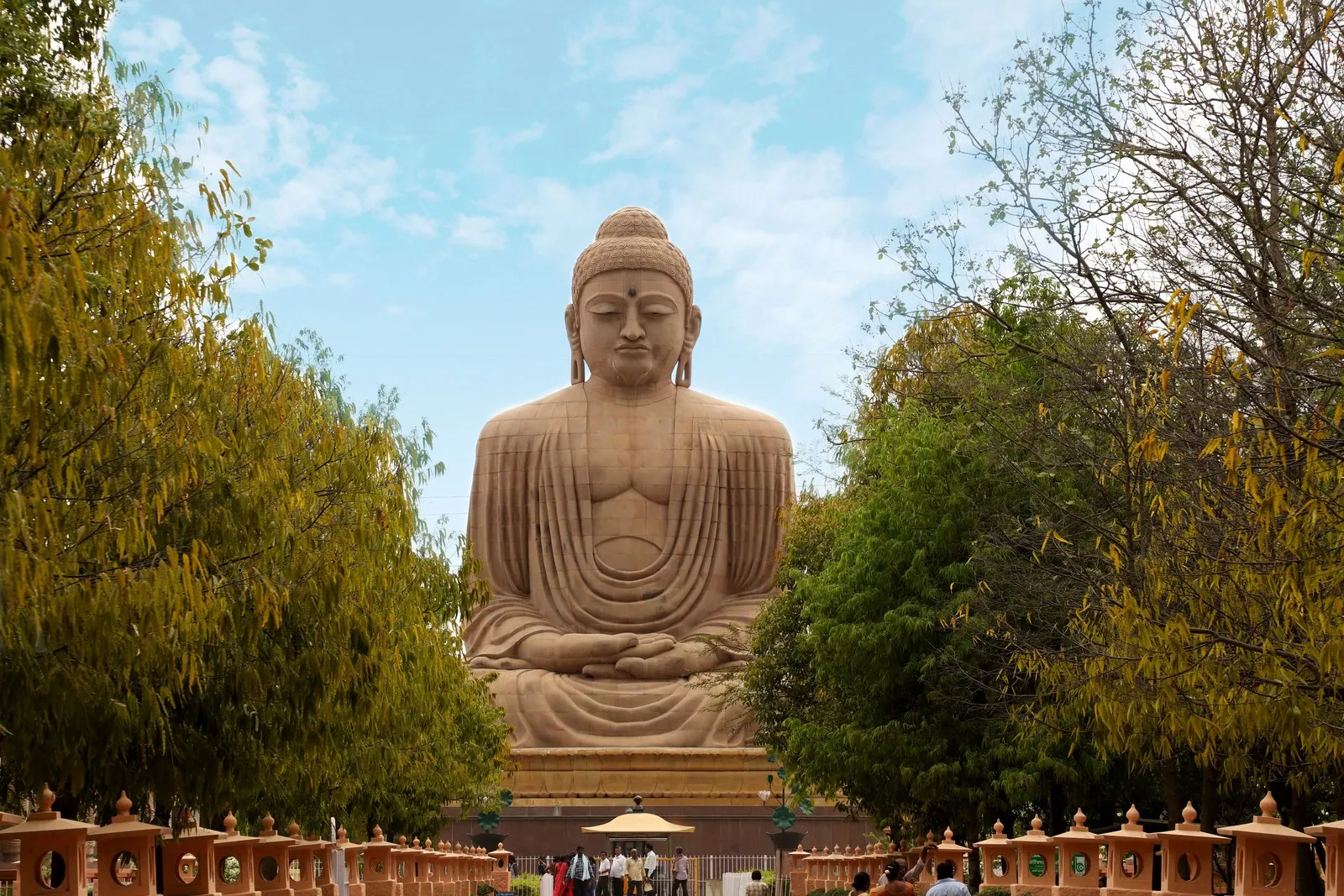
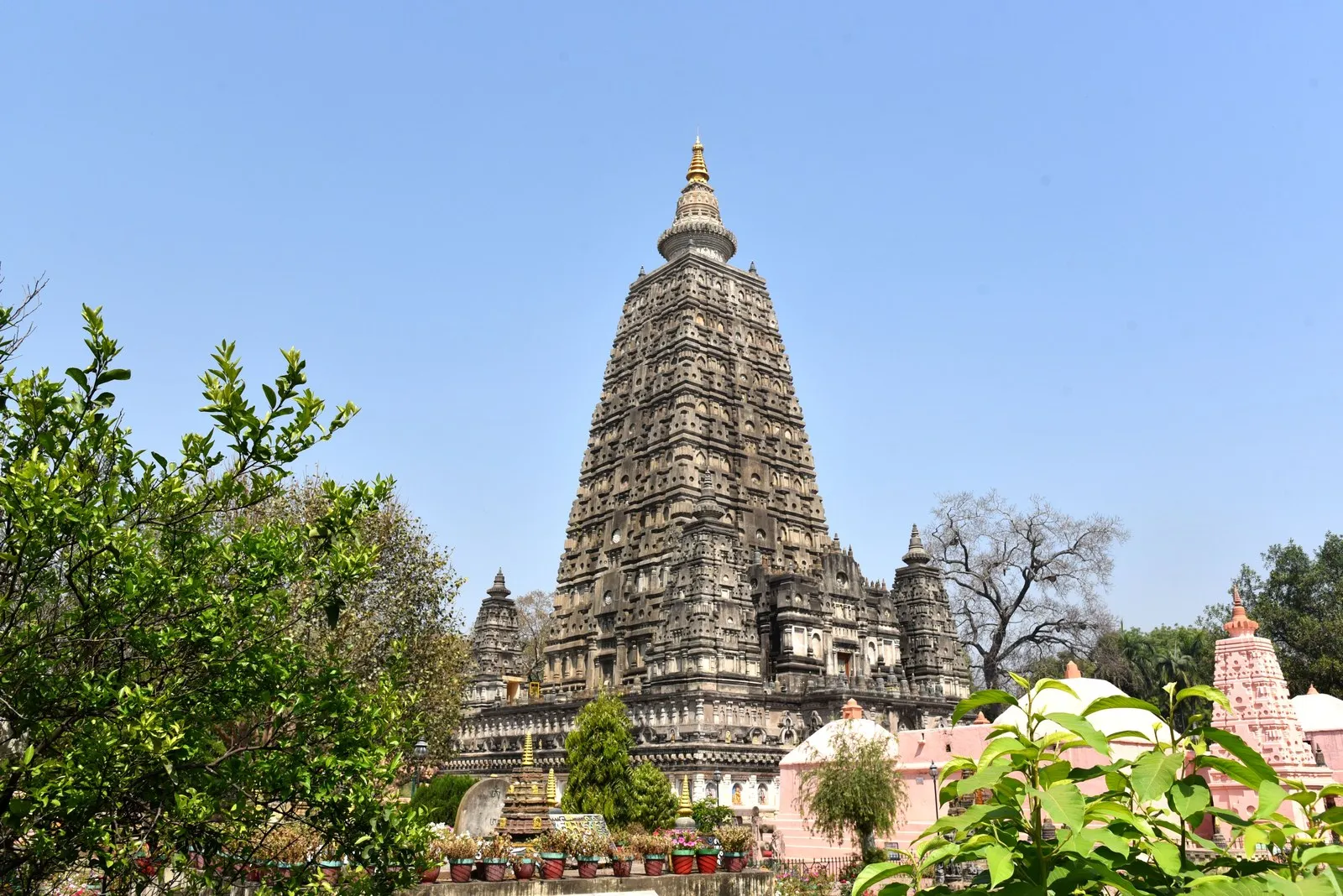
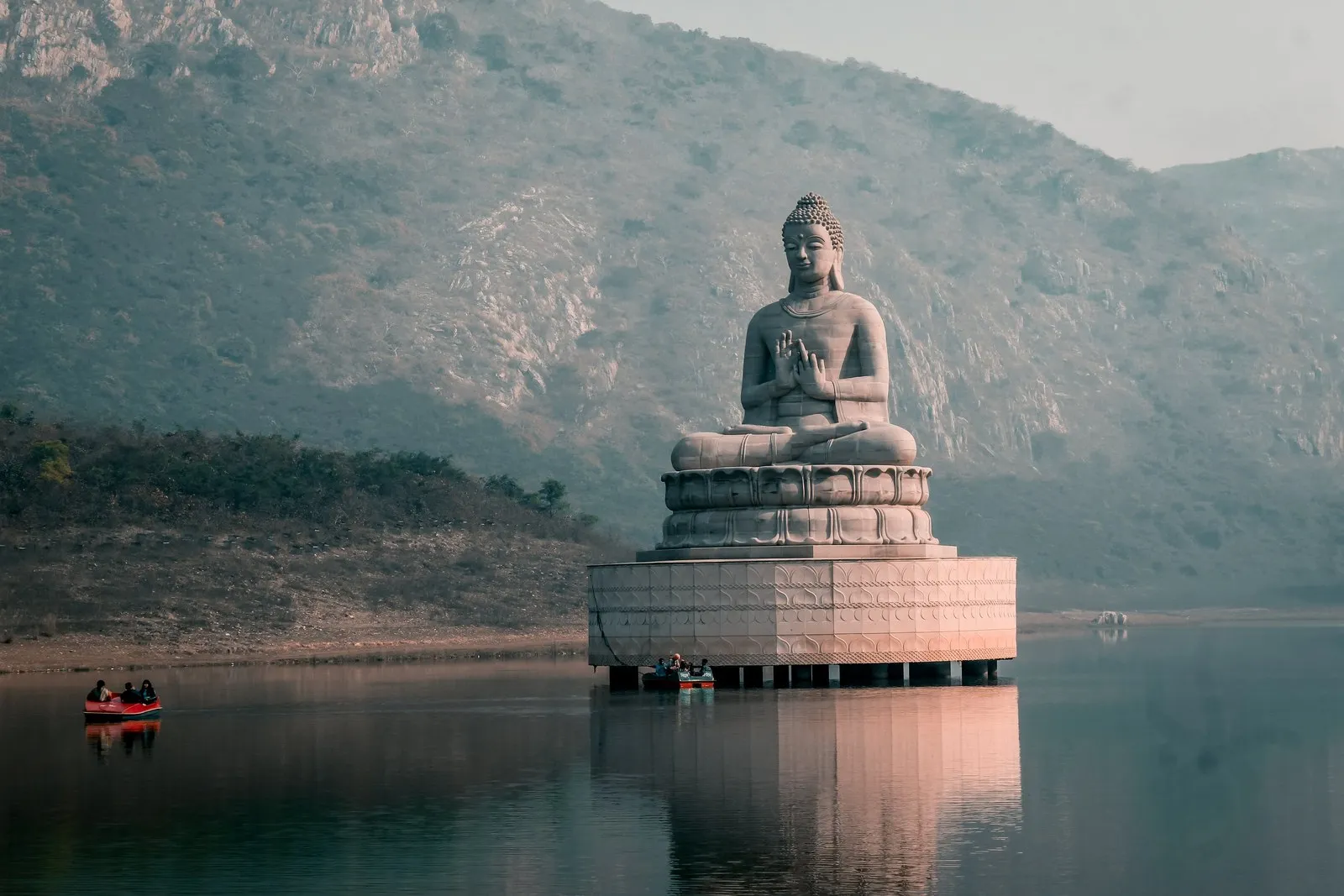
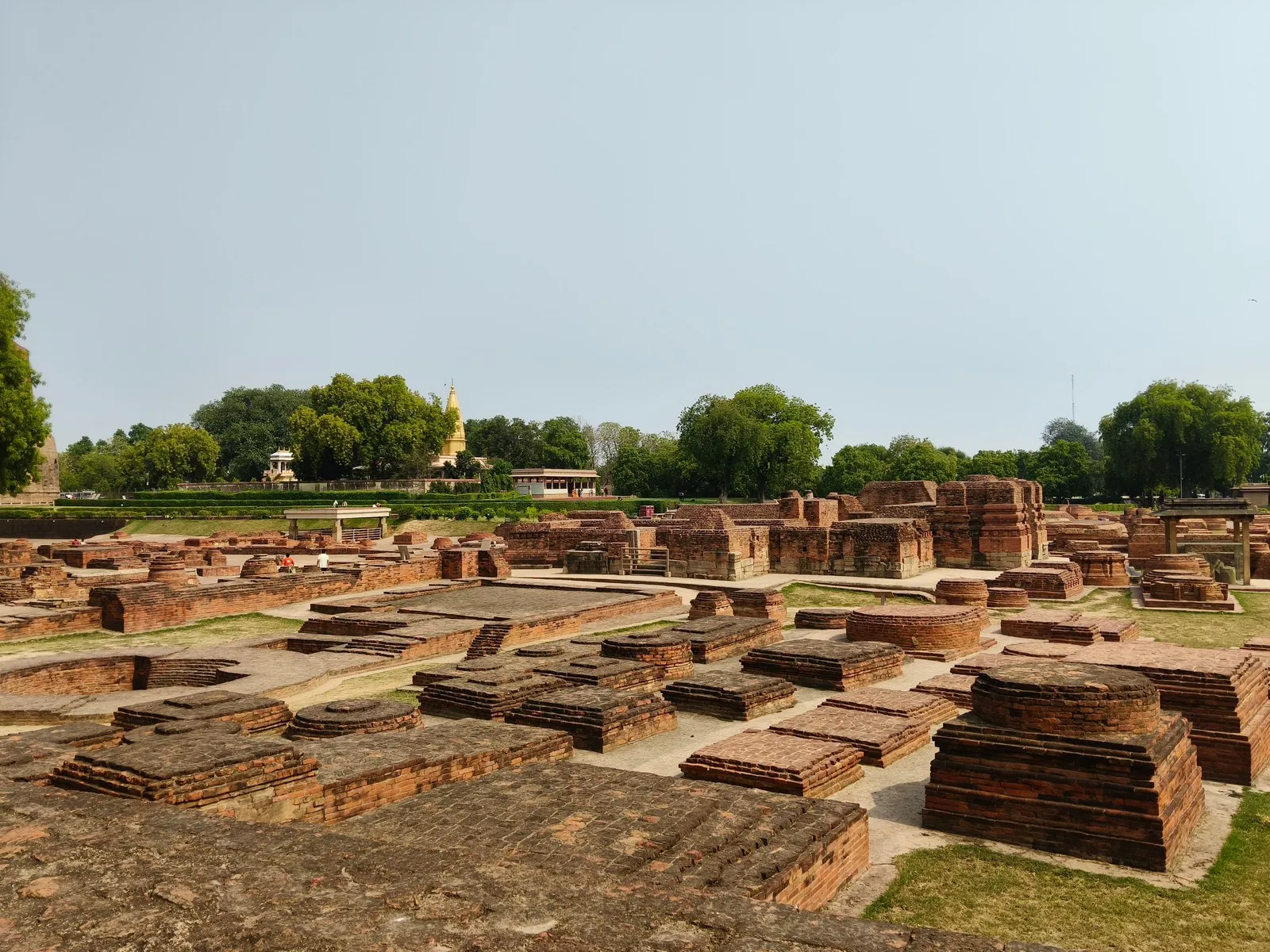
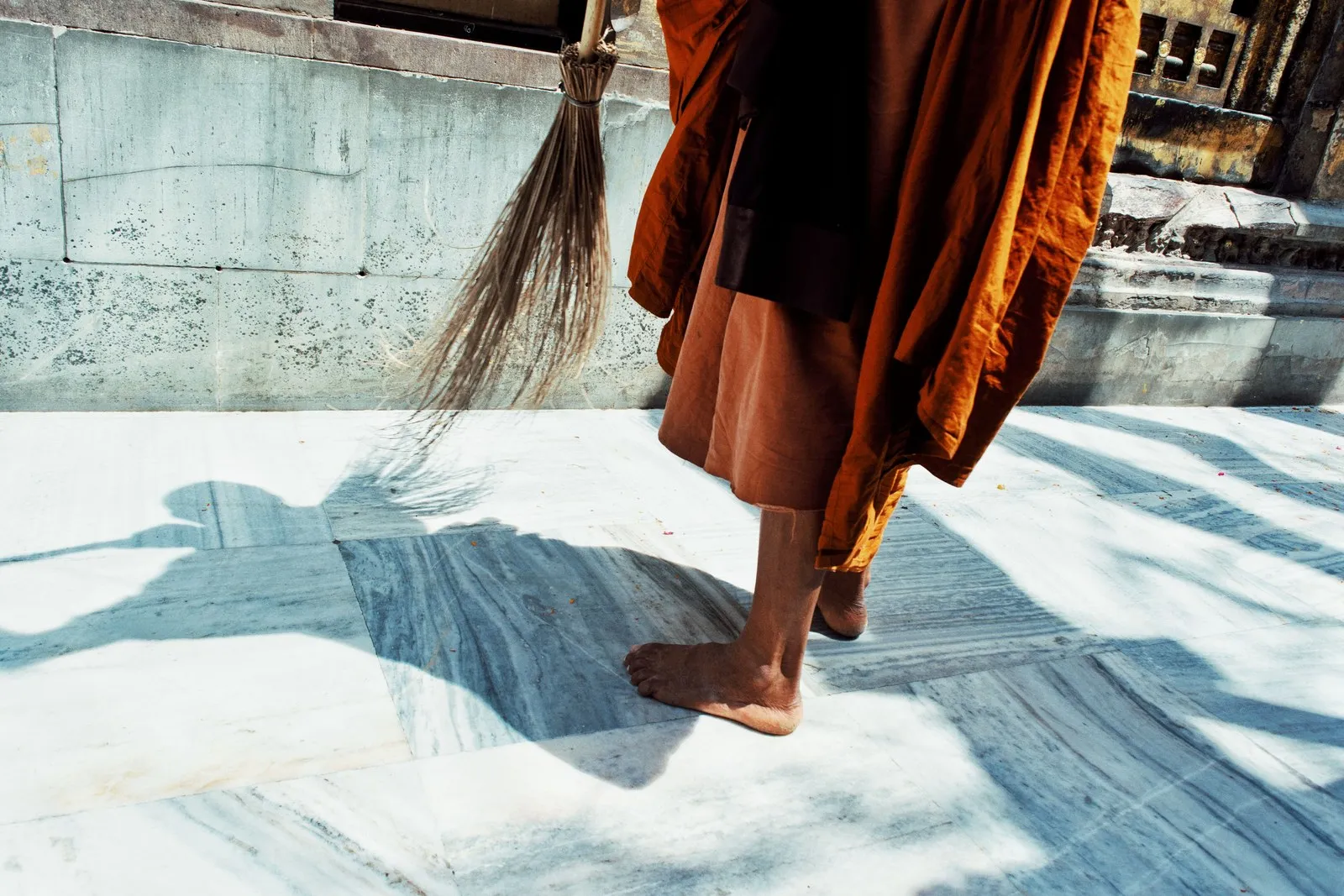
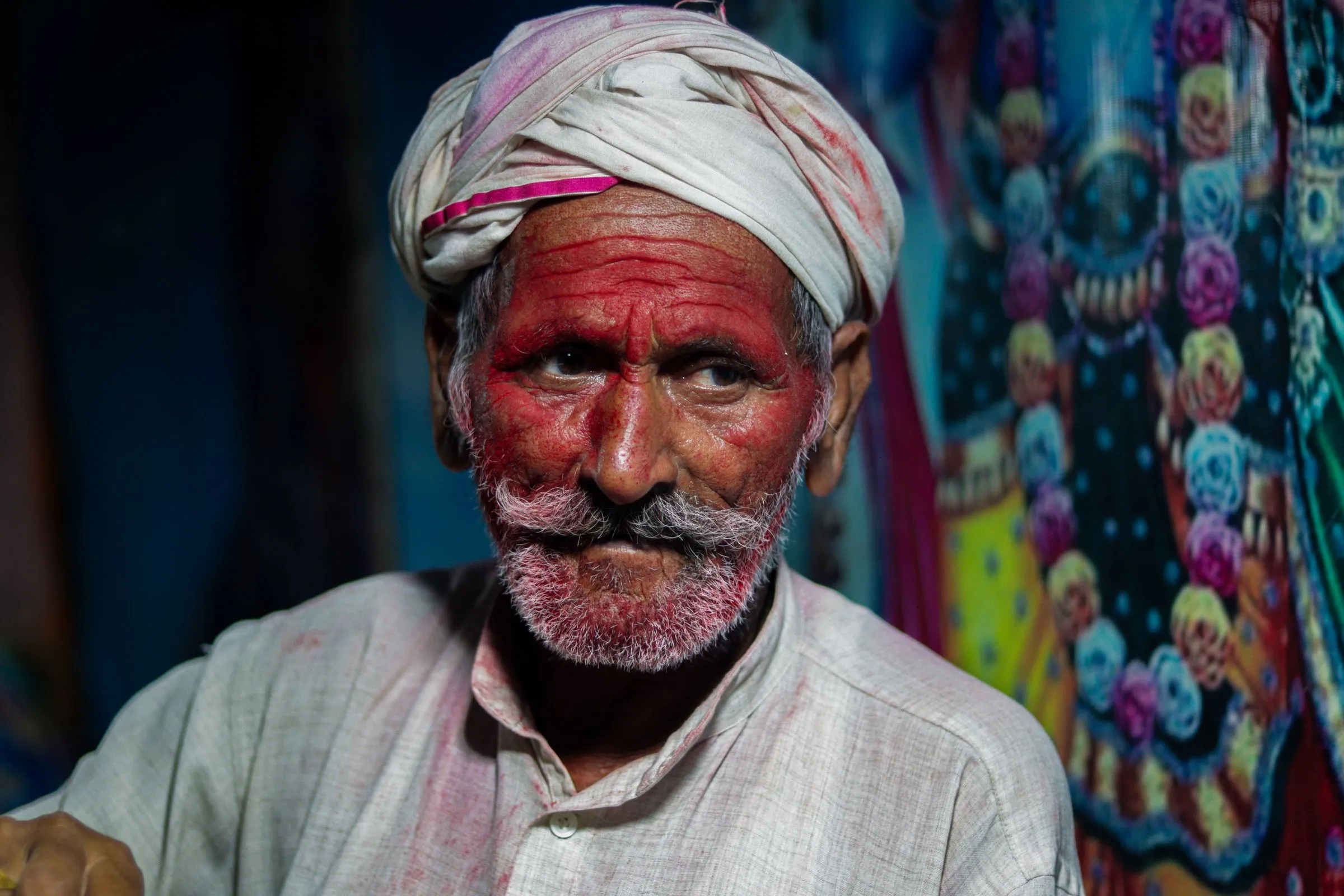
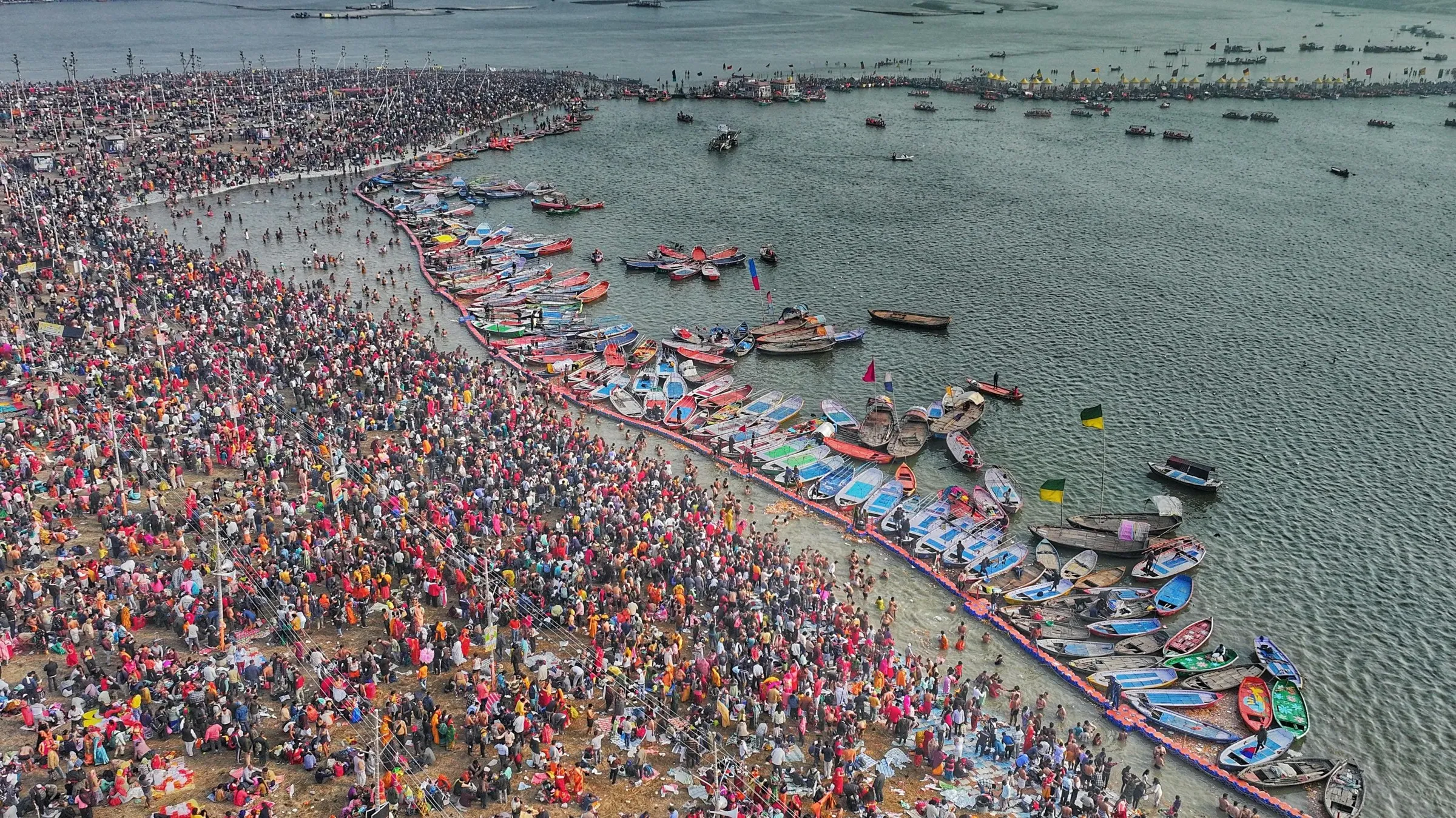
Early, before the crowds, to the Mahabodhi temple, a UNESCO World Heritage Site. Ashoka built the first shrine here in the third century BC; the brick tower you see dates from the fifth or sixth century AD. Beside it grows the Bodhi tree, a descendant of the one the Buddha sat beneath, over the Vajrasana, the stone seat that marks the place. Monks and pilgrims from Tibet, Thailand, Sri Lanka, Japan and Myanmar meditate on the terraces around it, or prostrate themselves on wooden boards, again and again.
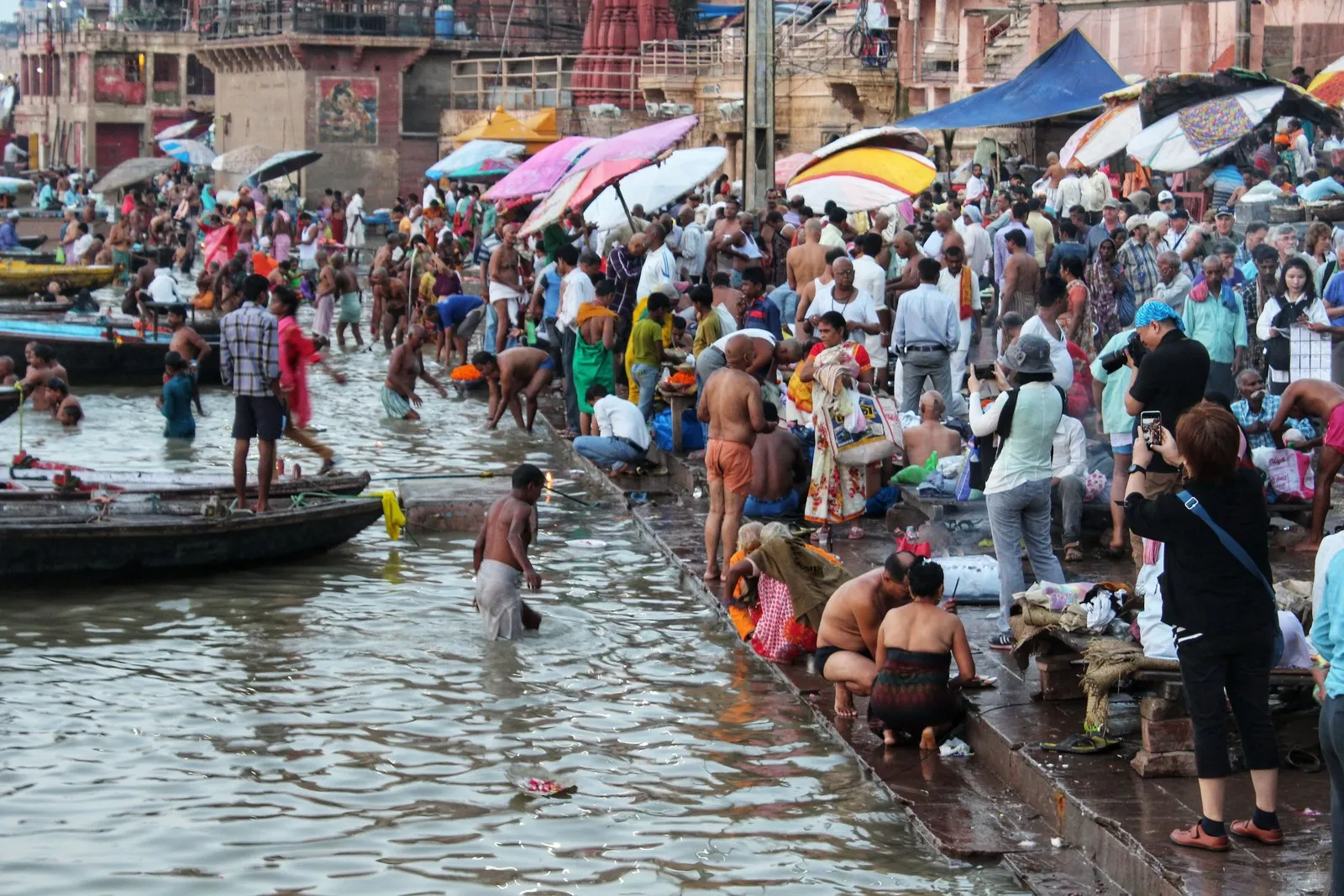
Then into Gaya to the Vishnupad temple on the Phalgu river, built around a footprint of Vishnu in the rock, where Hindus come to perform the rites for their ancestors; only Hindus may enter. In the afternoon, north to the Barabar caves, cut into solid granite in the third century BC and polished inside like glass — the oldest rock-cut caves in India, given by Ashoka to the ascetics of the Ajivika sect. On the way back, the Dungeshwari caves, where the Buddha is said to have fasted for six years before he came down to Bodh Gaya.