Rang Travels — explore the colors of India
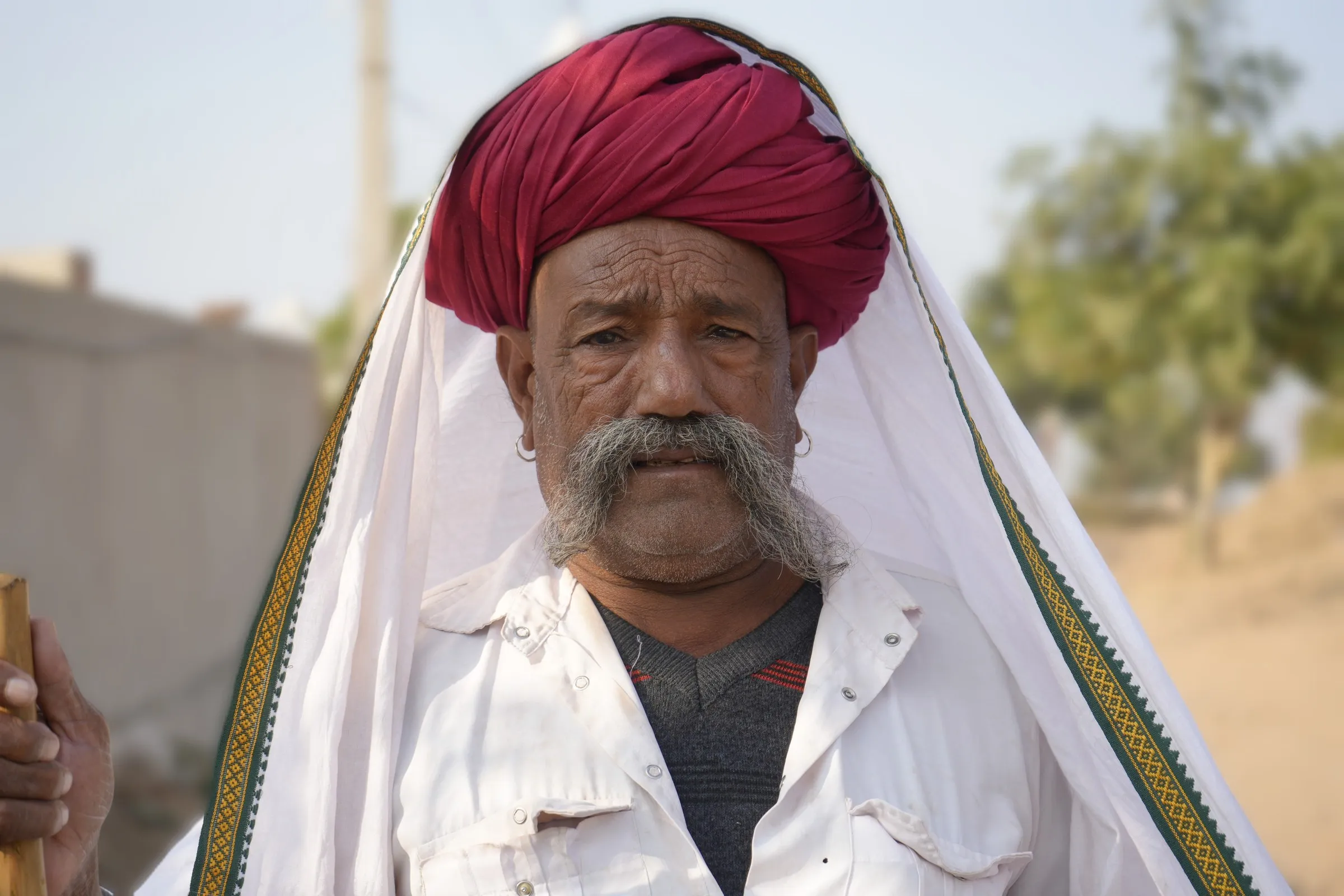
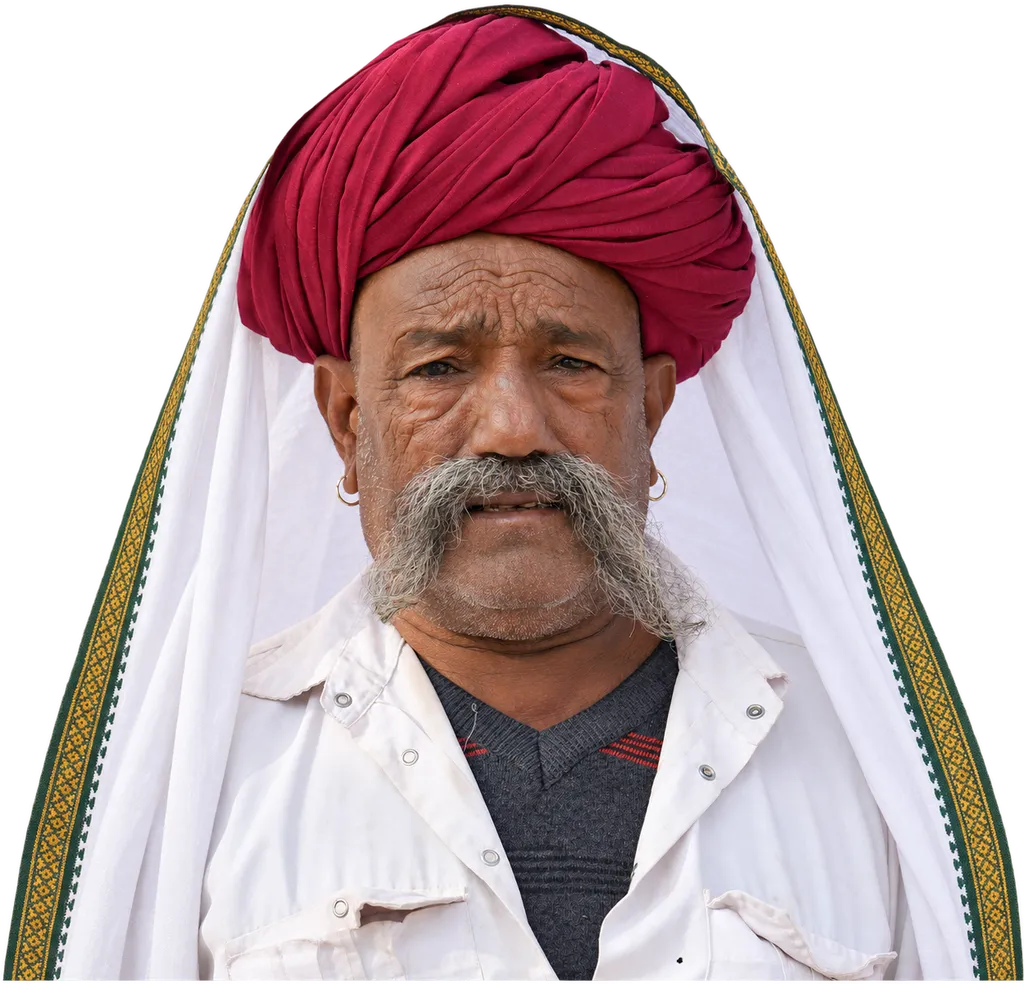
An elder in a maroon turban and white shawl, Jodhpur

Villages · Heritage · Crafts

Rural India: the villages of Rajasthan & Gujarat

Painted havelis, desert forts, Bishnoi and Bhil villages, a country train and the Little Rann

See the day-by-day
Duration
15 days · 14 nights
Halts
9
Delhi to Ahmedabad
Best months
October – March
Price
On request
quoted to your dates

The journey

Fifteen days in the villages of Rajasthan and Gujarat: Shekhawati, desert forts, Bishnoi and Bhil country, a country train, the Little Rann and Patan.

This is India for travellers who have already seen the Taj Mahal. It keeps to the country roads between the cities of Rajasthan and Gujarat, and sleeps in the forts of the villages: Khimsar in the dunes, Rohet Garh among its peacocks, Sardargarh on its hill in the Aravallis. You meet the Bishnoi, who have guarded the blackbuck and the khejri tree for five centuries, Raika herders and Bhil farmers, the Rabari and Bharwad of the Little Rann, and ride a metre-gauge train with the villagers through the hills.

Between the villages come the places that made the region’s name: the painted havelis of Mandawa, the golden fort of Jaisalmer, Mehrangarh above the blue city of Jodhpur, and Udaipur’s City Palace on its lake. In Gujarat, jeeps across the Little Rann of Kutch for the Indian wild ass and the winter flamingos, the Sun Temple at Modhera, Rani ki Vav and the patola weavers of Patan, and Gandhi’s ashram on the river at Ahmedabad.

Highlights

What you will remember

  • The painted havelis of Mandawa, in Shekhawati

  • Nights in the forts of Khimsar, Rohet Garh and Sardargarh

  • Jaisalmer’s living fort, and sunset on the dunes at Sam

  • Bishnoi villages and blackbuck around Rohet

  • A metre-gauge train with the villagers through the Goram Ghat

  • Bhil villages around Dungarpur, and the Rabari craftspeople of Dasada

  • The Little Rann’s wild ass, Modhera’s Sun Temple and Patan’s Rani ki Vav

The route

10 halts, in order

  1. Delhi
  2. Mandawa1 night
  3. Khimsar1 night
  4. Jaisalmer2 nights
  5. Rohet2 nights
  6. Sardargarh2 nights
  7. Udaipur1 night
  8. Dungarpur1 night
  9. Dasada2 nights
  10. Ahmedabad

Experiences

The moments it is built around

Everything else on this page is logistics. These are the reasons to come.

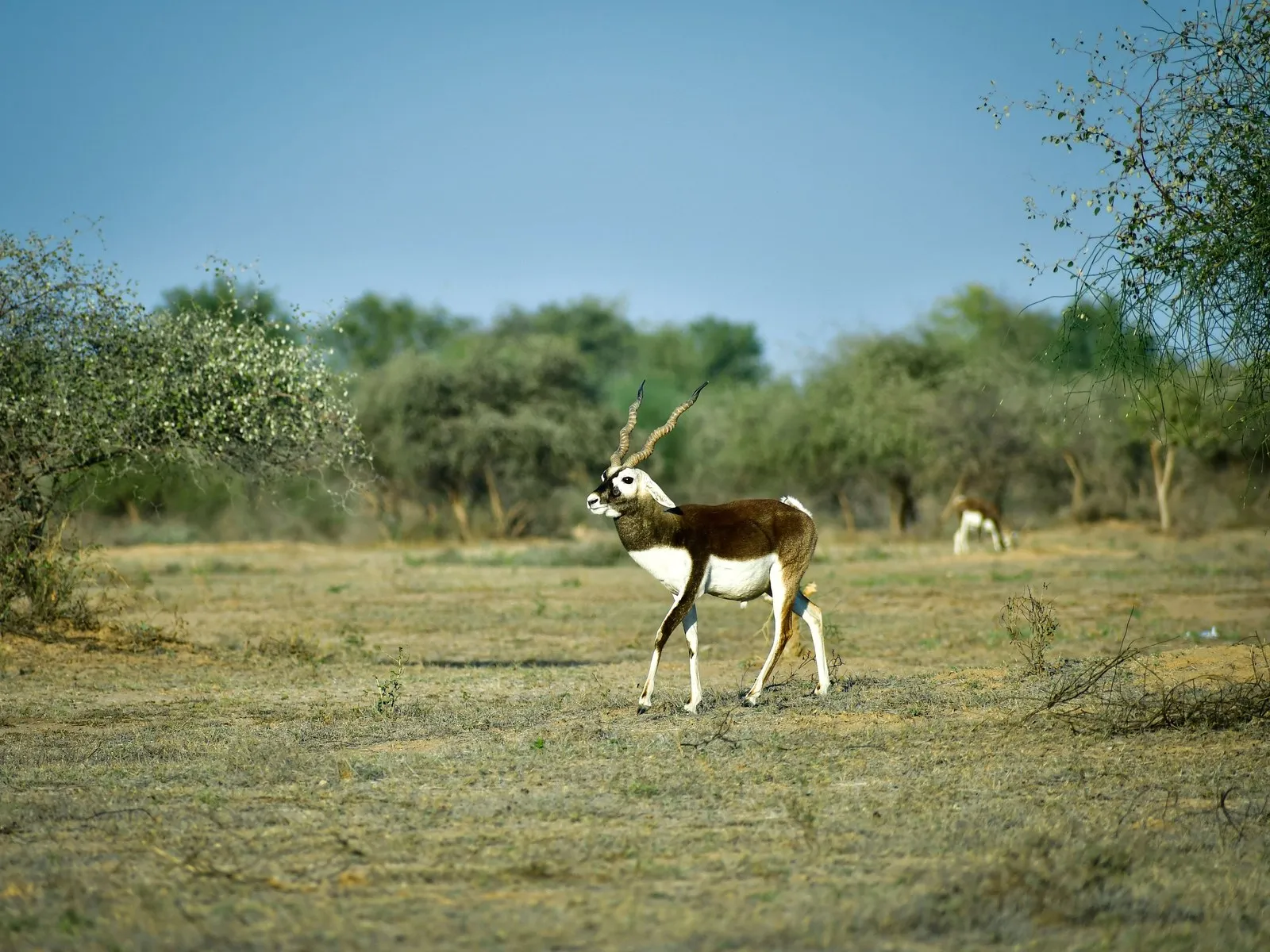
  • A blackbuck in the open fields around Jodhpur

    Bishnoi country

    Villages where the blackbuck graze close to the houses, because no one here has hunted them in five centuries.

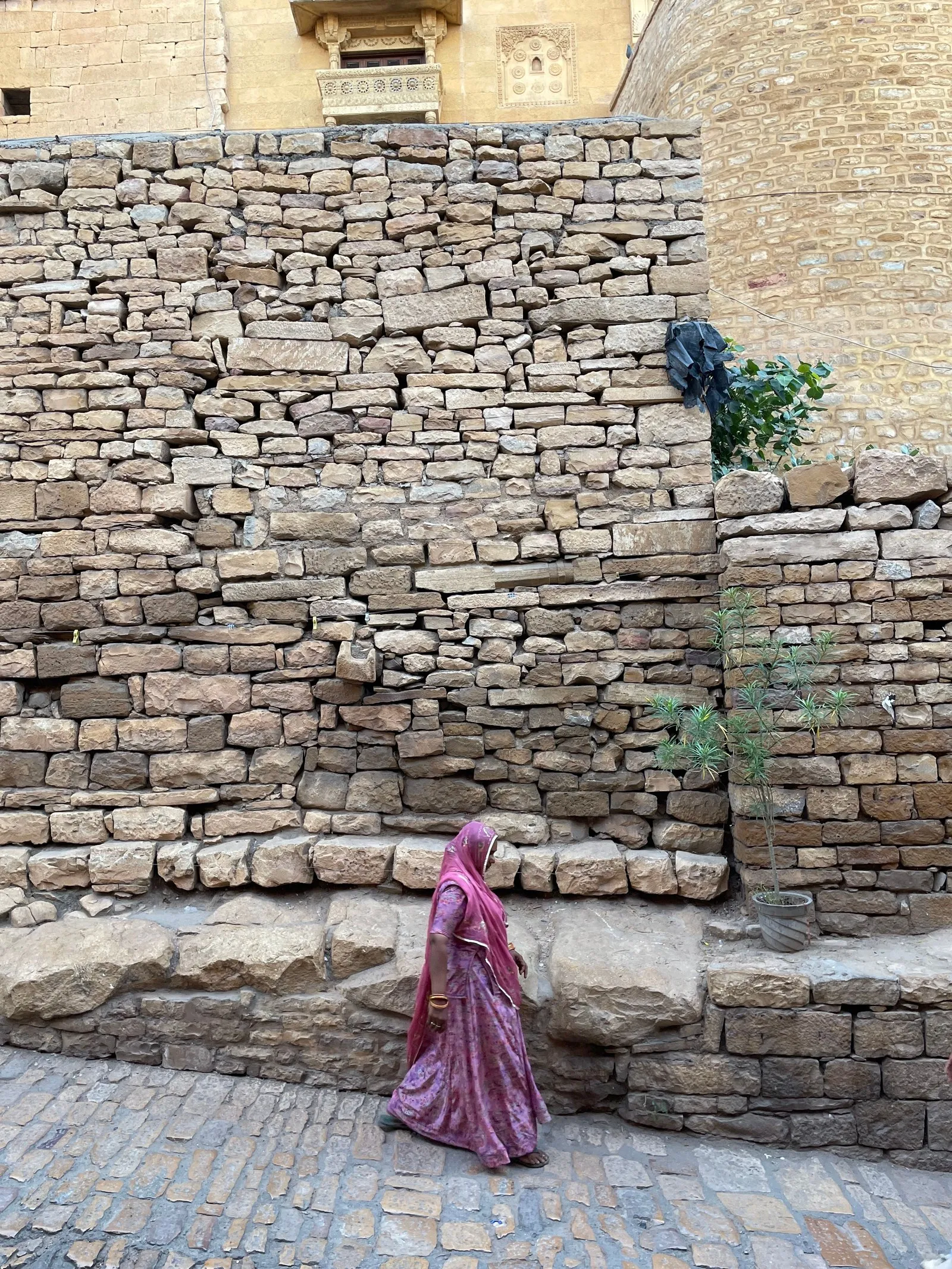
  • A woman in a pink sari walking along a stone lane in Jaisalmer

    The living fort

    Jaisalmer’s Sonar Qila, where thousands of people still live among the palace and the Jain temples.

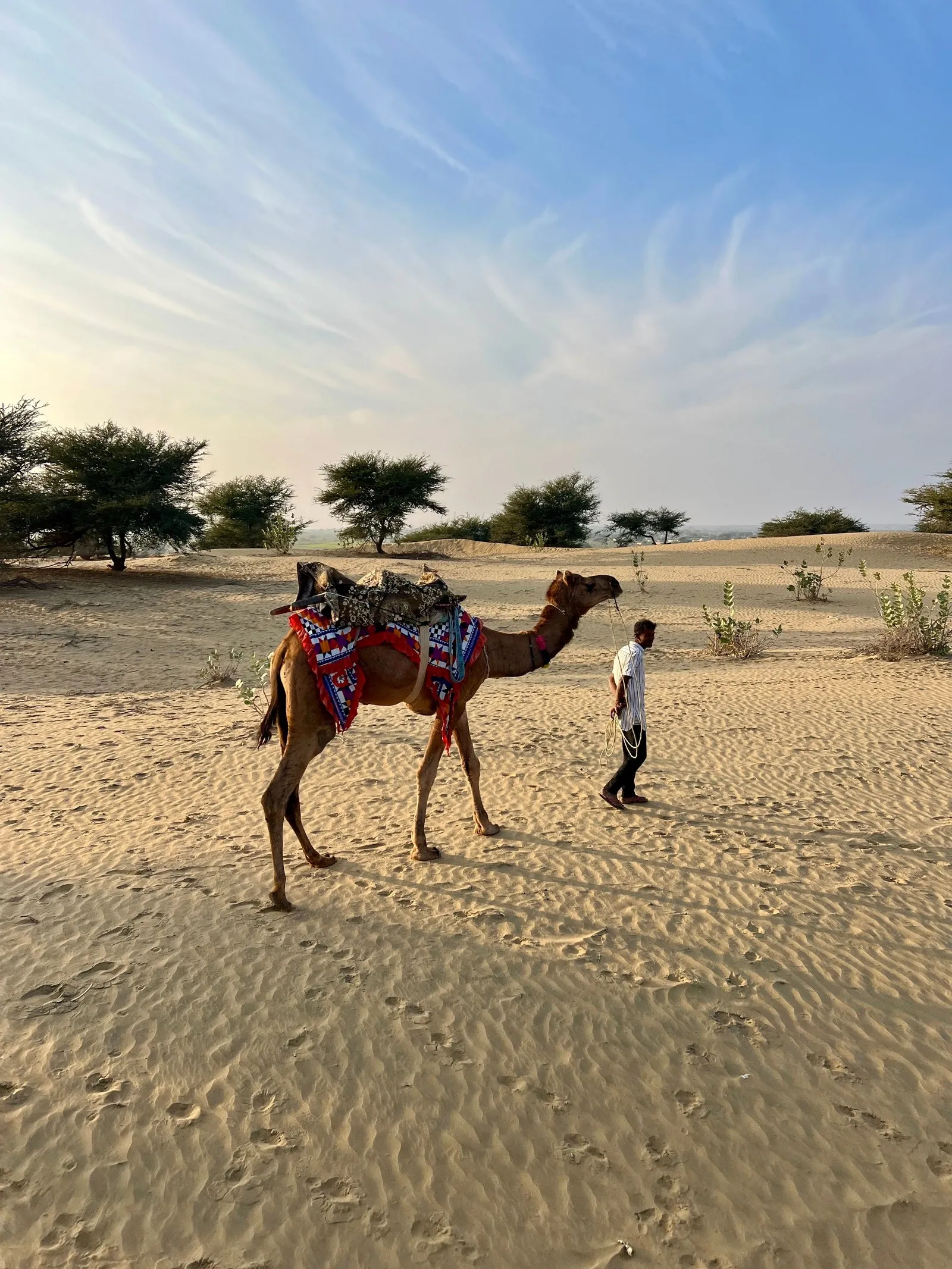
  • A man walking a decorated camel across the dunes of the Thar Desert

    Camels at Sam

    Out on the dunes west of Jaisalmer with a camel man from the villages, as the sun goes down.

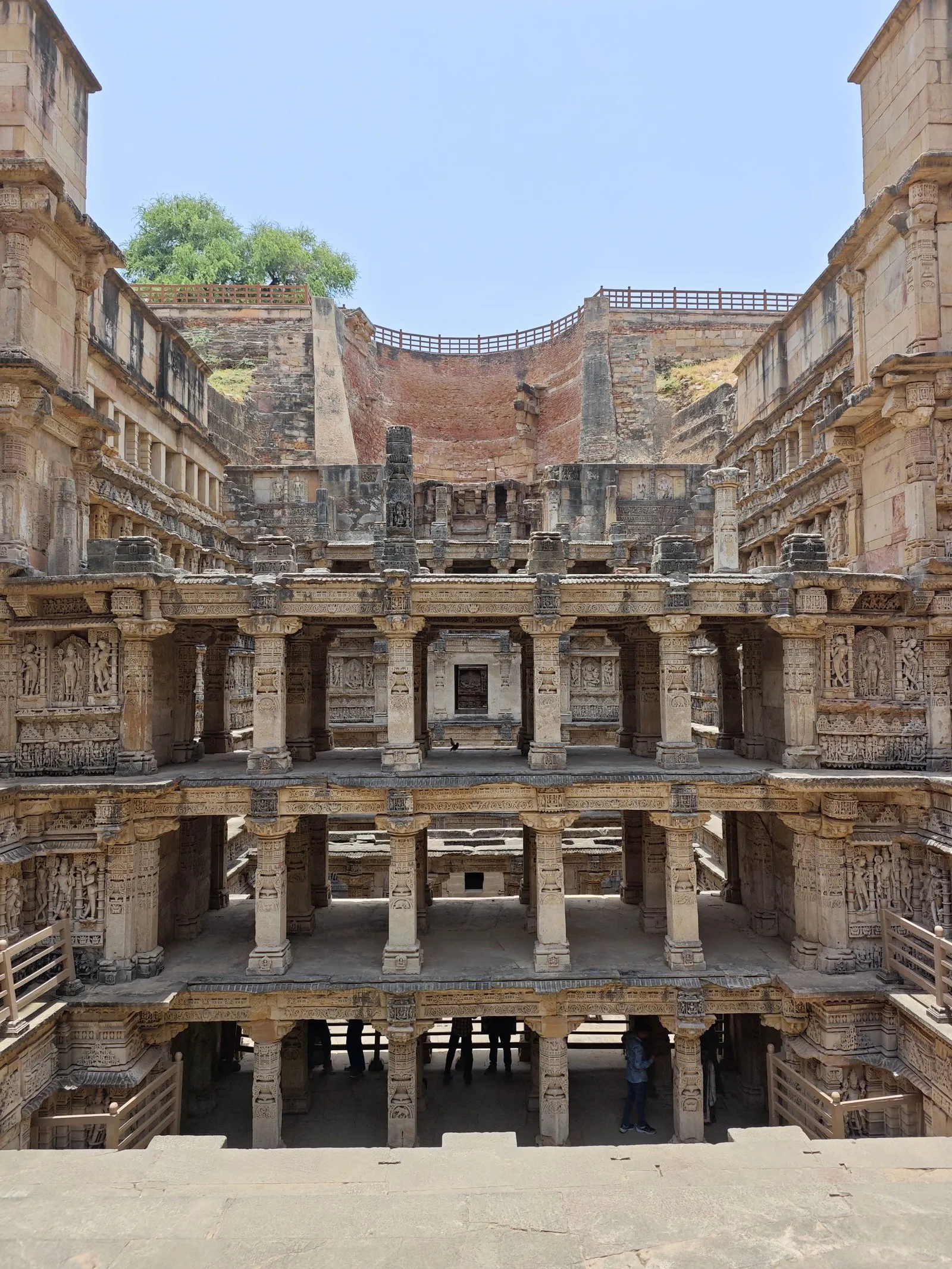
  • The carved galleries of Rani ki Vav, the Queen’s Stepwell, at Patan

    The Queen’s Stepwell

    Rani ki Vav at Patan: seven levels of carved stone galleries stepping down to the water.

A village elder with a grey moustache in a maroon turban and white shawl, Jodhpur

Villages · Heritage · Crafts

Painted havelis, desert forts, Bishnoi and Bhil villages, a country train and the Little Rann

15 days, 14 nights

The route, day by day

Every halt, every overnight and every drive, published in full.

  1. Delhi
  2. Mandawa
  3. Khimsar
  4. Jaisalmer
  5. Rohet
  6. Sardargarh
  7. Udaipur
  8. Dungarpur
  9. Dasada
  10. Ahmedabad
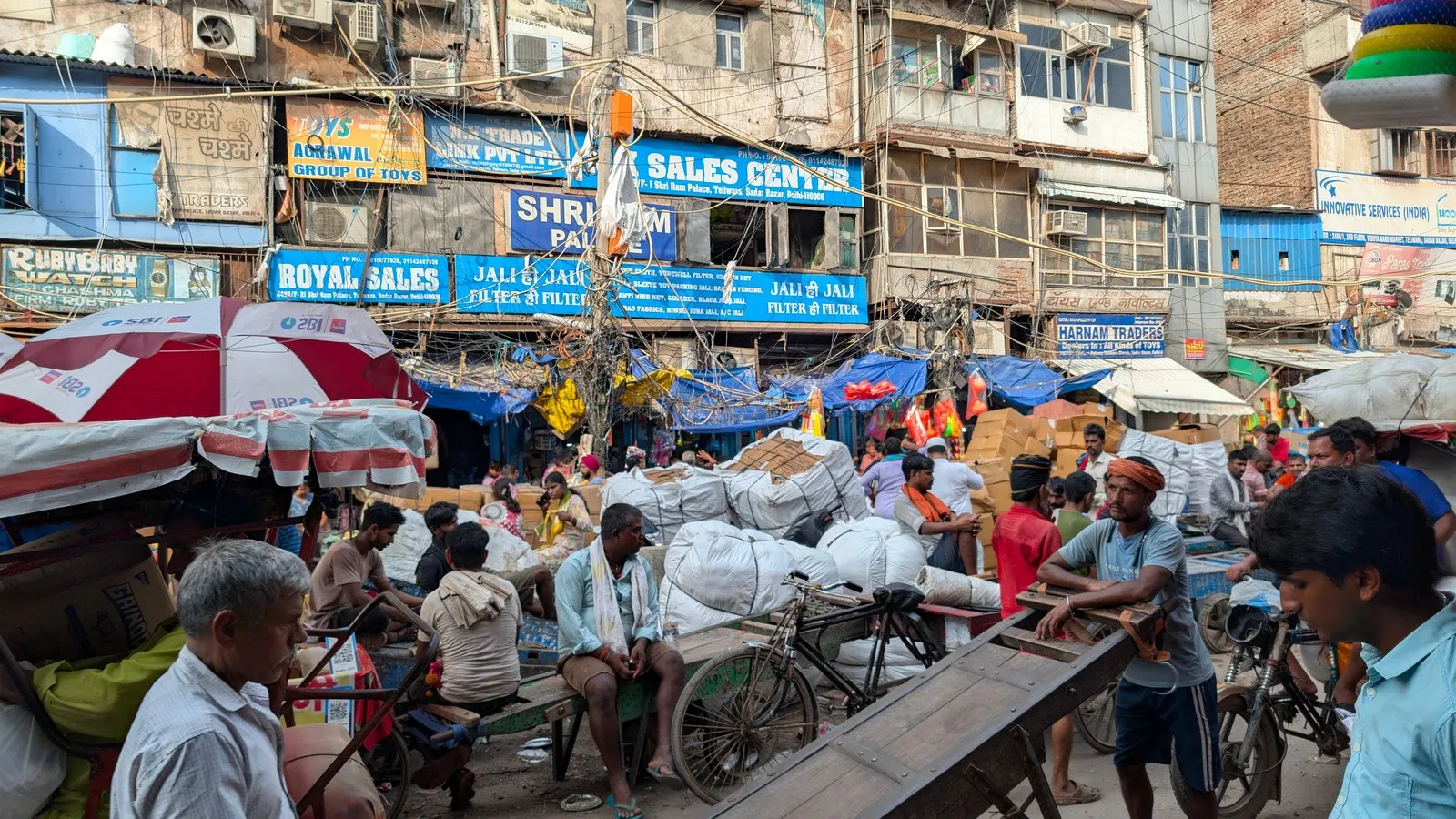
  1. Porters and shoppers in a busy street market in Old Delhi

    01

    Overnight Delhi

    Arrival, and Old Delhi

    Met at the airport and driven to your hotel. In the afternoon, Old Delhi, beginning at Raj Ghat, the black marble platform by the Yamuna where Mahatma Gandhi was cremated in 1948. Then the Red Fort, Shah Jahan’s red sandstone citadel and the seat of the Mughal emperors from the 1640s until 1857, from whose ramparts the prime minister still speaks every Independence Day. It is closed on Mondays.

    Then a cycle rickshaw through the lanes of Chandni Chowk to the Jama Masjid, which Shah Jahan finished in 1656: one of the largest mosques in India, its courtyard big enough for thousands to pray together. Dress modestly for the mosque, and hold on to the rickshaw.
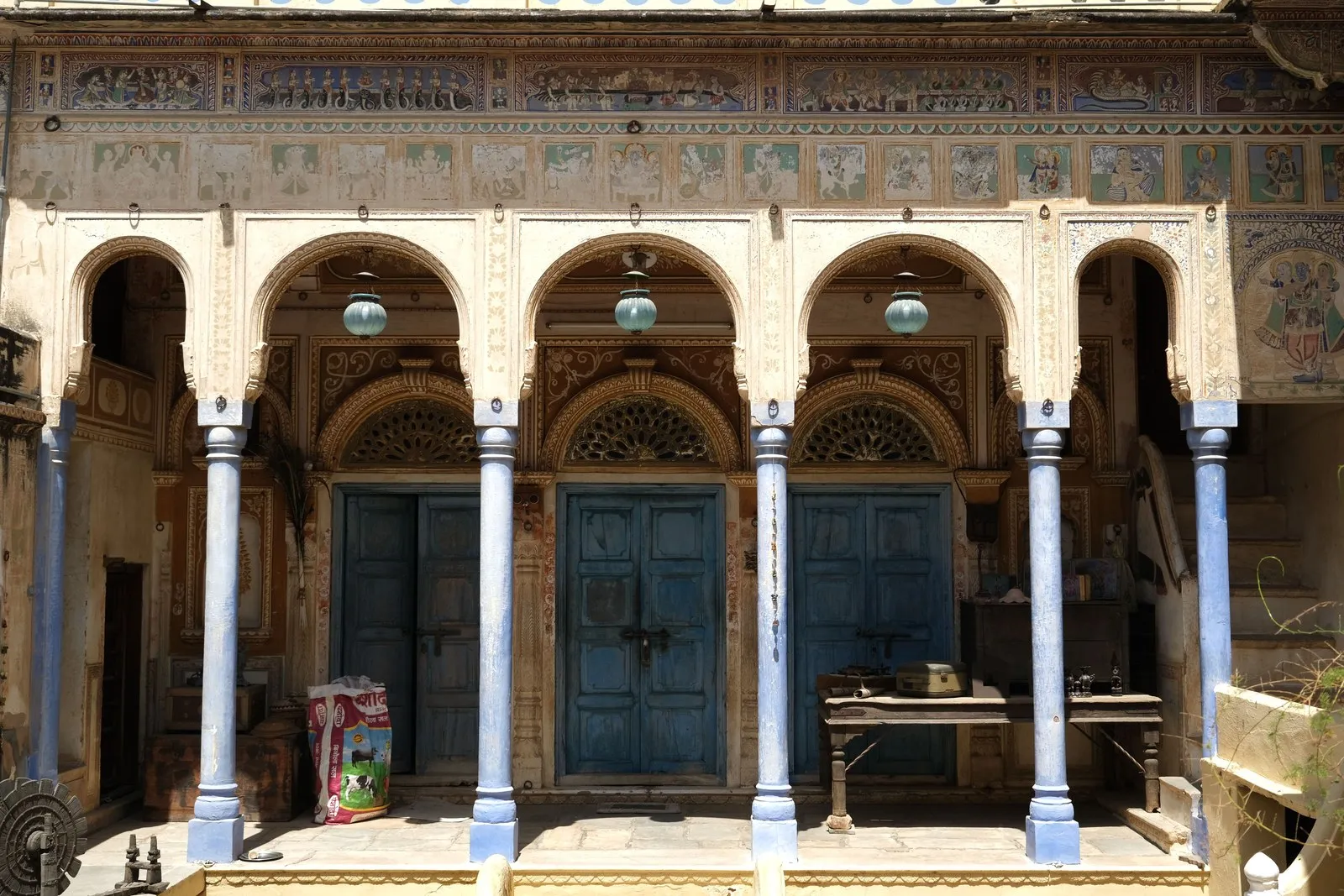
  2. The painted façade of the Gulab Rai Ladia Haveli, Mandawa

    02

    Overnight Mandawa

    270 km · about 6 hrs

    To Mandawa, in Shekhawati

    West out of Delhi and into Rajasthan, to Mandawa in the Shekhawati country, a small town founded in the eighteenth century that grew rich on its merchant families. Many of them later made their fortunes in Calcutta and Bombay, and spent them at home, on havelis painted inside and out; Shekhawati is still called the open-air art gallery of Rajasthan.

    In the afternoon, walk from haveli to haveli with your guide: the Hanuman Prasad Goenka Haveli, painted with Shiva on his bull Nandi and Indra on his elephant; the Jhunjhunwala Haveli, with its room of gold-leaf painting to the right of the main courtyard; and the Mohan Lal Saraf Haveli, where a maharaja strokes his moustache on the wall. Look for the newer scenes too — trains, motor cars and gramophones painted beside the gods.

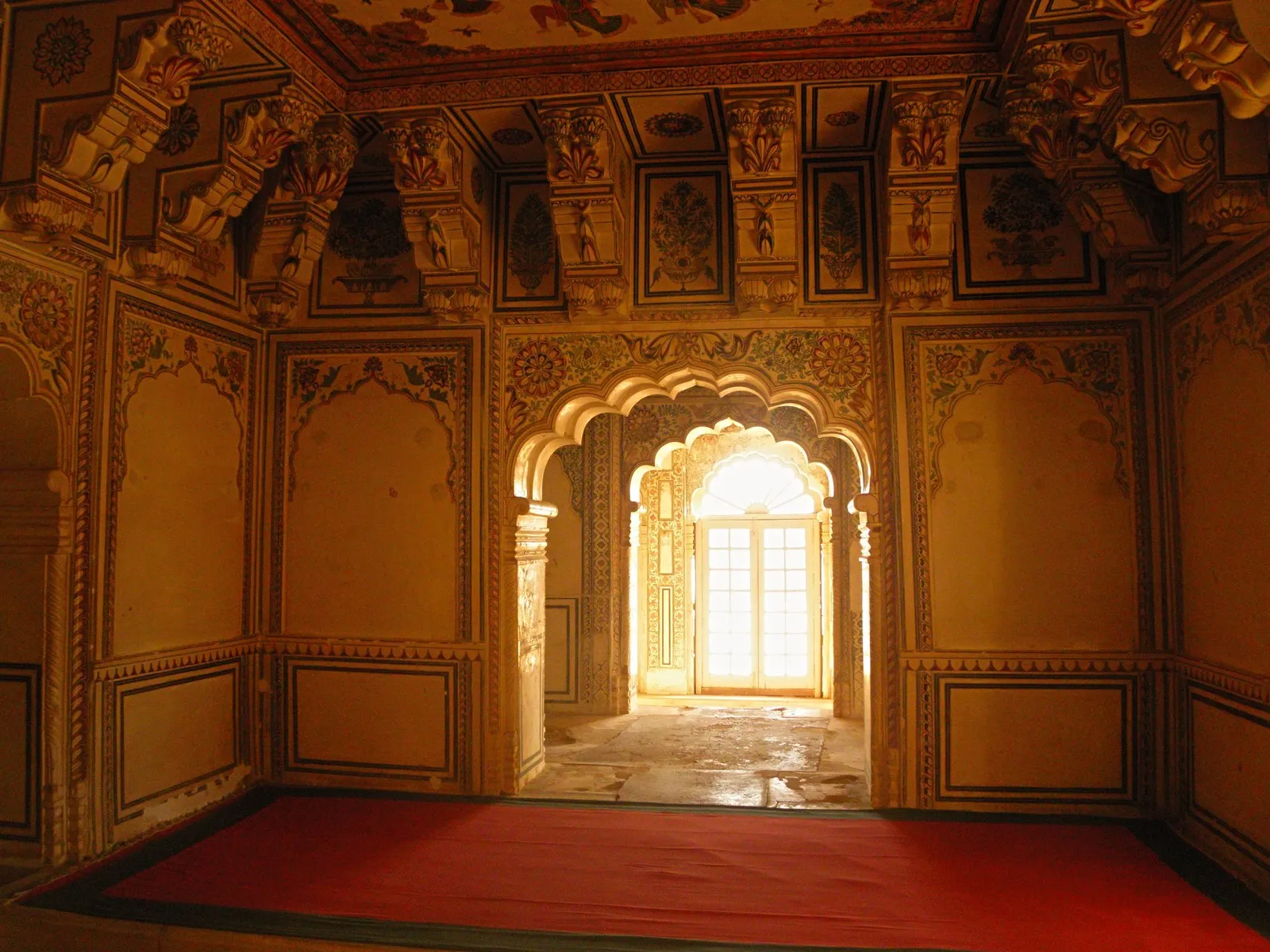
  3. A painted room in the fort at Nagaur

    03

    Overnight Khimsar

    235 km · about 5 hrs

    Nagaur, and the fort at Khimsar

    South-west across the plain to Nagaur, whose fort, Ahhichatragarh, hides palaces with painted walls and ceilings. The town is also home to the dargah of the Sufi saint Hamiduddin Nagauri, one of the chief disciples of Khwaja Moinuddin Chishti of Ajmer, which draws pilgrims all year round; cover your head to go in. Your guide also takes you to the temple of Deresiya Mata.

    On to Khimsar, a village on the edge of the Thar, and Khimsar Fort, built in 1523 by Rao Karamsji, a son of Rao Jodha, the founder of Jodhpur. His descendants still live in part of it, and the rest is a hotel of courtyards, carved stone and archways. In the afternoon, the village crafts centre, then a jeep through the villages around and out to the dunes for sunset. Back to the fort for the night.

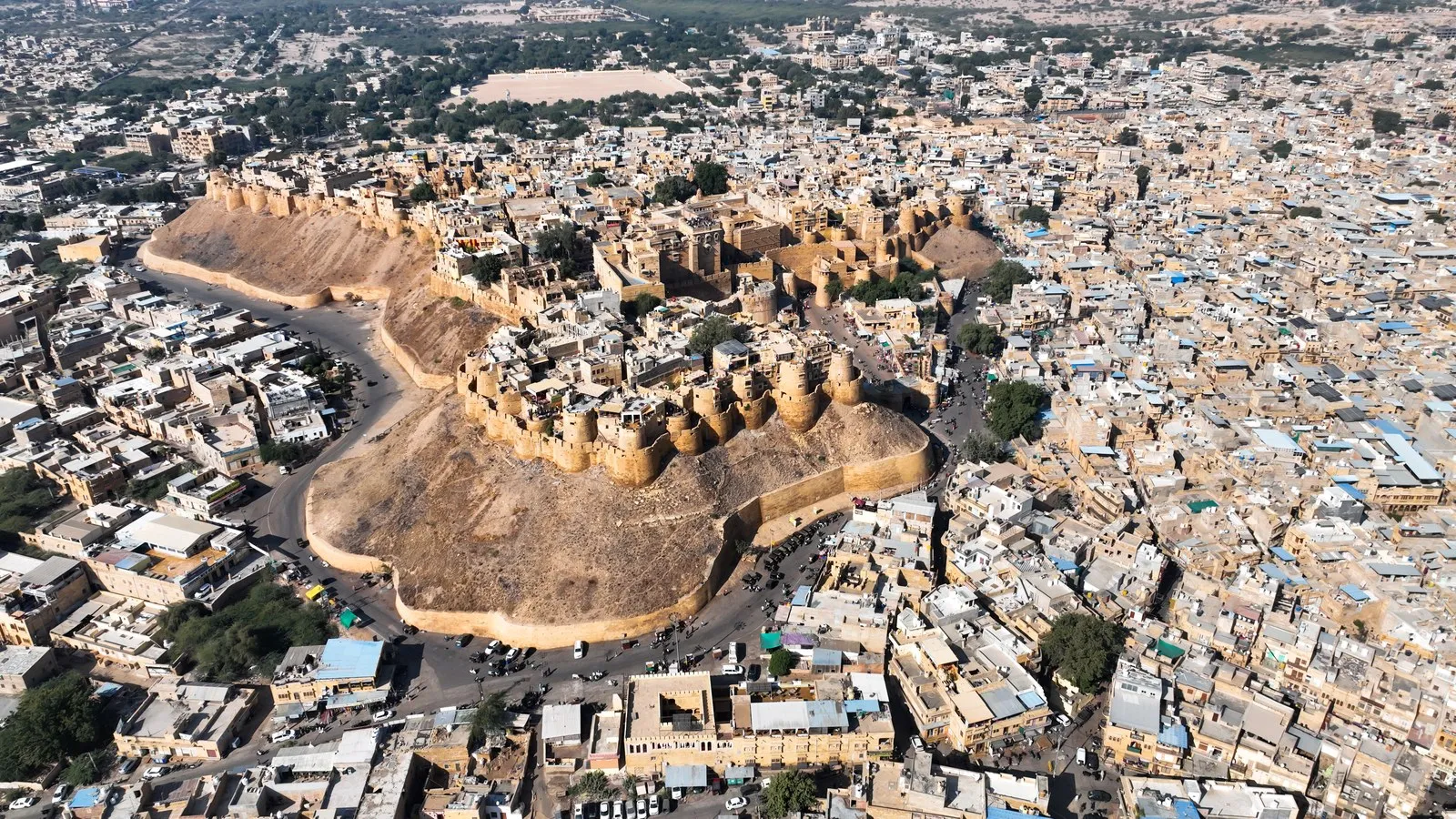
  4. Jaisalmer fort on its hill above the town, from the air

    04

    Overnight Jaisalmer

    285 km · about 5½ hrs

    Across the desert to Jaisalmer

    A long, straight road west through the Thar to Jaisalmer, rising gold out of the desert. Rawal Jaisal of the Bhati Rajputs founded it in 1156, and for centuries it lived on the camel caravans that crossed the desert between India, Persia and the lands beyond, taxing the merchants who passed through. Check in and rest. At dusk, walk down to Gadisar Lake, the old reservoir of the town, ringed by temple pavilions, to watch the light go.

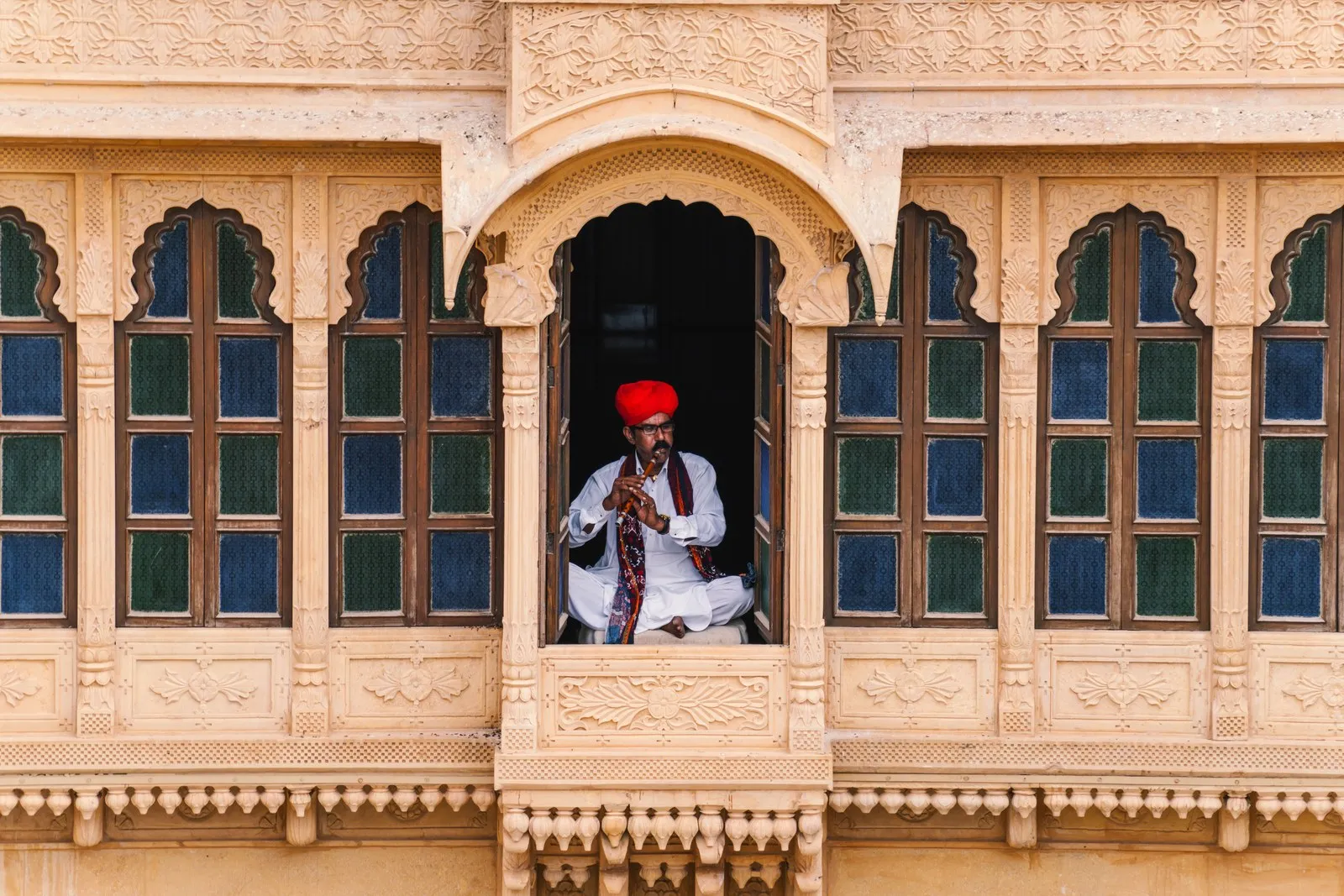
  5. A musician playing the algoza in a carved sandstone window, Jaisalmer

    05

    Overnight Jaisalmer

    Sonar Qila, the havelis and the dunes at Sam

    The morning inside Sonar Qila, the Golden Fort, one of UNESCO’s Hill Forts of Rajasthan and one of the few forts in India still lived in: thousands of people make their homes within its walls, around the palace, the carved Jain temples and houses of yellow sandstone. Then down into the town for the merchants’ havelis, carved as finely as lace: Patwon ki Haveli, five houses built for one family of brocade and jewel traders, and Nathmal ki Haveli, carved by two brothers, each working on one half.

    In the afternoon, 42 km west to the Sam dunes, the sand piled into long ridges. Ride out on a camel with a camel man from the villages, or walk, and stay until the sun drops behind the dunes.

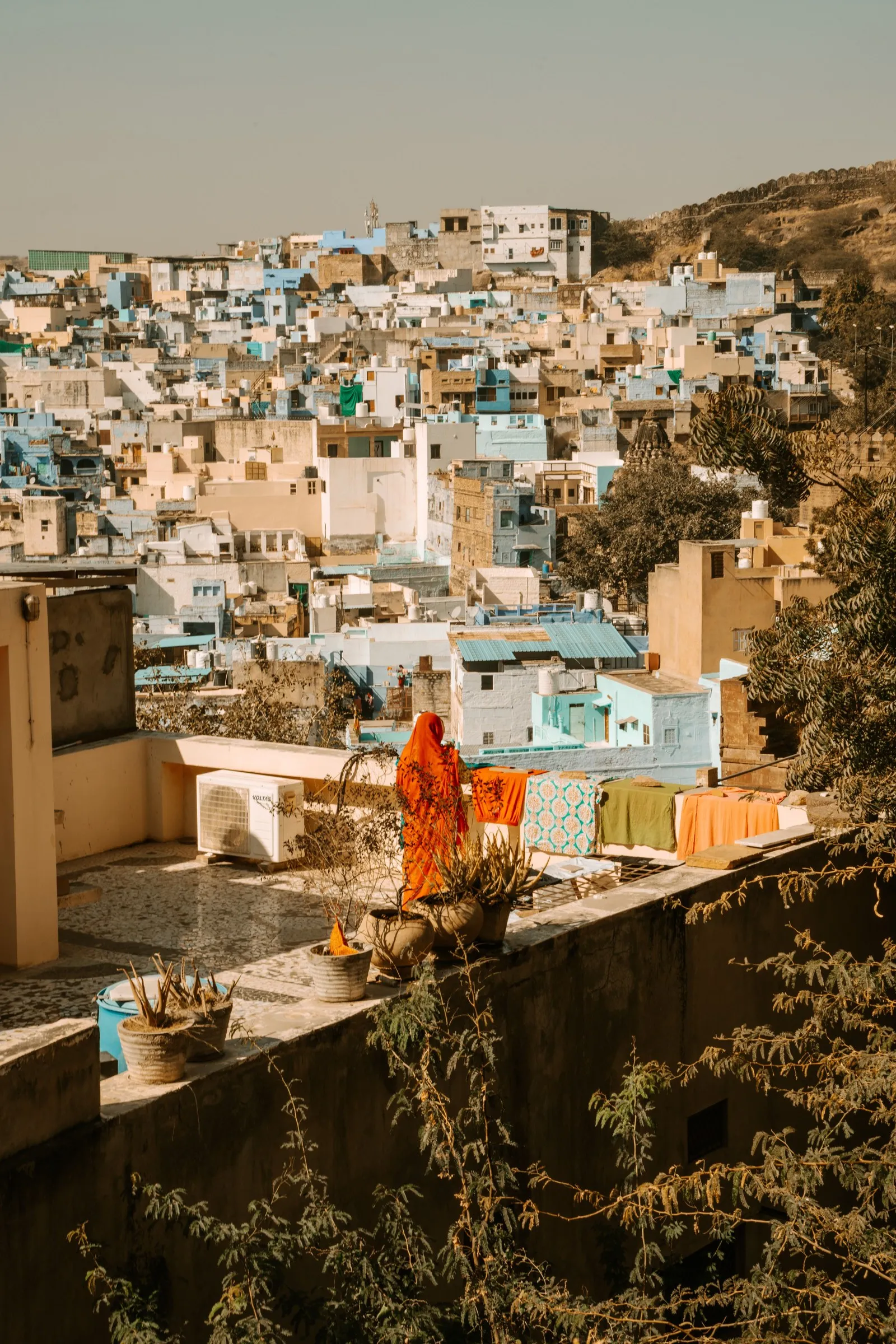
  6. A woman on a rooftop above the blue houses of Jodhpur

    06

    Overnight Rohet

    310 km · about 6 hrs, with Jodhpur on the way

    Jodhpur and Mehrangarh, then Rohet Garh

    East to Jodhpur, the old capital of Marwar. Its old town is the blue city, the houses below the fort washed in shades of blue, and from above it looks like a sea of blue cubes. Mehrangarh, founded by Rao Jodha in 1459, stands on a sheer rock over it all: climb through its gates, one still scarred by cannonballs, to palaces of latticed sandstone and a museum of palanquins, howdahs and armour.

    Then south into the country to Rohet Garh, the seat of the Singh family since 1622, who still live in it and run it as a hotel: peacocks under the stone arches, neem trees and bougainvillea, and Marwari horses in the stables. Bruce Chatwin wrote part of ‘The Songlines’ here, and William Dalrymple part of ‘City of Djinns’.

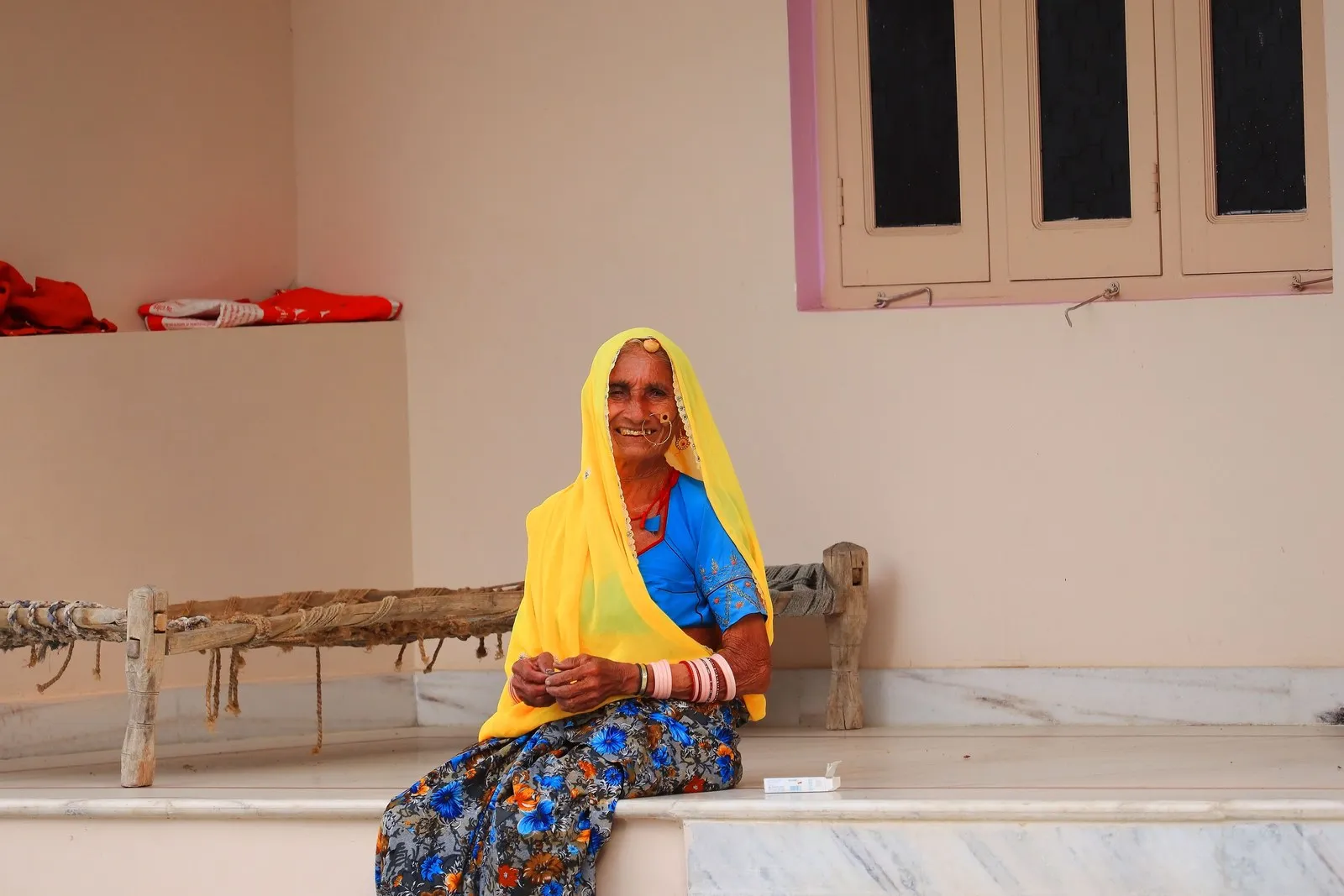
  7. An elderly woman smiling outside her home in a village in Pali district, Rajasthan

    07

    Overnight Rohet

    Bishnoi villages

    A morning in the villages around Rohet by jeep. The Bishnoi follow the twenty-nine rules of Guru Jambheshwar, who founded the community in 1485, among them never to cut a green tree or kill an animal; in 1730, at Khejarli near Jodhpur, 363 of them died trying to stop the Maharaja’s men from felling their khejri trees. Their fields are a refuge for blackbuck and chinkara, which graze close to the villages because nobody here will hunt them.

    You also meet the Raika, herders of camels, sheep and goats, the men in red turbans; the Paliwals, Brahmin farmers; and the Meghwals, who weave and embroider. You go as guests, and your guide will tell you when a photograph is welcome. The afternoon is free at Rohet Garh, or ride out on one of the fort’s Marwari horses.

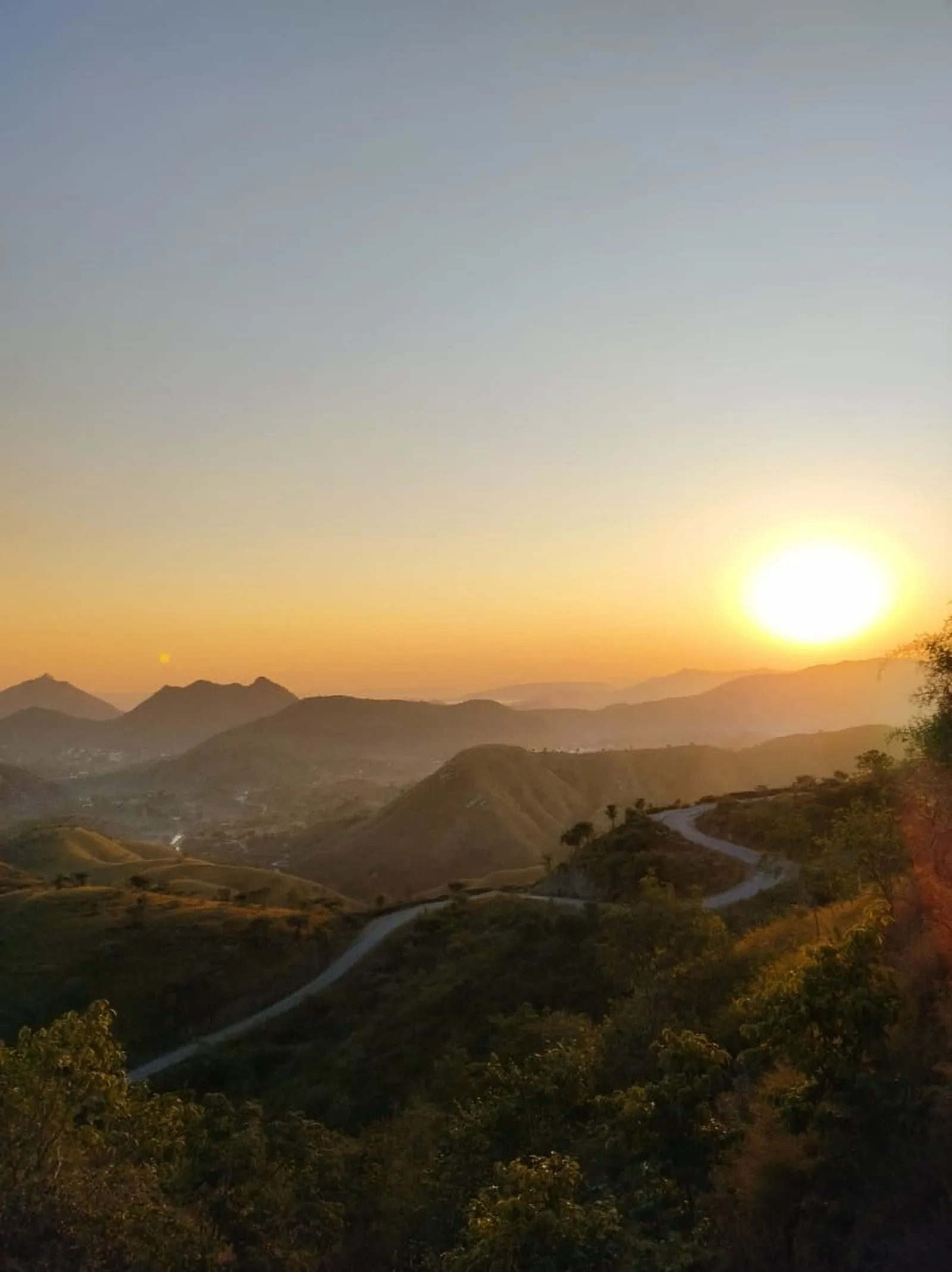
  8. A road winding into the Aravalli hills at sunset, near Udaipur

    08

    Overnight Sardargarh

    155 km · about 3½ hrs

    To Sardargarh, in the Aravallis

    South-east into the Aravalli hills, green after the desert, to Sardargarh, a village some 90 km north of Udaipur, where an eighteenth-century fort crowns the hill above the houses. The fort is now the Sardargarh Heritage Hotel, its suites each with its own name and decoration, and its terraces look out over the village and the hills. The afternoon is yours.

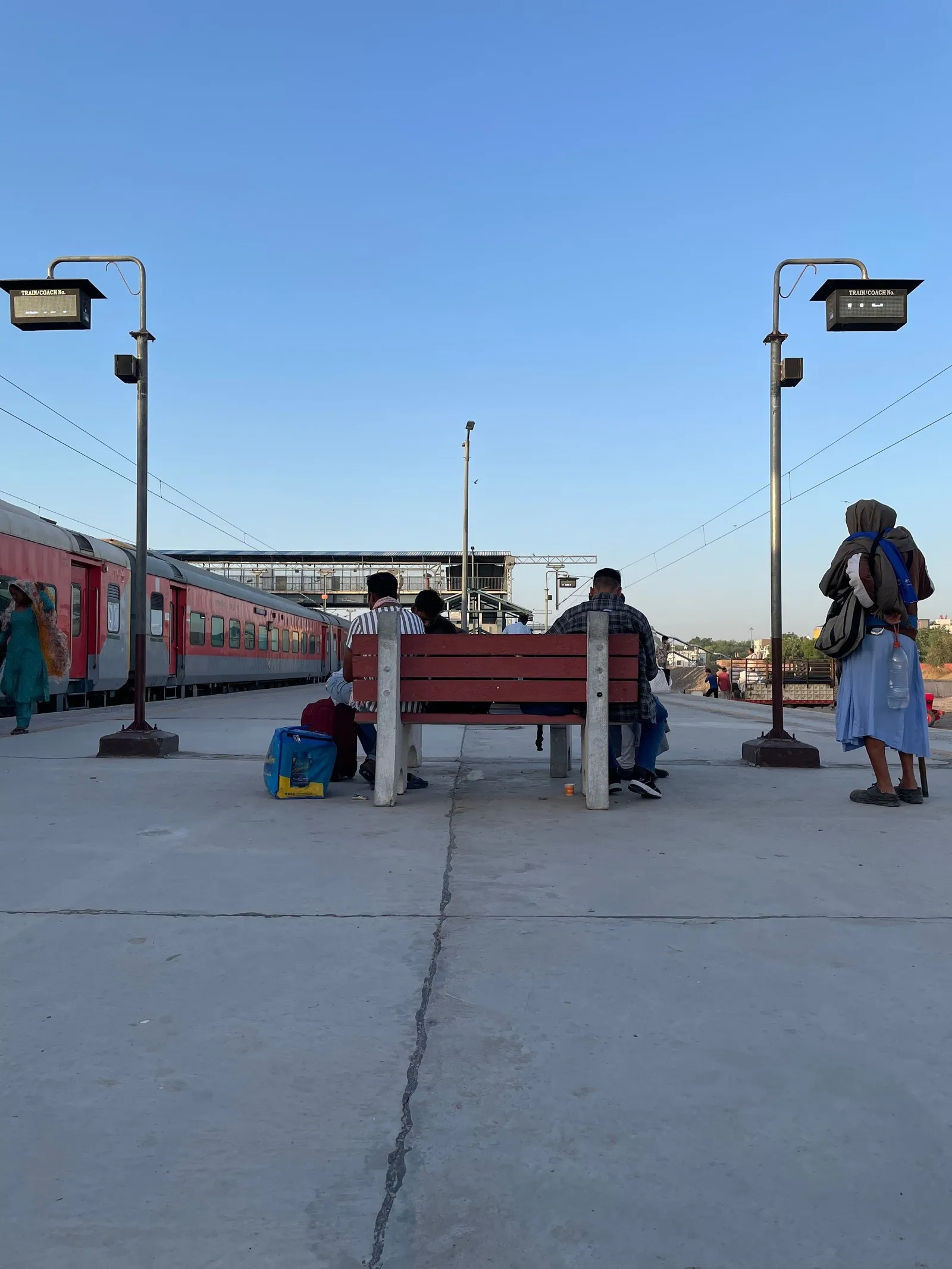
  9. Passengers waiting for a train at a village station in Rajasthan

    09

    Overnight Sardargarh

    Metre-gauge train · 44 km

    The country train through the Goram Ghat

    A day on the old metre-gauge line through the Aravallis, laid before Independence by the princely states of Mewar and Marwar. You board a local train at a village station and ride 44 km with the villagers, down through the Goram Ghat, the steep, wooded pass of the Todgarh-Raoli Wildlife Sanctuary, over bridges and through tunnels. Monkeys come out of the forest to meet the train at the little flag station of Goram Ghat. At Phulad the car is waiting to take you back to Sardargarh.

    The evening is free. If you like to cook, the kitchen can give you a lesson in Rajasthani home cooking: spices added one by one to hot ghee, dal, bajra rotis, and gatte simmered in a yoghurt curry.

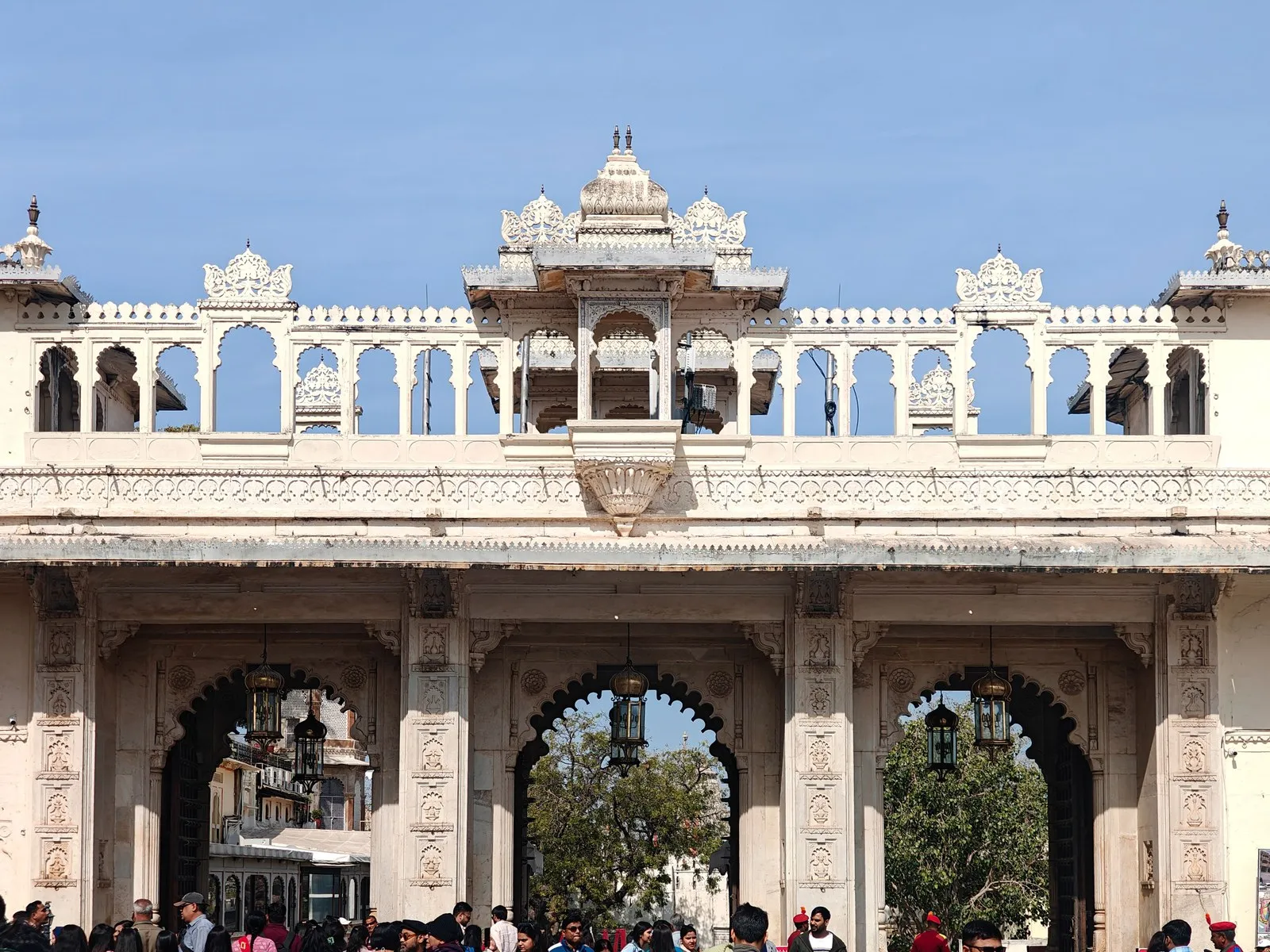
  10. Visitors under the carved gateway of the City Palace, Udaipur

    10

    Overnight Udaipur

    90 km · about 2 hrs

    To Udaipur: the City Palace

    Down out of the hills to Udaipur, the city of lakes that the Maharanas of Mewar made their capital in the sixteenth century. After lunch, the City Palace, climbing in white towers and balconies above Lake Pichola: rooms of mirror and glass mosaic, inlaid marble balconies, and the Mor Chowk, the peacock courtyard, where peacocks of coloured glass fan out across the walls.

    Then the Jagdish temple, built in 1651 and still busy with worshippers, its walls carved with dancers, musicians and elephants, and the Saheliyon ki Bari, the garden of the maids of honour, with its fountains, lotus pools and marble elephants.

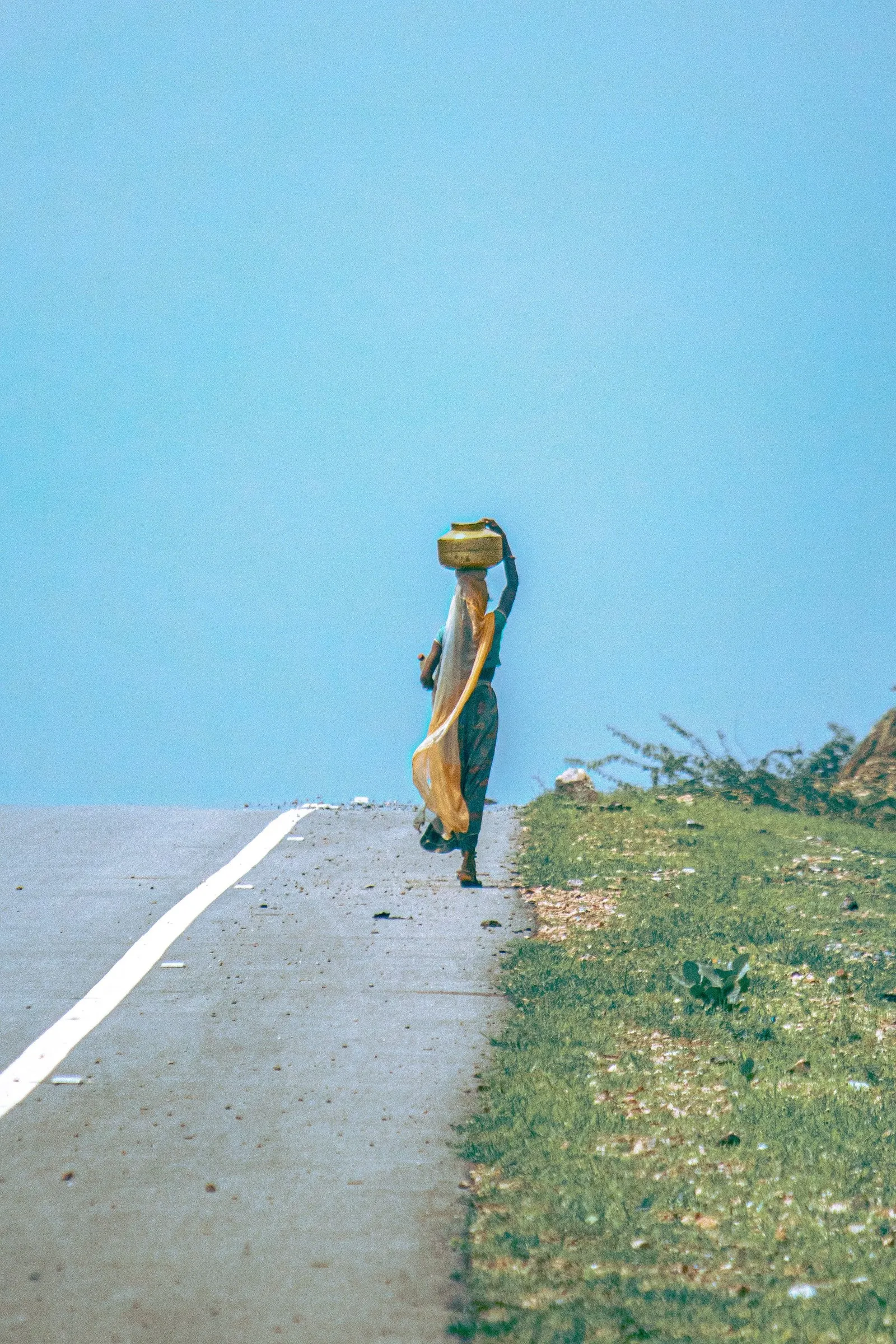
  11. A woman carrying a water pot along a country road near Udaipur

    11

    Overnight Dungarpur

    120 km · about 3 hrs

    Dungarpur and the Bhil villages

    South through the hills to Dungarpur, once a small Rajput state in the country of the Bhil, one of India’s largest Adivasi peoples; the town takes its name, the story goes, from Dungaria, a Bhil chief who ruled these hills before the Rajputs came. With a local guide, walk through Bhil hamlets of mud-walled houses among their fields. People are often curious to meet visitors: take your time, say hello, and ask before you take a photograph.

    In the afternoon, a walk or a boat on Gaib Sagar, the lake laid out in the fifteenth century, then up to the Juna Mahal, the old palace-fort of the rulers of Dungarpur, seven storeys on a rock above the town, painted inside with frescoes and set with mirror-work, with a view over the town and the lake.

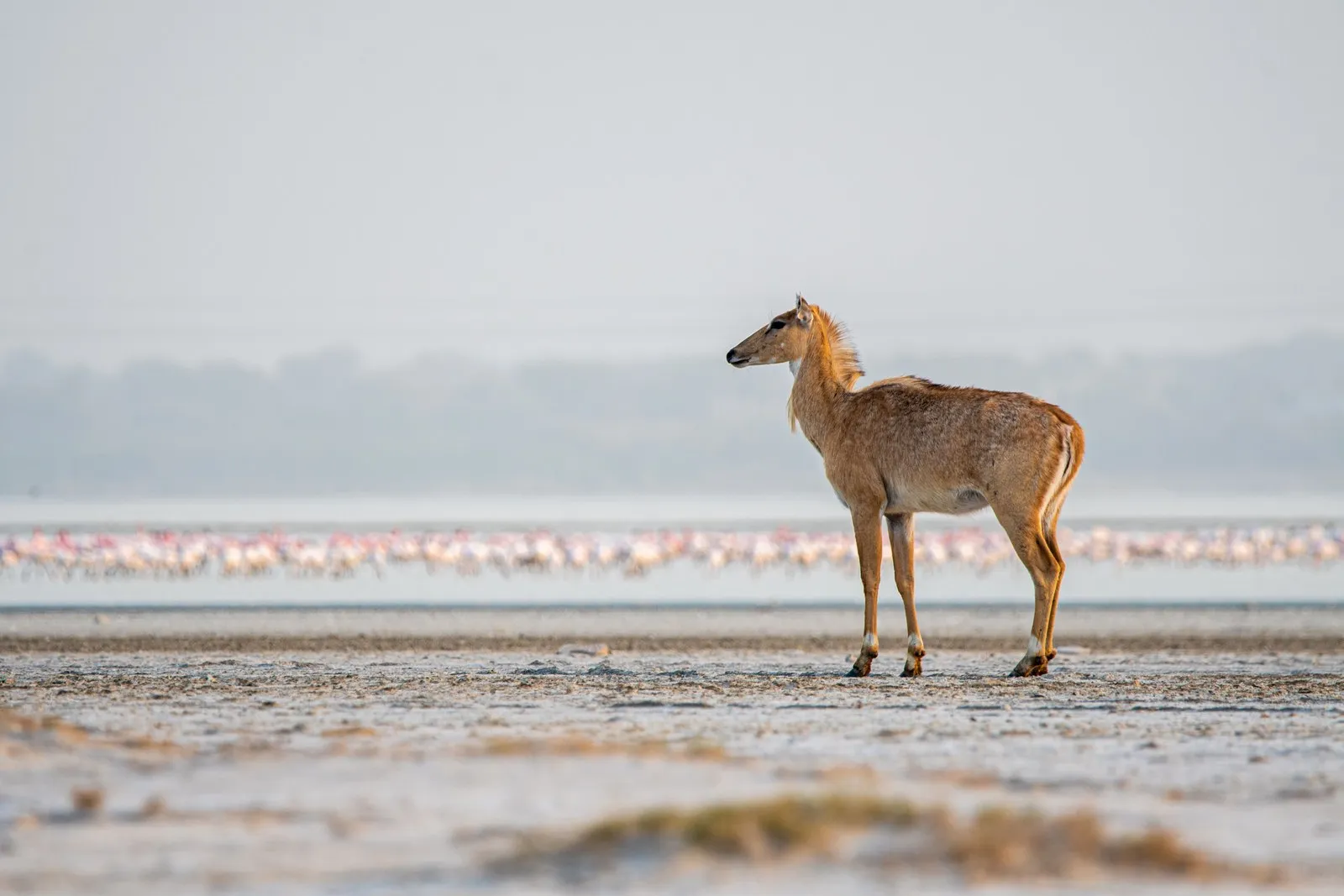
  12. A nilgai on the dry bed of the Little Rann, flamingos behind

    12

    Overnight Dasada

    245 km · about 5 hrs

    Into Gujarat, to Dasada

    Over the border into Gujarat and west across the plain to Dasada, a village on the edge of the Little Rann of Kutch: a flat, salt-crusted desert that floods in the monsoon and dries out through the winter, with wetlands and grassy islands, the bets, scattered across it.

    In the afternoon, the villages around Dasada and their crafts: the settlements of the Rabari, herding families known for their embroidery, and the silk weavers of Dasada; Ambala, the village of the Bharwad shepherds and goatherds; and, if you would like, the weavers’ cooperative at Bajana and other workshops nearby.

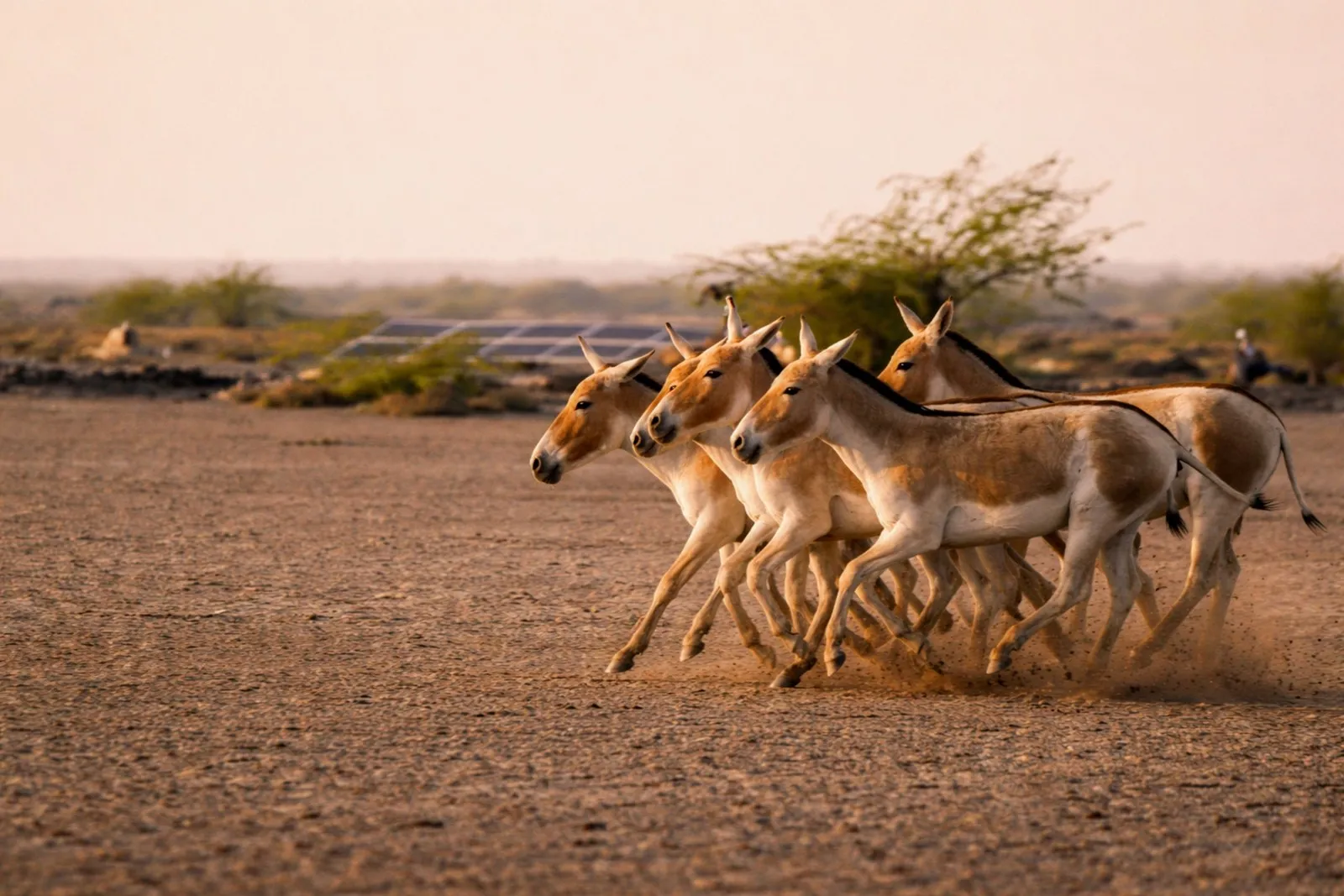
  13. A herd of Indian wild ass running across the Little Rann of Kutch

    13

    Overnight Dasada

    Two safaris in the Little Rann

    Out by jeep at first light, and again in the late afternoon, into the Wild Ass Sanctuary. The Little Rann is the last home of the Indian wild ass, the khur, a chestnut-and-white member of the horse family, very fast when it runs; small herds graze on the bets and gallop across the open flats.

    The drives take in the lakes and wetlands of the Rann, Nava Talav among them, and the salt pans around Kharaghoda, where Agariya families rake salt from the brine through the dry months. Nilgai, the blue bull, and jackals are common, and in winter flamingos, pelicans, storks and cranes arrive in great numbers.

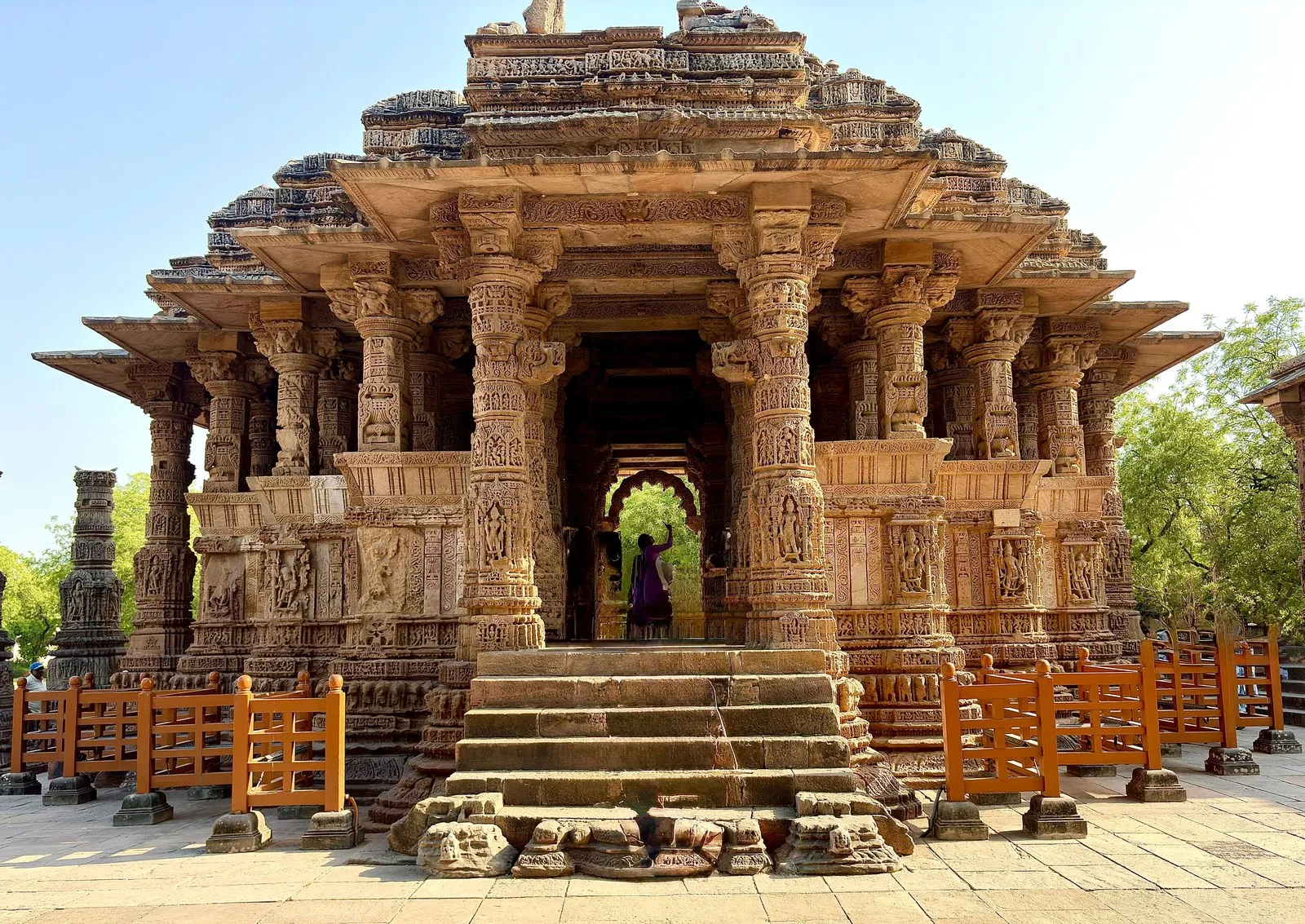
  14. The carved Sabha Mandap of the Sun Temple at Modhera

    14

    Overnight Ahmedabad

    215 km · about 5 hrs, by Modhera and Patan

    Modhera, Patan, and on to Ahmedabad

    East to the Modhera Sun Temple, built in 1026–27 under Bhima I of the Chaulukya, or Solanki, kings. In front of it the Surya Kund, a stepped tank lined with more than a hundred small shrines, leads up to the Sabha Mandap, the pillared hall of assembly, and the Guda Mandap, where the image of the sun god once stood; the temple is aligned so that the rising sun at the equinoxes shone into the sanctum. Every pillar is carved, with scenes from the Ramayana and the Mahabharata.

    Then Patan, the old Solanki capital, for Rani ki Vav, the Queen’s Stepwell, built in the eleventh century in memory of Bhima I and a UNESCO World Heritage Site since 2014. Nearby, a family of patola weavers, who dye every thread of warp and weft to the pattern before it goes on the loom — a double ikat so exacting that one sari can take months. Ahmedabad by evening.

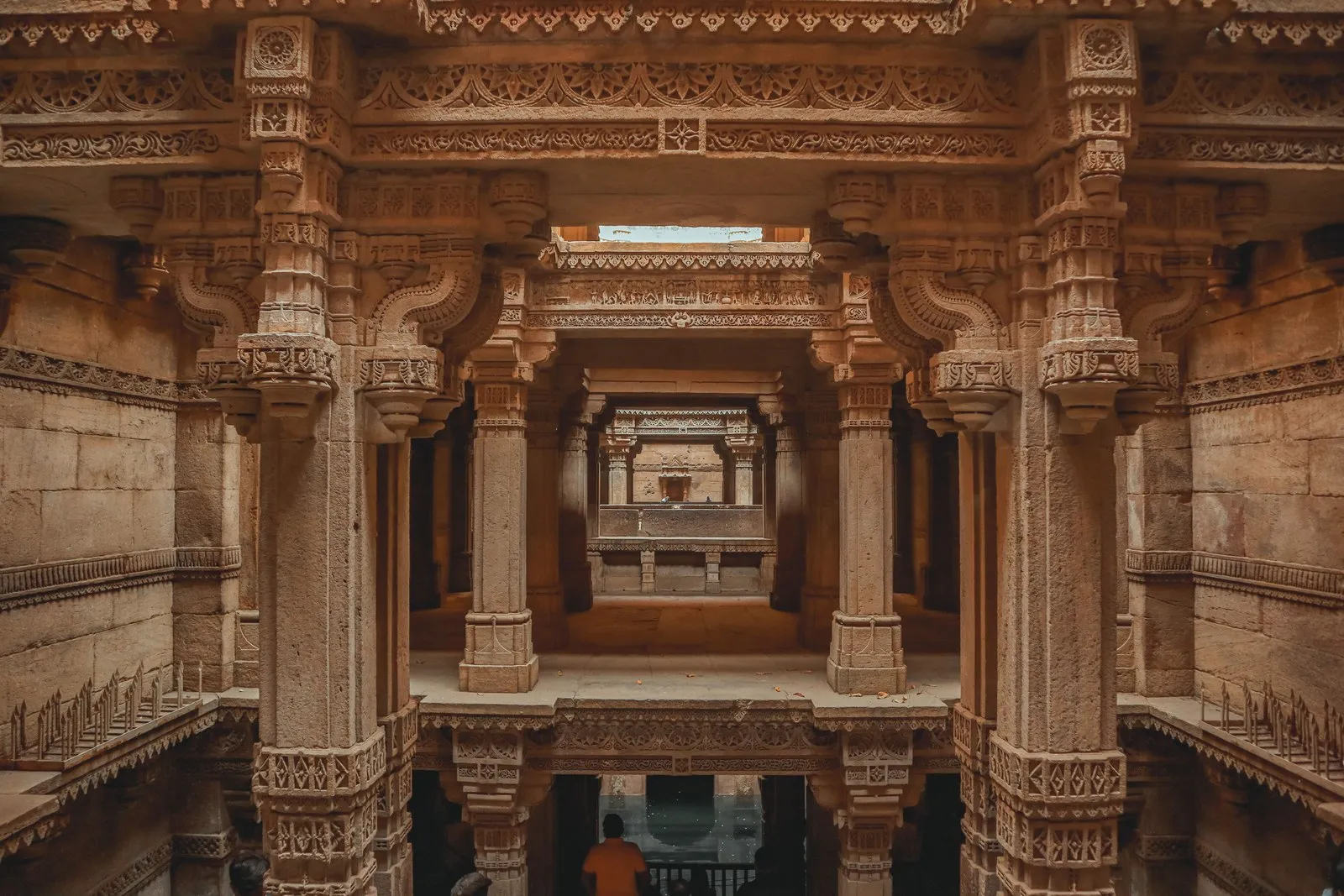
  15. The carved galleries of the Adalaj stepwell, near Ahmedabad

    15

    Departure

    Ahmedabad, then the flight home

    The morning in Ahmedabad, Gujarat’s largest city and its capital until 1970, which grew rich on cotton mills and was called the Manchester of the East. First the Sabarmati Ashram on the river, Gandhi’s home from 1917 to 1930, from which he set out on the Salt March to Dandi in March 1930; his cottage, Hriday Kunj, still holds his spinning wheel and writing desk.

    Then the Calico Museum of Textiles, one of the finest textile collections in the world, open only for booked morning visits; and the Adalaj stepwell, finished in 1499 by Rani Rudabai, five storeys of carved sandstone galleries stepping down to the water. In the evening, the transfer to the airport for your flight home.

Like the route? We will write it for your dates.

The price

What the price covers

The commonest reason travellers abandon an enquiry is not knowing what is covered. Every Rang Travels quotation itemises it — this is the usual shape for this journey.

Included

  • 14 nights with breakfast, five of them in the forts of Khimsar, Rohet Garh and Sardargarh
  • A private air-conditioned car with driver from Delhi to Ahmedabad
  • Local guides for the sightseeing and the village visits
  • The local train ride through the Goram Ghat
  • Jeep drives at Khimsar and around Rohet, and two jeep safaris in the Little Rann of Kutch
  • A camel ride on the dunes at Sam
  • Airport transfers, tolls, parking and driver allowances

Not included

  • International flights
  • Entrance fees at monuments and museums, and the Wild Ass Sanctuary fees
  • Lunches and dinners
  • The cooking lesson and horse riding, which are optional
  • Visa, travel insurance and tips

Price on request

Quoted to your dates,
your hotels and your pace

Before you book

Villages, forts and the season

This journey spends as much time in villages as in cities. A few things are worth knowing before you confirm.

In the villages

  • You visit the Bishnoi, Raika, Bhil, Rabari and Bharwad villages as guests of the people who live there, with a local guide who knows them. Ask before you photograph anyone, and put the camera away if the answer is no.
  • Dress modestly, with shoulders and knees covered, in the villages and at temples; cover your head at the dargah in Nagaur.
  • Please do not hand out sweets, pens or money to children. If you would like to give something, your guide can suggest a village school or a craft cooperative.

The country train

  • The metre-gauge line through the Goram Ghat is being converted to broad gauge in stages, and its trains have changed in recent years. We confirm the ride, or its alternative, before you travel.
  • The monkeys at Goram Ghat are wild: please do not feed them.

The Little Rann and the season

  • The Wild Ass Sanctuary closes for the monsoon, roughly from mid-June to mid-October. The best months for the Rann, and for its birds, are November to February.
  • The safaris are on rough tracks in open jeeps, and winter mornings in the desert are cold: bring a warm layer and a scarf against the dust.

The forts

  • Khimsar, Rohet Garh and Sardargarh are old forts that are still family homes, now run as hotels. Rooms differ in size and style, and some are up steep stairs; tell us if stairs are difficult for you.

Questions

Before you go

The questions travellers ask about this journey, answered from the itinerary itself. Anything else — ask, and a curator replies.

When is the best time to go?

October to March, when days in Rajasthan and Gujarat are warm and nights cool. The Little Rann is at its best from November to February, when the migrant birds arrive; the Wild Ass Sanctuary closes during the monsoon.

Is this a good first trip to India?

It is written for travellers who have already seen the Golden Triangle. It keeps to small towns and villages at a gentle pace, but it assumes you already know a little of what India is like.

Will we meet tribal communities?

Yes, as guests: Bhil villages around Dungarpur, and the Rabari and Bharwad herding communities around Dasada. Your guide introduces you, and you ask before you take a photograph.

What are the forts like to stay in?

Khimsar, Rohet Garh and Sardargarh are old forts, still family homes, now run as hotels: courtyards, terraces and rooms that are each different from the next.

How much time is spent driving?

Several days have five or six hours on the road, broken with stops. The roads are mostly good, but the distances between the villages are long.

Can I add days?

Yes. Ranakpur’s Jain temple fits between Rohet and Sardargarh, and a night in Bhuj for the Great Rann of Kutch after Dasada. Ask, and we will write them in.

The gallery

On the road

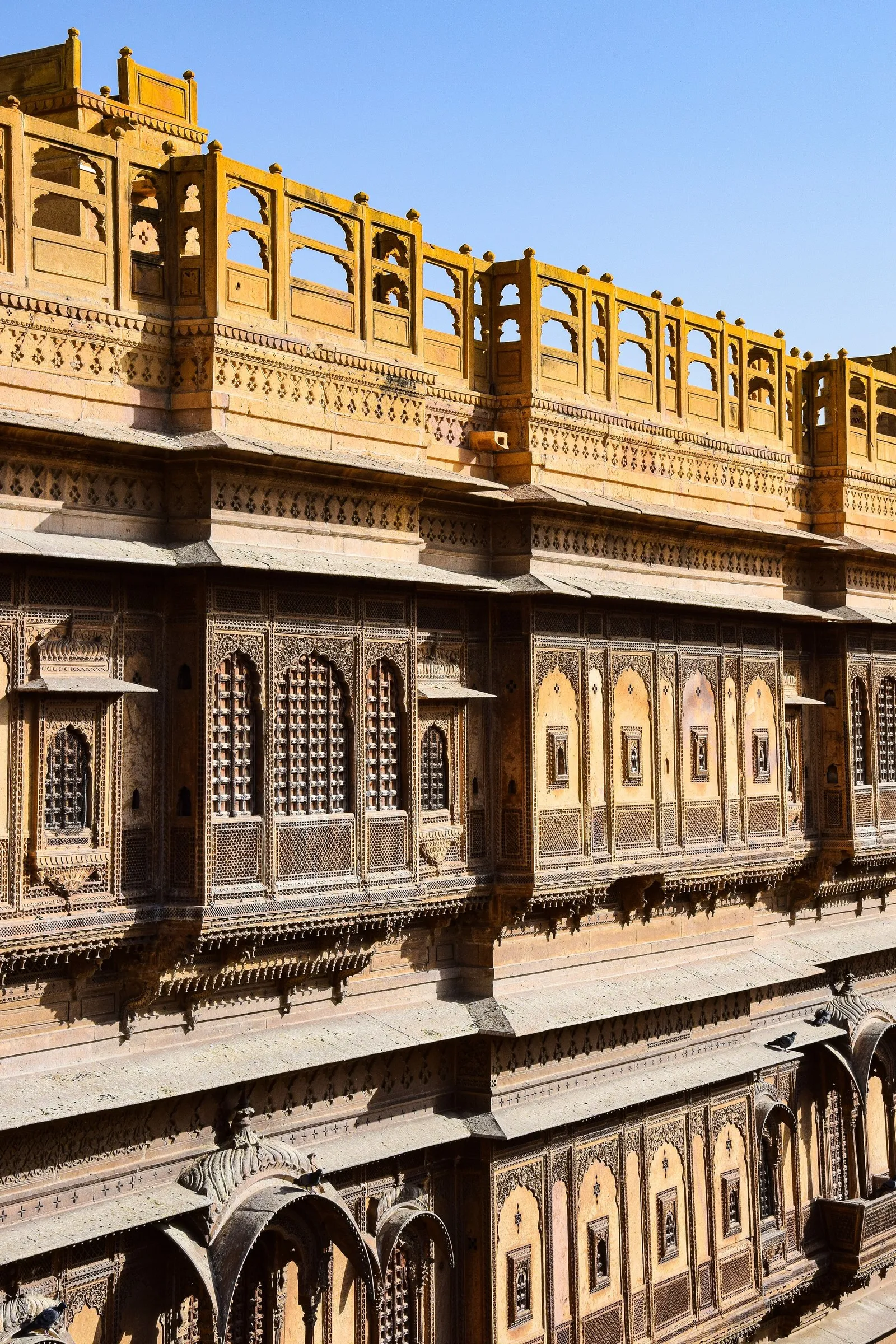
  • The carved balconies of Patwon ki Haveli, Jaisalmer
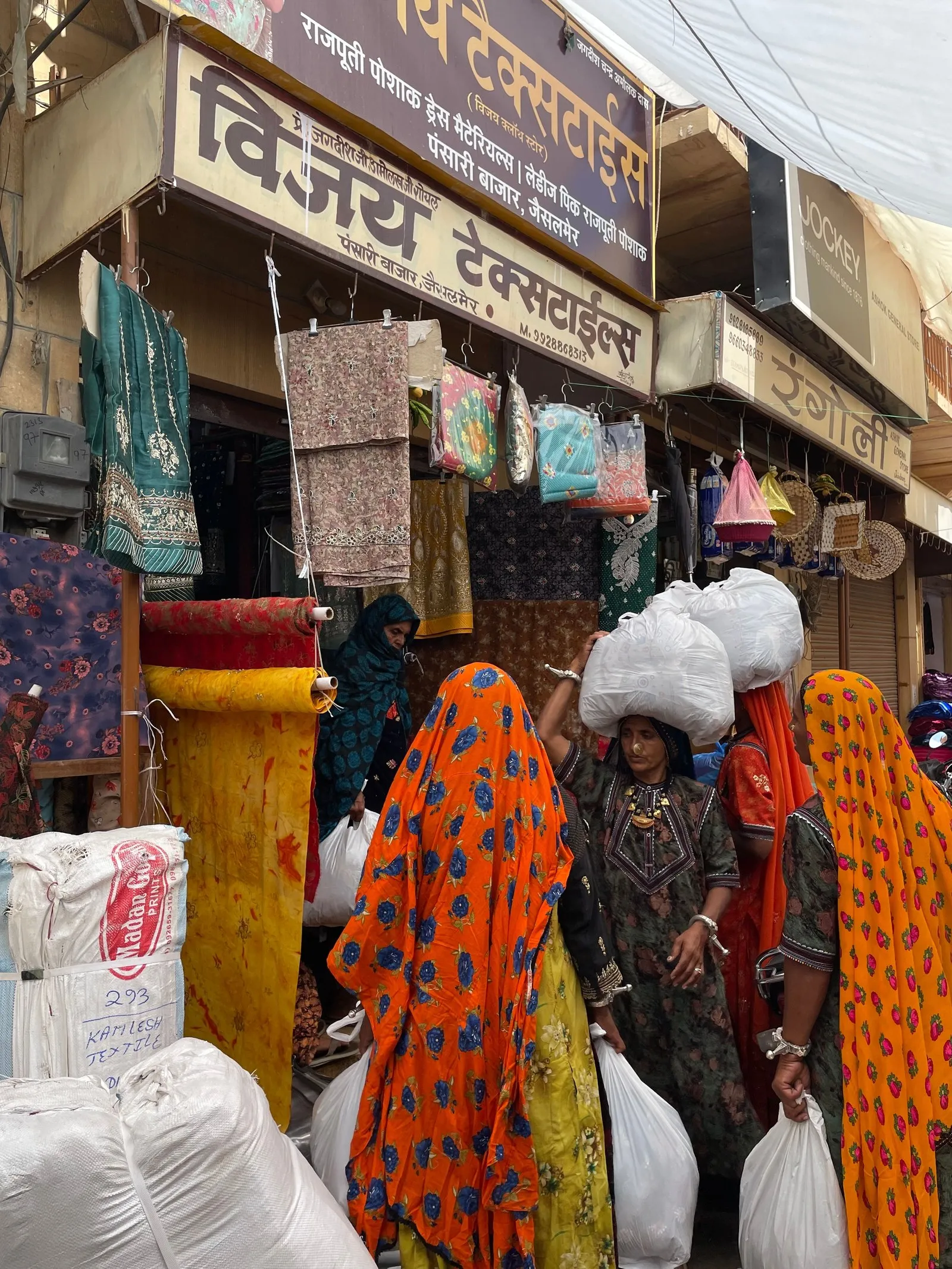
  • Women with bundles at a textile shop in Jaisalmer’s market
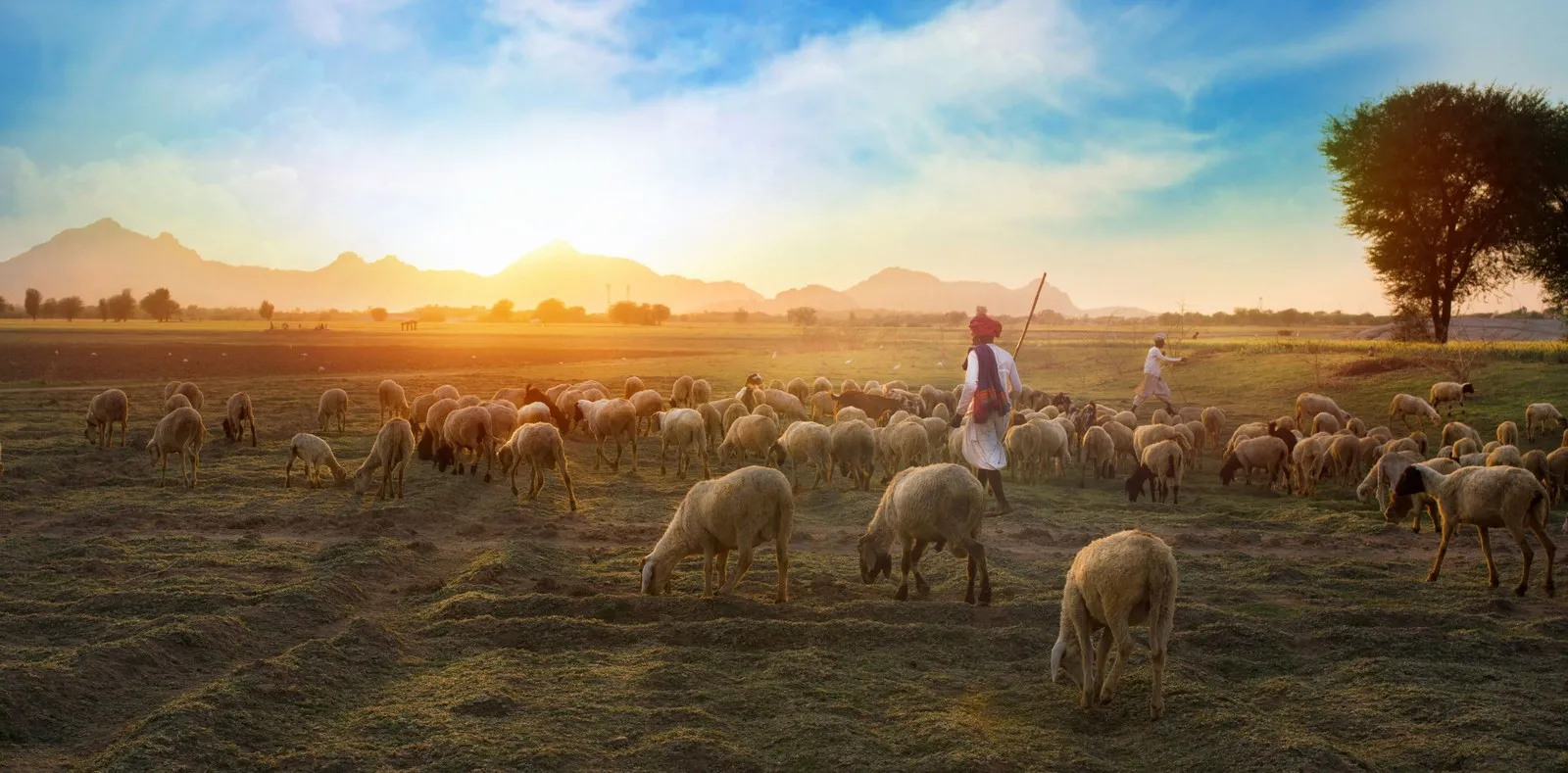
  • A shepherd with his flock at sunrise near Sheoganj, in southern Rajasthan
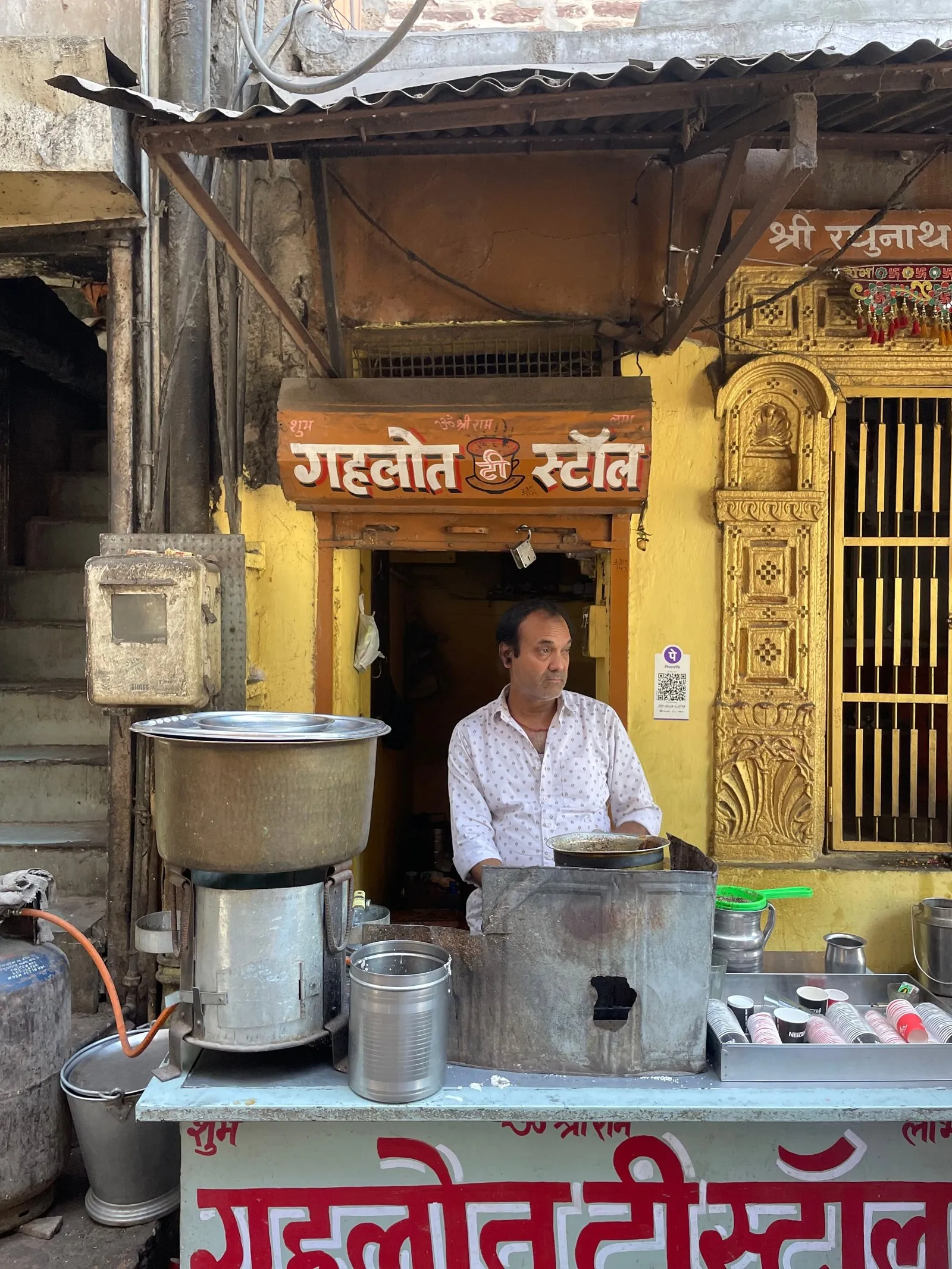
  • A tea seller at his stall in the old city of Jodhpur

Reviews

In their own words

Word for word, several in Italian, because Italy found us early. 5.0 from 146 reviews on Google, and 5.0 from 200 on TripAdvisor.

I had an incredible adventure with Rang Travels in Northern India earlier this year! The tour was jam packed. I loved the beautiful forts and buildings we visited, the markets, as well as the stunning World Heritage hotels. This tour gave me a real taste for India, and I felt very comfortable for my first time visiting!

Read the whole review on Google

Jess Foster

Northern India · May 2025

1 / 19

Enquire

Plan my journey

Tell us where your India begins — we reply with a written itinerary.

Travellers
When, roughly
Interests
Or ask on WhatsApp

No obligation. We reply with a written itinerary, not a sales call.