19 September 2026 · 4 minutes ·
by the curators
Varanasi rewards a particular order: the river first thing, the ceremony at dusk, and the quiet of Sarnath in between. Reverse it and the city feels like a crowd; keep to it and it feels like a place with a rhythm you are briefly inside.
First light on the water
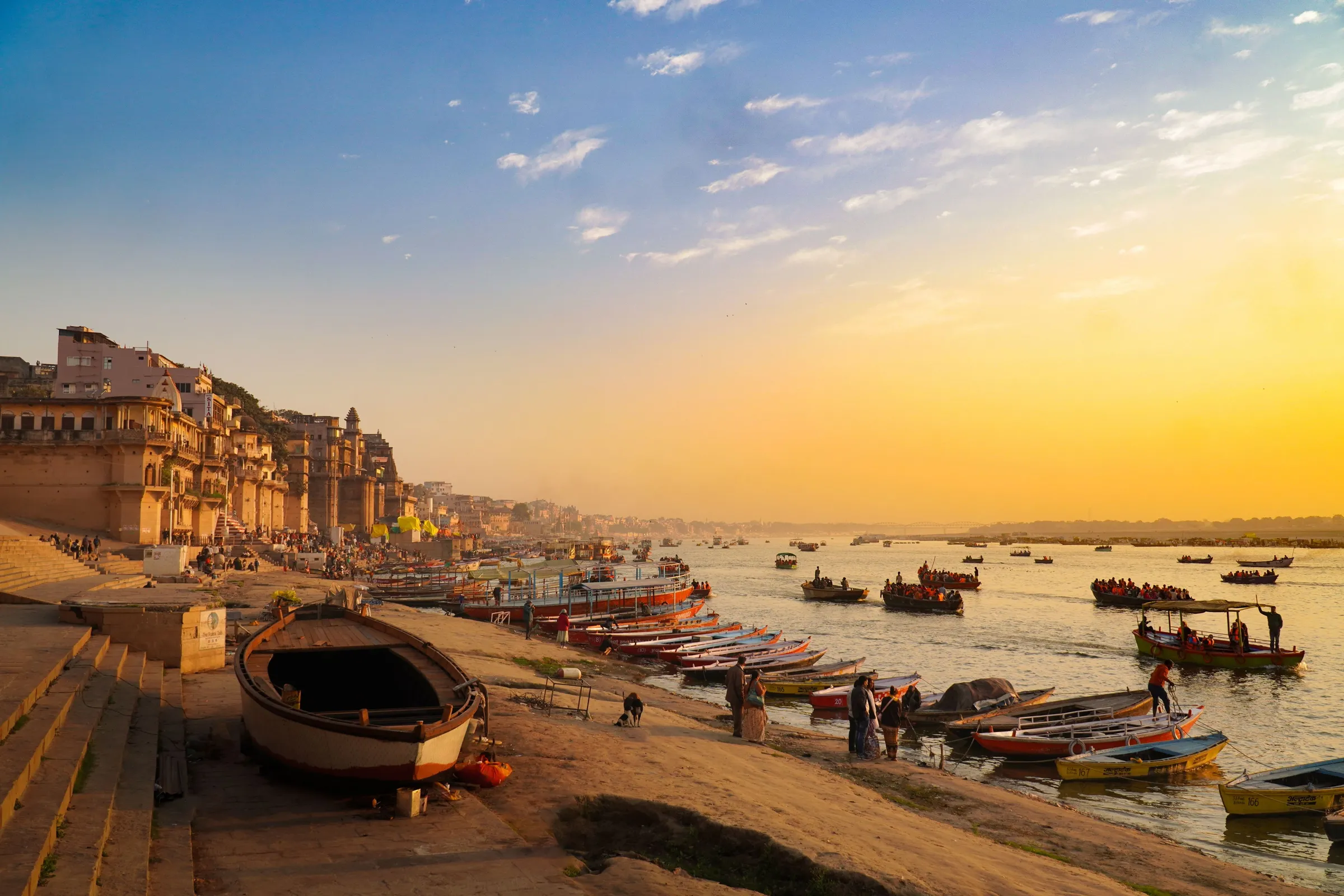
Be on a boat before sunrise. From the water the ghats read as one long terrace — pilgrims bathing, dhobis beating laundry, someone doing surya namaskar on the steps, smoke going up from the burning ghats. It is the one hour when the city faces the river rather than the lanes.
The light is soft, and nobody minds a camera at that distance; at the cremation ghats, put it away.
The lanes, and the temples
Between breakfast and the afternoon, the old city: the Kashi Vishwanath corridor, the Tulsi Manas temple, a silk weaver's workshop if you want to understand what Banarasi brocade actually costs in hours. The lanes are narrow and the cows have right of way.
Sarnath
Ten kilometres out, Sarnath is where the Buddha preached his first sermon, and it is startlingly calm after the city — a deer park, the great Dhamek Stupa, a museum with the lion capital that became India's emblem. An afternoon is enough, and it changes the pace of the day.
The aarti, and where to watch it
At dusk the priests at Dashashwamedh Ghat perform the Ganga Aarti with tiered lamps, conch and bell. The steps fill early. A boat gives you the ceremony from the front and an escape route afterwards, which matters more than it sounds.
Varanasi appears in several of our journeys — at the end of the Grand India Journey, in the Colours of Devotion Holi journey, and on the Royal Rajasthan and Sacred India route. Two nights is the minimum that lets you do it in this order.
Journeys that go there