18 September 2026 · 4 minutes ·
by the curators
Most people picture Holi as one morning of thrown colour. In Braj — Krishna's country, two hours south of Delhi — it is a week, and the most striking days come before the date in the calendar.
The dates for 2027
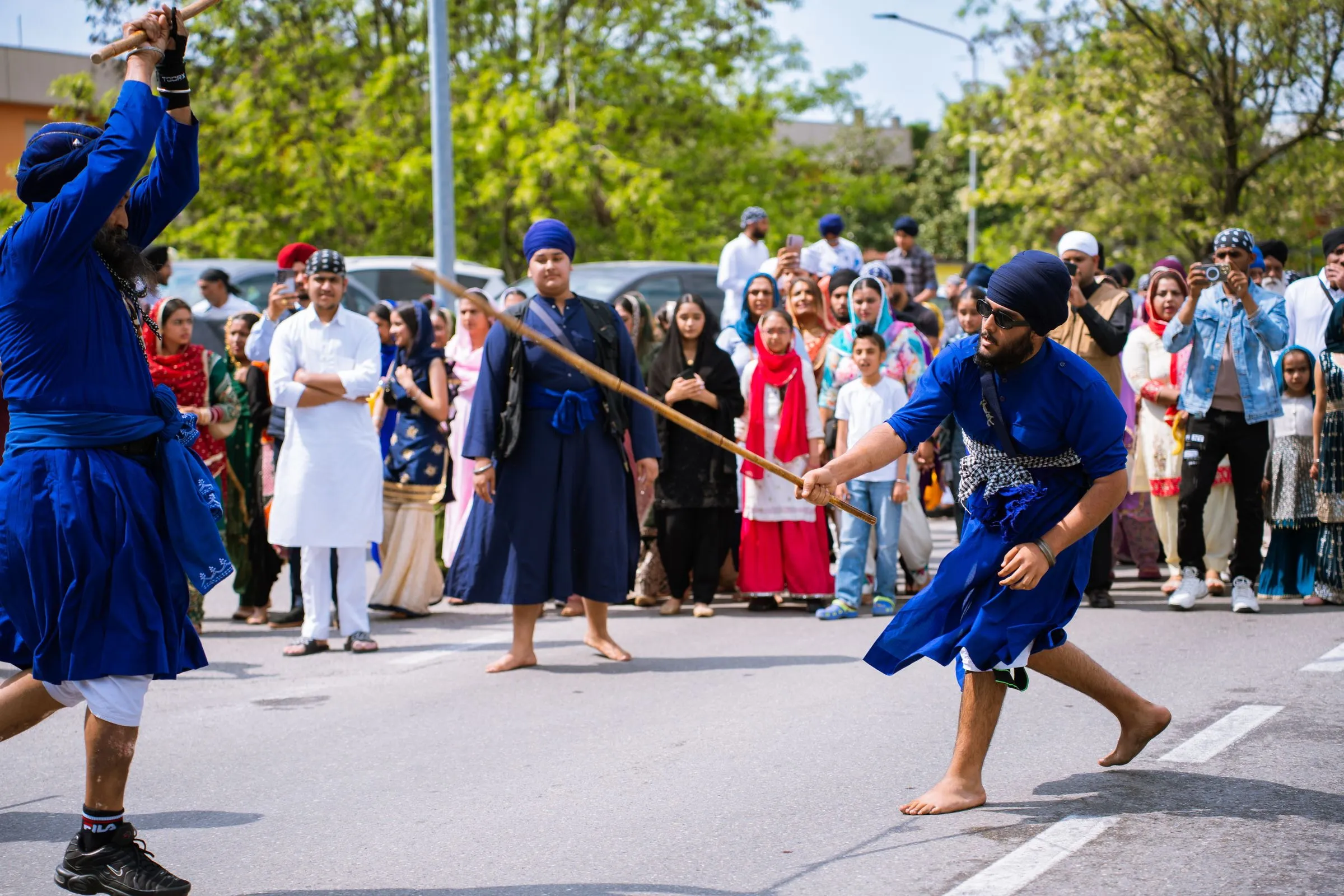
Lathmar Holi is played at Barsana on 16 March and at Nandgaon on 17 March, and the Banke Bihari temple in Vrindavan keeps its flower Holi on the 18th. Holika Dahan, the bonfire, is lit on the evening of 21 March, and Rangwali Holi — the colours — is the morning of 22 March. Hola Mohalla, the Sikh martial festival at Anandpur Sahib in Punjab, begins on 23 March.
Those five days are why we write the journey the way we do: Braj first, the bonfire and the colours in the middle, Punjab at the end.
What Lathmar Holi actually is
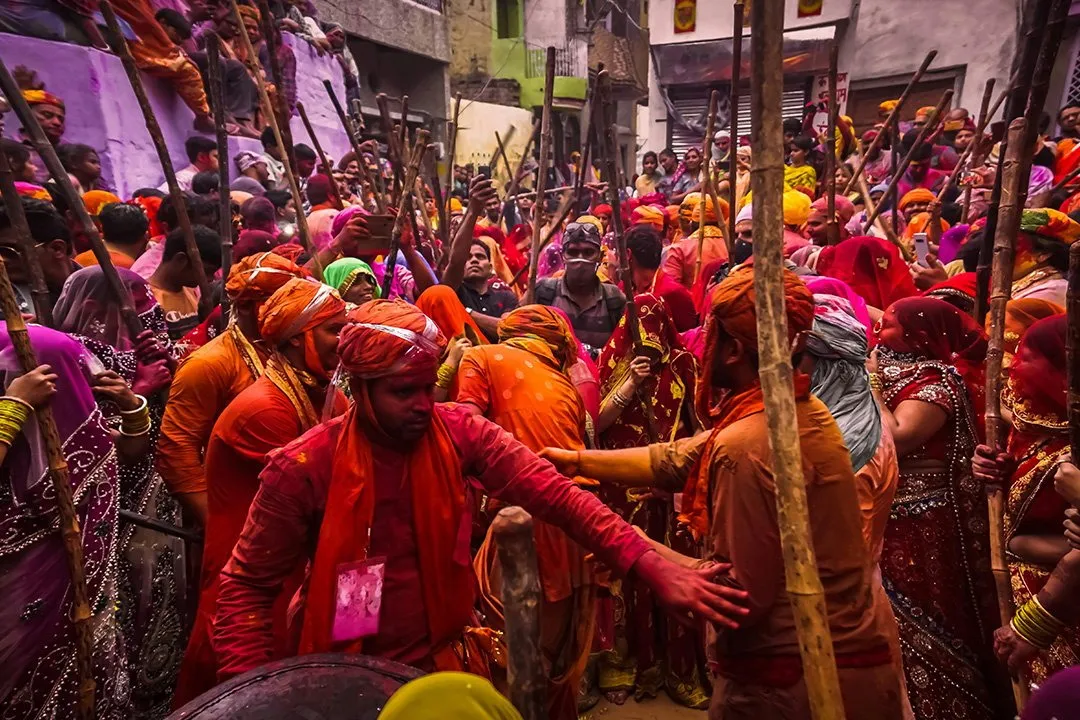
At Barsana the women of the town drive the men of Nandgaon out of the courtyard with staves, as Radha's friends once drove off Krishna. The men come shielded and take it in good humour; the next day the villages swap roles at Nandgaon. It is loud, crowded, drenched in colour and completely unlike a staged event.
Practicalities nobody tells you
Wear clothes you will throw away, and protect the camera more than you protect yourself. The colour comes off skin in a day or two; it does not come out of a lens mount. Go early — the courtyards fill hours before anything happens — and go with someone who knows the lanes, because Barsana on that morning is not a place to be navigating a map.
Women travelling alone often prefer the Braj days with a guide and a car standing by; that is how we arrange it as a matter of course.
Two ways to travel it
If you want the whole arc — Braj, then the Taj at Agra, then the Ganga at Varanasi — that is the nine-day Colours of Devotion journey. If what draws you is the contrast between Holi and the Sikh festival that follows it, the eleven-day Holi & Hola Mohalla journey ends at Anandpur Sahib among the Nihangs.